
Blog
How Much Does It Cost to Legalize an Unpermitted Pool in FL?
Wondering how much it costs to legalize an unpermitted pool in Florida? Learn the fees, engineering needs, and corrections that drive the total.
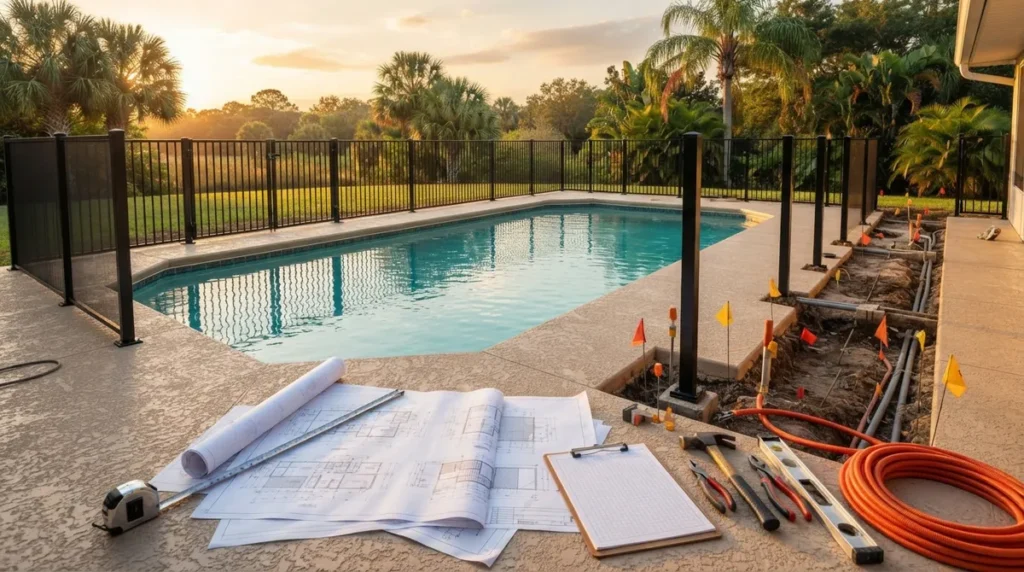
Key Takeaways
-
Legalization costs vary dramatically by Florida county and municipality—there is no statewide price, so request your specific jurisdiction's fee schedule and after-the-fact pool checklist before budgeting.
-
Engineering and architectural plans are often the largest expense; many jurisdictions require sealed documents from a licensed professional, and verification of buried components like steel reinforcing can significantly increase costs.
-
Documentation is critical to controlling costs; pools with original plans, photos, or contractor records are far cheaper to legalize than those requiring invasive verification or reconstruction of construction details.
-
Many jurisdictions apply additional fees beyond standard permit costs, including double-permit fees for unpermitted work, trade permits for electrical and plumbing, and separate barrier installation permits.
-
Common compliance gaps that trigger correction costs include pool barriers and gate hardware, electrical bonding and GFCI protection, and equipment setbacks—each may require its own trade permit and inspection.
-
Follow a six-step process to build realistic estimates: confirm jurisdiction, check permit history, gather existing documentation, get an engineer's assessment, price corrections, and avoid using public-pool fee schedules which do not apply to residential pools.
So you just bought a home with a gorgeous backyard pool, and then someone mentions the dreaded words: "I don't think that pool was ever permitted." Take a breath. You are far from alone, and this is more fixable than it sounds.
Here is the honest answer to how much does it cost to legalize an unpermitted pool in Florida: it depends on where the pool sits and what condition it is in. There is no single statewide price. Each county or city sets its own fees, and the biggest expenses often come from engineering, inspections, and any corrections the pool needs to meet code.
In this guide, we walk through every cost bucket, show you how to build a realistic estimate, and explain the steps that keep surprises to a minimum. Whether you are a homeowner, a realtor with a closing on the clock, or a contractor helping a client, you will leave with a clear plan.
Why There Is No Single Statewide Price
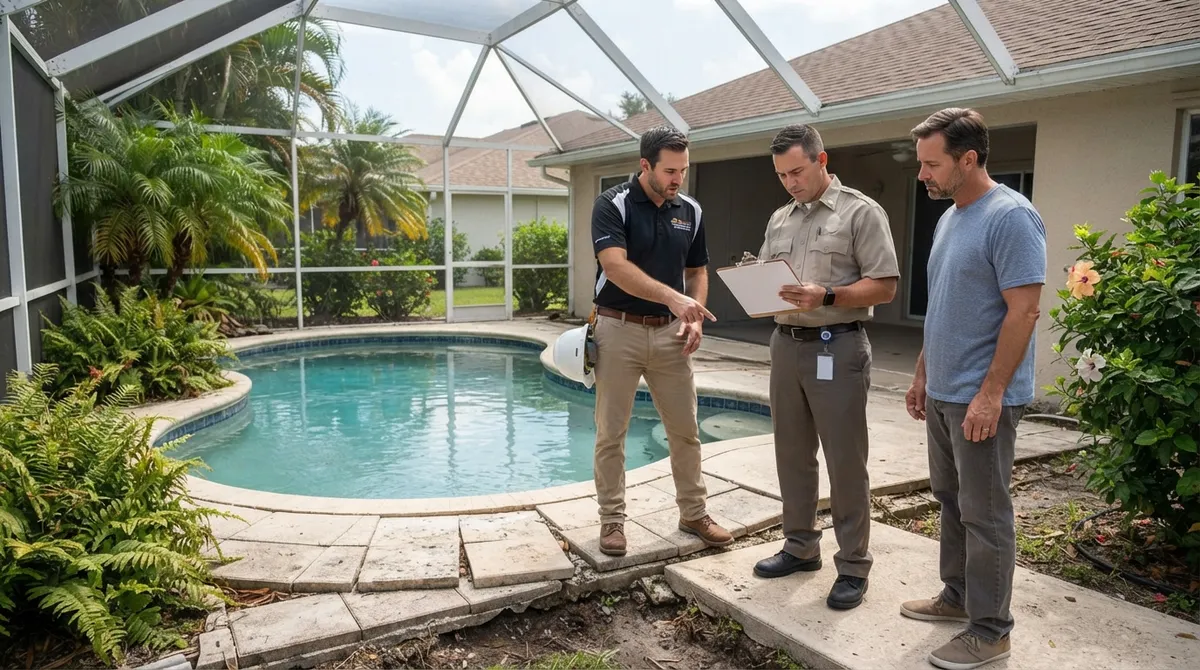
Florida's building code is statewide, but permit fees, review procedures, and enforcement policies are set locally. A pool in one county can carry a very different fee schedule than the same pool two counties over.
That is why anyone quoting you one flat number for the whole state should make you a little skeptical. The real total depends on four things:
- Your jurisdiction: the county or municipality that actually controls your address (this is not always the city on your mailing label).
- The pool itself: in-ground, above-ground, spa combination, screen enclosure, and so on.
- Your documentation: whether the original construction can be proven or has to be verified.
- Inspection results: whether the pool and its safety features pass the first time.
Not sure which office has authority over your property? Our building department lookup tool is a handy first stop.
What Does "Legalizing" an Unpermitted Pool Actually Mean?
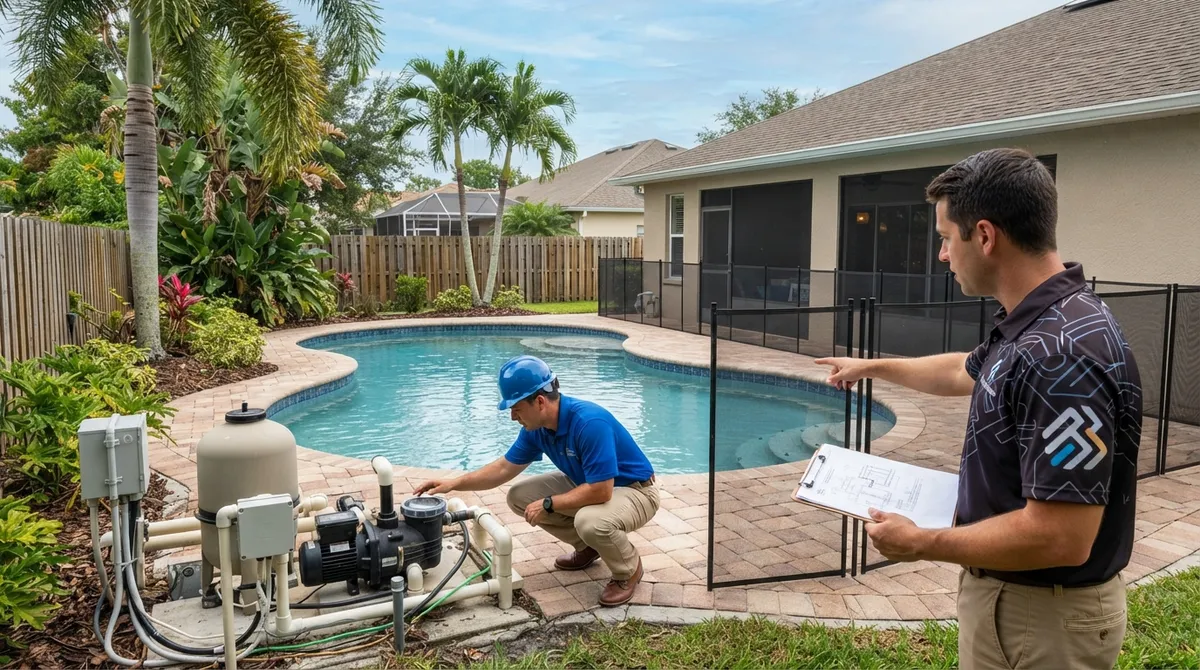
Legalizing a pool generally means applying for an after-the-fact building permit and proving the pool complies with applicable code. Paying a fee alone does not make a noncompliant pool legal. The building department will want to see that the pool is structurally sound, electrically safe, and properly protected by a barrier.
In practice, the process usually involves plans or documentation, one or more inspections, and corrections where something falls short. If you want a deeper look at this process, our guide to legalizing an existing pool in Florida covers the details.
The Main Cost Categories at a Glance
Think of the total as a stack of smaller pieces. Some apply to every pool, while others only show up when something needs fixing.
| Cost Category | What It Covers | How Predictable Is It? |
|---|---|---|
| Permit and plan-review fees | Local building department charges for processing and reviewing the application | Set by your local fee schedule |
| After-the-fact or double-permit fee | An added charge some jurisdictions apply to work done without a permit | Varies by jurisdiction |
| Engineering or architectural plans | Sealed drawings and certifications prepared by a Florida-licensed professional | Depends on pool complexity |
| Verification and testing | Confirming concealed items such as reinforcing steel and piping | Varies widely |
| Trade permits | Electrical, plumbing, gas, and barrier permits where applicable | Separate local fees |
| Corrections and upgrades | Bringing barriers, bonding, equipment, or other items up to code | Least predictable |
Permit and Plan-Review Fees
This is the cost most people think about first, and it is often the smallest piece. Your local building department publishes a fee schedule, and an after-the-fact pool application will be priced from it. Ask the department for its current schedule and its after-the-fact pool checklist so you are working from real numbers.
The Double-Permit Fee
Some jurisdictions add a penalty on top of the standard fee when work was done without a permit. Indian River County, for example, publishes after-the-fact residential pool requirements that call for a double permit fee on unpermitted pools and spas. That is one local example rather than a statewide rule, so check what your own jurisdiction does. Our article on after-the-fact permit costs in Florida explains how these fee structures typically work.
Engineering and Plans: Often the Biggest Line Item
For many unpermitted pools, the engineering package is where the budget goes. Local requirements vary, but they commonly call for sealed documents prepared by a Florida-licensed professional engineer or registered architect. Orange County, for instance, requires construction plans from a licensed engineer or registered architect as part of its residential pool permit process.
Indian River County's after-the-fact requirements go further. They call for sealed plans and an engineer's certification of the construction, along with electrical-contractor certification. That means a professional must be willing to stand behind a pool they did not build.
Because our drafting and engineering teams work in house, 1 Contractor Solutions can prepare the plan set and have our own engineer review, sign, and seal it. That keeps the process moving without waiting on an outside consultant. You can explore our plans and engineering services or our structural engineering work to see how this fits together.
When the Pool Needs Invasive Verification
Here is where costs can climb. If no one can document what is buried in the shell, the engineer may need to verify it. Indian River County's requirements, for example, ask the engineer to describe how reinforcing steel and piping were verified. That can mean testing or limited exploratory work, and the price depends on what the pool needs.
A pool with original plans, photos of the steel before the shotcrete, or a prior contractor's records is far easier and cheaper to document. If you have any paperwork at all, gather it before you start.
The Hidden Budget Items: Barriers, Electrical, and Equipment
Even a well-built pool can fail inspection on safety details. These are the items that most often generate correction costs:
- Pool barriers: fences, gates, door alarms, and self-closing, self-latching hardware. Orange County notes that a building permit is required for pool barriers.
- Electrical bonding and wiring: pump circuits, lighting, GFCI protection, and equipment bonding.
- Plumbing and gas: heater gas lines, equipment connections, and drainage.
- Equipment placement: setbacks and clearances from structures and property lines.
Each of these may require its own trade permit, and each can add a separate fee. The good news is that many of these problems are fixable once the inspector tells you exactly what is needed.
A Quick Warning: Do Not Confuse Public-Pool Fees With Your Cost
If you search online, you may stumble on Florida Statutes Chapter 514 and its fee ranges. Those figures are real, but they apply to public swimming pools and state operating permits, not your backyard pool.
For context, §514.033 (2025) lists public-pool fees such as $275 to $500 for original construction plan approval and $125 to $250 for an initial operating permit. These numbers do not estimate what a private homeowner pays to legalize a residential pool, so please do not budget from them. When in doubt, confirm whether your pool is residential or public and call your local building department.
How to Build a Realistic Estimate: 6 Steps
Instead of guessing, follow this sequence to put real numbers on your project.
- Confirm your jurisdiction. Identify the exact county or municipality that controls your address.
- Request the after-the-fact pool checklist and fee schedule. Ask the building department what documents it requires and how it prices after-the-fact permits.
- Search for existing records. Use an open permit search to see whether any permit history exists for the property.
- Gather documentation. Collect original plans, contractor records, photos, equipment manuals, and survey information.
- Get an engineer's assessment. Have a licensed professional evaluate whether the pool can be documented as built or needs correction.
- Price the corrections. Once you know the barrier, electrical, and equipment gaps, get quotes for the fixes.
Following these steps turns a vague worry into a line-item budget. It also helps you avoid paying for work you do not need.
Cost Scenarios: Why Two Pools Can Differ So Much
To show why totals vary, here is how different situations tend to play out. These are descriptions of cost drivers rather than dollar quotes, since local fees and conditions decide the final figure.
| Scenario | Likely Cost Drivers | Relative Budget |
|---|---|---|
| Well-documented pool, compliant barrier, simple equipment | Permit fee, possible after-the-fact surcharge, engineer's review | Lower |
| Pool with missing records but sound construction | All of the above plus verification of steel and piping | Moderate |
| Pool with barrier or electrical deficiencies | Everything above plus trade permits and corrective work | Higher |
| Pool with structural concerns or setback conflicts | Redesign, engineering, possible variance or construction changes | Highest |
The takeaway: documentation and compliance are the levers you can pull. The more you can prove up front, the less you tend to spend on discovery and repairs.
What Happens If the Pool Fails Inspection?
A failed inspection is not the end of the road. The inspector will list what must be corrected, you fix those items, and you schedule a reinspection. Each round can add time and sometimes fees, which is why a pre-inspection review by a professional can pay for itself.
If you receive correction comments on your application, our team handles revisions and resubmittals so the file keeps moving. And if the property already has a violation notice attached, our code compliance and violations service can help you respond properly.
Selling or Buying a Home With an Unpermitted Pool
Realtors and buyers, this one is for you. An unpermitted pool can surface during an inspection or appraisal and slow a closing. The earlier it is identified, the more options you have.
A seller can often legalize the pool before closing, a buyer can negotiate credits or escrow, or the parties can agree on a plan to complete the permit afterward. Each path has trade-offs, and lenders and insurers may have their own requirements. Our realtor and closing support and our guide on closing a home sale with unpermitted work walk through how to keep a deal on track.
If the clock is already ticking, our urgent permit rescue team works on denials, stop work orders, and held-up closings.
Tips for Contractors, Pool Builders, and Design Professionals
If you are a general contractor, pool and spa contractor, or design professional helping a client, a few habits save everyone money:
- Pull the permit history before you quote, so scope and fees are clear from day one.
- Bring in engineering early when documentation is thin.
- Coordinate the pool, barrier, and electrical permits together to avoid duplicate review rounds.
- Keep your client informed about local after-the-fact fees so there are no surprises.
We support trades with dedicated pool and spa contractor services and permit facilitation and filing, including drafting-only help if you already have your own engineer.
Why Working With a Local Permitting Team Helps
Pool rules differ across Florida's 67 counties, and the details matter. Our team has filed in more than 400 municipalities, so we know which office really controls your address and what it expects to see in an after-the-fact pool package. We prepare plans, file the application, track it, and work every reviewer comment through closeout.
Curious how other property owners have fared? You can see what 1 Contractor Solutions customers say on Google, and you can follow us on LinkedIn or follow us on Facebook for more Florida permitting tips.
Bottom Line: Get Real Numbers Before You Decide
The most useful answer to how much it costs to legalize an unpermitted pool in Florida is a personalized one. Your total will come from local permit fees, any after-the-fact surcharge, engineering, verification, and whatever corrections the pool needs. The sooner you identify your jurisdiction and assess the pool's documentation, the sooner you can budget with confidence.
You do not have to figure this out alone. If you would like a clear scope, a realistic timeline, and a team that handles the whole process from plans to final approval, get a free quote and we will tell you exactly what your pool will take. We respond within 30 minutes, day or night, and se habla español.
FAQs
How much does an after-the-fact pool permit cost in my Florida county?
It depends entirely on your local building department's fee schedule, which is set by the county or municipality rather than the state. The best move is to request the department's after-the-fact pool checklist and fee schedule, then add the cost of any engineering and corrections your pool needs.
Does Florida charge a double permit fee for an unpermitted pool?
There is no statewide double-fee rule, but some local jurisdictions do apply one. Indian River County, for example, publishes a double permit fee for unpermitted pools and spas, so check what your own building department does.
Will I need an engineer to certify an existing pool?
Often, yes. Many jurisdictions require sealed plans from a Florida-licensed engineer or architect, and some also ask for certification of the construction and the electrical work. Your building department's after-the-fact checklist will spell out exactly what it expects.
Can an unpermitted pool be legalized if it does not meet current code?
Paying the permit fee alone will not legalize a noncompliant pool. The pool generally has to be brought into compliance with applicable code, which may mean upgrading barriers, electrical bonding, or other features before it passes final inspection.
Can I sell a Florida home with an unpermitted pool?
You can, but an unpermitted pool may come up during inspections, appraisals, or lender and insurance reviews and could complicate the closing. Many sellers choose to legalize the pool beforehand, while others negotiate credits or escrow with the buyer.
We do this work every day across all 67 Florida counties. Call (866) 314-6931 and we will tell you what your situation actually requires — including when you do not need us.
Related services
Permit Facilitation & Filing
You have a crew scheduled, a client asking for dates, and a permit sitting somewhere in a queue you cannot see. We file it, w…
See the servicePlan Review Coordination
A permit in plan review is not one queue. On a commercial project it can be six queues, each with its own reviewer, its own c…
See the serviceReady to get your permit moving?
One call tells you which jurisdiction controls your project, what it will take, and what it will cost. Most of the time we can scope it on the phone.