
Blog
How Do You Legalize an Existing Pool in Florida?
Learn how to legalize an existing pool in Florida with an after-the-fact permit, required documents, safety rules, and inspections explained simply.
Key Takeaways
-
Apply for an after-the-fact permit through your local building department to legalize an unpermitted pool; the process requires documentation, code compliance verification, and inspections before final approval.
-
Pool age does not exempt it from permit requirements under Florida Statutes §553.79; even pools installed 20+ years ago must be reviewed and permitted if they were never formally approved.
-
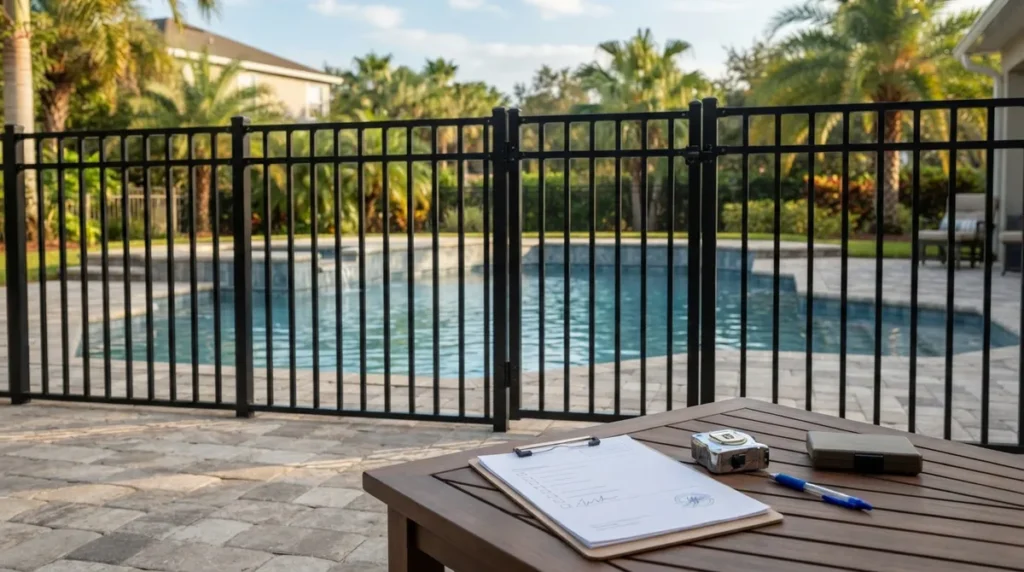
Residential pools must meet Florida Statutes §515.29 requirements: 4-foot barrier, self-closing/self-latching gates, proper electrical bonding, and no climbable features or gaps that allow child access.
-
Unpermitted pools create critical problems during home sales, refinancing, insurance claims, and code enforcement; legalizing protects your property value and avoids costly delays or coverage denials.
-
Identify your correct jurisdiction (city or county) before filing, as rules, fees, and timelines vary significantly; filing with the wrong authority wastes time and money.
-
Missing original construction plans do not disqualify you; building officials may accept professionally prepared as-built drawings, engineer letters, or testing to document existing conditions.
Maybe you just bought a home with a gorgeous backyard pool, only to learn at closing that nobody can find the permit. Or maybe you've owned the place for years and a surveyor, an appraiser, or an insurance agent just asked a question you can't answer. Take a breath. You are far from alone, and there is a path forward.
When homeowners ask how to legalize an existing pool in Florida, they are really asking how to turn an unpermitted pool into a fully approved, documented, insurable one. The good news? It's usually doable. The process typically runs through your local building department as an after-the-fact permit, and it ends with inspections that confirm the pool is safe and built to code.
In this guide, we'll walk through what legalizing a pool really means, what paperwork and inspections to expect, which safety rules matter most, and where a permitting team can save you time and stress. Grab a cold drink (maybe not by the pool just yet) and let's dig in.
What Does It Mean to Legalize an Existing Pool in Florida?
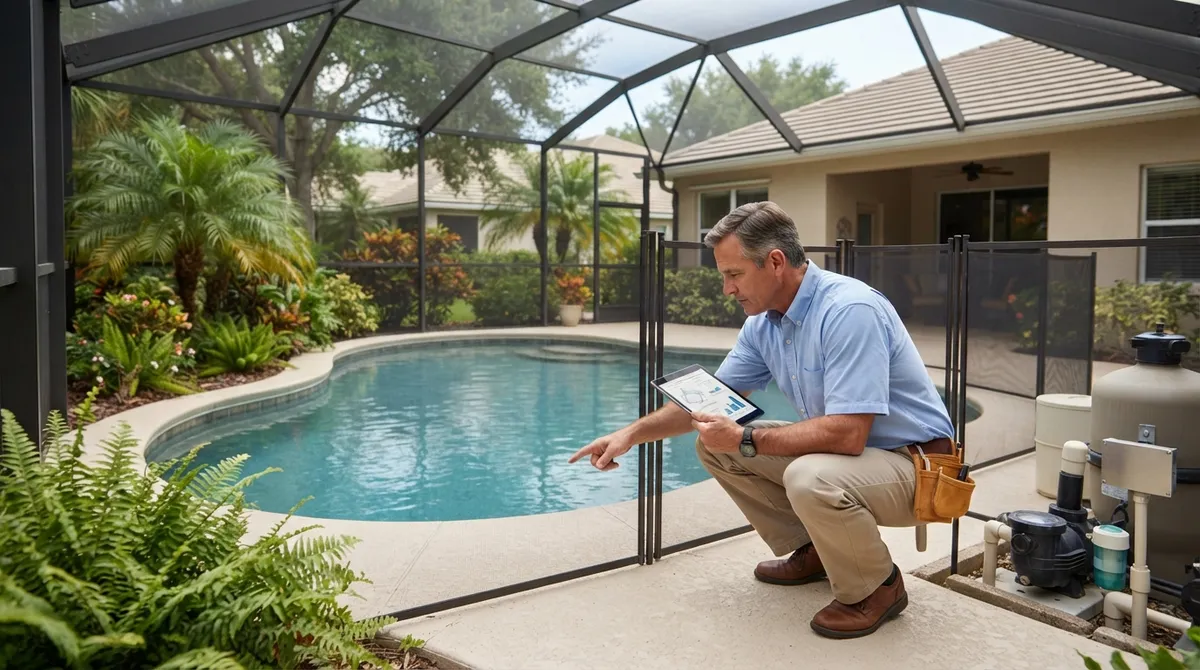
Legalizing an existing pool generally means applying to the local building department for an after-the-fact permit. You then demonstrate that the pool and its related work comply with the applicable code. Once the permit is closed with final approval, the pool becomes a documented, permitted structure on your property record.
Here's the part many owners miss: a pool's age or prior use does not make it exempt. Florida Statutes §553.79 generally requires building permits and plan review for regulated construction. A pool that has been sitting there for twenty years still needs to be reviewed if it was never permitted.
The exact forms, fees, and inspection sequence vary by city and county. That is why the first step is always figuring out which authority actually controls your address. If you're not sure, the building department lookup tool is a handy place to start, since jurisdiction lines near city borders can be surprisingly tricky.
Why Owners End Up With an Unpermitted Pool
Nobody wakes up planning to skip a permit. Most of the time, it happens one of these ways:
- A previous owner added the pool and never closed out the permit.
- A contractor said they would pull the permit and never did.
- The permit was issued but expired before final inspection.
- Upgrades like a new deck, heater, or electrical work were done without paperwork.
- The property changed hands and the file was simply never reconciled.
If that last bullet sounds familiar, you may find our guide on what to do when a prior owner skipped permits in Florida helpful.
Why Legalizing Your Pool Is Worth the Effort
It might be tempting to leave sleeping dogs lie. But an unpermitted pool tends to wake up at the worst possible moments, usually when money or safety is on the line.
| Situation | How an Unpermitted Pool Can Cause Trouble |
|---|---|
| Selling your home | Buyers, lenders, and title companies may flag it and delay or derail closing |
| Buying a home | You inherit the problem, along with any code corrections |
| Insurance claims | Coverage questions can arise if unpermitted work is involved |
| Refinancing or a HELOC | Appraisers may note unpermitted improvements |
| Code enforcement | A complaint or neighbor report can trigger a violation notice |
| Safety | Missing barriers or electrical bonding put people at real risk |
Beyond the paperwork, there's a safety angle that matters deeply. Pool barriers, gates, and electrical bonding are there to protect children and swimmers. Legalizing the pool means someone qualified has verified those protections are in place.
Step-by-Step: How the After-the-Fact Pool Permit Process Works
Every jurisdiction does things a little differently, but most follow a similar rhythm. Here is the general path from "uh-oh" to "all set."
- Identify the correct authority. Confirm whether your property sits in a city or in unincorporated county territory. This determines who accepts the application.
- Check for existing records. Search for any open, expired, or closed permits tied to the address. Our open permit search tool can help you see what's already on file.
- Document the pool as it exists today. Gather dimensions, location, equipment details, and photos. A site plan showing the pool's position relative to property lines and the home is usually required.
- Prepare the after-the-fact application and plans. This may include drawings, structural details, and electrical or plumbing information.
- Submit and respond to review comments. Reviewers may ask for clarifications or corrections before approving.
- Complete required corrections and inspections. Fix any deficiencies, then schedule inspections.
- Receive final approval and close the permit. Keep your final documentation somewhere safe for future sales or refinancing.
Fees and timelines are set locally and depend on the scope of work and any corrections needed. We could not find a single statewide standard for either, so be wary of anyone who quotes a one-size-fits-all number without looking at your property. If you want a feel for how costs behave in general, take a look at our breakdown of after-the-fact permit costs in Florida.
What Documents Will the Building Department Want?
The paperwork requirement is case-specific, but here is what's commonly requested for an existing pool.
| Document | What It Shows |
|---|---|
| Site plan | Pool location, setbacks, barrier layout, and relationship to the home |
| Pool dimensions and depth | Size, shape, and depth profile |
| Construction details | Shell type, structure, and any decking |
| Equipment information | Pump, filter, heater, and similar equipment |
| Electrical and plumbing details | Bonding, grounding, wiring, and piping |
| Barrier and safety information | Fence, gates, alarms, or covers |
Here's what surprises a lot of folks: if the original plans can't be found, you are not automatically out of luck. In those cases, the building official may accept professionally prepared drawings. Depending on the situation, they may also require testing, exposing concealed work, or repairs before approval. That is where as-built drawings and engineer letters become genuinely useful, because they document what's actually in the ground rather than what someone once planned to build.
Florida Pool Safety Rules You Need to Know
Safety compliance is often the biggest part of legalizing an existing pool. A pool can be beautifully built and still fail inspection because of a gate latch or a gap in the fence.
Residential Barrier Requirements Under Florida Law
Florida Statutes §515.29 sets out the pool safety expectations for residential pools. In plain English, the key points include:
- A barrier at least 4 feet high measured on the outside.
- Limits on openings and on climbable features that would let a child get over or through.
- Gates that open outward and are self-closing and self-latching.
- A latch release mechanism positioned on the pool side, as the statute specifies.
- Defined conditions for using an above-ground pool structure as part of the barrier.
The Florida Building Code's residential pool provisions can add further requirements. These may cover barriers, doors or other access points, alarms or safety covers, electrical bonding, and pool equipment. Which code edition applies depends on your permit and jurisdiction, so have the local building department confirm what governs your pool.
Quick Safety Self-Check Before You Apply
Before you file, walk the property and look for these common stumbling blocks:
- Gates that swing inward or fail to latch on their own.
- Fence gaps or horizontal rails that a child could climb.
- Doors from the house that open directly to the pool without alarms or other protection.
- Exposed or unbonded metal equipment and rails.
- Missing or outdated equipment labeling and installation details.
Catching these early can save you a failed inspection and a second round of fees.
What to Expect During Inspections
Inspections for an after-the-fact permit are designed to verify existing work and confirm that the safety features function. The inspector is not there to punish you. They are there to confirm the pool is safe and built to the applicable standard.
Keep in mind that approval is not guaranteed just because the pool has been in use. A failed inspection typically means corrections and a reinspection. Ask the building department which inspections and documents are required before you arrange work or cover any components, because concealed items may need to be exposed or otherwise verified.
For a deeper look at what inspectors check, see our article on what inspections Florida after-the-fact permits require, or explore our inspection support services.
Residential vs. Public Pools: Two Different Paths
Not every pool follows the same rulebook, and mixing them up is a common source of confusion.
| Feature | Residential Pool | Public Pool |
|---|---|---|
| Main safety law | Florida Statutes §515.29 plus the Florida Building Code | Florida Statutes Chapter 514 and Department of Health rules |
| Building permit | Through the local building department | Through the local building department |
| Health operating permit | Generally not applicable | Handled through the county health department |
| Typical examples | Single-family backyard pools | HOA, condo, hotel, and community pools |
Under Florida Statutes §514.03, an application for a public-pool operating permit is required before filing for a building permit to construct, develop, or modify a public pool. Local governments may also review and inspect for Florida Building Code construction compliance. In other words, a public pool may need a health operating permit in addition to local building approvals. If you manage a community pool, our services for property managers are built for exactly this kind of layered approval.
Should You Do It Yourself or Hire a Permitting Team?
Some homeowners tackle after-the-fact permitting on their own, and that can work for a simple situation. But once you add missing plans, a fence that needs rework, electrical questions, or a closing date breathing down your neck, the process can eat weeks of your life.
That is where a team like 1 Contractor Solutions comes in. We act as Florida's outsourced permitting department. We figure out which jurisdiction controls your pool, prepare or review the drawings, file the application, track it, and work every reviewer comment. Our drafting and engineering are in house, and our own engineer signs and seals the work, so when a reviewer flags something we can fix it quickly rather than waiting on an outside consultant.
We handle after-the-fact and expired permits across all 67 Florida counties, including files other people decline. Whether you're a homeowner, a pool and spa contractor, or a realtor trying to save a closing, we can help you get from unpermitted to approved. And if your closing date is the clock that's ticking, our urgent permit rescue service is built for exactly that kind of pressure.
If you'd like to see how we've helped others, you can visit us on Google — 1 Contractor Solutions and read what customers have to say, or follow us on LinkedIn and follow us on Facebook for Florida permitting tips.
Common Mistakes to Avoid When Legalizing a Pool
A little foresight goes a long way. Here are the pitfalls we see most often:
- Assuming age equals exemption. A pool's age does not remove the permit requirement.
- Covering up concealed work. Pouring new decking or burying lines before asking what must be inspected can force costly demolition.
- Ignoring the barrier. Fence and gate issues are among the easiest things to fail.
- Guessing the jurisdiction. Filing with the wrong authority wastes time and fees.
- Quoting from a template. Fees and timelines are local, so verify before you budget.
- Waiting until the last minute. Closings, refinances, and insurance renewals move faster than permits do.
If you're worried about the bigger picture, our guide on how to legalize unpermitted work in Florida covers the broader process, and our article on the penalty for building without a permit in Florida explains why acting sooner is almost always better than later.
Your Pool Can Be Legal, Safe, and Stress-Free
Legalizing an existing pool in Florida is very much a solvable problem. Start by confirming your jurisdiction, document the pool as it stands, address any barrier or electrical safety gaps, and move through the after-the-fact permit and inspections until it is closed with final approval. Rules and fees vary by city and county, so always confirm details with the authority that controls your address. For the underlying law, you can read the Florida Statutes on residential swimming pool safety directly.
You don't have to figure it all out alone. If you'd like a clear plan, honest guidance, and a team that handles the paperwork from start to finish, we'd love to help. Get a free quote today and let's turn that unpermitted pool into a fully permitted one, so you can get back to enjoying the water.
FAQs
Can I legalize a pool that was built without a permit in Florida?
In most cases, yes! You typically apply to your local building department for an after-the-fact permit, document the pool, fix any code or safety issues, and pass inspections. Requirements vary by city and county, so it's smart to confirm the process with the authority that controls your address.
What documents are needed to permit an existing pool?
Commonly requested items include a site plan, pool dimensions and location, construction details, equipment information, and electrical or plumbing details. If original plans are missing, the building official may accept professionally prepared drawings or ask for testing or exposure of concealed work.
What are Florida's pool fence and gate requirements?
Under Florida Statutes §515.29, a residential pool barrier must be at least 4 feet high on the outside, with limits on openings and climbable features. Gates must open outward and be self-closing and self-latching, with the release mechanism positioned on the pool side as the statute specifies.
How much does an after-the-fact pool permit cost, and how long does it take?
There's no single statewide fee or timeline, because both are set locally and depend on your scope of work and any required corrections. The best move is to confirm with your local building department or work with a permitting team that can estimate it for your specific property.
Do public pools need a Department of Health permit as well as a building permit?
Yes, they can. Public pools follow Florida Statutes Chapter 514 and Department of Health rules, with operating permits and inspections handled through county health departments. A public pool may need that health operating permit in addition to local building approvals.
We do this work every day across all 67 Florida counties. Call (866) 314-6931 and we will tell you what your situation actually requires — including when you do not need us.
Related services
Permit Facilitation & Filing
You have a crew scheduled, a client asking for dates, and a permit sitting somewhere in a queue you cannot see. We file it, w…
See the servicePlan Review Coordination
A permit in plan review is not one queue. On a commercial project it can be six queues, each with its own reviewer, its own c…
See the serviceReady to get your permit moving?
One call tells you which jurisdiction controls your project, what it will take, and what it will cost. Most of the time we can scope it on the phone.