
Blog
How Does Multifamily After the Fact Permitting Work in Florida?
Unpermitted apartment work? Learn how multifamily after the fact permitting works in Florida, what documents you need, and how to move forward.
Key Takeaways
-
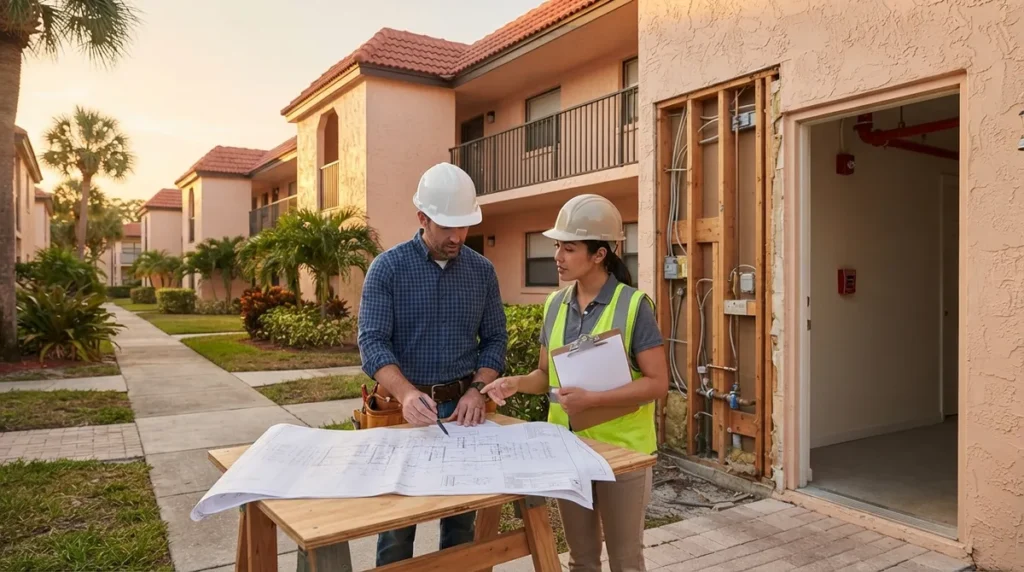
Multifamily properties almost always require permits; the single-family exemption for minor work does not apply to apartments, rental duplexes, or condo and townhome communities unless the local building department says otherwise in writing.
-
The permitting authority is the specific city or county with jurisdiction over the parcel, which may differ from the mailing address, so confirm jurisdiction before spending money on drawings.
-
Expect coordination beyond a standard building permit: changes affecting units, egress, fire separations, alarms, sprinklers, or shared systems may require fire-authority review and possibly zoning approval.
-
Concealed work may require selective wall or ceiling openings, testing, or engineering evaluation; a well-prepared engineer's letter and a pre-application meeting can help limit how much must be opened.
-
Do not demolish or remove anything before an engineer evaluates it, and gather invoices, photos, and prior inspection records to document the work's history.
-
There is no statewide ATF fee schedule or universal timeline; penalties vary by locality, and costs and review times should be confirmed with the local building department for each project.
Picture this: you're closing on a fourplex, refinancing an apartment building, or finally cleaning up a property your last manager left in a mess. Then someone pulls the permit history, and there it is. A converted unit, a new electrical panel, a rebuilt stairwell, and not a single permit on file. Take a breath. This happens more often than you'd think, and it is usually fixable.
Multifamily after the fact permitting in Florida is the local review process for work that was built without the required permit. It is not a magic eraser, and it does not automatically legalize anything. But with the right documentation, the right professionals, and a realistic plan, most owners can work through it. This guide walks you through how the process works, what to expect, and how to avoid the most common stumbling blocks, whether you are a general contractor, an investor, a property owner, or a design professional supporting a client.
What Is After-the-Fact Permitting for Multifamily Properties?
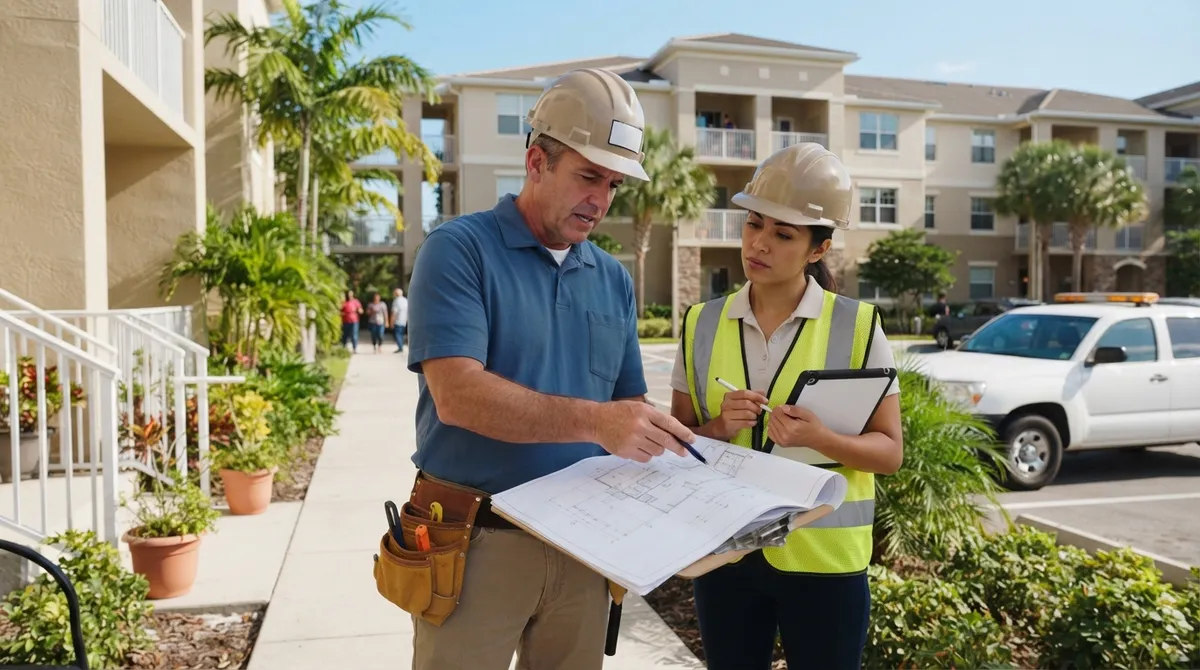
An after-the-fact (ATF) permit is your local building department's process for reviewing work that has already been done without the permits it required. Florida generally requires a permit before covered construction, alteration, repair, demolition, or regulated electrical, plumbing, mechanical, or gas work begins. That baseline comes from Florida Statutes §553.79 and Florida Building Code §105.1.
Here is the key point for multifamily owners: the narrow statutory exemption for certain low-value work on single-family homes does not stretch to apartment buildings, duplexes used as rentals, or condominium and townhome communities. If you own a multifamily property, assume permits are required unless your local building department tells you otherwise in writing.
An ATF permit does not mean the city or county simply stamps what already exists. You apply, you provide documentation, and you demonstrate that the work complies with the applicable building, fire, zoning, and other local requirements. For a deeper look at the basics, see our guide on what after-the-fact permitting in Florida really means.
Why Multifamily ATF Permits Are Different From Single-Family Fixes
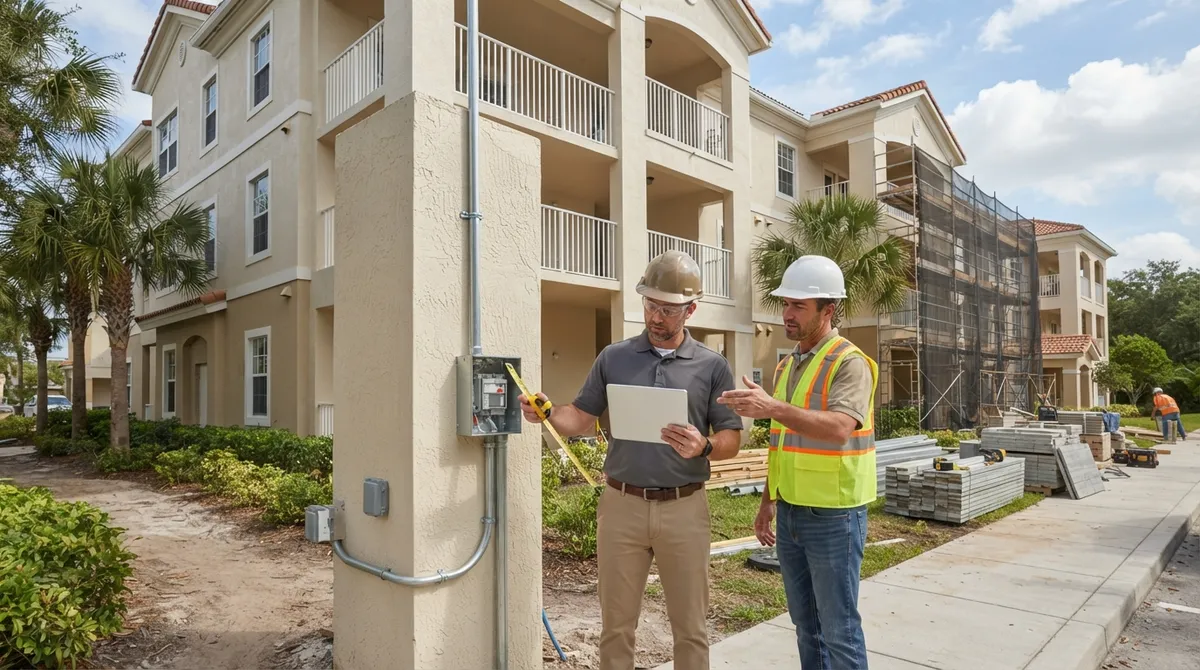
If you have read about legalizing a backyard patio or a kitchen remodel, you may think multifamily works the same way. It doesn't. Apartment buildings share walls, floors, utilities, exits, and fire protection. That means one unpermitted change can ripple across the whole structure.
Depending on the work, a reviewer may look at:
- Structural elements: removed or altered walls, added floors, balconies, stairs, and load paths
- Electrical, plumbing, and mechanical systems: panels, water heaters, HVAC replacements, gas lines, and shared risers
- Fire protection and life safety: alarms, sprinklers, fire separations, rated assemblies, and emergency lighting
- Egress and occupancy: exit paths, door widths, unit counts, and changes of use
- Accessibility: routes and unit features that must meet applicable standards
- Site and zoning: parking, setbacks, density, and unit conversions
A change that touches occupancy, egress, fire separations, alarms, sprinklers, or shared building systems may require coordination beyond a standard building permit, including fire-authority review. That is why multifamily ATF projects tend to take more planning than their single-family cousins.
Who Actually Decides? Understanding the Authority Having Jurisdiction
There is no single statewide ATF desk in Florida. The permitting authority is the city or county with jurisdiction over your property, and that is a bigger deal than it sounds. Application forms, required drawings, review steps, inspection procedures, fees, penalties, and options for exposing or removing concealed work all vary by jurisdiction.
Property near a city line can be especially tricky. Your mailing address may say one city while the parcel actually sits in unincorporated county territory, or the other way around. Before you spend a dollar on drawings, confirm who truly has authority. Our building department lookup tool can point you in the right direction, and our article on which Florida jurisdiction reviews your project explains why this step matters so much.
The local building official always keeps final approval and enforcement authority. A permitting professional can guide the process, but the department decides.
How to Get an After-the-Fact Permit for Multifamily Work in Florida
While every jurisdiction does things a little differently, the overall path looks similar almost everywhere. Here is a practical roadmap.
- Identify the unpermitted work. Walk the property and list everything that was changed, added, removed, or replaced. Check unit interiors, mechanical rooms, roofs, balconies, and common areas.
- Search the permit history. Pull open, expired, and closed permits so you know exactly what is and is not on record. Our open permit search tool is a handy starting point.
- Confirm the jurisdiction and process. Ask the building department how they handle ATF or "permit after construction" applications and whether they require a pre-application meeting.
- Create as-built documentation. Licensed professionals typically measure and draw what exists today. See our overview of as-built drawings for what these packages usually include.
- Get engineering where needed. Structural, electrical, plumbing, and mechanical conditions often need an evaluation and a sealed letter or drawings.
- Submit the application and pay fees. Expect permit fees plus any local ATF charges or penalties.
- Respond to plan-review comments. Reviewers frequently ask for clarifications, so quick, accurate responses keep things moving.
- Complete inspections and close the permit. Inspectors verify the work, and you may need to correct deficiencies before final approval.
If that list feels like a lot, you are not alone. This is exactly the kind of workflow our permit facilitation and filing team handles every day.
What Documents and Drawings Will You Probably Need?
Local officials may require plans, specifications, and inspections to establish that existing work complies with the Florida Building Code. For multifamily properties, the packet often includes more than you might expect. The table below shows common items and why reviewers ask for them.
| Document | Why It Is Requested | Who Usually Prepares It |
|---|---|---|
| As-built floor plans | Shows the current layout, unit counts, and egress paths | Drafter or design professional |
| Site plan | Verifies setbacks, parking, and exterior additions | Drafter or surveyor |
| Structural evaluation or letter | Confirms framing, connections, and load paths meet code | Licensed engineer |
| MEP drawings or letters | Documents electrical, plumbing, and mechanical installations | MEP engineer |
| Fire and life-safety details | Confirms alarms, sprinklers, and rated assemblies | Engineer or fire protection contractor |
| Contractor information | Identifies licensed contractors for open permits | Contractor or owner |
| Photos and records | Supports the timeline and the scope of work | Owner or property manager |
Our in-house team prepares many of these items, including structural engineering, MEP engineering, and engineer letters, so you are not chasing outside consultants.
Will They Make You Open Walls and Ceilings?
This is the question that keeps owners up at night, and the honest answer is: sometimes. Where work is concealed behind drywall, above ceilings, or inside shafts, the local authority may require selective opening, testing, engineering evaluation, corrective work, or even removal and reconstruction. The exact requirements are decided case by case by the local building official.
A few things often influence that decision:
- How critical the concealed element is to safety, such as framing connections, wiring, or fire-rated assemblies
- Whether photos, invoices, or prior inspection records exist
- The engineer's confidence level based on non-destructive observation
- The jurisdiction's own policies
The best move is to ask early. A well-prepared engineer's letter paired with targeted exploratory openings can sometimes save you from tearing into far more of the building than necessary. If you want a closer look at what inspectors do, check out what happens during a Florida ATF site inspection.
What About Fire, Life Safety, and Zoning Approvals?
An ATF building permit is rarely the only approval in play for apartments. If the unpermitted work changed the number of units, altered exit paths, modified fire-rated walls, or touched alarms or sprinklers, expect coordination with the fire authority. Zoning can also enter the picture, especially if units were added or converted, because density and parking limits may apply.
Here is the tough truth: sometimes the work simply cannot be approved as built. When existing work does not meet the Florida Building Code, you may need corrective work or removal before the local authority will sign off. Zoning problems, such as an extra unit that exceeds allowed density, can be even harder because they are not purely technical fixes. That is why a feasibility review up front is worth its weight in gold, and our code compliance violation support can help you sort out the options.
How Much Will It Cost, and How Long Will It Take?
Let's be refreshingly honest. The sources reviewed did not provide a reliable statewide count of multifamily ATF permits, average ATF costs, or average processing times, and there is no single statewide ATF fee schedule. Any article promising you a universal price tag is guessing. Your real numbers come from your local building department and the scope of your project.
That said, here is what we can point to:
| Item | What to Know |
|---|---|
| Penalties and extra fees | Vary by city and county. For example, Miami Beach's published guidance describes a $500 charge plus double permit fees for work started before a permit, with higher charges for repeat offenses. That is a local example, not a statewide rule. |
| Review timeframes | Florida Statutes §553.792 (2025) sets a 60-business-day decision timeframe for certain complete and sufficient multifamily applications of no more than 50 units when a local-government plans reviewer is used. It is not a guarantee of approval or a universal ATF timeline. |
| Professional costs | Depend on property size, number of units, amount of unpermitted work, and whether engineering and testing are needed. |
| Corrective work | Unknown until inspection and review identify any deficiencies. |
For a broader look at pricing drivers, you might enjoy our article on after-the-fact permit costs in Florida.
What Happens If You Do Nothing?
It is tempting to hope nobody notices, but unpermitted multifamily work has a way of surfacing at the worst moments. It can lead to additional permit charges and separate code-enforcement consequences. It can also complicate sales, refinancing, insurance claims, and tenant safety.
Common trouble spots include:
- Lenders or title companies discovering open or missing permits during due diligence
- Insurance carriers questioning coverage after a loss tied to unpermitted work
- Code-enforcement notices that escalate with fines
- Buyers walking away or renegotiating the price
If a closing is on the clock, our article on whether a permit hold can delay a Florida real estate closing is worth a read, and our realtor and closing support team works with agents and investors on tight timelines.
How a Florida Permitting Professional Can Help
You do not have to figure this out alone. A permitting-services professional can help you identify the correct jurisdiction and permit path, assemble as-built drawings and supporting records, coordinate licensed design professionals and contractors, respond to plan-review comments, and arrange inspections. The local authority still holds approval and enforcement power, but a good guide can save you weeks of back-and-forth.
At 1 Contractor Solutions, we act as Florida's outsourced permitting department. We work across all 67 counties, handle drafting and sealed engineering in house, and respond fast, which matters when a lender, buyer, or code officer is waiting. Whether you are a general contractor supporting a client, an investor evaluating a deal, or an owner trying to get ahead of a notice, our after-the-fact and expired permit services were built for exactly these situations. You can also see what clients say by visiting our 1 Contractor Solutions profile on Google.
Practical Tips Before You Start
- Gather every record you can. Old invoices, photos, tenant communications, and prior inspection reports all help tell the story.
- Do not demolish anything yet. Removing evidence before an engineer evaluates it can make approval harder.
- Ask about a pre-application meeting. Many departments will tell you what they expect before you pay for drawings.
- Plan for tenants. If openings, testing, or corrective work are required, coordinate schedules and notices.
- Budget for surprises. Concealed conditions are the biggest wildcard in multifamily ATF projects.
- Check licensing. Make sure any contractor involved holds the proper Florida license; our guide on who can pull a permit in Florida explains the basics.
Ready to Move Forward? Let's Talk
Multifamily after the fact permitting in Florida can feel heavy, but it is a problem with a path forward. Start by learning what is on record, confirm your jurisdiction, build solid as-built documentation, and bring in engineering where it counts. Take it one step at a time, and keep your focus on getting the building safely and legally closed out.
If you would like a friendly, knowledgeable team in your corner, we would love to help. Get a free quote and tell us about your property. You can also follow us on LinkedIn or follow us on Facebook for Florida permitting tips. For official statute language, you can review Florida Statutes §553.792 on the Florida Senate website.
FAQs
How do I get an after-the-fact permit for unpermitted multifamily work in Florida?
You apply through the city or county that has jurisdiction over your property, usually with as-built drawings and any needed engineering. The local building department reviews the work, may require inspections or corrections, and decides whether to approve it. A permitting professional can help you assemble the packet and respond to reviewer comments.
Will the building department make me open walls or ceilings?
Possibly. When work is concealed, the local building official may require selective opening, testing, an engineering evaluation, or corrective work. It is decided case by case, so asking early and bringing a solid engineer's letter can help limit how much has to be opened.
How much do after-the-fact permits cost for multifamily properties in Florida?
There is no single statewide fee schedule, so costs depend on your local jurisdiction and the scope of work. Some cities add penalties, such as Miami Beach's published $500 charge plus double permit fees for work started before a permit. Your local building department can give you the most accurate numbers.
Can unpermitted multifamily work be legalized if it does not meet current code?
Not always as-is. If the work does not comply with the Florida Building Code, the local authority may require corrective work or removal before approval. Zoning issues, like an extra unit beyond allowed density, can be even trickier, so a feasibility review early on is smart.
Do multifamily after-the-fact permits require fire or zoning approval?
Often, yes, if the work touched occupancy, egress, fire separations, alarms, sprinklers, or the number of units. These changes may need fire-authority review and zoning sign-off on top of the building permit. Your local departments will confirm exactly which approvals apply.
We do this work every day across all 67 Florida counties. Call (866) 314-6931 and we will tell you what your situation actually requires — including when you do not need us.
Related services
Permit Facilitation & Filing
You have a crew scheduled, a client asking for dates, and a permit sitting somewhere in a queue you cannot see. We file it, w…
See the servicePlan Review Coordination
A permit in plan review is not one queue. On a commercial project it can be six queues, each with its own reviewer, its own c…
See the serviceReady to get your permit moving?
One call tells you which jurisdiction controls your project, what it will take, and what it will cost. Most of the time we can scope it on the phone.