
Blog
How Do You Permit Unpermitted Construction in Florida?
Learn how to permit unpermitted construction in Florida: after-the-fact steps, documents, inspections, costs, and what happens if you wait.
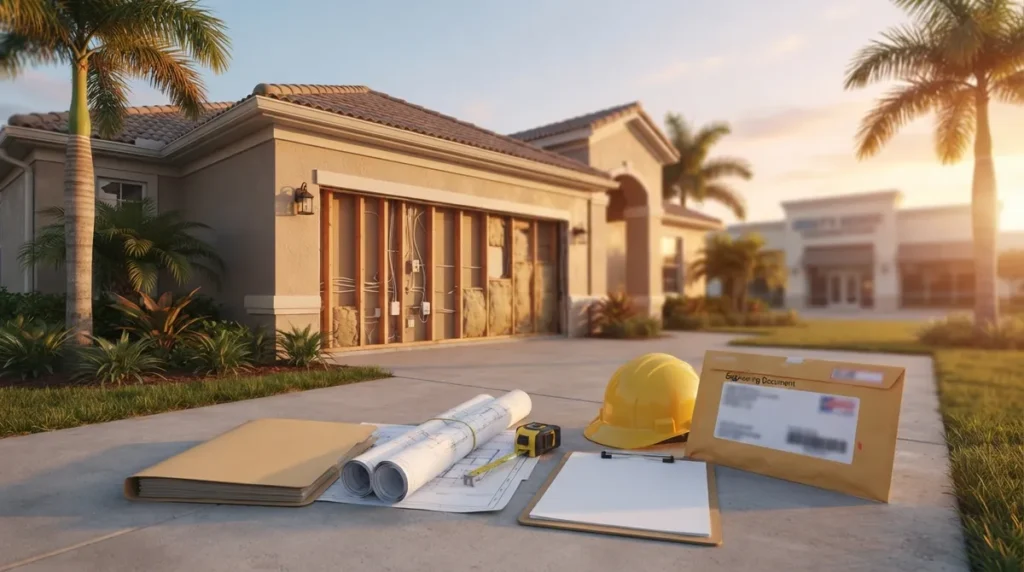
Key Takeaways
-
Florida has no statewide after-the-fact permit application, fee, or timeline; each city or county building department sets its own process, so confirm jurisdiction first.
-
Check the property's permit history for open, expired, or unfinished permits before filing anything, since these can be closed out rather than starting from scratch.
-
Document existing work with photos, measurements, contractor details, and invoices, and prepare as-built plans, often with sealed engineering letters for structural elements.
-
Approval is not automatic: the work must meet the Florida Building Code, and corrections or partial redos may be required before the permit closes.
-
Inspectors may require opening concealed walls or ceilings, but photos, documentation, and engineer field verification can sometimes limit how much must be opened.
-
Leaving unpermitted work unresolved can bring fines, stop-work orders, liens, and complications during a sale, refinance, appraisal, or insurance claim.
Here's something we hear almost every week: "I just bought the house, and now I find out the lanai was never permitted." Or maybe the previous owner finished the garage conversion without telling anyone. Or a contractor disappeared halfway through a remodel. First, take a breath. You are far from alone, and in most cases there is a clear path forward.
If you need to permit unpermitted construction in Florida, the good news is that the state has well-worn processes for exactly this situation. The tricky part is that there is no single statewide application. Each city and county building department runs its own after-the-fact process, with its own forms, fees, and expectations. In 2026, that local variation still catches plenty of owners off guard.
In this friendly guide, we'll walk you through what the law says, how the after-the-fact process generally works, what documents you'll need, what inspectors may ask for, and what can happen if you do nothing. Whether you're a homeowner, a general contractor, a realtor, or a solar company cleaning up a past install, you'll leave with a practical plan.
What Does Florida Law Say About Unpermitted Work?
Under Florida Statutes §553.79, it is generally unlawful to construct, alter, repair, or demolish a building without first obtaining a permit from the appropriate enforcing agency, unless an exception applies. In practice, that enforcing agency is your local city or county building department.
So when work gets done without a required permit, the property is out of step with the law, even if the work looks perfect. The fix is not to hide it. The fix is to bring it into the system through that local office.
Here is the key thing to understand: Florida does not have one statewide after-the-fact permit application, fee schedule, or timeline. What works in Tampa may differ from what works in Miami-Dade or Orange County. That is why the very first step is figuring out who actually has jurisdiction over your address.
Why Jurisdiction Matters More Than You Think
Properties near city lines can be tricky. An address that says "Tampa" might sit in unincorporated Hillsborough County. A home with a Fort Myers mailing address could be under Lee County rather than the city. Filing with the wrong office wastes weeks. Our building department lookup tool can help you confirm which authority controls your property before you submit anything.
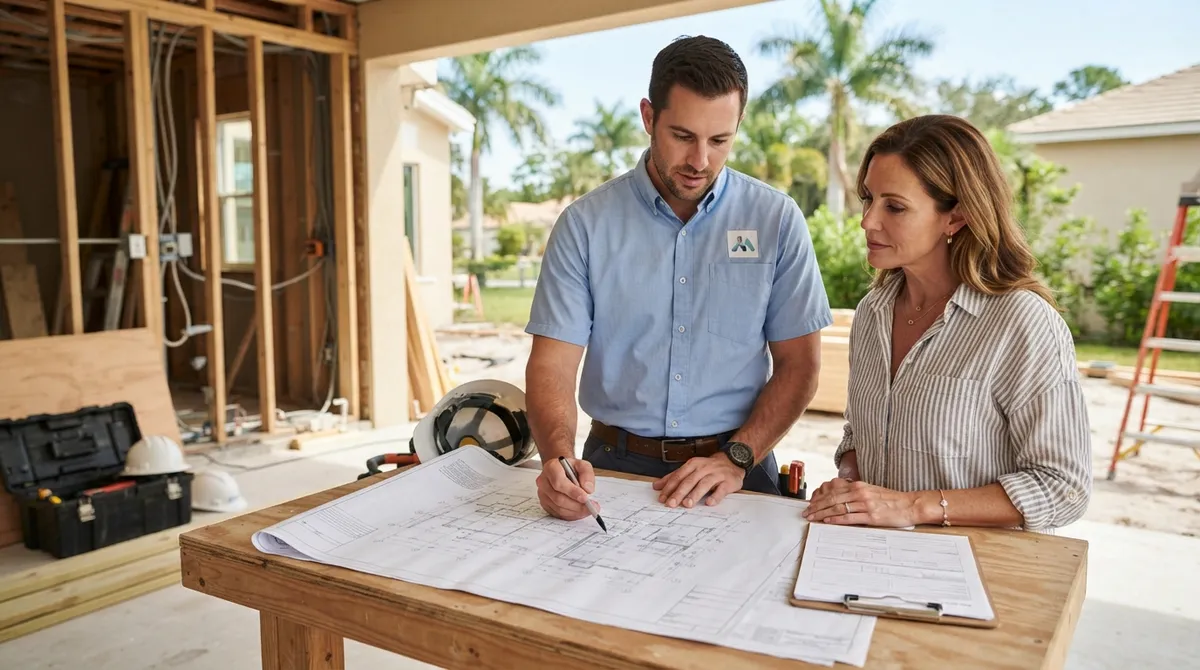
What Is an After-the-Fact Permit?
An after-the-fact permit is a local process for documenting and reviewing work that began, or was fully completed, without a required permit. Think of it as asking the building department to take a second look and officially recognize the work, provided it meets code.
Notice the phrase "provided it meets code." Applying does not guarantee approval. The department will review whether the work satisfies the Florida Building Code and any local requirements. Sometimes it passes with minor tweaks. Sometimes corrections are needed. Occasionally, parts must be redone.
If you want a deeper dive, our after-the-fact and expired permits service page explains how we approach these files, and our guide on what after-the-fact permitting in Florida really means covers the fundamentals.
Step-by-Step: How to Permit Unpermitted Construction in Florida
Every jurisdiction differs, but most follow a similar rhythm. Here is a practical roadmap you can use.
- Confirm your jurisdiction. Determine whether your property is inside a municipality or in unincorporated county territory.
- Check the permit history. Look for open, expired, or closed permits tied to the address. Sometimes a permit was pulled and simply never finished.
- Contact the building department. Ask how they handle after-the-fact applications, what they require, and what fees apply.
- Document the existing work. Gather photos, measurements, contractor information, and any receipts or invoices.
- Prepare as-built plans. Many departments want drawings showing what is actually there, often with engineering support.
- Submit the application. File the permit application and supporting documents the way that office requires.
- Respond to review comments. Reviewers may request corrections, additional details, or sealed documentation.
- Pass inspections. Complete required inspections and close out the permit.
Skipping step two is a common mistake. Our free open permit search tool can help you spot open or expired permits before you apply for anything new.
What Documents and Drawings Will You Need?
Local departments commonly request a mix of the following. The exact list depends on the work and the jurisdiction.
- A completed permit application
- Plans or as-built drawings of the existing work
- Photographs of the completed work and any visible framing, wiring, or plumbing
- Contractor details, if a contractor performed the work
- Property survey or site plan, especially for additions, pools, and structures
- Sealed engineering documentation or an engineer letter, where structural or life-safety elements are involved
When structural elements are involved, such as an enclosed patio, new roof framing, or a pool cage, sealed documentation is often part of the conversation. That is where as-built drawings and engineer letters become so valuable. They tell the reviewer, in a language they trust, exactly what exists and that it is safe.
| Type of Unpermitted Work | Typical Documentation Requested | Engineering Involvement |
|---|---|---|
| Room addition or enclosed lanai | As-built plans, site plan, photos | Often structural review and sealed letter |
| Reroof | Roofing details, product approvals, photos | Sometimes, depending on deck and truss conditions |
| Electrical or plumbing changes | Scope description, photos, trade details | Sometimes MEP review |
| Pool or pool cage | Site plan, as-builts, barrier details | Often structural or safety verification |
| Interior remodel | Floor plan, scope, photos | Depends on structural or system changes |
Will Inspectors Make You Open Walls?
It's the question everyone worries about, so let's address it honestly. Inspections are commonly part of the after-the-fact review. If the work has been concealed behind drywall, ceilings, or finishes, the building department may require access to those concealed components. That can mean opening a wall or ceiling so an inspector can verify framing, wiring, or plumbing.
That doesn't happen in every case, and the scope is usually targeted rather than a full demolition. Sometimes documentation, photos taken during construction, or an engineer's field verification can reduce what has to be opened. Any deficiencies found generally need to be corrected before the permit is approved.
Our article on what inspections Florida after-the-fact permits require breaks this down in more detail, and our inspections service can help you prepare so there are no surprises on inspection day.
What Does It Cost?
Honestly, it varies, and anyone who quotes you one flat statewide number is guessing. Florida has no uniform after-the-fact permit fee. Local departments may charge additional fees on top of the normal permit fee for work done before permitting, and your total will also depend on drafting, engineering, and any corrective construction.
| Cost Factor | What Influences It |
|---|---|
| Local permit fees | Jurisdiction, project value, and whether penalty or additional fees apply |
| Plans and as-built drawings | Size and complexity of the work |
| Engineering and sealed letters | Structural, electrical, or mechanical elements involved |
| Corrections and opening walls | Whether concealed work meets code |
| Inspection fees | Number and type of required inspections |
For a closer look at budgeting, read our breakdown of after-the-fact permit costs in Florida.
What Happens If You Don't Permit Unpermitted Work?
We never want to scare anyone, but it is worth knowing what is on the table. Consequences can include additional local fees, code-enforcement fines, stop-work action, and liens against the property.
Florida Statutes §162.09 sets general administrative fine ceilings of up to $250 per day for a first violation and $500 per day for a repeat violation under the provision commonly cited, though other provisions and circumstances can change those limits. Separately, licensing-related enforcement under §489.127 can carry civil penalties of up to $2,500 per day per violation in certain circumstances, which concerns unlicensed contracting rather than a standard permit fee. Always verify the applicable subsection and local enforcement rules for your situation.
Beyond fines, unpermitted work tends to surface at the worst moments: during a sale, an appraisal, a refinance, or an insurance claim. Our guides on penalties for building without a permit in Florida and what happens if you build without a permit explain the real-world fallout.
Can Unpermitted Work Be Grandfathered?
Not automatically. There is no blanket rule that older unpermitted work is approved as-is. Some departments may consider the age of the work or available records, but the work generally still has to be evaluated against applicable code and local policy. Plan on documentation, not assumptions.
Special Situations: Buyers, Sellers, and Contractors
Unpermitted work does not only affect the owner who commissioned it. Here is how it tends to play out for different readers.
- Homebuyers and investors: A home inspection or title review may reveal missing permits. Negotiate early and get a permitting roadmap before closing deadlines get tight.
- Sellers and realtors: Open or missing permits can stall a closing. Our realtor closing support is built for exactly these moments.
- General contractors: If a client inherits work done by someone else, a clean after-the-fact path protects your reputation and your project timeline.
- Solar companies: Past installs that never closed out inspections may need documentation and engineering support to be brought into compliance.
- Architects, designers, and trades: Outsourced drafting and engineering can keep your own team focused on design while the permitting gets handled.
You may also find our resource on what to do if a prior owner skipped permits helpful if the work predates your ownership.
Why Local Knowledge Makes Such a Difference
Because every office does things a little differently, local experience saves real time. A reviewer in Miami-Dade County may want different supporting material than one in Hillsborough County or Sarasota County. Coastal wind and flood considerations, product approval requirements, and sealed-drawing expectations can all shift from place to place.
At 1 Contractor Solutions, we act as Florida's outsourced permitting department. We work across all 67 counties and have filed in more than 400 municipalities, and our in-house drafting and engineering team means sealed documentation does not depend on an outside consultant calling you back. If you'd like to see what other customers say, visit us on Google — 1 Contractor Solutions.
Tips to Make the Process Smoother
- Start with the permit history before you spend money on drawings.
- Gather any old invoices, photos, or contractor contact information right away.
- Be honest with the building department; cooperative owners usually have smoother reviews.
- Ask whether the department accepts private provider plan review, which may speed things up in some jurisdictions.
- Keep communications organized so you can respond quickly to reviewer comments.
- Don't cover or alter the work further until you know what the department will want to see.
If you're facing a notice, a stop-work order, or a closing deadline, our urgent permit rescue service is designed for time-sensitive situations, and our code compliance violations team can help you respond to enforcement notices.
Ready to Bring Your Project Into Compliance?
Permitting unpermitted construction in Florida can feel overwhelming, but it is a solvable problem. Confirm your jurisdiction, check the permit history, document the work, bring in drawings and engineering as needed, and move through review and inspections one step at a time. Plenty of owners, contractors, and agents have walked this road and come out with a clean, closed permit and real peace of mind.
If you would rather not navigate it alone, we are happy to help. You can get a free quote and tell us your address and what happened, and we'll tell you which jurisdiction controls it and what it will take. We respond within 30 minutes, day or night, and se habla español. You can also follow us on LinkedIn or follow us on Facebook for more Florida permitting tips. Permits approved. Projects moving.
FAQs
How do I get a permit for unpermitted construction in Florida?
Start by confirming which city or county building department has jurisdiction, then check the property's permit history. From there, contact that office to learn its after-the-fact process, submit an application with as-built plans and photos, and pass any required inspections. Every jurisdiction is a little different, so local guidance really helps.
Can I get an after-the-fact building permit in Florida?
In most cases, yes. Local building departments typically offer a process to review work that was done without a permit. Approval is not automatic, though, because the work must meet applicable code and any corrections must be completed first.
Will inspectors make me open walls for an after-the-fact permit?
Sometimes. If work is concealed, the building department may require access to inspect framing, wiring, or plumbing, which can mean opening a wall or ceiling. Photos, documentation, and engineer verification can sometimes limit how much needs to be opened.
How much does an after-the-fact permit cost in Florida?
There is no single statewide fee. Your total depends on local permit and penalty fees, drafting and engineering costs, inspection fees, and any corrective work. Contact your local department or a permitting professional for an estimate based on your specific project.
What happens if I don't permit unpermitted construction in Florida?
You may face additional fees, code-enforcement fines, stop-work action, or liens, and the issue can complicate a sale, refinance, or insurance claim later. Fine amounts and processes vary by violation and enforcement authority, so it's best to address the work proactively.
We do this work every day across all 67 Florida counties. Call (866) 314-6931 and we will tell you what your situation actually requires — including when you do not need us.
Related services
Permit Facilitation & Filing
You have a crew scheduled, a client asking for dates, and a permit sitting somewhere in a queue you cannot see. We file it, w…
See the servicePlan Review Coordination
A permit in plan review is not one queue. On a commercial project it can be six queues, each with its own reviewer, its own c…
See the serviceReady to get your permit moving?
One call tells you which jurisdiction controls your project, what it will take, and what it will cost. Most of the time we can scope it on the phone.