
Blog
How Do You Get an EV Charger Permit in Venice, FL?
Learn how to get an EV charger permit in Venice, FL: who issues it, required documents, inspections, fees, and tips to avoid delays.
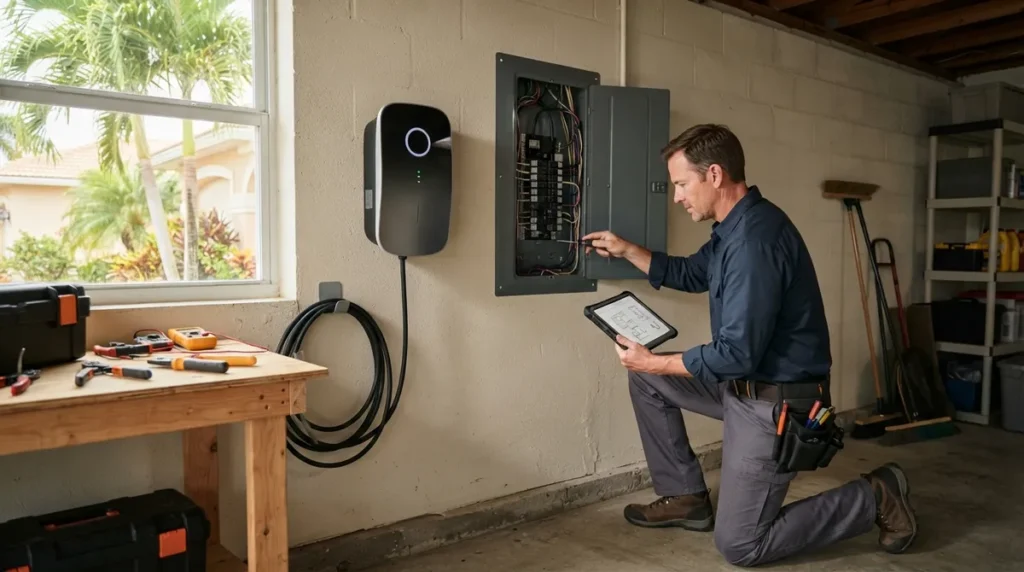
Key Takeaways
-
In most cases, an EV charger installation in Venice, FL requires an electrical permit before work begins, including for new dedicated circuits, plug-in outlets, or hardwired units.
-
Your property's physical location, not your Venice mailing address, determines whether the City of Venice or Sarasota County issues your permit, so verify the address before filing.
-
Load calculations are critical for Level 2 chargers (40-48 amp), since existing central air, range, pool pump, and dryer loads may push the panel near its limit.
-
EV charger work should be performed by a certified or registered electrical contractor; verify their license before signing, as homeowners pulling their own permits face extra complications.
-
Completing the installation does not close the permit; you must schedule and pass inspections and keep approval records, since open permits can cause problems at home sale.
-
The City of Venice lists a base electrical permit fee of $90, but total costs may include plan review and valuation-based fees, so confirm current fees before budgeting.
You finally brought home the electric vehicle, and the shiny new Level 2 charger is sitting in the garage box, ready to go. Then comes the question every Venice driver eventually asks: do I really need a permit for this? Short answer: yes, in most cases you do, and getting it right the first time saves you headaches later.
An ev charger permit in Venice, FL is not meant to be a roadblock. It is a safety check. Your charger will pull a lot of power for hours at a time, so the electrical work behind your wall needs to be done correctly and verified by an inspector. The good news is that the process is very manageable once you know the steps.
In this friendly guide, we will walk through who issues the permit, what paperwork you need, what the inspections look like, and how contractors, solar companies, and homeowners can keep things moving. We will also flag a few things worth confirming directly with the building department, because fees and checklists can change.
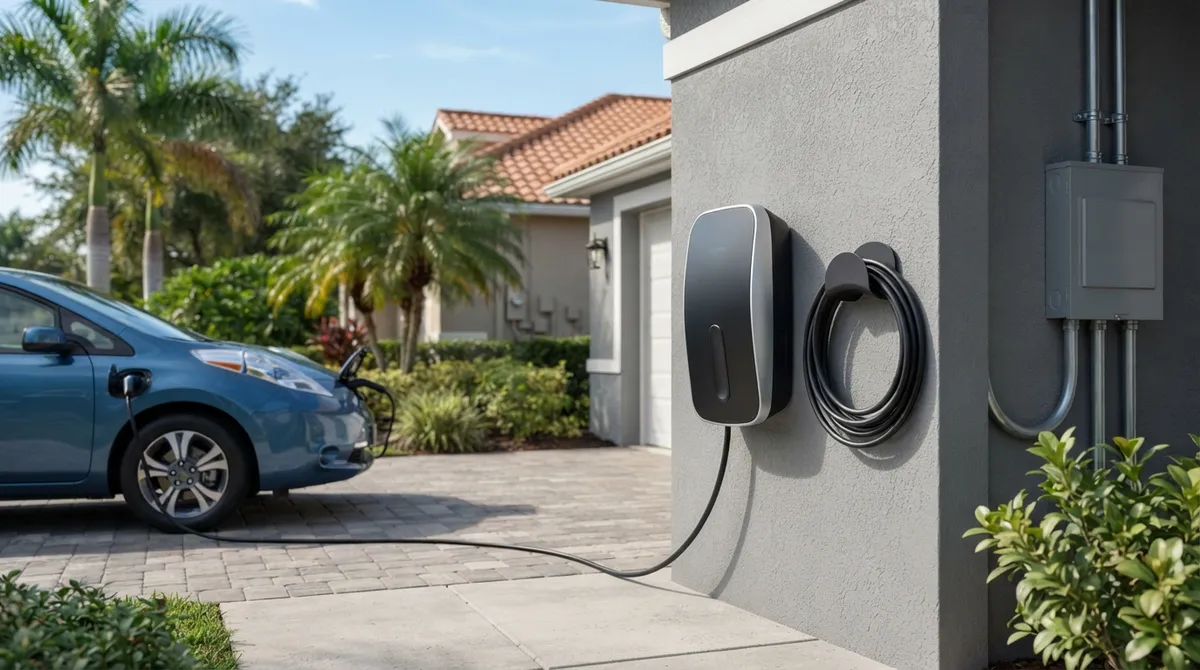
Do You Need a Permit to Install an EV Charger in Venice?
In general, yes. An EV charger installation inside Venice city limits typically requires an electrical permit before any work begins. That includes a new dedicated circuit, a new outlet for a plug-in charger, or a hardwired wall-mounted unit.
Florida law gives the state the lead role in regulating EV charging stations. Under Florida Statutes §366.94, local governments cannot create their own separate rules for charging stations. However, they still issue permits and inspect the work using state-established standards and other applicable state law. So the permit is still required, but the rules behind it are statewide.
Skipping the permit can create real trouble down the road, from failed inspections to complications when you sell your home. If you ever find yourself in that spot, our guide on how to bring unpermitted work into compliance in Florida explains the path forward. It is always easier to do it right from the start.
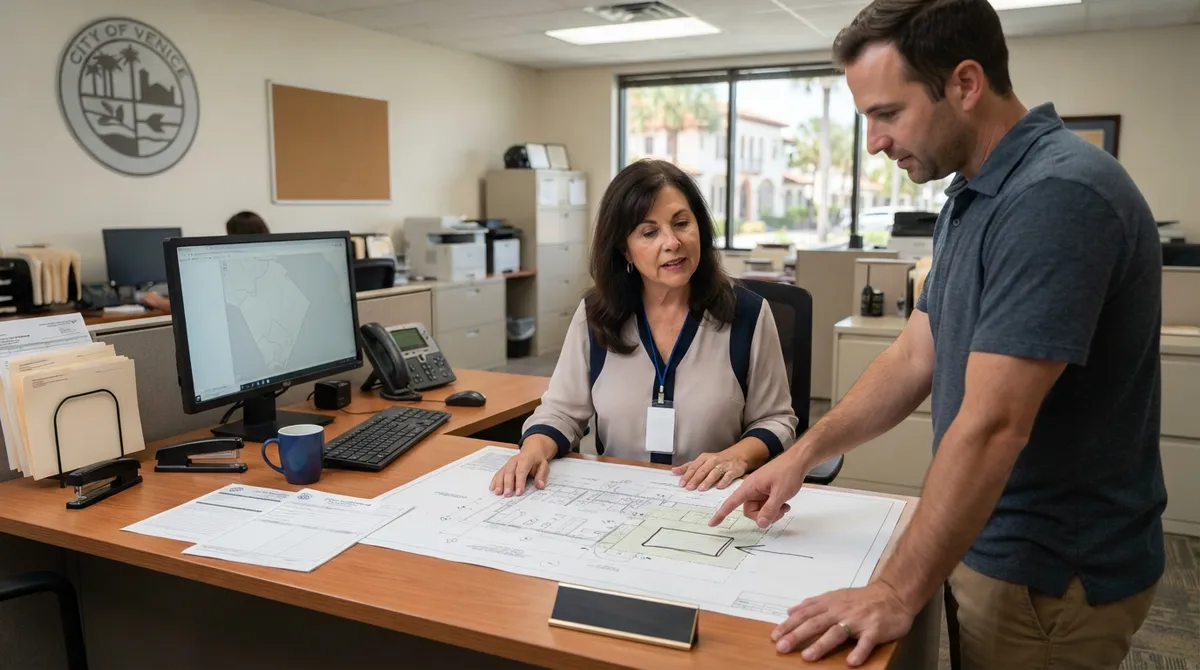
City of Venice or Sarasota County: Who Issues Your Permit?
Here is a detail that trips up a lot of people. Venice has a city boundary, but plenty of addresses with a Venice mailing address sit in unincorporated Sarasota County. Your mailing address does not decide who permits your project. Your property location does.
| Property Location | Permitting Authority | What to Confirm |
|---|---|---|
| Inside Venice city limits | City of Venice Building Department | Current application checklist and fee schedule |
| Unincorporated Sarasota County (Venice mailing address) | Sarasota County permitting authority | County submittal requirements and fees |
| Planned community or HOA | City or county, plus HOA approval | HOA architectural review is separate from the permit |
If you are not sure which jurisdiction applies, check your property address with the city or county before you submit anything. Filing in the wrong place wastes time. Our guide to which Florida jurisdiction reviews your project walks through how to sort this out, and you can browse our Sarasota County permitting page for local context.
What Florida Law Says About EV Charging Stations
Florida takes a statewide approach to EV charging, and it is helpful to know the basics even if you are just installing one charger at home.
- Statewide preemption: The state regulates EV charging stations, and local governments cannot adopt conflicting rules. Local offices still handle permitting under state standards.
- Public-use charger registration: Under Florida Statutes §366.94, public-use chargers must be registered with the Florida Department of Agriculture and Consumer Services before being placed into service.
- Safety rules: Florida's EV charging safety rule, 5J-28.003, ties equipment and installation to national and state codes.
- Record retention: Operators must keep installation compliance records for five years and provide them to the state department within ten business days if requested.
For a private home charger, the registration piece generally does not apply, since it targets public-use stations. For businesses, apartment communities, and retail locations, it is a very real step.
Code and Installer Requirements You Should Know
The technical backbone of your installation is the National Electrical Code, specifically NFPA 70 Article 625, which covers electric vehicle charging equipment. The Florida Building Code adds its own provisions on top. In practical terms, here is what that means for your project:
- The charger equipment must be listed as required.
- The circuit must be sized and protected correctly for continuous load.
- The installation must follow the manufacturer's instructions.
- The work must be performed by a certified or registered electrical contractor.
That last point matters. EV charger work is not a typical weekend DIY project in Florida. If you are a homeowner wondering whether you can pull the permit yourself, read our overview of who can pull a permit in Florida before you buy materials. For a deeper look at the licensing side, see our article on how to register your contractor license in Venice, FL.
What Documents Does an EV Charger Permit Application Need?
Every jurisdiction publishes its own checklist, and the City of Venice's current checklist is the one to follow. That said, residential EV charger submittals commonly include the following items:
- Electrical permit application completed with the correct owner, address, and contractor information.
- Charger manufacturer specifications showing the model, amperage, voltage, and listing information.
- Electrical service and panel information such as the main service size and available breaker spaces.
- A circuit or one-line diagram showing conductors, raceways, and overcurrent protection.
- Load calculations if needed to show the existing service can support the added charger.
That load calculation step is where many projects get interesting. A 40-amp or 48-amp Level 2 charger adds a serious continuous load. If your home already runs central air, an electric range, a pool pump, and a dryer, the panel may be closer to its limit than you think. A properly prepared load calculation protects you and keeps the reviewer from sending the package back.
Clean drawings make a real difference at this stage. Our team can prepare permit-ready documents through our MEP engineering services, and our post on how to get permit-ready plans Florida officials approve shares what reviewers like to see.
Residential vs. Commercial EV Charger Permits
A single charger on a single-family home is a fairly simple project. Commercial and multi-charger installations are a different animal. Florida Building Code provisions address EV charging equipment and accessibility, and the project scope determines which reviews apply.
| Item | Typical Residential Charger | Commercial or Multi-Charger Project |
|---|---|---|
| Permit type | Electrical permit | Electrical plus possible building and site review |
| Plans needed | One-line diagram, specs, load info | Site plan, electrical plans, parking layout, accessibility details |
| Accessibility review | Usually not a factor | Often applies to parking and charger access |
| State registration | Generally not required for private use | Required for public-use chargers under §366.94 |
| Complexity | Low to moderate | Moderate to high |
Commercial projects benefit from solid site plans and coordinated electrical drawings. If your charger is part of a business build-out, you may also need a certificate of use. See our Venice certificate of use mistakes to avoid for what trips owners up.
Step-by-Step: How the Permit Process Usually Works
While every project is a little different, most EV charger permits follow this general flow:
- Confirm your jurisdiction. Decide whether the City of Venice or Sarasota County handles your address.
- Choose a qualified electrical contractor. Verify their license and registration before signing anything.
- Gather your documents. Collect charger specs, panel details, and your circuit diagram or load calculation.
- Submit the application. File with the building department using their current checklist.
- Respond to reviewer comments. If the reviewer asks for changes, answer them promptly and resubmit.
- Receive permit approval. Do not start work before the permit is issued.
- Install the charger. The contractor follows code and the manufacturer's instructions.
- Schedule and pass inspections. Keep the approval records for your files.
If a reviewer sends the package back, do not panic. It happens often, and the fix is usually small. Our article on who can rescue a denied building permit in Florida explains your options if you hit a wall.
Inspections: The Step People Forget
Here is a friendly reminder that saves a lot of grief: finishing the installation does not close the permit. Inspections are part of the process, and you need to schedule them with the city or county.
An inspector typically verifies things like the circuit protection, conductor sizing, grounding, mounting, and that the equipment matches what was permitted. Depending on the work, there may be more than one inspection. Once everything passes, keep the approval records. They are valuable if you sell the home or ever file an insurance claim.
Open permits can also cause surprises at closing. If you are buying or selling in the area, our post on how to handle an open permit before closing in Venice, FL is worth a read. Some jobs may also qualify for a faster path. Learn more in our guide to private provider inspections in Venice.
How Much Does an EV Charger Permit Cost in Venice?
This is the question everyone asks, and the honest answer is: it depends. The City of Venice publishes its permit fee schedule online. One published fee document lists a base electrical permit fee of $90. However, that figure may not represent the total cost or the current charge for your specific EV charger project.
Here is what can influence your total:
- Base electrical permit fees
- Plan review charges, if applicable
- Valuation-based fees tied to project cost
- Any additional charges that apply to your property type
Always verify current fees with the City of Venice or Sarasota County before you budget. Timelines also vary. A simple residential submittal can move quickly, while a project with corrections or commercial review takes longer. For a sense of how timing works across the state, see our article on how long a building permit takes in Florida.
Tips for Contractors, Solar Companies, and Design Pros
If you install chargers professionally, a smooth permit workflow is the difference between a profitable week and a stalled crew.
- General contractors: Build EV-ready circuits into new construction plans so the permit is already covered. Our general contractor support handles filing and tracking.
- Solar companies: Chargers often pair with rooftop solar and battery storage. Combining the documentation can cut down on repeat reviews. See our solar contractor services, and read our guide on getting a solar permit in Venice, FL.
- Architects and designers: Coordinate charger locations early so panel capacity and parking layout do not become late-stage surprises.
- Realtors and investors: Chargers are a popular upgrade. Confirm that any existing charger was permitted before you list or buy. Our realtor closing support can help sort it out.
Common Mistakes That Slow Down EV Charger Permits
After helping with permits across Florida, a few patterns show up again and again:
- Filing with the wrong jurisdiction because of a mailing address mix-up
- Skipping the load calculation on an older or already busy panel
- Submitting charger specs that do not match the diagram
- Starting work before the permit is issued
- Forgetting to schedule the final inspection
- Assuming the permit is closed once the charger works
Good news: every one of these is avoidable with a little preparation. And if you already installed a charger without a permit, there is a way to fix it. Check out our resource on after-the-fact electrical permits in Florida and our overview of how to legalize unpermitted work in Florida.
Let 1 Contractor Solutions Handle the Paperwork
Permits should not be the part of your project that keeps you up at night. At 1 Contractor Solutions, we act as Florida's outsourced permitting department. Our drafting and engineering are in-house, our own engineer signs and seals the work, and we respond within 30 minutes. If you want to hear from real customers, you can visit us on Google — 1 Contractor Solutions. You can also follow us on LinkedIn and follow us on Facebook for Florida permitting tips. Our website is supported by Brain Buzz Marketing.
Ready to Charge Up the Right Way?
Getting an ev charger permit in Venice, FL comes down to a few simple moves: confirm your jurisdiction, hire a qualified electrical contractor, submit complete documents, and pass your inspections. Do those things, and your charger will be safe, legal, and ready for years of driving.
If you would rather hand off the paperwork, we are here to help with filing, plan review coordination, and everything in between. Ready to get moving? Get a free quote today and let us take the permit off your plate. You can also explore our permit facilitation and filing services or our Venice permitting page to learn more.
FAQs
Do I need a permit to install an EV charger in Venice, Florida?
In most cases, yes. An EV charger installation in Venice generally needs an electrical permit before work begins, followed by inspections. Confirm the details for your specific address with the City of Venice or Sarasota County so you are covered.
Who issues the EV charger permit, the City of Venice or Sarasota County?
It depends on where your property sits, not your mailing address. Homes inside Venice city limits use the City of Venice Building Department, while homes in unincorporated Sarasota County use the county. A quick address check keeps you from filing in the wrong place.
Who is allowed to install an EV charger in Florida?
Florida's EV charging safety rules call for installation by a certified or registered electrical contractor who follows the manufacturer's instructions. Always verify your contractor's license before work begins. It protects you at inspection time and when you sell.
What inspections happen after an EV charger is installed?
Finishing the install does not close the permit. You will need to arrange the required inspection or inspections through the city or county, and an inspector checks that the work matches the permitted plans. Keep your approval records for the future.
Do commercial or public chargers need anything extra?
Yes, usually. Commercial and multi-charger projects may need site, accessibility, and parking details beyond a basic electrical permit. Public-use chargers must also be registered with the Florida Department of Agriculture and Consumer Services before going into service.
We do this work every day across all 67 Florida counties. Call (866) 314-6931 and we will tell you what your situation actually requires — including when you do not need us.
Related services
Permit Facilitation & Filing
You have a crew scheduled, a client asking for dates, and a permit sitting somewhere in a queue you cannot see. We file it, w…
See the servicePlan Review Coordination
A permit in plan review is not one queue. On a commercial project it can be six queues, each with its own reviewer, its own c…
See the serviceReady to get your permit moving?
One call tells you which jurisdiction controls your project, what it will take, and what it will cost. Most of the time we can scope it on the phone.