
Blog
After-the-Fact Permitting for Solar Companies in Florida
Installed solar without a permit in Florida? Learn how after-the-fact permitting works, what reviewers need, and how to close the file the right way.
Key Takeaways
-
An after-the-fact permit application does not automatically legalize an installed solar system or waive fees, penalties, or corrections; it simply opens review and inspection of the finished work.
-
Confirm the authority having jurisdiction (the city or county that controls the property address) before filing, since requirements and checklists vary and there is no single statewide solar checklist.
-
Florida's solar access law bars local bans on solar installs, but it does not exempt systems from building, electrical, structural, or safety permitting and code compliance.
-
The applicant must be properly licensed for the scope of work under Chapter 489; the narrow owner-builder exemption for residential solar is conditional and still requires a licensed electrical contractor for wiring and interconnection.
-
Never energize, modify, or conceal an unpermitted system to avoid inspection, since this typically turns a fixable paperwork issue into a larger enforcement problem.
-
No statewide after-the-fact fee or penalty exists; get the local fee schedule and confirm timelines, since some jurisdictions let permits expire if no inspection passes within a set period.
Let's be honest: nobody plans to end up here. Maybe a crew got ahead of the paperwork. Maybe a subcontractor skipped the filing. Maybe you inherited a batch of installs from a company that no longer exists. Whatever the reason, you now have solar systems on Florida roofs without the permits they should have had, and you need a clean way forward.
The good news is that this problem is fixable more often than people fear. After-the-fact permitting for solar companies in Florida is a real, workable process, but it comes with rules, inspections, and a few traps worth knowing about before you pick up the phone and call the building department.
In this guide, we'll walk through what after-the-fact permitting means, what Florida law says, what documents reviewers expect, and how to move through the process without making things worse. Whether you run a solar company, manage a crew as a general contractor, or are a homeowner holding the bag on a system installed without a permit, you'll find practical steps here.
What After-the-Fact Permitting Actually Means
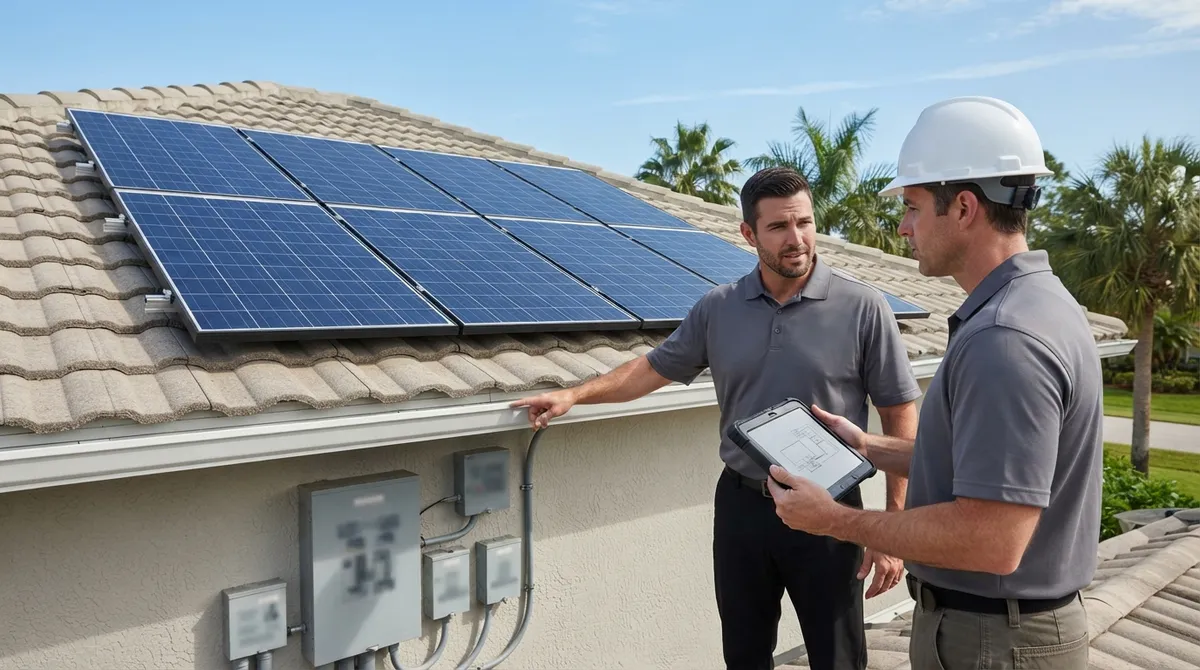
After-the-fact permitting means applying to the local building department after solar work has already started or been completed without the required permit. Florida Statutes §553.79(1)(a) makes it unlawful to construct or alter covered work without a permit unless an exception applies. The local authority having jurisdiction (AHJ), meaning the city or county building department, controls how the application, review, inspection, and enforcement work.
Here is the part that surprises many contractors: an after-the-fact application does not automatically legalize the installation. It also does not automatically waive fees, penalties, or correction requirements. It simply opens the door to getting the work reviewed, inspected, and approved, or corrected if something does not meet code.
Think of it as asking the building department to treat your finished system like a brand-new application, with extra scrutiny because the work is already in place.
Why Solar Installs Need Permits in the First Place
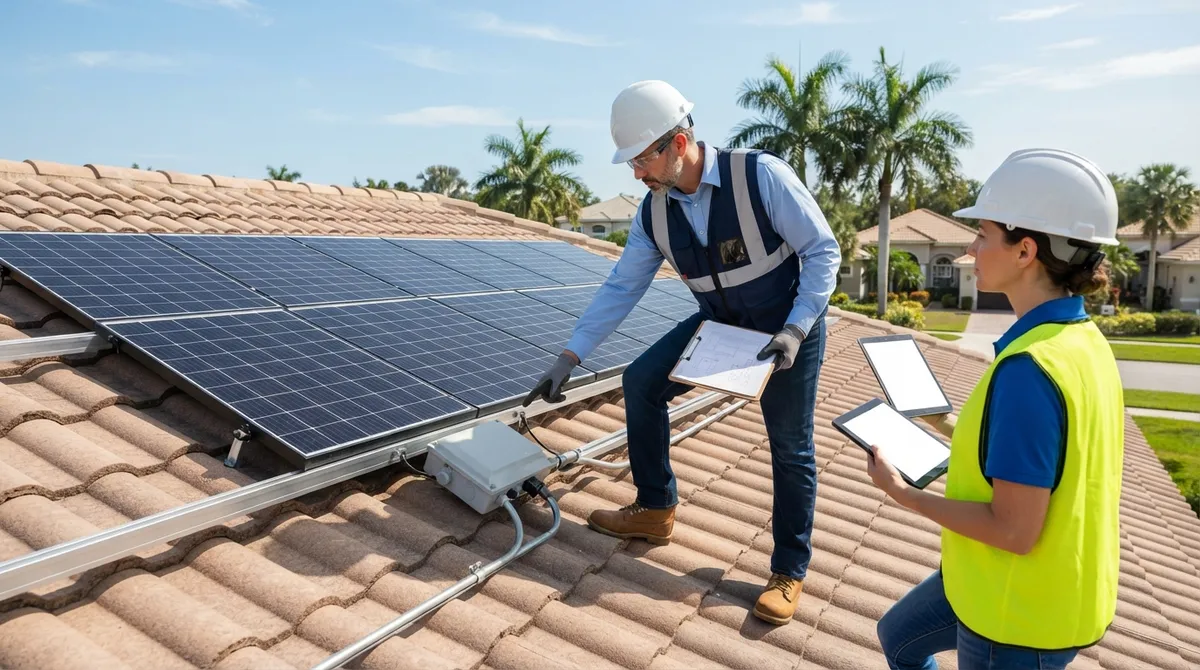
Solar photovoltaic systems typically need permits even when they are added to an existing building. The exact permit types vary by jurisdiction and by project, but they commonly include:
- Electrical permits for the PV system, inverter, disconnects, and interconnection wiring
- Structural or building review for roof loading and attachment methods
- Roofing permits in some situations, especially on commercial projects
- Other trade permits depending on the scope, such as battery storage or ground-mount foundations
Local examples show how much this varies. Miami requires a solar permit, and its guidance describes a stand-alone roofing permit for commercial projects, while residential applicants do not need a separate roofing permit under its described process. Lee County's guide states that permits are required for PV and several other solar system types. Hillsborough County's checklist identifies different permit paths for roof-mounted and ground-mounted systems.
The takeaway? There is no single statewide checklist. Always confirm with the jurisdiction that actually controls the property address. Our building department lookup tool can help you identify the right office, which is not always obvious near city lines.
Does Florida's Solar Access Law Change Anything?
Florida Statutes §163.04 generally protects the ability to install solar energy devices from prohibitions by local ordinances and certain private restrictions, subject to statutory provisions. That is great news for solar adoption, but it does not wipe out building, electrical, structural, or safety requirements.
In other words, a city cannot simply say "no solar," but it can absolutely require that your system be permitted, inspected, and code-compliant. Solar companies sometimes blur this line, so keep it clear in your own mind and with your customers.
The Licensing Question Solar Companies Must Get Right
Florida Statutes Chapter 489 governs contracting, and the person or company applying for the permit must be authorized for the scope of work. This is where after-the-fact files sometimes get complicated.
A narrow statutory owner-builder exemption exists for certain residential solar work in participating jurisdictions. It has conditions, and it requires a licensed electrical contractor for panel wiring and interconnection. It is not a general exemption for solar companies, and it is not a workaround for an install that was done by an unlicensed crew.
If your company's licensing or municipality registration is not in order, fix that first. Our contractor registration checklist and municipality registration service can help you get squared away, and our overview of Florida contractor license requirements explains who can pull what.
Step-by-Step: Handling an After-the-Fact Solar Permit in Florida
Every jurisdiction does this a little differently, but a practical sequence looks like this:
- Identify the AHJ. Use the property address to confirm which city or county building department has jurisdiction.
- Gather your records. Pull the contract, equipment labels and specifications, any plans, photographs, utility and interconnection records, and contractor license information.
- Call the building department. Ask how they handle after-the-fact solar applications and what must be inspected. Do not promise a customer a specific outcome yet.
- Prepare the permit package. This usually means application forms, plans, equipment data sheets, electrical documentation, and structural information.
- Submit and track the application. Respond quickly to reviewer comments.
- Schedule inspections. Make the installation accessible for inspection.
- Correct any deficiencies. Fix what the inspector flags, then request a re-inspection.
- Close out the permit. Get final approval so the permit does not sit open or expire.
One more important point: avoid energizing, modifying, or concealing anything to dodge inspection. That is the fastest way to turn a fixable paperwork problem into a bigger enforcement headache.
Documents Reviewers Commonly Ask For
Reviewers and inspectors need enough information to verify code compliance on a system they did not see being built. Local checklists vary, but you should be ready to assemble the following.
| Document | Why It Matters | Typical Source |
|---|---|---|
| Signed and sealed plans | Some AHJs, such as Hillsborough County for its listed solar PV process, require plans by a Florida-licensed design professional | Engineer or design professional |
| Equipment specifications | Verifies modules, inverters, and racking are listed and appropriate | Manufacturer data sheets |
| Electrical details | Shows conductor sizing, disconnects, grounding, and interconnection design | Electrical contractor or engineer |
| Structural documentation | Confirms the roof or ground structure can carry the load | Structural engineer |
| Photos of the installation | Helps reviewers understand concealed or finished work | Installer or site visit |
| Contractor license information | Confirms the applicant is authorized for the scope | Licensed contractor |
Because our drafting and engineering are in house, we can produce as-built drawings and sealed documentation that match what is actually on the roof, which is exactly what an after-the-fact reviewer wants to see.
Inspections: What to Expect on an Installed System
Inspections are jurisdiction- and system-specific. A completed installation may need to be exposed or otherwise made accessible so the inspector can verify it. If concealed work cannot be verified, the AHJ may require additional documentation, engineering letters, or corrective work.
Do not assume an inspection can be skipped because the system is already operating. Plan for it, and make the roof, the equipment, and the electrical components accessible when the inspector arrives.
Sometimes an engineer letter can help verify concealed conditions, such as roof attachment details, when a physical inspection alone cannot confirm them. Whether that is accepted is up to the local reviewer, so ask early. Our inspection support and private provider services can also help keep this stage moving.
Fees, Penalties, and Timing: What We Can and Cannot Say
We wish we could hand you a single statewide number, but the research is clear: no statewide after-the-fact fee or penalty amount is established. Local fee schedules and enforcement policies control, so confirm directly with the city or county before quoting a customer.
For a deeper look at how costs tend to shake out, see our after-the-fact permit cost guide and our breakdown of the penalty for building without a permit in Florida.
Timing is also local. For example, Lee County's solar guide states that an issued permit expires if it does not pass at least one inspection within 180 days. That is a Lee County rule, not a statewide deadline, but it illustrates why you should never let an after-the-fact permit sit idle once it is issued.
| Question | Statewide Answer | What to Do |
|---|---|---|
| Is a permit required for PV? | Generally yes, per §553.79 | Confirm permit types with the AHJ |
| Is there a fixed after-the-fact fee? | No statewide amount identified | Check the local fee schedule |
| Do sealed plans apply? | Varies by jurisdiction | Review the local solar checklist |
| Is inspection optional if the system works? | No | Plan for access and inspection |
Common Mistakes Solar Companies Make
After helping with files like these, certain patterns show up again and again. Watch out for these:
- Calling the wrong office. Filing with the county when the city controls the address, or the reverse, wastes weeks.
- Underestimating documentation. Showing up without equipment specs or electrical details leads to rejection after rejection.
- Ignoring licensing gaps. If the applicant is not authorized for the scope, the application stalls.
- Promising customers a result. Never guarantee approval, fee waivers, or timelines before the AHJ weighs in.
- Letting the permit expire. An issued permit with no passed inspection can lapse under local rules.
- Hiding the problem. Concealing work or modifying a system to avoid inspection tends to make enforcement outcomes worse.
If you are weighing whether to legalize or start fresh, our article on whether solar companies can legalize unpermitted installs walks through the decision, and our guide to fixing an unpermitted solar install in Florida covers the 2026 landscape.
Who Benefits Most From Professional Help
Different readers feel this pain in different ways, and that is okay. Here is how it tends to look from each seat:
- Solar companies face the volume problem. A handful of unpermitted installs can balloon into dozens, each in a different jurisdiction with a different checklist.
- General contractors often discover solar scope that a subcontractor never permitted and need it closed before final inspection.
- Real estate professionals and buyers run into unpermitted panels during inspections and closings, where an open issue can stall everything. Our realtor closing support is built for exactly this.
- Florida homeowners are sometimes stuck with a system installed by a company that vanished and need someone to guide them through the process calmly.
If you run a solar business, our solar contractor services are designed for the repeatable, high-volume side of this work, and our Florida solar permit timelines article can help you set realistic expectations.
How 1 Contractor Solutions Can Help
We are not a construction contractor. We are Florida's outsourced permitting department. For after-the-fact solar files, that means we identify the jurisdiction that really controls the property, prepare the plans and sealed documentation in house, file the application, track it, work every reviewer comment, and carry it through inspection and closeout. Our after-the-fact and expired permit service takes the files other people decline.
Because our own engineer signs and seals the work, we are not waiting on an outside consultant when a reviewer flags something. We also respond within 30 minutes, day or night, and we work across all 67 Florida counties. If you want to see what customers say, you can visit us on Google — 1 Contractor Solutions and read the reviews.
Want to stay connected? You can follow us on LinkedIn and follow us on Facebook for Florida permitting updates. For the underlying law, the official Florida Statutes §553.79 is worth bookmarking.
Wrapping Up: You Have a Path Forward
Unpermitted solar work is stressful, but it is rarely the end of the road. The recipe is straightforward: find the right AHJ, gather your records, prepare accurate plans, make the system accessible for inspection, fix what needs fixing, and close the permit properly. Be honest with the building department, avoid shortcuts, and never promise customers outcomes that only the AHJ can decide.
If you have an unpermitted system on your hands and want a steady guide through it, we would love to help. Get a free quote and tell us the address and the problem. We will tell you who controls it, what it will take, and then we will go do it.
FAQs
Can I get a permit for solar panels after they have already been installed in Florida?
Yes, in most cases you can apply for an after-the-fact permit through the city or county building department that controls the property. The application does not automatically legalize the system, though. The AHJ may require plans, inspections, and corrections before it approves the permit.
What happens if a solar company installs panels without a permit in Florida?
Florida law generally makes unpermitted covered work unlawful, so the company and the property owner can face local enforcement, fees, and correction requirements. The exact consequences depend on the jurisdiction, so it is smart to confirm with the building department before promising anything to a customer.
Will Florida require solar panels to be removed for an inspection?
Not necessarily, but the installation generally needs to be accessible so the inspector can verify it. If concealed work cannot be verified, the AHJ may ask for extra documentation or corrective work, so ask the local office what they will need to see.
Can a homeowner pull a solar permit instead of a licensed contractor in Florida?
A narrow owner-builder exemption exists for certain residential solar work in participating jurisdictions, but it comes with conditions and still requires a licensed electrical contractor for panel wiring and interconnection. It is not a general exemption, so check local rules first.
Do after-the-fact solar permits involve extra fees or penalties?
They can. No statewide after-the-fact fee or penalty amount is established, so each city or county sets its own schedule and enforcement approach. Ask the building department for its current fee schedule before you file.
We do this work every day across all 67 Florida counties. Call (866) 314-6931 and we will tell you what your situation actually requires — including when you do not need us.
Related services
Permit Facilitation & Filing
You have a crew scheduled, a client asking for dates, and a permit sitting somewhere in a queue you cannot see. We file it, w…
See the servicePlan Review Coordination
A permit in plan review is not one queue. On a commercial project it can be six queues, each with its own reviewer, its own c…
See the serviceReady to get your permit moving?
One call tells you which jurisdiction controls your project, what it will take, and what it will cost. Most of the time we can scope it on the phone.