
Blog
After-the-Fact Permit vs. Tear-Out: What Should You Do?
Compare filing an after-the-fact permit in Florida with tearing out unpermitted work. Learn costs, documents, inspections, and the best path forward.
Key Takeaways
-
Unpermitted work can often be legalized through an after-the-fact (ATF) permit, but approval is never automatic; the local building department decides whether the work meets the Florida Building Code.
-
Florida Statutes §553.79 makes building without a required permit unlawful, and ATF procedures, fees, and documentation are set by the city or county with authority over your address, so confirm the jurisdiction first.
-
Removal and re-permitting makes more sense when work is unsafe, unsalvageable, cheap to redo, or located where it can never be approved, such as within a setback or easement.
-
Typical ATF documentation includes a detailed scope of work, proof of ownership, plans or as-builts, and engineering or product approvals where work cannot be visually verified.
-
Concealed work may require opening walls or ceilings or a sealed engineering analysis at the owner's expense, so budget for possible exposure and restoration costs.
-
ATF fees vary widely; for example, St. Lucie County charges double the regular fee, so check your local fee schedule before deciding which route to take.
So you just found out that a deck, a re-roof, a garage conversion, or a bathroom remodel in your Florida property never got a permit. Take a breath. You're in good company, and there is a path forward. Plenty of Florida owners, buyers, and contractors end up here, and most of them wonder the same thing: should I try to file an after the fact permit in Florida, or should I just rip the work out and start over?
The honest answer is that it depends on the work, the jurisdiction, and what an inspector can actually verify. In 2026, building departments across the state still treat unpermitted work seriously, but many have a defined process for bringing it into review. This friendly guide compares the two main routes side by side, so you can make a calm, informed decision.
We'll walk through what an after-the-fact (ATF) permit really is, when removal makes more sense, what it typically costs in time and money, and how a Florida permitting professional can help. One note up front: the local building department, not any consultant, decides whether work can be approved.
What Is an After-the-Fact Permit in Florida?
An after-the-fact permit is a local building-department process for reviewing and legalizing work that was completed before the required permit was obtained. It is not automatic approval. It is also not a shortcut around the Florida Building Code. The work still has to show it meets code.
Florida law is clear on the starting point. Florida Statutes §553.79 generally makes it unlawful to construct, alter, repair, or demolish a building without first obtaining the required permit. The city or county enforcing agency then reviews applications and plans under the Florida Building Code and applicable local rules.
That means the statewide rule is the same, but the details are local. Application forms, documentation, inspections, and fees are set by the building department that has authority over your address. If you want a deeper dive into the basics, our guide on what after-the-fact permitting in Florida is covers the fundamentals.
The Core Idea in Plain English
Think of an ATF permit as a "prove it" process. You're asking the county or city to look at finished work and confirm it's safe and compliant. If it passes, the permit closes out. If it doesn't, corrections are required.

Option One: File an After-the-Fact Permit
Choosing to file an after the fact permit in Florida means you're working with the building department rather than around it. For many projects, this is the cleaner long-term answer, especially when you plan to sell, refinance, or insure the property.
Typical Steps to File
- Confirm the jurisdiction. Figure out which city or county actually controls your address. Near city lines, this isn't always obvious.
- Check permit history. Look for open, expired, or prior permits so you don't duplicate or conflict with existing records.
- Document the scope. Write a clear description of what was built, altered, or installed.
- Prepare plans or as-builts. Many departments want drawings that show what actually exists, plus engineering or trade documents where relevant.
- Submit the application. Provide proof of ownership or authorization, along with the plans and supporting records.
- Pass inspections and close out. An issued permit alone is not final approval. The required inspections and closeout are what count.
You can use our free building department lookup tool to confirm who handles your property, and our open permit search to check for existing records.
What Documents Are Commonly Needed?
Exact requirements vary by department and project type. Still, most ATF applications involve a similar set of materials.
- A completed application with a detailed scope of work
- Proof of ownership or owner authorization
- Plans or as-built drawings showing the finished work
- Structural, electrical, plumbing, or mechanical documentation where applicable
- Product approvals for items like windows, doors, or roofing materials
- Engineering analysis or an engineer letter when work can't be visually verified
- Is the work visible and accessible? If yes, ATF review is usually more straightforward.
- Is it structural, electrical, or life-safety related? Plan for engineering documentation.
- Is it located where it can never be approved? Removal may be the only option.
- Are you selling or refinancing soon? A closed permit is usually valuable.
- Have you received a notice or stop-work order? Act quickly and get guidance. Our urgent permit rescue team handles these situations.
- Confirm your jurisdiction and look up the property's permit history.
- Photograph and describe the existing work in detail.
- Gather ownership documents and any receipts or product information.
- Decide whether you need as-built drawings or engineering support.
- Contact the building department or a permitting professional to confirm requirements for your project.
Option Two: Remove the Work and Start Over
Tearing out unpermitted work and re-doing it under a normal permit is the other route. It can feel "clean," but it isn't always the simpler or cheaper option.
Removal tends to make sense when the work is clearly non-compliant and can't be corrected, when it's small and inexpensive to rebuild, or when it creates a safety hazard that can't be verified or repaired. If a structure sits where it never should have been built, such as in a setback or easement, an ATF permit may not be approvable at all.
However, demolition and rebuilding carry real costs. You pay for removal, disposal, new materials, new labor, and a full permit and inspection cycle. For substantial work like additions, enclosed patios, or roof systems, that can be far more expensive than documenting and correcting what's already there. Our article on whether you'll really have to demolish unpermitted work explains when removal is actually required.
Side-by-Side Comparison
Here's a quick look at how the two paths stack up across the factors most owners care about.
| Factor | File After-the-Fact Permit | Tear Out and Re-Permit |
|---|---|---|
| Upfront cost | Application, plans, possible engineering, higher fees | Demolition, disposal, new materials and labor |
| Permit fees | Often higher than a regular permit (varies by jurisdiction) | Standard permit fees |
| Timeline | Depends on review, inspections, and corrections | Removal time plus full build and inspection cycle |
| Disruption | May require opening walls or ceilings for inspection | Highest disruption; work is fully removed |
| Best for | Work that is mostly compliant or correctable | Work that is unsafe, unsalvageable, or cheap to redo |
| Result | Closed permit and a clean record when approved | New permitted work with a fresh inspection record |
Notice that neither option is automatically "better." The right choice depends on what's physically there and what the inspector can verify.
The Big Wild Card: Concealed Work
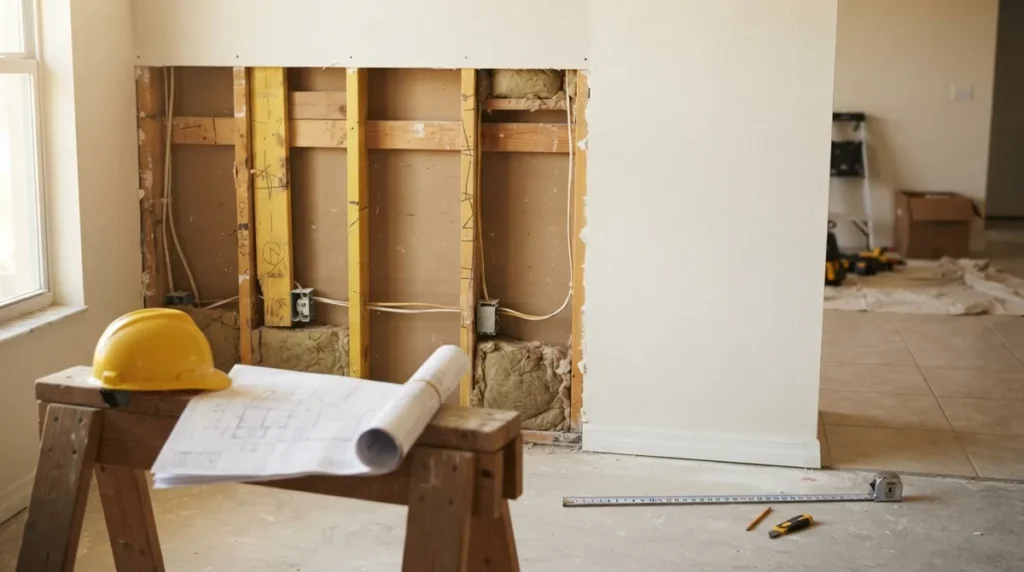
Inspectors need to see the work to verify it. If framing, wiring, plumbing, or other components are hidden behind drywall, flooring, or finishes, the department may require them to be opened up. It might also request additional inspections or a third-party engineering analysis.
For example, St. Lucie County specifically warns that concealed work may require an engineering analysis at the property owner's expense. Requirements vary by jurisdiction and project, so don't assume one county's rule applies elsewhere. Still, it's a useful reminder to budget for the possibility of opening things up.
This is where structural engineering and MEP engineering support can save real headaches. A sealed analysis can sometimes document hidden conditions without tearing everything apart, though the building department makes the final call.
What About Cost?
Cost is usually the first question, and it's a fair one. ATF fees vary widely by jurisdiction. As one county-specific example, St. Lucie County states that its after-the-fact permit fee is double the regular fee. That is not a statewide rate, so please don't treat it as a universal rule.
On top of the permit fee itself, budget for plans or as-builts, engineering where needed, any corrective work, and re-inspections. Our breakdown of after-the-fact permit costs in Florida goes deeper into what drives the total.
Cost Drivers at a Glance
| Cost Driver | Why It Matters | |
|---|---|---|
| Jurisdiction fee schedule | Some departments double or add penalties to standard fees | |
| Plans and as-builts | Drawings document what actually exists | |
| Engineering or letters | Needed when work is concealed or structural | |
| Corrective work | Failed items must be fixed before closeout | |
| Opening finishes | Walls or ceilings may need to be exposed and restored |
What Happens If the Work Doesn't Meet Code?
Here's where honesty matters. If work fails inspection or doesn't meet the applicable code, it may need correction, exposure for inspection, or removal before the permit can be closed. A submitted application doesn't equal approval.
Unresolved violations can also lead to notices, fines, or liens, depending on local procedures. If you've already received a notice, our guide to code compliance violation help in Florida walks through next steps, and our code compliance violations service can help you respond.
Which Route Fits Your Situation?
Different readers face different pressures, so let's match the options to real-world situations.
For Homeowners and Residential Property Owners
If you bought a home and discovered unpermitted work from a previous owner, an ATF permit is often the practical route. It documents the work, protects your insurance and resale position, and gives you a closed permit on record. Our homeowner resources are a friendly place to start.
For Real Estate Professionals and Buyers
Permit issues can stall a closing quickly. Lenders, appraisers, and title companies may flag unpermitted work, so identifying it early helps. See our guide on open permits found at closing, and learn how realtor and closing support can keep deals moving.
For General Contractors and Trade Professionals
If a job was started before the permit was pulled, filing promptly and cleanly protects your license and your client relationship. Accurate drawings and coordinated engineering make the review smoother. We support general contractors with filing, tracking, and revisions.
For Solar Companies
Solar installations require code-compliant structural and electrical documentation. If an installation went in without a permit, ATF filing typically needs sealed documentation showing roof loading and electrical compliance. Our solar contractor services cover this.
How a Florida Permitting Professional Helps
A good permitting partner can identify the correct authority, assemble plans and records, coordinate licensed contractors or design professionals, and track reviews and inspections. That's a lot of moving parts, and it's easy to lose weeks to a missing document or a misread comment.
At 1 Contractor Solutions, we act as Florida's outsourced permitting department. Our drafting and engineering are in-house, and our own engineer signs and seals the work. When a reviewer flags something, we fix it directly rather than waiting on an outside consultant. We handle after-the-fact and expired permits, and we can coordinate plan review and revisions and resubmittals through approval.
To be clear, we help you build a strong, accurate submission. The building department, not us, decides whether the work can be approved. If you want to see what other clients say, visit us on Google — 1 Contractor Solutions and read the reviews.
A Simple Decision Guide
Use these quick questions to point yourself in a direction.
Next Steps You Can Take Today
Local rules differ across Florida, so it helps to know your area. We serve all 67 counties, including Hillsborough County, Broward County, and Miami-Dade County. You can also follow us on LinkedIn for Florida permitting updates.
Final Thoughts: Calm, Clear, and Moving Forward
Discovering unpermitted work is stressful, but it's very fixable. For many Florida properties, choosing to file an after the fact permit in Florida is the practical, protective route. Removal still has its place, especially when work is unsafe or can't be approved. The key is knowing what you're dealing with before spending money in either direction.
If you'd like a friendly, no-pressure look at your situation, we're here to help. Our team responds fast, day or night, and we'll tell you which jurisdiction controls your project and what it will take. When you're ready, get a free quote and let's get your permit moving.
FAQs
Q: How do I file an after-the-fact permit in Florida?
A: Start by confirming which city or county building department controls your address, then check the property's permit history. Next, submit an application with a detailed scope of work, proof of ownership, and plans or as-builts, then complete the required inspections. Exact steps vary by jurisdiction, so check with your local department.
Q: Will I have to open walls or ceilings for an after-the-fact inspection?
A: Possibly. Inspectors must be able to verify the work, so if framing, wiring, or plumbing is concealed, the department may require finishes to be opened or request a third-party engineering analysis. Requirements vary by jurisdiction and project.
Q: How much does an after-the-fact permit cost in Florida?
A: It depends on your jurisdiction. Some departments charge more than the regular fee; for example, St. Lucie County states its after-the-fact fee is double the standard fee. You'll also want to budget for plans, engineering if needed, and any corrective work.
Q: What happens if unpermitted work doesn't meet the Florida Building Code?
A: The work may need to be corrected, exposed for inspection, or removed before the permit can be closed. Unresolved violations can also lead to notices, fines, or liens depending on local procedures.
Q: Can a Florida permitting service help with an after-the-fact permit?
A: Yes. A permitting professional can identify the correct authority, prepare plans and records, coordinate engineering, and track reviews and inspections. The building department, not the consultant, makes the final approval decision.
We do this work every day across all 67 Florida counties. Call (866) 314-6931 and we will tell you what your situation actually requires — including when you do not need us.
Related services
Permit Facilitation & Filing
You have a crew scheduled, a client asking for dates, and a permit sitting somewhere in a queue you cannot see. We file it, w…
See the servicePlan Review Coordination
A permit in plan review is not one queue. On a commercial project it can be six queues, each with its own reviewer, its own c…
See the serviceReady to get your permit moving?
One call tells you which jurisdiction controls your project, what it will take, and what it will cost. Most of the time we can scope it on the phone.