
Blog
9 CO vs CU Mistakes That Stall Florida Openings in 2026
Confused about the difference between a CO and a CU in Florida? Learn how they differ and 9 mistakes that stall business openings in 2026.

Key Takeaways
-
A Certificate of Occupancy (CO) confirms a building or space is safe and approved for occupancy after construction and inspections, while a Certificate of Use (CU) confirms a specific business activity is allowed at a specific address.
-
A CU does not replace a CO, a construction permit, or other required approvals, so each can independently block your opening and must be checked separately.
-
There is no uniform statewide Florida process for COs and CUs; first determine whether your property is inside a city or unincorporated county, since that decides which office controls your permits.
-
Verify zoning for your intended use before signing a lease or closing on a property, because a business type not allowed at the address can leave you paying rent with no way to open.
-
Confirm the sequence with local building and zoning departments: a change of use may require permits and an updated CO before a CU can be issued, and applying out of order can mean a rejected application and lost fees.
-
Run an open-permit search early, before going under contract, since unpermitted work or open permits are a common reason sales and openings get held up late in the process.
Picture this: you sign a lease on a perfect storefront, finish the build-out, pass your final inspection, and proudly hang your sign. Then someone asks, "Do you have your Certificate of Use?" Suddenly your grand opening is on hold. If you have ever wondered what is the difference between a CO and a CU, you are in good company. Plenty of Florida business owners, contractors, and property buyers mix these two documents up, and the confusion can cost real time and money.
Here is the short version. In Florida permitting, a CO usually means a Certificate of Occupancy, and a CU usually means a Certificate of Use. One is about the building or space. The other is about the business using it. Both can matter, and the exact rules depend on your city or county.
In this friendly guide, we will walk through the difference between a CO and a CU, then cover nine common mistakes that stall openings in 2026. We will keep it practical, so whether you are a general contractor, realtor, solar company, or homeowner, you can spot problems before they cost you.
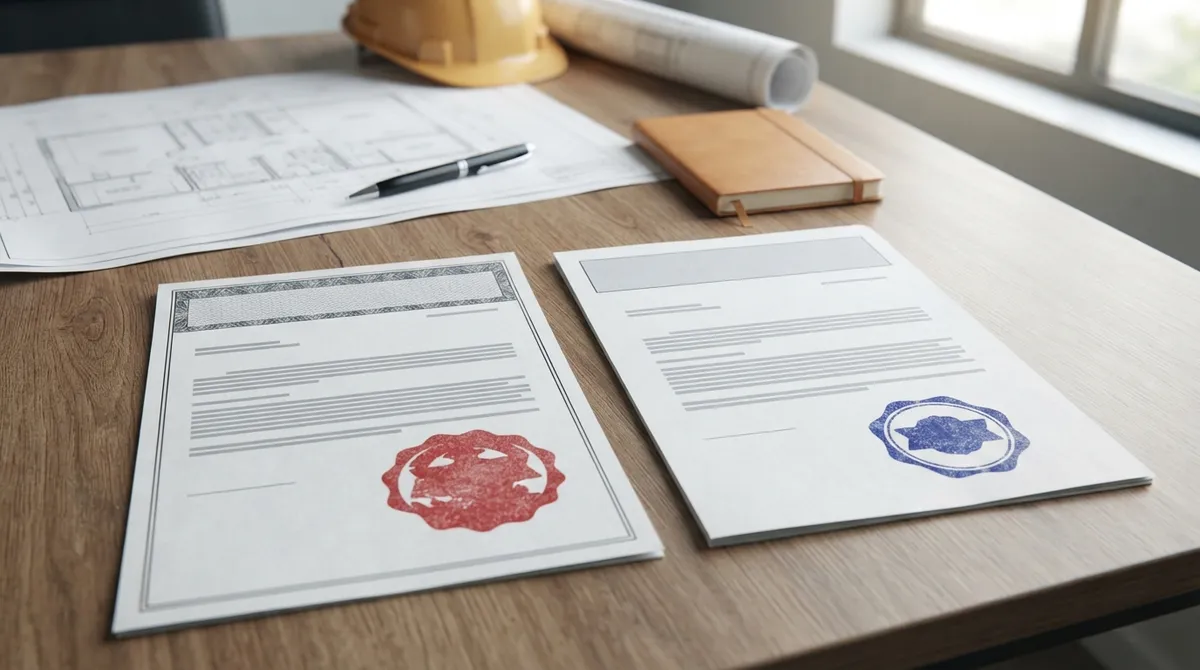
What Is the Difference Between a CO and a CU? The Quick Answer
Let's get the featured-snippet answer out of the way first. A Certificate of Occupancy (CO) confirms that a building or space may be occupied for an approved occupancy classification after required work and inspections are complete. A Certificate of Use (CU) generally confirms that a specific business activity is allowed at a specific address under local zoning and related requirements.
Think of it like this: the CO answers, "Is this space safe and approved to be occupied?" The CU answers, "Is this particular business allowed to operate here?"
| Feature | Certificate of Occupancy (CO) | Certificate of Use (CU) |
|---|---|---|
| Main question | Can this building or space be occupied? | Can this business operate at this address? |
| Issued by | Building department | Typically zoning or planning (varies locally) |
| Focus | Building code, construction, inspections | Zoning and local use rules |
| Triggered by | New construction, alterations, change of occupancy | New business, change of business or ownership (varies) |
| Replaces permits? | No | No |
Terminology can vary by jurisdiction, so always confirm with the authority that controls your property. If you want a deeper dive on just the comparison, our Certificate of Occupancy vs Certificate of Use article is a great companion read.
A Closer Look at the Certificate of Occupancy
A CO is issued by the building department after construction or alteration work and the required inspections are finished. It confirms the building or space complies with applicable building-code requirements and may be occupied for its approved classification, such as business, assembly, or residential.
A CO usually covers things like:
- Structural, electrical, plumbing, and mechanical work passing final inspection
- Fire and life-safety requirements for the approved occupancy
- Completion of the permitted scope of work
- Closing out open permits tied to the project
For homeowners and buyers, a CO can also surface during a sale, especially when unpermitted work is discovered. If that sounds familiar, our guide on how to get a Certificate of Occupancy in Florida walks through the process step by step.
A Closer Look at the Certificate of Use
A CU is more about the business than the building. It generally confirms that a particular activity, like a restaurant, salon, or retail shop, is allowed at a specific address under local zoning and other applicable requirements. It is commonly required before a business opens, often alongside a local Business Tax Receipt (BTR).
Not every Florida jurisdiction uses the same name or process. Fort Lauderdale, Orlando, Miami-Dade County, Miami Beach, and Jacksonville each publish their own application steps, exemptions, and review requirements. Some require a CU for every new tenant. Others only require one for certain uses or changes.
If you are opening a business, our do I need a Certificate of Use to open a business in FL article is worth a look. And if you are in Southwest Florida, see our Certificate of Use Fort Myers guide.
The 9 Mistakes That Stall Florida Openings
Now for the part you came for. Here are nine mistakes we see again and again, and how to dodge each one.
Mistake 1: Treating the CO and CU as the Same Thing
This is the big one. A CO does not necessarily authorize a particular business to operate, and a CU does not replace a CO, a construction permit, or other required approvals. They answer different questions, and each one can block your opening on its own.
The fix is simple: ask your local building and zoning departments which documents apply to your exact use, and in what order.
Mistake 2: Assuming Florida Has One Statewide Process
There is no uniform statewide count or process for COs and CUs. Requirements are administered locally, and they differ from city to city and county to county. Miami-Dade County, for example, describes the CO as a prerequisite to its CU process, but other jurisdictions may handle the sequence differently.
Before anything else, establish whether your property sits inside a municipality or in an unincorporated area. That single fact decides who you call. Near city lines this is not always obvious, so double-check it.
Mistake 3: Signing a Lease Before Checking Zoning
Here is a classic heartbreaker. A tenant signs a five-year lease, then learns the zoning at that address does not allow their business type. By then, they are on the hook for rent.
Before you sign, verify the zoning and the local CU process for your intended use. A quick call or a pre-lease zoning verification can save thousands of dollars and a lot of stress.
Mistake 4: Ignoring Change-of-Use Rules
Converting an office into a restaurant is more than a fresh coat of paint. A change in business type or occupancy may require zoning review and a building permit or an updated CO before a CU is issued. The review can consider building and fire-code requirements, not just zoning.
Restaurants, salons, gyms, and medical offices often trigger extra scrutiny. If your project involves this kind of conversion, read our guide on what a change of use permit needs before you start work.
Mistake 5: Doing Work Without Permits and Hoping the CU Covers It
A CU generally does not authorize construction, renovations, signs, or other work that requires separate permits. Some owners finish a build-out, apply for a CU, and then discover the building department wants permits and inspections for the work already done.
If that has already happened to you, do not panic. Many Florida jurisdictions offer a path to bring existing work into compliance. Start with our overview of after-the-fact permit requirements in Florida, and see how to fix a commercial build-out without a permit if you are in a commercial space.
Mistake 6: Skipping the Business Tax Receipt and Other Licenses
Even with a CO and a CU in hand, you may not be ready to open. A business may also need a Business Tax Receipt and state, county, or federal licenses before opening. Owners often celebrate the CU and forget the rest of the checklist.
Here is a simple opening checklist to keep handy:
- Confirm zoning allows your use at the address
- Obtain permits for any construction or alterations
- Complete inspections and secure the CO if required
- Obtain the CU where your jurisdiction requires one
- Get your local Business Tax Receipt
- Secure any state, county, or federal licenses your trade needs
Mistake 7: Doing Things in the Wrong Order
Sequence matters. Applying for a CU before the CO is ready can mean a rejected application and a lost filing fee. A practical order for a new or changed use looks like this:
- Verify zoning and the local CU process for your use.
- Determine whether a change-of-use or building permit and an updated CO are required.
- Complete permits and inspections.
- Obtain the CU and any required Business Tax Receipt or other licenses.
- Confirm the sequence with your local building and zoning departments.
That last step is the safety net. Local offices can differ, so a quick confirmation call is cheap insurance.
Mistake 8: Forgetting Open Permits and Holds During a Sale
Realtors, investors, and buyers know this pain well. An open permit or an unpermitted addition can hold up a closing, and a missing CO can complicate the deal. These issues often surface late, right when everyone wants to cross the finish line.
Helpful reads if you are in this spot include 14 ways to clear a CO hold for unpermitted work and how to fix a Florida closing held up by unpermitted work. Running an open-permit search early, ideally before you go under contract, makes everything smoother.
Mistake 9: Assuming Every CO Request Moves at the Same Speed
Timing is another common surprise. Under Florida Statutes section 553.791 (2024), in the specified private-provider inspection process, a local building official generally has up to 10 business days to issue a requested CO or certificate of completion, or to identify deficiencies, after receiving the required materials and approvals. For single-family or two-family dwelling permits, that period is 2 business days.
That is a helpful tool, but it is a limited statutory process, not a general guarantee for every CO application. Many owners misread it as a universal promise. If speed matters on your project, learn how private provider options work in our guide to using private provider plan review in Florida in 2026.
How CO and CU Requirements Compare Across Florida
To show how much local variation exists, here is a general snapshot of how different jurisdictions approach these documents. Always confirm current details directly with the authority that controls your property.
| Jurisdiction | What to know |
|---|---|
| Miami-Dade County | Describes the CO as a prerequisite to its CU process for applicable new or changed uses |
| Fort Lauderdale | Publishes its own CU application steps through its planning division |
| Orlando | Publishes a dedicated process for getting a CU for your business |
| Jacksonville | Addresses CUs and converting use building permits together |
| Other cities and counties | Terminology, exemptions, and sequence can differ, so verify locally |
The takeaway is simple: no two offices are guaranteed to work the same way, so local confirmation is not optional.
Who Needs to Pay Attention to the CO vs CU Difference?
Honestly, almost everyone in the Florida permitting world touches this topic at some point.
- General contractors: Your client expects to open on time. Knowing whether a CU, an updated CO, or both are needed protects your schedule and your reputation.
- Solar companies: Commercial installs and new tenant spaces can bring occupancy questions, especially when a building's status is unclear.
- Realtors and investors: A buyer needs to know that the space can be occupied and that the intended business is allowed there before they commit.
- Homeowners and residential property owners: Additions, garage conversions, and ADUs can raise CO questions, particularly when work was done without permits.
- Architects, designers, and trades: Your drawings may need to support a change of use, which can affect the CO and CU path.
How a Permitting Partner Can Help
If all of this feels like a lot, that is completely normal. Permitting is a specialty, and it is okay to hand it off. At 1 Contractor Solutions, we act as an outsourced permitting department for Florida. We handle permit filing, tracking, plan review coordination, and revisions, and our in-house drafting and engineering team prepares sealed drawings when a change of use or build-out requires them.
We also help directly with the documents in this article. You can learn more about our Certificate of Occupancy services, our Certificate of Use services, and our small business permitting support. Because we work across all 67 Florida counties, we know the local quirks that trip people up, including which jurisdiction actually controls an address.
Want to see what our customers say? You can visit us on Google — 1 Contractor Solutions and read reviews, and you are welcome to follow us on LinkedIn or follow us on Facebook for permitting tips and updates. For help with marketing your own contracting or real estate business online, Brain Buzz Marketing is another resource worth exploring.
A Simple Pre-Opening Game Plan for 2026
Let's wrap the practical advice into one friendly game plan you can follow for any new Florida space.
- Identify the jurisdiction. City or unincorporated county? This decides everything.
- Check zoning for your use. Do it before you sign a lease or close on a property.
- Search for open permits. Our open permit search tool can point you in the right direction.
- Decide if construction is needed. If so, plan for permits, inspections, and possibly an updated CO.
- Apply for the CU and BTR in the right order. Confirm sequence with local offices.
- Keep your documents organized. Lenders, insurers, and future buyers may ask for them.
Final Thoughts: Know the Difference, Open with Confidence
So, what is the difference between a CO and a CU? A CO is about the building or space being approved for occupancy after the work and inspections are done. A CU is about the business use being allowed at that address under local rules. They are partners, not twins, and mixing them up is one of the easiest ways to stall a Florida opening in 2026.
The good news is that every one of the nine mistakes above is avoidable with a little planning and the right local information. If you would rather have an experienced team handle the paperwork, reviewer comments, and revisions, we are happy to help. Reach out and get a free quote today, and let's get your project permitted and your doors open.
FAQs
What does CO mean in Florida permitting?
In Florida permitting, CO usually stands for Certificate of Occupancy. It's issued by the building department after required work and inspections are complete, and it confirms a building or space may be occupied for its approved classification.
What does CU mean for a Florida business?
CU usually stands for Certificate of Use. It generally confirms that your specific business activity is allowed at a specific address under local zoning and related rules, and it's often needed before you open, sometimes alongside a Business Tax Receipt.
Do I need both a CO and a CU in Florida?
Often, yes, but it depends on your city or county and what you're doing. A new build-out or change of use may need an updated CO before a CU can be issued, so confirm the exact requirements and order with your local building and zoning departments.
Does a CU replace a CO or a building permit?
No, and that's a common mix-up! A CU doesn't replace a CO, a construction permit, or other required approvals. It generally doesn't authorize any construction, renovations, or signs that need their own permits.
Are Certificate of Use requirements the same across Florida?
Not at all. Requirements and application steps are administered locally, so places like Miami-Dade, Fort Lauderdale, Orlando, and Jacksonville each have their own process. Always check with the authority that controls your property first.
We do this work every day across all 67 Florida counties. Call (866) 314-6931 and we will tell you what your situation actually requires — including when you do not need us.
Related services
Permit Facilitation & Filing
You have a crew scheduled, a client asking for dates, and a permit sitting somewhere in a queue you cannot see. We file it, w…
See the servicePlan Review Coordination
A permit in plan review is not one queue. On a commercial project it can be six queues, each with its own reviewer, its own c…
See the serviceReady to get your permit moving?
One call tells you which jurisdiction controls your project, what it will take, and what it will cost. Most of the time we can scope it on the phone.