
Blog
8 Steps to Legalize Unpermitted Construction in Florida
Wondering how to legalize unpermitted construction in Florida? Follow these 8 clear steps, from jurisdiction research to final inspection and closeout.
Key Takeaways
-
Identify the jurisdiction controlling your property first, since Florida has 67 counties and many municipalities, and a city mailing address may still sit in unincorporated county territory.
-
Pull the permit history and check for open or expired permits, notices of violation, or code enforcement cases, because the right strategy depends on what is already on record.
-
Build your evidence before filing: take dated photos, measure dimensions and setbacks, collect receipts and contracts, and gather product information for the completed work.
-
Expect to need as-built drawings, and for structural, electrical, plumbing, mechanical, or flood-zone work, plan on licensed Florida professionals such as an engineer or licensed contractor.
-
Paying the after-the-fact permit fee does not prove code compliance or automatically close a code-enforcement case, so you must still pass plan review and field inspections.
-
Address unpermitted work before listing or refinancing, since it can surface in appraisals, inspections, or title searches and delay closings; costs and timelines vary by jurisdiction.
So you just found out that the addition, deck, or remodel at your Florida property was built without a permit. Take a deep breath. It happens far more often than you might think, and the good news is that there is almost always a path forward. If you have been asking yourself, how do I legalize unpermitted construction in Florida, you are in the right place.
Maybe a prior owner skipped the paperwork. Maybe a contractor promised to pull the permit and never did. Maybe an appraiser, a lender, or a code officer just flagged it. Whatever brought you here, the process is manageable when you take it one step at a time.
Under Florida Statutes §553.79, covered construction, alteration, repair, and demolition generally requires a permit before work begins. The local building department enforces it and handles the practical details. In this guide, we will walk through eight clear steps, from identifying who has authority over your property to closing out the final inspection. Whether you are a homeowner, a general contractor, a solar company, or a real estate professional, these steps will help you move forward with confidence.
Step 1: Identify the Jurisdiction That Controls Your Property
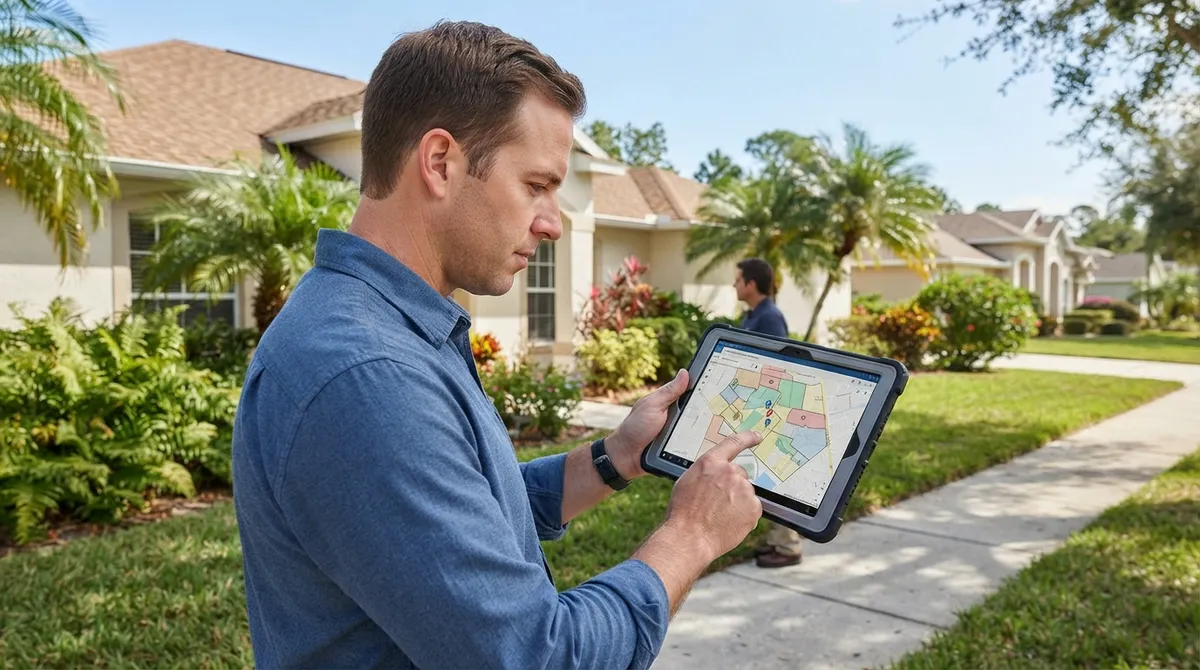
Before you do anything else, figure out who actually has authority. This sounds simple, but it trips people up constantly. Florida has 67 counties and hundreds of municipalities, and a property with a city mailing address may actually sit in unincorporated county territory.
The state sets the general permit requirement, but local agencies set many of the practical details: forms, fees, inspection procedures, and enforcement rules. Getting the jurisdiction wrong means filing in the wrong place and losing weeks.
- Check your property tax record for the incorporated area or county designation.
- Call the county building department and ask who has jurisdiction over your parcel.
- Look for any special overlays, such as flood zones, coastal construction areas, or historic districts.
- Confirm whether a homeowners association also requires approval.
Not sure which office applies? Our building department lookup tool can point you in the right direction, and our guide on which Florida jurisdiction reviews my project explains the tricky city-line situations.

Step 2: Research Existing Permit History and Open Violations
Next, find out what is already on record. You want to know whether any permits exist for the property, whether any are open or expired, and whether code enforcement has already opened a case.
This matters because the strategy changes depending on what you find. A property with no permit history for the work needs a new after-the-fact application. A property with an expired or open permit may need that permit reinstated or closed out instead.
What to Look For
- Open or expired permits tied to the address
- Notices of violation or stop work orders
- Prior inspection records and failed inspections
- Liens or fines connected to code enforcement
You can start with our open permit search tool. If you discover an expired permit, our article on how to close an expired permit in Florida will help you decide the best route.
Step 3: Document the Work as It Exists Today
Now it is time to build your evidence. Because the work is already done, the building department cannot watch it being installed. Instead, you need to show what exists and demonstrate that it is safe and code-compliant.
Start by gathering everything you can before you ever walk into the permit office.
- Take dated photographs of the work from every angle, including interior, exterior, attic, and crawl space.
- Measure the structure and note dimensions, heights, and setbacks from property lines.
- Collect any receipts, invoices, or contracts from the original work.
- Locate product information for windows, doors, roofing, and electrical equipment.
- Write a short timeline of when the work was done and who did it, if known.
This documentation becomes the foundation of your submittal. The more complete it is, the fewer back-and-forth correction rounds you will face later.
Step 4: Get As-Built Drawings and Plans Prepared
Most jurisdictions will want drawings that show the completed work. These are typically called as-built drawings, and they are often the single most important piece of an after-the-fact application.
Depending on the scope and local rules, the building department may request plans, floor layouts, elevations, site plans showing setbacks, and sealed engineering documents. A small interior change may need very little. A structural addition will likely need much more.
| Type of Unpermitted Work | Documents Commonly Requested |
|---|---|
| Room addition or enclosure | As-built plans, site plan, structural engineering, energy calculations |
| Garage conversion | Floor plan, egress and ventilation details, electrical and mechanical review |
| Deck or patio cover | Framing details, connection details, engineer letter, footing information |
| Interior remodel | Floor plan, electrical, plumbing, and mechanical documentation |
| Roof replacement | Product approvals, roof assembly details, permit application |
Our team prepares as-built drawings and site plans in house, so there is no waiting on an outside consultant. If you want to understand the cost side, see 3 as-built drawing costs Florida owners overpay for.
Step 5: Bring in the Right Licensed Professionals
This is where many owners wonder whether they can go it alone. For simple situations, an owner-builder route may be possible in some jurisdictions. For anything involving structural safety, electrical, plumbing, mechanical systems, or flood zones, you will likely need licensed Florida professionals.
An engineer may need to evaluate the framing, connections, and load path. If work is hidden behind finished walls or ceilings, an engineer letter can sometimes document what has been verified. The local agency decides what is acceptable, so it helps to ask early.
- Structural engineer: evaluates framing, foundations, roof structure, and connections.
- MEP engineer: reviews electrical, plumbing, and mechanical systems.
- Licensed contractor: pulls the permit or corrects deficient work as required.
- Surveyor: may be needed to verify setbacks and elevations.
Learn more about our structural engineering and engineer letters, or read who can pull a permit in Florida to sort out licensing questions.
Step 6: Submit the After-the-Fact Permit Application
With your documents in hand, you are ready to file. This is the formal request to the local building department to recognize and permit work that is already complete. The package typically includes an application, owner authorization, contractor information if applicable, your drawings, and any engineering and product approval documents.
One point worth knowing: paying an after-the-fact permit fee does not by itself prove the work complies with code, and it does not automatically resolve a code-enforcement case. Pasco County's ordinance, for example, states that paying the fee is not a defense to prosecution for starting work without a permit. Fees and penalties differ from place to place, so expect your local schedule to be unique.
Tips for a Cleaner Submittal
- Double-check that every form is signed and every page is legible.
- Match the scope of work on the application to what your drawings show.
- Include product approvals for windows, doors, and roofing materials.
- Keep digital copies of everything you submit.
Our permit facilitation and filing service handles the entire submittal and tracks it through review. For a closer look at the process, check how to get an after-the-fact permit in Florida.
Step 7: Respond to Plan Review Comments and Prepare for Inspections
Once you file, plan reviewers will look at your submittal and may issue comments asking for clarification, revised drawings, or additional engineering. Do not panic when this happens. Corrections are a normal part of the process, and answering them thoroughly is how you move toward approval.
Inspectors may then need to verify the completed work. If concealed structural, electrical, plumbing, or mechanical elements cannot be confirmed from the surface, officials may require selective opening, testing, or other documentation. The agency determines what is acceptable.
Here is a quick snapshot of how the review and inspection phase usually unfolds:
| Phase | What Happens | What You Do |
|---|---|---|
| Plan review | Reviewers check drawings against code and local rules | Answer comments with revised sheets and letters |
| Permit issuance | Permit is approved once requirements are met | Pay remaining fees and schedule inspections |
| Field inspection | Inspectors verify the completed work on site | Provide access and open areas if requested |
| Corrections | Any deficiencies are identified | Repair, retest, and request reinspection |
Our plan review coordination and revisions and resubmittals services keep these comment cycles moving. If your application is stuck, read why was my building permit rejected.
Step 8: Correct Deficiencies and Close Out the Permit
Sometimes the work does not meet the Florida Building Code. In that case, you may need to correct it, submit revised plans, or in some situations remove or restore the work. It is not the news anyone wants, but catching it now is far better than discovering it during a sale or after an insurance claim.
Once all inspections pass, the permit is finalized. Depending on the project, you may also need a Certificate of Occupancy or Certificate of Use. Closing out the permit is what puts the property back on solid footing.
- Complete any required corrections identified by plan review or inspectors.
- Request reinspection and obtain passing results.
- Confirm the permit shows as finaled in the jurisdiction's system.
- Request any needed certificate of occupancy or certificate of use.
- Store copies of the finaled permit and approvals with your property records.
If code enforcement is involved, our code compliance and violations team can help you resolve the case alongside the permit. For a broader overview, see unpermitted work Florida: how to legalize.
What Does Legalizing Unpermitted Work Cost and How Long Does It Take?
This is the question everyone asks, and the honest answer is that it depends. Florida law does not set one statewide after-the-fact fee or penalty. Costs and timelines vary by jurisdiction and by the size and complexity of the project.
Some local programs offer temporary relief. For example, Pinellas County ran a storm-related after-the-fact permitting program that temporarily waived penalties through June 30, 2026, though standard permit fees still applied. That was a local, time-limited program, not a statewide rule, so always confirm what is currently available where you live.
Main Cost Drivers
- Permit fees, which can include penalty multipliers in some jurisdictions
- Drafting and as-built drawing preparation
- Engineering and sealed letters
- Corrections or repairs if deficiencies are found
- Opening walls or testing for concealed work, if requested
For a deeper look at numbers, read after-the-fact permit Florida cost and penalty for building without a permit in Florida.
Why This Matters for Sales, Refinancing, and Insurance
Beyond staying on the right side of code enforcement, there are practical reasons to legalize. Unpermitted work can surface during an appraisal, a home inspection, or a title search. It can slow a closing, complicate a refinance, or create trouble with an insurance claim.
That is why real estate professionals and investors often treat this as a priority before listing. Resolving it early gives buyers and lenders confidence and keeps deals from falling apart at the last minute. If you are in that position, our realtor and closing support can help, and you can also read open permit found at closing for common scenarios.
Solar companies and contractors also run into this when a previous install or addition was never permitted. Having a partner who knows how to qualify and process those jobs saves a lot of frustration.
How 1 Contractor Solutions Can Help
You do not have to figure this out alone. 1 Contractor Solutions acts as Florida's outsourced permitting department, serving all 67 counties. We identify which jurisdiction controls your property, prepare the as-built drawings and sealed engineering in house, file the application, track it, work every reviewer comment, and carry it through to closeout.
We respond within 30 minutes day or night, and se habla español. If you want to see what other owners and contractors say, Visit us on Google — 1 Contractor Solutions, or follow us on LinkedIn and follow us on Facebook for permitting tips and updates. You can also review the statute itself at the Florida Senate's page for Section 553.79.
One important note: a permitting service can help you assemble submittals, coordinate plans and inspections, and track corrections, but no one can guarantee approval. Approval depends on demonstrating compliance with the code and local requirements.
Ready to Legalize Your Florida Project?
Legalizing unpermitted construction in Florida comes down to eight steps: identify the jurisdiction, research permit history, document the work, prepare as-built drawings, bring in licensed professionals, submit the application, respond to review and inspections, and close out the permit. Take them in order and the path gets much clearer.
If you are ready for a partner who handles the heavy lifting, we would love to help. Whether you are a homeowner, contractor, solar company, or agent, get a free quote and let us show you what a smoother permitting process feels like. For urgent situations like a stop work order or a stalled closing, visit our urgent permit rescue page and we will get started right away.
FAQs
How do I get an after-the-fact building permit in Florida?
You apply to the local building department that has jurisdiction over your property, usually with an application, as-built drawings, and any needed engineering documents. Requirements and fees vary by city and county, so it helps to confirm the details before you file. A permitting service can gather the paperwork and walk it through review for you.
Will inspectors make me open walls or ceilings?
Sometimes, yes. If structural, electrical, plumbing, or mechanical work is hidden and cannot be verified, officials may ask for selective opening, testing, or other documentation. The local agency decides what is acceptable, so it is worth asking early so there are no surprises.
Does paying the after-the-fact permit fee resolve a code violation?
Not by itself. Paying the fee does not prove the work meets code, and it does not automatically close a code-enforcement case. You still need to satisfy plan review and inspections, and some local ordinances state that the fee is not a defense to a violation.
Can I sell or refinance a Florida home with unpermitted construction?
It may be possible, but unpermitted work can slow or complicate appraisals, lender approvals, and closings. Many owners choose to legalize it first so buyers and lenders have confidence. Resolving it early usually makes the whole transaction smoother.
Do I need an engineer to legalize unpermitted work?
Not always, but structural work, additions, enclosures, and anything affecting safety often calls for sealed engineering or an engineer letter. Smaller cosmetic or minor projects may need less. The local building department ultimately decides what documentation it requires.
We do this work every day across all 67 Florida counties. Call (866) 314-6931 and we will tell you what your situation actually requires — including when you do not need us.
Related services
Permit Facilitation & Filing
You have a crew scheduled, a client asking for dates, and a permit sitting somewhere in a queue you cannot see. We file it, w…
See the servicePlan Review Coordination
A permit in plan review is not one queue. On a commercial project it can be six queues, each with its own reviewer, its own c…
See the serviceReady to get your permit moving?
One call tells you which jurisdiction controls your project, what it will take, and what it will cost. Most of the time we can scope it on the phone.