
Blog
6 Things to Know About 40 Year Recertification Fort Myers
Does Fort Myers require 40-year recertification? Learn how Florida's milestone inspection law works and what owners should verify first.
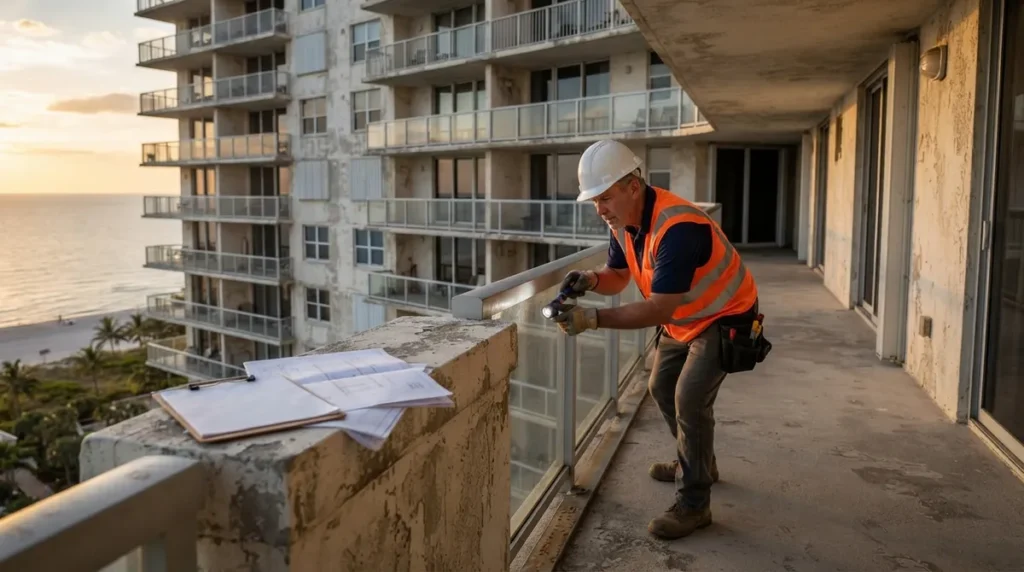
Key Takeaways
-
Fort Myers and Lee County do not verifiably share Miami-Dade's "40-year" recertification program, so confirm requirements with the building authority serving your specific property before acting.
-
Florida's statewide milestone-inspection law (§553.899) generally applies to condo and co-op buildings at least three habitable stories tall, with inspections due at 30 years and every 10 years after.
-
Clock your building's certificate-of-occupancy date first, since the statute uses it to start the milestone timeline, and check whether your property sits in Fort Myers city limits or unincorporated Lee County.
-
Not every older building is covered: height, ownership type, location, and statutory exceptions all matter, so a two-story duplex may fall outside the law while a tall Gulf-view condo likely does not.
-
Milestone inspections are performed by a Florida-licensed architect or engineer in phases, starting with a visual review and moving to a detailed phase-two investigation only if substantial structural deterioration appears.
-
Inspection-recommended repairs that need permits require drawings and often sealed engineering, so line up permitting help early to avoid delays from reviewer comments or unpermitted prior work.
If you own a condo or older commercial building in Southwest Florida, you have probably heard someone say, "Your building needs its 40-year recertification." It sounds official, it sounds urgent, and it can send a board member or owner straight to Google at 9 p.m. Here is the friendly truth: the 40 year recertification Fort Myers question is trickier than it looks.
The famous "40-year" program is tied to Miami-Dade County. Fort Myers and Lee County are a different story, and Florida also has a statewide milestone-inspection law that works on its own schedule. In 2026, mixing those up can cost you time, money, and some serious stress.
In this guide, we walk through six things every Fort Myers owner, property manager, GC, and real estate pro should know. We will separate myth from fact, show you how to check whether your building is covered, and explain what happens after an engineer finds something. Grab a coffee and let's untangle it together.
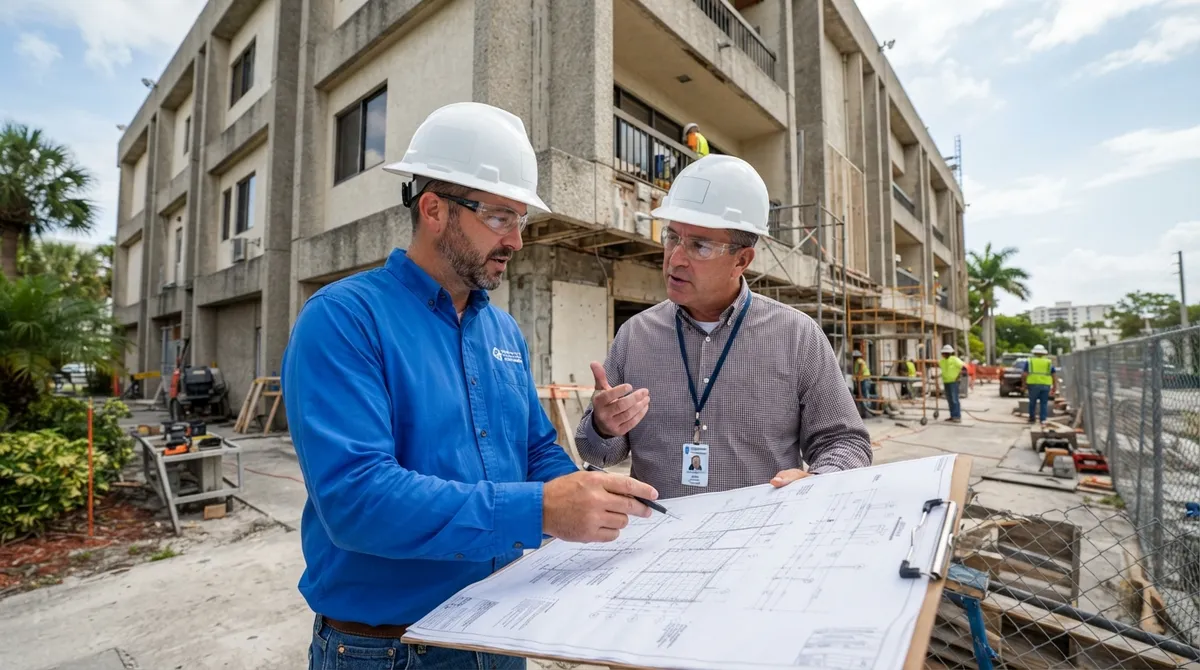
1. The "40-Year" Label Does Not Automatically Apply in Fort Myers
Let's start with the biggest surprise. "40-year recertification" is the nickname most people associate with Miami-Dade County's building recertification program. The available research does not establish that Fort Myers or Lee County has a blanket program with the same name or the same schedule.
That matters because Miami-Dade's rules are county-specific. Its current program describes 30-year or 25-year schedules for certain buildings and excludes some residences. Those details should not be presented as Fort Myers requirements.
Why the confusion happens
- Older articles and listing descriptions still use "40-year" as shorthand for any big building inspection.
- Buyers relocating from South Florida bring the term with them.
- Some lenders and insurers use "recertification" loosely, even when no local program exists.
So before anyone panics, verify. Ask the building authority that actually serves your property what it requires, rather than assuming a rule from another county carries over.
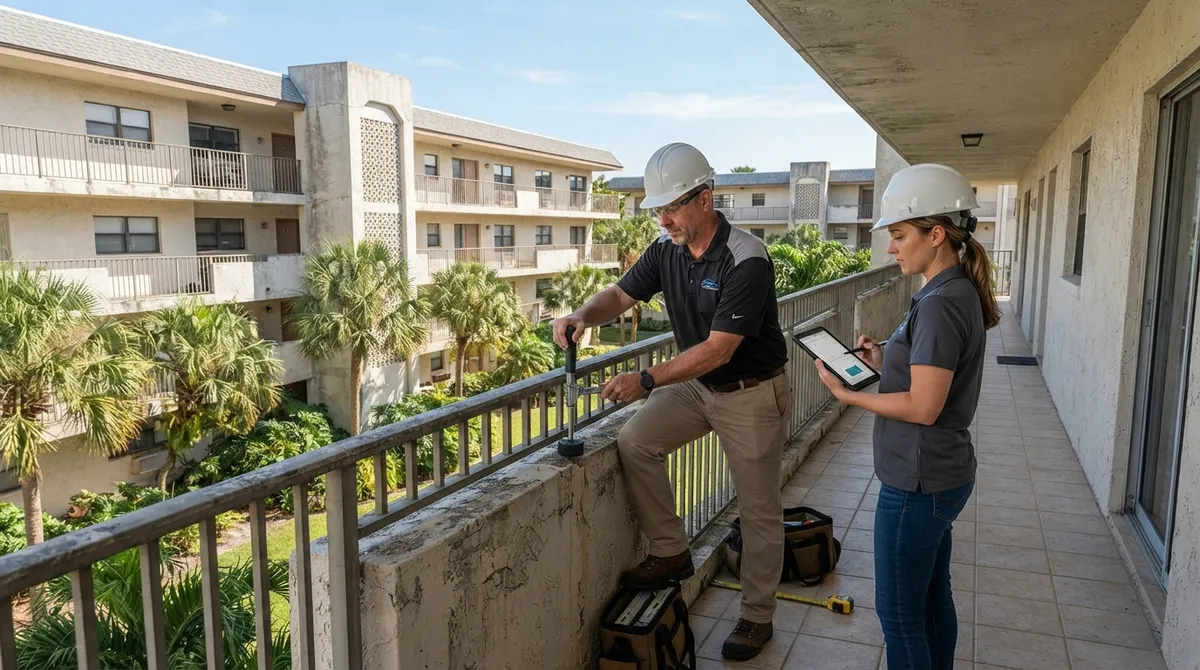
2. Florida's Milestone Inspection Law Is the Statewide Rule That Matters
Here is the part that surprises many Fort Myers owners. Florida has a statewide milestone-inspection law under Florida Statutes §553.899. It is not the same as a general 40-year recertification, but it can absolutely apply to your building.
In plain English, covered residential condominium and cooperative buildings that are at least three habitable stories tall generally need an inspection at 30 years of age and every 10 years after that. The clock usually runs from the certificate-of-occupancy date, and certain local jurisdictions may set an earlier age.
| Feature | Miami-Dade "40-Year" Program | Florida Milestone Inspection (§553.899) |
|---|---|---|
| Scope | County-specific program | Statewide law |
| Typical trigger | Age-based schedule set by the county | 30 years from certificate of occupancy, then every 10 years |
| Covered buildings | Defined by county rules | Condo and co-op buildings, three or more habitable stories |
| Who inspects | Licensed professional per county rules | Florida-licensed architect or engineer |
| Fort Myers applicability | Not verified as a local requirement | Applies if the building meets the statutory criteria |
The statute also had transition deadlines. Buildings already 30 years old before July 1, 2022 faced a December 31, 2024 deadline, and buildings reaching 30 between July 1, 2022 and December 31, 2024 faced December 31, 2025. If your building falls in either group and you are unsure where you stand, our guide on what happens if a Florida condo misses its milestone deadline is a good next read.
3. Not Every Old Building Is Covered
Here is some good news. A 30- or 40-year-old building is not automatically subject to a milestone inspection. Applicability depends on several factors working together.
What decides whether your building is covered
- Building height: The statewide law targets buildings with three or more habitable stories.
- Ownership type: It focuses on condominium and cooperative buildings, not every single-family home or rental.
- Location: Local rules or earlier age thresholds may add requirements.
- Statutory exceptions: Some buildings and situations are carved out.
A two-story duplex in Fort Myers, for example, may not be covered by the statewide milestone law at all. A ten-story Gulf-view condo with a 1990s certificate of occupancy probably is. And a commercial plaza? That depends on what the local building official requires, so do not guess.
For commercial owners, the smart move is to confirm in writing. A short email to the building department can save you from either skipping a requirement or paying for an inspection you do not need.
4. Your First Job: Confirm Four Facts and Your Jurisdiction
Before you hire anyone, play detective for an hour. Fort Myers has its own city Building, Permitting & Inspections department, but plenty of Fort Myers-area addresses actually sit in unincorporated Lee County. Mailing addresses lie; jurisdiction lines do not. If you want a head start on the local process, see our overview of what a milestone inspection in Fort Myers, FL involves.
- Find the certificate-of-occupancy date. This is the date the statute uses to start the clock. Ask the building department for your property's records, or check your association's closing documents.
- Confirm height and use. Count habitable stories and verify whether the building is residential, commercial, or mixed-use.
- Verify condo or cooperative status. Check your declaration or ask your association manager.
- Confirm your jurisdiction. Determine whether you are inside Fort Myers city limits or in unincorporated Lee County, then contact that building official directly.
Once you have those four facts, ask the building official about current inspection requirements, notices, filing procedures, and deadlines. Rules and forms change, so get today's answer, not last year's.
Our open permit search tool can also help you spot lingering permit issues that complicate any inspection, and our 40-year recertification and milestone inspection support page explains how we help owners sort this out.
5. Know How the Inspection Actually Works
A milestone inspection is not your typical walk-through. It is performed by a Florida-licensed architect or engineer, and the process generally runs in two stages.
Phase one: the visual inspection
The professional performs an initial visual review of the structure. They look for signs of substantial structural deterioration, such as cracking, spalling concrete, corrosion, or settlement.
Phase two: the deeper dive
If phase one finds signs of substantial structural deterioration, a more detailed phase-two inspection follows. This can involve testing and closer analysis. To see how the two stages compare, check out Phase 1 vs. Phase 2 milestone inspection in Florida (2026).
| Stage | What happens | Typical outcome |
|---|---|---|
| Document review | Plans, past reports, and permit history are gathered | Baseline for the inspection |
| Phase one | Visual inspection by a licensed architect or engineer | Report filed with the local building official |
| Phase two (if needed) | Detailed investigation after deterioration is identified | Repair recommendations and follow-up reporting |
The professional submits the report to the local building official. If repairs are recommended, that is where permitting enters the picture.
6. Repairs Mean Permits, and Permits Need a Plan
Here is where many owners hit a wall. An inspection report might be clear, but turning it into approved repair work takes drawings, engineering, and a permit that survives plan review. Any repair that requires a permit has to go through the local permitting authority.
That is where 1 Contractor Solutions comes in. We work as Florida's outsourced permitting department, handling plan drafting, sealed structural and MEP engineering, permit filing, tracking, and reviewer comments. Our drafting and engineering are in house, so when a reviewer flags something, we fix it directly instead of waiting on a consultant.
Common permit snags after an inspection
- Past repairs or alterations with no permit on file from a prior owner.
- Missing or outdated drawings, which may call for as-built drawings.
- Repair scopes that need sealed structural drawings.
- A denied application that needs a rescue plan.
If something unpermitted turns up during the process, do not panic. There are well-worn paths for fixing it, including legalizing unpermitted work through the proper channels.
Who Benefits Most From Getting This Right
- Condo boards and property managers: You need clear timelines, a documented process, and a partner who can keep repairs moving.
- General contractors: You may be the one pulling repair permits after an inspection, and clean plans mean fewer reviewer comments.
- Real estate professionals: Inspection status and open permits can affect closings, so early research protects your deal. See our take on fixing a Florida closing held up by unpermitted work.
- Homeowners and residential owners: You may not be covered at all, but knowing that for certain is worth the phone call.
Quick Planning Checklist for Fort Myers Owners
- Confirm your jurisdiction: Fort Myers city limits or unincorporated Lee County.
- Pull the certificate-of-occupancy date.
- Verify building height, use, and condo or co-op status.
- Ask the building official in writing about current requirements and deadlines.
- Hire a Florida-licensed architect or engineer for the inspection if required.
- Line up permit help early for any repairs the report recommends.
Need a hand with any step? You can explore our Fort Myers permitting services or read our walkthrough on how to use private provider plan review in Fort Myers, which can help repair permits move faster. Want a sense of how others rate us? Visit us on Google — 1 Contractor Solutions and read what customers say. You can also follow us on LinkedIn or follow us on Facebook for Florida permitting updates, and if you market in this space, the folks at Brain Buzz Marketing keep a close eye on local trends.
Final Thoughts
The phrase "40 year recertification Fort Myers" is really a starting point for a better question: does my building need an inspection, and what comes next? The answer depends on your building's age, height, ownership type, and jurisdiction, not on a nickname borrowed from Miami-Dade. Verify first, inspect with a licensed professional if required, and handle any repairs through the proper permit process.
You do not have to figure it all out alone. 1 Contractor Solutions provides permitting, plan drafting, and sealed engineering across all 67 Florida counties, with fast response and in-house drawings. When you are ready to turn an inspection report into approved, permitted repairs, get a free quote and let us take the permit headache off your plate.
FAQs
Does Fort Myers require 40-year building recertification?
The "40-year" program is most closely tied to Miami-Dade County, and the available research does not verify an equivalent blanket requirement in Fort Myers or Lee County. That said, Florida's statewide milestone-inspection law may still apply to your building. Your best bet is to confirm with the building department that serves your property.
Which Fort Myers buildings must undergo a Florida milestone inspection?
Generally, condominium and cooperative buildings that are at least three habitable stories tall must be inspected at 30 years and every 10 years after that, measured from the certificate-of-occupancy date. Height, ownership type, location, and statutory exceptions all play a role, so not every older building is covered.
Who can perform a milestone inspection in Fort Myers?
A Florida-licensed architect or engineer performs the inspection. They start with a visual review and move to a more detailed phase two if substantial structural deterioration is found. The professional then submits the report to the local building official.
How do I find my building's certificate-of-occupancy date?
Start with the building department that serves your property, either the City of Fort Myers or Lee County, and request your property's records. Your condo association's closing documents or original plans may also list it. Once you have it, you can calculate when the 30-year mark falls.
What do I do after an inspection recommends repairs?
Repairs that require permits must go through your local permitting authority, usually with drawings and sometimes sealed engineering. A permitting partner like 1 Contractor Solutions can prepare the plans, file the application, and work reviewer comments through approval.
We do this work every day across all 67 Florida counties. Call (866) 314-6931 and we will tell you what your situation actually requires — including when you do not need us.
Related services
Permit Facilitation & Filing
You have a crew scheduled, a client asking for dates, and a permit sitting somewhere in a queue you cannot see. We file it, w…
See the servicePlan Review Coordination
A permit in plan review is not one queue. On a commercial project it can be six queues, each with its own reviewer, its own c…
See the serviceReady to get your permit moving?
One call tells you which jurisdiction controls your project, what it will take, and what it will cost. Most of the time we can scope it on the phone.