
Blog
What Does a Milestone Inspection in Fort Myers, FL Involve?
Learn who needs a milestone inspection in Fort Myers, FL, how deadlines work, what phases involve, and how permits fit into repairs.
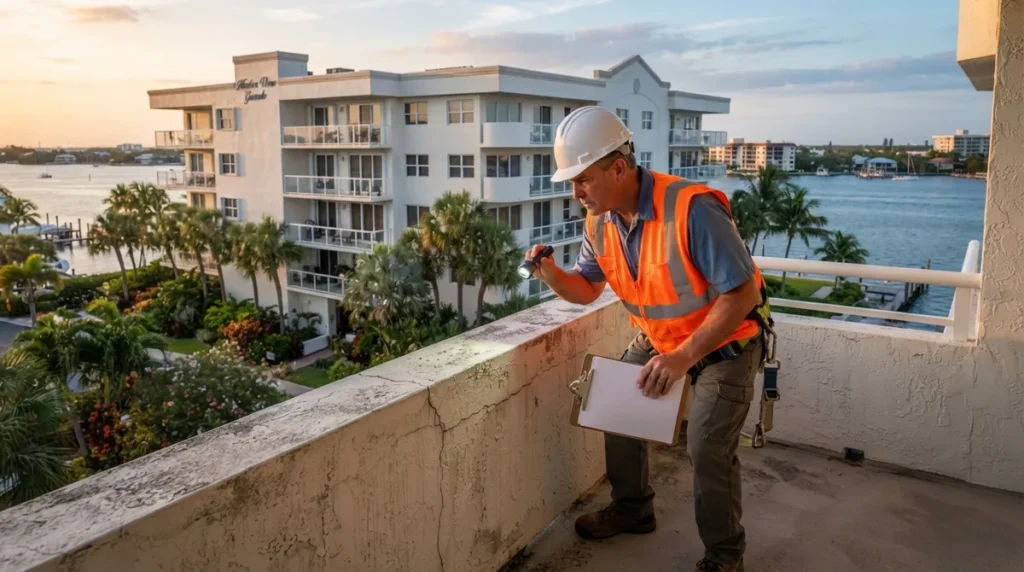
Key Takeaways
-
Florida milestone inspections under §553.899 apply to residential condo and co-op buildings three or more habitable stories tall, first due 30 years after the certificate-of-occupancy date.
-
The local building official can set an earlier deadline based on conditions like salt-water proximity, so always confirm your exact deadline with the authority having jurisdiction.
-
The inspection must be performed by a Florida-licensed architect or engineer; a permitting company supports the process but cannot substitute for that professional.
-
Phase two is only triggered if phase one finds signs of substantial structural deterioration; many buildings end after phase one.
-
The association must arrange and pay for the inspection, distribute the report to unit owners, and submit it to the local building official.
-
Repairs stemming from the report typically require engineered plans, permits, and building inspections, so boards should plan these steps early to avoid schedule slips.
If you serve on a condo board in Southwest Florida, you have probably heard the words "milestone inspection" more often in the last few years than you ever expected. Maybe a unit owner asked about it at the last meeting. Maybe your property manager mentioned a deadline. Either way, you are not alone, and the good news is that this process is far more manageable when you understand the steps.
A milestone inspection in Fort Myers, FL is a structural assessment required by Florida law for qualifying condominium and cooperative buildings. It is performed by a Florida-licensed architect or engineer, and it can lead to repairs that need permits, plans, and local inspections. That last part is where permitting help becomes valuable.
In this friendly guide, we will walk through who needs an inspection, how the deadlines work, what happens in each phase, and how the permitting side fits in. We will also point out a few common stumbling blocks so your association can avoid them in 2026 and beyond.
What Is a Milestone Inspection in Florida?
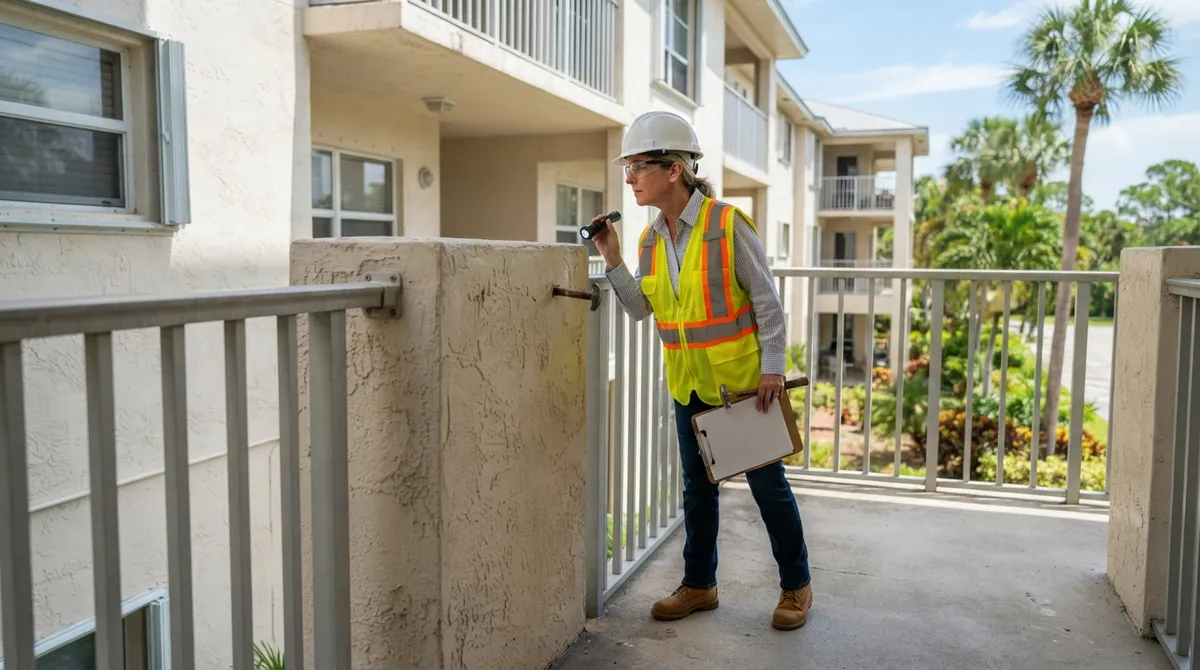
A milestone inspection is a structural safety review of a building at set points in its life. Florida's rules live in Florida Statutes §553.899, and they apply to residential condominium and cooperative buildings that are three or more habitable stories tall.
Think of it like a major check-up for a building. The goal is not to punish anyone. It is to catch structural wear early, while repairs are still manageable and safe.
The standard timing works like this:
- The first inspection is generally due by December 31 of the year the building reaches 30 years from its certificate-of-occupancy date.
- Follow-up inspections are generally required every 10 years after that.
- The local building official can set an earlier initial deadline based on local conditions, such as proximity to salt water.
Because that last point matters in coastal areas, always confirm your exact deadline with the authority having jurisdiction rather than relying on the 30-year rule alone.
Does Your Fort Myers Condo Building Need One?
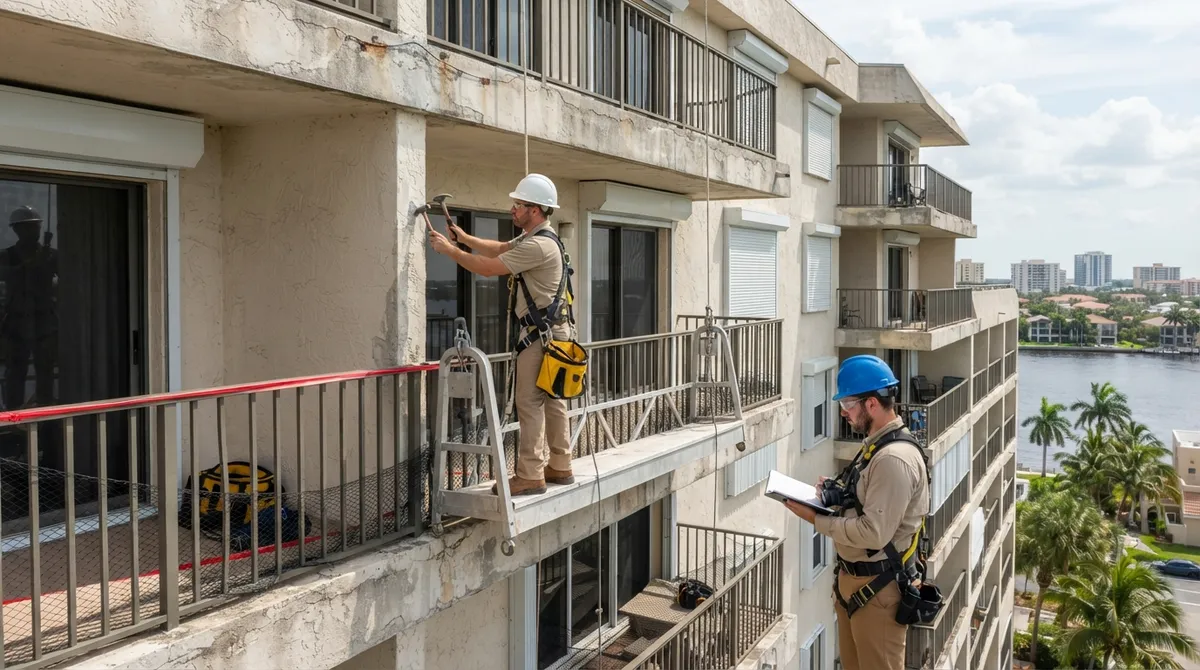
This is the first question most boards ask, and the answer depends on three details: the building type, the height, and the certificate-of-occupancy date. Here is a quick way to check.
| Question | If Yes | If No |
|---|---|---|
| Is it a residential condominium or cooperative building? | Keep going | The statute likely does not apply |
| Is it three or more habitable stories? | Keep going | The statute likely does not apply |
| Is it 30 years past its certificate-of-occupancy date (or earlier if the local official says so)? | An inspection is due or coming soon | Confirm the local deadline and plan ahead |
If you answered yes to all three, it is time to confirm the deadline and start planning. If you are not sure about your building's certificate-of-occupancy date, the next section can help.
How to Find Your Deadline and Certificate-of-Occupancy Date
Many associations get stuck right here, and honestly, that is understandable. Older records get misplaced, management companies change, and addresses with a Fort Myers mailing label can fall under different local jurisdictions.
Here is a simple step-by-step approach:
- Identify the true jurisdiction. A Fort Myers mailing address does not always mean the City of Fort Myers. The property may be in unincorporated Lee County or another municipality.
- Locate the certificate-of-occupancy date. Check your association records, original closing documents, or the building department's permit history.
- Ask the building official about local deadlines. Confirm whether an earlier initial deadline was set because of local conditions.
- Write down the date and share it. Make sure the board, manager, and attorney all work from the same deadline.
Not sure which department controls your property? Our Fort Myers permitting page and our Lee County resources are good places to start, and our team can research the jurisdiction for you.
Who Performs the Inspection?
Here is an important point worth saying plainly: the statutory inspection must be performed by a Florida-licensed architect or engineer. A permitting company, including ours, does not substitute for that licensed professional.
At 1 Contractor Solutions, our role is the support structure around the inspection. We help associations figure out the right jurisdiction and deadline, organize documents, coordinate with qualified professionals, and handle the permits for repairs that come out of the report. That division of labor keeps everyone in their lane and keeps your association protected.
Phase One vs. Phase Two: What Happens During the Inspection?
The inspection happens in up to two phases. Understanding both helps boards budget and plan without surprises. If you want a deeper comparison, see our guide on Phase 1 vs. Phase 2 milestone inspections in Florida.
| Feature | Phase One | Phase Two |
|---|---|---|
| Purpose | Visual examination and qualitative assessment of structural condition | Detailed evaluation of substantial structural deterioration |
| When required | Always, for qualifying buildings | Only if phase one finds signs of substantial structural deterioration |
| Methods | Visual review of major structural components | May include destructive or nondestructive testing |
| Outcome | Report on structural condition | Defines extent and urgency of deterioration and recommends repairs |
Phase One in Plain English
In phase one, the architect or engineer visually examines the major structural components of the building and gives a qualitative assessment of its condition. For many buildings, this is where the process ends.
Phase Two When Needed
If the first phase reveals signs of substantial structural deterioration, a more detailed phase-two inspection follows. This can include testing, and the findings must describe how extensive and how urgent the deterioration is, along with recommended repairs.
If you want to understand what boards typically face when timelines slip, our article on what happens if a Florida condo misses its milestone deadline is a helpful read.
Who Pays and What the Association Must Do
The association is responsible for arranging and paying for the milestone inspection. It must also handle the required notices and reports. According to the statute, that includes distributing the report to unit owners and submitting it to the local building official.
A simple responsibility checklist for the board:
- Confirm the applicable deadline with the local building official.
- Hire a Florida-licensed architect or engineer.
- Budget for both phase one and a possible phase two.
- Distribute the report to unit owners as required.
- Submit the report to the local building official.
- Plan for any repairs, permits, and follow-up inspections.
Keeping a clean paper trail makes everything easier, especially if questions come up later from owners, lenders, or insurers.
What Happens If the Inspection Finds Problems?
First, take a breath. Finding deterioration is not a disaster. It is exactly what the process is designed to do. Early detection usually means repairs are more controlled and less costly than waiting.
When a report identifies deterioration, the local building official may require repairs or other action to address unsafe conditions. Those repairs often require:
- Plans and engineering showing the scope of repair work.
- A building permit filed with the correct jurisdiction.
- Plan review and revisions as the reviewer comments come in.
- Contractor coordination so the right licensed trades do the work.
- Inspections under applicable building codes as work progresses.
- Closeout so the permit is properly finalized.
This is the stretch where a permitting partner earns their keep. Plan sets, sealed drawings, resubmittals, and inspection scheduling can eat up a board's time quickly. Our guide to who seals structural drawings for Florida permits explains how sealed structural documents fit into the picture, and our structural engineering services are built for exactly this kind of work.
Milestone Inspection vs. SIRS vs. Building-Permit Inspections
These three terms get mixed up constantly, so let us clear them up. They are related, but they are not the same thing.
| Item | What It Is | Key Point |
|---|---|---|
| Milestone inspection | Structural safety assessment of a qualifying condo or co-op building | Performed by a Florida-licensed architect or engineer |
| Structural Integrity Reserve Study (SIRS) | A reserve funding study for major building components | Separate from the milestone inspection |
| Building-permit inspection | Inspections during permitted construction or repair work | Happens after a permit is issued for the work |
A milestone report may identify repairs, and those repairs then trigger permits and building-permit inspections. Routine maintenance is a different category again. Keeping these separate on paper helps avoid confusion at board meetings.
Do Repairs Need a Permit in Fort Myers or Lee County?
The milestone inspection itself is not a building permit. However, the repairs that follow often do need permits. Whether a specific repair does depends on the scope of work and the jurisdiction's rules, so the safest approach is to confirm with the correct local building department before work begins.
Common mistakes here include starting repairs before permits are in place, or filing with the wrong jurisdiction. If work has already started without proper permits, do not panic. Our guides on after-the-fact permit requirements in Florida and 7 steps to legalize unpermitted work in Florida show the path forward.
Also keep in mind that expired permits can complicate a repair project. If that is your situation, see what reopens an expired Florida permit fastest.
How Permitting Support Helps With Milestone Repairs
Boards are usually volunteers. They have day jobs, families, and a long list of other association duties. Asking them to also become experts in Florida permitting is a lot.
Here is how a permitting partner can lighten the load:
- Jurisdiction and deadline research so you know who actually controls your building.
- Document organization for submittals and records.
- Coordination with licensed architects and engineers for the inspection and repair design.
- Permit filing and tracking through approval and closeout.
- Plan review coordination and responses to reviewer comments.
- Revisions and resubmittals when the county or city asks for changes.
We keep drafting and engineering in house, with sealed drawings, so when a reviewer flags something, we can fix it quickly instead of waiting on an outside consultant. You can learn more about our 40-year recertification and milestone inspection support and our permit facilitation and filing services.
Tips for Boards, Managers, and Property Owners
Different readers care about different things, so here are a few quick pointers by audience.
- Condo boards and managers: Start early. Confirm the deadline, gather records, and line up a licensed inspector well before the due date.
- General contractors: Expect repair scopes to require engineered plans and permits. Coordinating early prevents schedule slips.
- Real estate professionals and investors: Ask whether a building has completed its milestone inspection and whether any repair permits are open. It can affect closings and financing.
- Unit owners: You are entitled to receive the report distribution described in the statute, so keep an eye on association communications.
- Design professionals and specialty trades: Reliable drafting and engineering support keeps repair projects moving without adding in-house headcount.
A Simple Milestone Planning Timeline
If you like to see the big picture, here is a practical sequence boards can follow:
- Verify applicability: building type, height, and certificate-of-occupancy date.
- Confirm the true jurisdiction and any earlier local deadline.
- Engage a Florida-licensed architect or engineer for phase one.
- Receive the report and distribute it to unit owners as required.
- Submit the report to the local building official.
- If needed, complete phase two and finalize repair recommendations.
- Prepare plans, file permits, and coordinate contractors.
- Complete inspections and close out permits.
Working backward from your deadline gives you breathing room for the unexpected, like a reviewer comment or a contractor scheduling delay.
Ready to Make Your Milestone Process Smoother?
A milestone inspection in Fort Myers, FL does not have to feel overwhelming. With the right deadline research, a qualified architect or engineer, and a permitting partner who handles the paperwork and review process, your association can move from inspection to completed repairs with confidence.
If you would like help sorting out jurisdiction, organizing submittals, or permitting the repairs that follow your report, get a free quote and we will respond fast. You can also see what our 1 Contractor Solutions customers say on Google, and for the statute itself, review Florida Statutes §553.899 directly. We are happy to help however we can, and you can follow us on LinkedIn for more Florida permitting tips.
FAQs
Does my Fort Myers condo building need a milestone inspection?
Most likely, if it is a residential condominium or cooperative building that is three or more habitable stories tall and has reached the required age. The standard trigger is 30 years from the certificate-of-occupancy date, though your local building official may set an earlier deadline. A quick call to the right building department will settle it.
Who is qualified to perform a Florida milestone inspection?
A Florida-licensed architect or engineer must perform the inspection. A permitting company can help with deadlines, paperwork, coordination, and repair permits, but it does not replace the licensed professional. That keeps your association on solid legal footing.
What happens if a milestone inspection finds structural deterioration?
If phase one shows signs of substantial structural deterioration, a more detailed phase-two inspection follows to define the extent and urgency of the problem and recommend repairs. The local building official may require repairs or other action for unsafe conditions. Those repairs typically need plans, permits, and building inspections, which is where permitting support really helps.
What is the difference between a milestone inspection and a SIRS?
A milestone inspection is a structural safety assessment of the building, while a Structural Integrity Reserve Study (SIRS) is a separate reserve funding study for major components. They are related topics but distinct requirements. Your association should track both on its own timeline.
Does a milestone inspection require a building permit in Fort Myers or Lee County?
The inspection itself is not a building permit, but the repairs that result from it often are. Whether a specific repair needs a permit depends on the scope of work and the jurisdiction, so confirm with the correct local building department before work starts. A permitting partner can help you figure out which office applies.
We do this work every day across all 67 Florida counties. Call (866) 314-6931 and we will tell you what your situation actually requires — including when you do not need us.
Related services
Permit Facilitation & Filing
You have a crew scheduled, a client asking for dates, and a permit sitting somewhere in a queue you cannot see. We file it, w…
See the servicePlan Review Coordination
A permit in plan review is not one queue. On a commercial project it can be six queues, each with its own reviewer, its own c…
See the serviceReady to get your permit moving?
One call tells you which jurisdiction controls your project, what it will take, and what it will cost. Most of the time we can scope it on the phone.