
Blog
7 Pros Who Help Agents Fix Unpermitted Work in FL
Discover who really helps Florida real estate agents resolve unpermitted work, from building departments to permitting specialists.

Key Takeaways
-
Real estate agents are not responsible for solving unpermitted work issues alone; specialized teams including contractors, engineers, permit expeditors, and attorneys handle the heavy lifting while agents coordinate.
-
After-the-fact permit costs typically run 2-3 times standard permit fees and timelines range from 1-3 weeks for simple documentation to 6-12+ weeks for structural work, varying significantly by county.
-
Check permit history as part of your pre-listing checklist and ask sellers directly about renovations early to avoid surprises during underwriting or closing that could delay transactions.
-
Florida Building Code §553.79 requires permits for construction work; unpermitted work must be disclosed under Johnson v. Davis standards, and buyers can require legalization, price negotiation, or assume the risk themselves.
-
A dedicated permitting company coordinating sealed drawings, engineering, contractor certifications, and municipal filing across your specific county eliminates weeks of back-and-forth and improves approval odds.
-
Licensed engineers can often certify existing concealed work meets code without demolition, and many Florida jurisdictions accept signed engineering certifications instead of exposing finished walls.
Picture this: you're a real estate agent in Bradenton, three days from listing a lovely little bungalow, and the seller casually mentions their sunroom was "built by a guy my husband knew." No permit. No inspection. Just vibes and good intentions. Sound familiar? If you've been in Florida real estate for more than a hot minute, you've bumped into unpermitted work at least once, and honestly, it's more common than most people admit at the closing table.
Here's the good news: you are not the one who has to solve this alone, and you were never supposed to be. Real estate agents play an important coordinating role, but the actual heavy lifting, the research, the paperwork, the engineering, and the permit filing, belongs to a small team of specialists who do this every single day. In this article, we'll walk through exactly who those people are, what they do, and how a Florida permitting company like 1 Contractor Solutions fits into that picture. Grab a coffee, and let's get you feeling confident about this instead of overwhelmed.
Why Unpermitted Work Becomes a Real Estate Agent's Problem
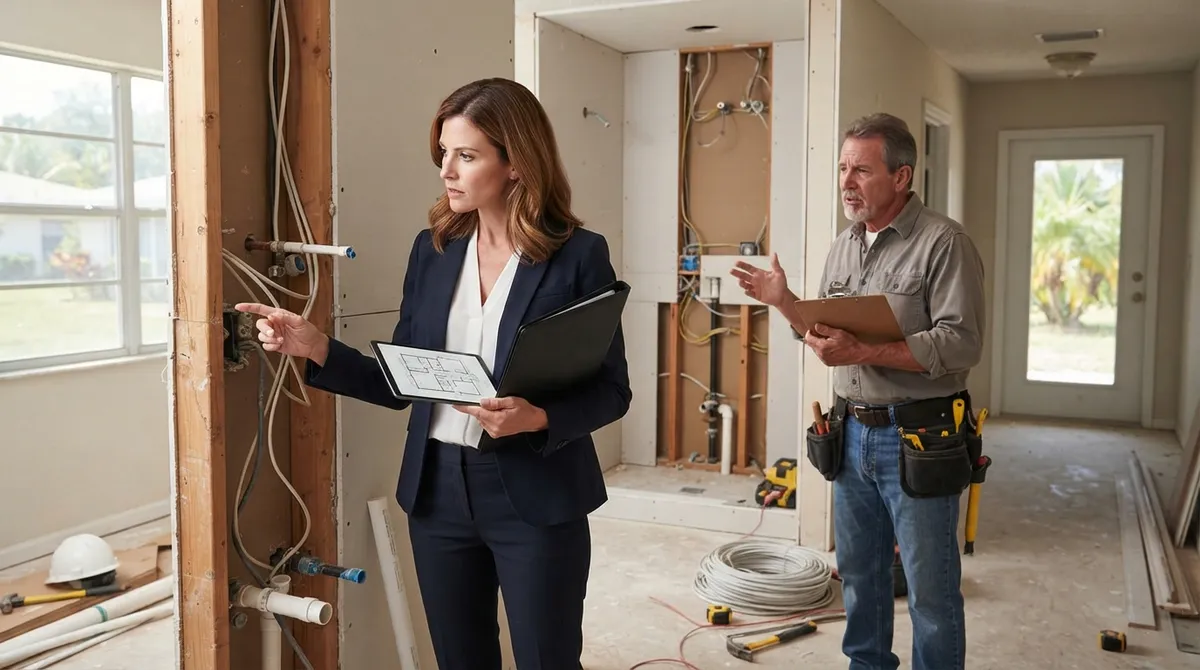
Unpermitted work rarely announces itself. It shows up as a mismatched roofline, a converted garage, or a pool enclosure nobody can find records for. Under Florida Statutes §553.79, anyone who constructs, alters, repairs, modifies, or demolishes a structure generally must obtain a permit first. When that step gets skipped, it becomes a chain reaction that eventually lands on your desk during a listing appointment or, worse, during underwriting.
Agents are often the first to notice something's off, simply because you're the one walking the property with fresh eyes. But once you spot it, your job shifts from salesperson to project coordinator. That's where knowing your team of specialists becomes priceless.

Who Actually Helps Real Estate Agents With Unpermitted Work in Florida
Let's break down the real players in this process. None of them work in isolation, and honestly, the magic happens when they're coordinated well.
1. Local Building Departments
Every fix starts here. The city or county building department holds the permit history, and that record determines everything else. Some counties offer online open permit search tools, while others require an in-person records request. Either way, this is non-negotiable step one.
2. Florida-Licensed Contractors
If work needs to be corrected, exposed, or rebuilt to meet code, a licensed contractor typically performs that labor. They're also often needed to submit certifications for electrical, plumbing, mechanical, or roofing components that were completed without oversight.
3. Architects and Engineers
For structural elements like additions, load-bearing wall changes, or anything involving the roof structure, a Florida-licensed engineer or architect usually needs to review and seal drawings. This is especially true when the work is concealed and can't easily be inspected without demolition.
4. Permit Expediters and Permitting Companies
This is where a company like 1 Contractor Solutions becomes the connective tissue. A dedicated permitting service can pull permit history, identify what's open, expired, or missing, coordinate with contractors and engineers, prepare the application package, and track it through plan review coordination until it's closed out. They don't replace the building official's authority, but they absolutely remove the guesswork and the back-and-forth phone tag that eats up weeks.
5. Real Estate Attorneys
When disclosure questions or contract disputes come up, a Florida real estate attorney steps in. They interpret legal exposure and guide sellers on what must be disclosed under Florida's Johnson v. Davis standard, which generally requires disclosure of known material facts affecting value.
6. Title Companies and Closing Coordinators
Open permits can absolutely stall a closing. Title companies often flag these issues during their search, which is why having a permitting partner who offers realtor and closing support can mean the difference between a smooth signing and a delayed one.
7. Structural and MEP Engineers for After-the-Fact Certification
In many jurisdictions, instead of tearing open finished walls, a licensed engineer can inspect and certify the existing work meets code. This is a huge time-saver and a service engineering teams provide regularly for after-the-fact permits.
The After-the-Fact Permit Process, Step by Step
Once you know who's involved, the process itself becomes much less mysterious. Here's the general sequence most Florida jurisdictions follow:
- Pull the property's permit history from the local building department to confirm what's missing, expired, or open.
- Determine the scope of unpermitted work, whether it's cosmetic, electrical, structural, or a combination.
- Engage a licensed contractor or engineer to inspect the work and document its condition.
- Prepare as-built drawings or engineering calculations as required by the jurisdiction.
- Submit the after-the-fact permit application, often flagged specifically as retroactive.
- Respond to reviewer comments and schedule any required inspections, including exposing concealed work if the building official requires it.
- Receive final approval and permit closeout, clearing the property for sale or refinance.
Some counties, like Indian River County and the City of Vero Beard, publish detailed after-the-fact procedures requiring signed contractor and design-professional certifications for concealed work. Other jurisdictions are less formal but still expect the same level of documentation. This is exactly why having someone who already knows the building department lookup shortcuts for your specific county saves so much time.
What a Florida Permitting Company Can and Cannot Do
It helps to set realistic expectations early with your sellers and buyers. Here's a simple breakdown.
| Task | Can a Permitting Company Handle It? |
|---|---|
| Research permit history and status | Yes |
| Identify required permits for existing work | Yes |
| Prepare sealed engineering drawings | Yes, when in-house engineers are available |
| File and track applications with the county | Yes |
| Coordinate contractor certifications | Yes |
| Guarantee permit approval | No, approval is the building official's decision |
| Give legal advice on disclosure obligations | No, refer to a real estate attorney |
Costs and Timelines Agents Should Set Expectations For
Nobody likes surprises at closing, so let's talk numbers honestly. After-the-fact permit fees in Florida often run about two to three times the cost of a standard permit, though this varies significantly by county, project scope, and whether penalty fees apply under local Florida Building Code provisions. Timelines are just as variable.
| Project Type | Typical Timeline Range |
|---|---|
| Simple documentation-only correction | 1 to 3 weeks |
| Standard after-the-fact permit with inspection | 3 to 6 weeks |
| Structural work requiring engineering and exposure | 6 to 12+ weeks |
| Complex multi-system corrections (electrical, plumbing, structural) | Several months |
These ranges aren't set in stone, and your local building department is always the authoritative source. But having a permitting partner who already understands the paperwork trail in counties like Hillsborough, Pinellas, and Manatee can shave real weeks off the process.
Practical Options for Sellers Facing Unpermitted Work
When you sit down with a seller who's just found out about that unpermitted addition, there are really four paths forward. Walking through these calmly, without judgment, builds trust fast.
- Legalize the work before listing, using an after-the-fact permit process.
- Correct or remove the noncompliant portions if legalizing isn't feasible.
- Disclose the issue transparently and negotiate price or terms accordingly.
- Sell to a buyer who is willing and informed enough to assume the permitting risk themselves.
Which path makes sense depends on safety concerns, financing requirements, insurance implications, and how much time is available before closing. This is exactly the kind of decision where bringing in a after-the-fact and expired permits specialist early saves everyone stress later.
How Agents Can Get Ahead of the Problem
The best agents I know treat permit history like they treat comps: something to check before it becomes a surprise. A few habits worth building into your listing process:
- Run a permit history check as part of your pre-listing checklist.
- Ask sellers directly and early about any renovations, additions, or repairs.
- Keep a trusted permitting partner on speed dial for quick assessments.
- Never guarantee permit approval to a buyer or seller; that's not your call to make.
- Loop in a real estate attorney the moment disclosure questions get complicated.
Agents serving areas like Sarasota County, Miami-Dade County, and Broward County deal with this constantly given how much older housing stock and DIY renovation history exists across the state. Having a reliable process, rather than scrambling each time, protects your reputation and your clients' timelines.
Why Working With a Dedicated Permitting Team Makes Sense
Think of it this way: you wouldn't try to draft a contract addendum without a lawyer's input, so why navigate structural engineering and municipal permit review without specialists who do it daily? A team like 1 Contractor Solutions handles permit facilitation and filing, plans and engineering, and even code compliance violations resolution, all under one roof, across all 67 Florida counties.
That in-house structure matters more than people realize. When a plan reviewer flags an issue, having your own sealed drawings and engineering department means the fix happens fast, not after a two-week wait for an outside consultant to call back. If you want to see how other Florida professionals talk about their experience, you can follow us on LinkedIn or follow us on Facebook for regular updates and permitting tips.
Bringing It All Together for Your Next Listing
Unpermitted work doesn't have to derail a sale, and it definitely doesn't have to derail your week. With the right team, permit history checks, licensed contractors, engineers, permitting specialists, and attorneys, working together, most situations have a clear, manageable path forward. You're simply the coordinator who makes sure the right people are talking to each other at the right time.
If you're an agent, homeowner, or contractor in Florida dealing with an unpermitted work situation right now, you don't have to figure it out solo. Feel free to get a free quote and let a team that's handled thousands of these situations across the state walk you through your options. You can also visit us on Google — 1 Contractor Solutions to see how neighbors and industry professionals across Florida describe working with our team. We're here, we answer fast, and we genuinely enjoy untangling these situations so you can get back to doing what you do best: closing deals with confidence.
FAQs
Who can help a Florida real estate agent resolve unpermitted work?
You've got a whole team available: local building departments for permit history, licensed contractors for corrections, engineers for structural certification, and permitting specialists like 1 Contractor Solutions who tie it all together and file the paperwork for you. Real estate attorneys step in when disclosure or legal questions arise. You don't have to juggle it all yourself, that's the beauty of a good team.
How do I check whether a Florida property has open or missing permits?
Start with the city or county building department where the property is located, since permit records are managed locally rather than statewide. Many jurisdictions offer online lookup tools, and a permitting service can also pull this history quickly if you'd rather not chase it down yourself.
Can a house with unpermitted work be sold in Florida?
Yes, absolutely, homes with unpermitted work get sold in Florida all the time. The key is transparency: sellers should disclose what's known, and buyers can decide whether to move forward as-is, negotiate price, or require the work be legalized first.
What is an after-the-fact permit in Florida, and how do I obtain one?
It's essentially a retroactive permit application for work that was done without proper approval the first time around. The process usually starts with the local building department, involves documentation like as-built drawings or engineering certification, and wraps up with inspections before the permit is officially closed.
Will concealed unpermitted work have to be opened for inspection?
Sometimes, yes, especially for structural changes the building department can't verify otherwise. That said, many jurisdictions will accept a signed and sealed certification from a licensed engineer or architect instead of tearing open finished walls, so it's always worth asking about that option first.
We do this work every day across all 67 Florida counties. Call (866) 314-6931 and we will tell you what your situation actually requires — including when you do not need us.
Related services
Permit Facilitation & Filing
You have a crew scheduled, a client asking for dates, and a permit sitting somewhere in a queue you cannot see. We file it, w…
See the servicePlan Review Coordination
A permit in plan review is not one queue. On a commercial project it can be six queues, each with its own reviewer, its own c…
See the serviceReady to get your permit moving?
One call tells you which jurisdiction controls your project, what it will take, and what it will cost. Most of the time we can scope it on the phone.