
Blog
6 Steps That Resolve Florida After-the-Fact Violations
Learn the 6 practical steps to resolve a Florida after-the-fact code violation, from stopping work to closing out fines and permits for good.
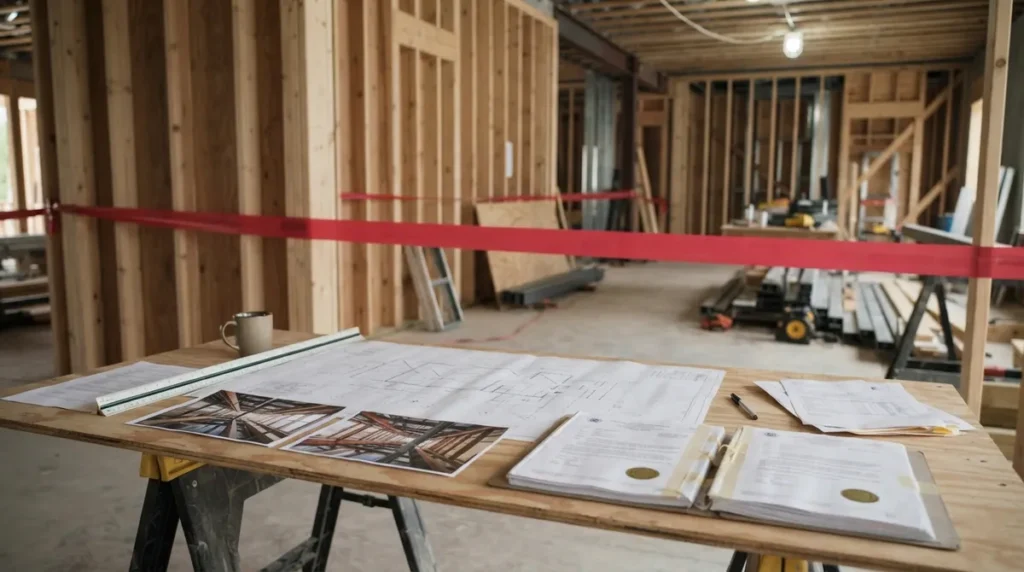
Key Takeaways
-
Florida requires permits before building or altering structures under §553.79; after-the-fact work means applying for the same permit retroactively with extra documentation like sealed drawings and photos.
-
Stop all unpermitted construction immediately when a violation is issued, as continuing work worsens penalties, and confirm your local jurisdiction since procedures vary significantly across Florida's 67 counties.
-
Prepare comprehensive documentation including as-built drawings, current photos, site plans, and sealed engineering letters before filing, as incomplete applications restart your timeline and extend fine exposure.
-
Inspectors may require opening walls to verify hidden work like wiring and plumbing comply with current Florida Building Code, and code compliance is non-negotiable even if original work was older.
-
Closing a permit and resolving a code enforcement case are separate processes; you need written confirmation for both, as unpaid violations can attach as property liens blocking sales and refinancing.
-
Florida Building Code typically authorizes 100% penalty fees on top of regular permit costs, with daily civil penalties up to $1,000-$5,000; verify exact fees with your specific jurisdiction as amounts vary widely.
Getting a code violation notice in your mailbox can make your stomach drop, especially when it's tied to work you thought was totally fine. Maybe you enclosed a lanai, added a bathroom, or finished a garage without realizing a permit was required first. Take a breath, because you are far from alone, and this is genuinely fixable. Thousands of Florida homeowners and contractors face this exact situation every year, and with the right steps, most of them get it resolved without losing sleep for months.
If you're wondering how do I resolve a code violation for after the fact work in Florida, the honest answer is that it takes patience, the right paperwork, and often a little professional help. This guide walks you through the six practical steps that actually move a case from "violation notice" to "case closed." Whether you're a homeowner, a general contractor cleaning up a past project, a realtor trying to save a closing, or a solar company chasing a compliant install, these steps apply to you. Let's get your property back in good standing together.
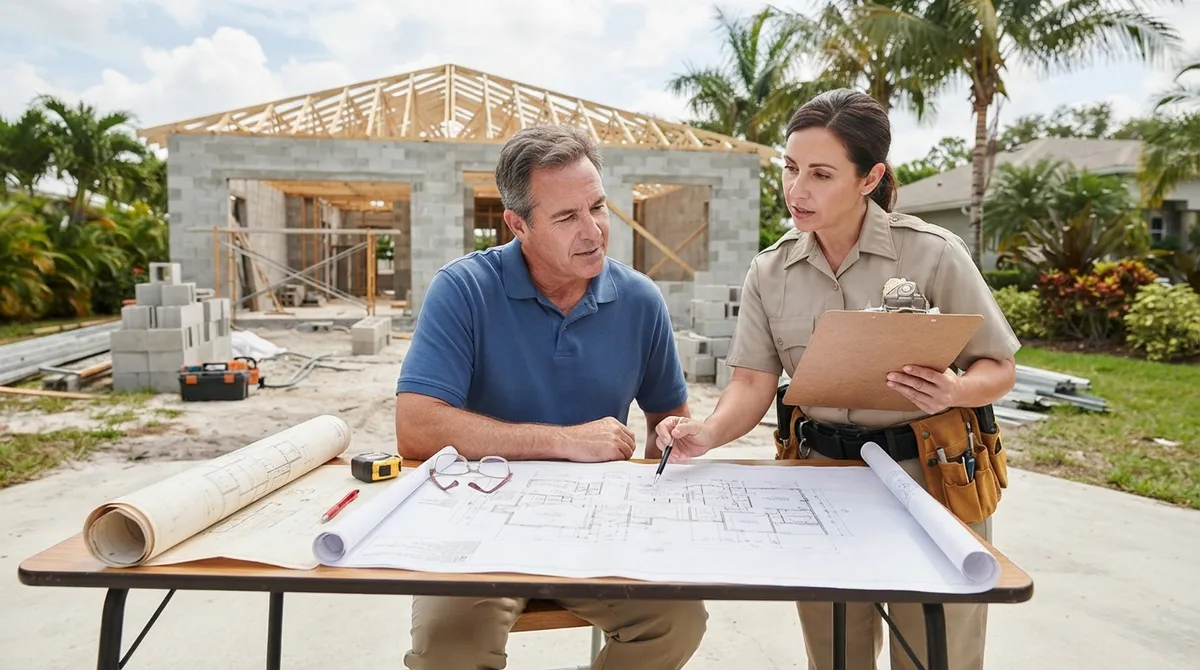
Understanding What "After-the-Fact" Really Means in Florida
Florida Statutes §553.79 requires a permit before you build, alter, repair, modify, or demolish most structures. When work happens without that permit first, and someone finds out later, whether through a neighbor complaint, an insurance inspection, or a sale, it becomes what Florida calls unpermitted or after-the-fact work.
Here's something that surprises a lot of people: Florida does not have one single statewide "after-the-fact permit" application. Instead, you apply for the same permit that should have been pulled originally, and your local building department decides what extra documentation, fees, and inspections are needed to catch it up to code. That's why procedures can look completely different in Tampa versus Fort Lauderdale versus Naples.
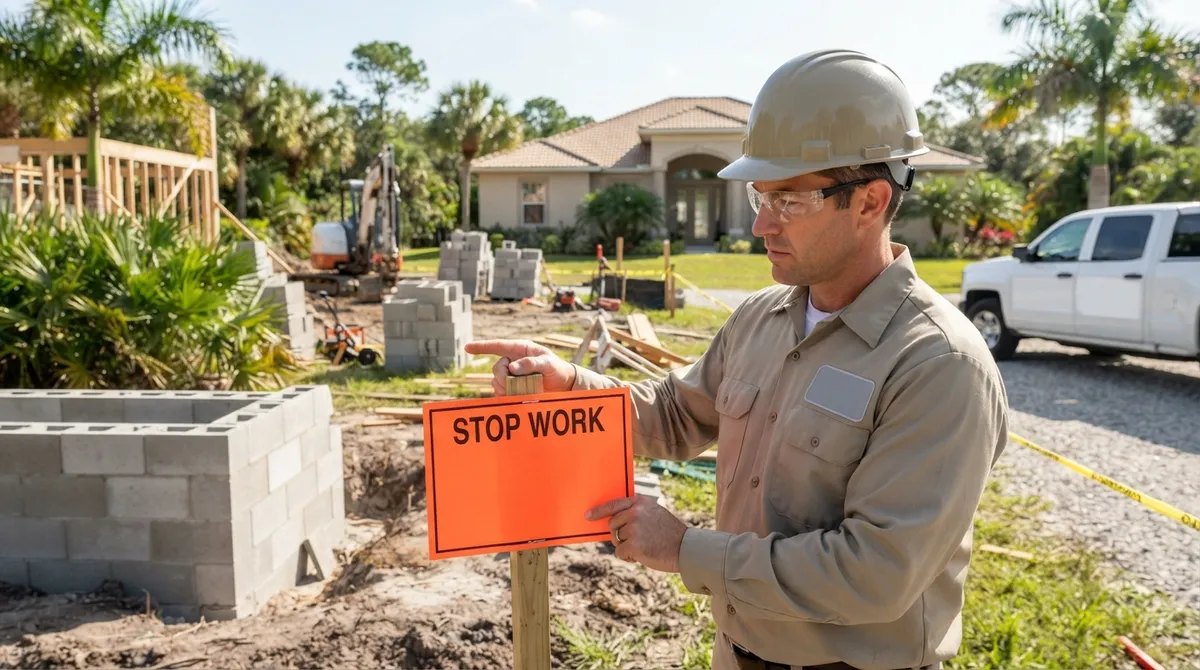
Step 1: Stop All Work and Confirm Who Has Jurisdiction
The very first move, and this one is non-negotiable, is to stop any ongoing unpermitted construction immediately. Continuing to build while a violation is open almost always makes penalties worse.
Next, figure out exactly which agency oversees your property. This sounds simple, but Florida has cities, counties, and special districts that all have their own building departments, and boundaries aren't always obvious near city lines. Our building department lookup tool can help you confirm the correct office before you file anything in the wrong place.
- Identify whether a city or county building department has authority over your address
- Check for any recorded liens, stop-work orders, or active code-enforcement case numbers
- Note the deadline listed on your violation notice, since missing it can trigger daily fines
- Gather the property's folio number and any prior permit history for reference
Step 2: Pull Together Your Documentation Before You Apply
Local building departments want to see proof of what was built and how it was built, not just a description. This is where many owners get stuck, especially if the original work was done years ago by someone who never filed anything.
Typical documentation includes:
- A detailed written description of the completed work
- Current photographs and measurements of the structure or space
- A site plan showing the work in relation to the property lines
- Architectural or engineering drawings, often sealed by a licensed Florida professional
- Contractor licensing information, if a licensed contractor performed the work
- Any specialty documentation needed for electrical, plumbing, mechanical, fire, zoning, or floodplain requirements
This is exactly where working with a permitting specialist saves enormous time. 1 Contractor Solutions keeps plans and engineering in house, including as-built drawings and engineer letters, so the paperwork reviewers actually want to see gets prepared correctly the first time.
Step 3: File the After-the-Fact Permit Application
Once your documentation is ready, it's time to formally apply. This is essentially the same permit application that should have been submitted before work began, just now accompanied by proof of the completed construction and, in many jurisdictions, an additional after-the-fact processing fee.
| Application Component | Why It Matters |
|---|---|
| Permit application form | Establishes the official request for retroactive review |
| As-built or existing conditions drawings | Shows inspectors exactly what was constructed |
| Contractor or owner-builder affidavit | Identifies who is legally responsible for the work |
| Fee payment, including penalty surcharge | Satisfies the jurisdiction's administrative requirements |
| Supporting engineering or trade documents | Confirms structural, electrical, or mechanical compliance |
Filing correctly the first time really matters, because a rejected or incomplete application can restart your clock and extend your exposure to fines. Our team handles permit facilitation and filing across every county we serve, and we specifically manage after-the-fact and expired permits that other providers tend to decline.
Step 4: Prepare for Inspections, Including Possible Opened Walls
Here's the part nobody loves talking about: inspectors need to actually see the work to confirm it complies with the Florida Building Code. If framing, wiring, plumbing, or waterproofing is hidden behind drywall or flooring, you may be asked to open those areas up.
This isn't the inspector being difficult. It's simply how compliance gets verified. A sealed engineering evaluation can sometimes support a determination, but it typically doesn't replace the inspection itself. Coordinating inspections and working through plan review coordination with an experienced team can reduce how much destructive testing is actually required, because reviewers are more comfortable when the documentation package is thorough from the start.
What Happens If the Work Doesn't Meet Current Code
Sometimes older construction simply doesn't hold up against today's Florida Building Code standards, especially around wind load, egress, or electrical safety. If that happens, you may need corrective construction before the permit can close. This is common, and it's not a dead end. It just means budgeting for the fix alongside the paperwork.
Step 5: Handle Fees, Penalties, and Any Code Enforcement Case Separately
Closing the permit and resolving the code enforcement case are two different things, and this trips people up constantly. You can get your permit approved and still have an open code enforcement file with accruing fines if you don't formally address the notice of violation.
A few numbers worth knowing:
- Florida Building Code administrative provisions generally authorize a 100% penalty on top of the regular permit fee for work started without one, unless local ordinance says otherwise
- Under Florida Statutes §162.09, code enforcement civil penalties can run up to $1,000 per day for a first violation and up to $5,000 per day for repeat violations
- Local jurisdictions often set their own fee schedules and minimum charges, so verifying the exact number with your city or county is essential
Our code compliance and violations service exists specifically to walk owners through both tracks at once, the permit application and the enforcement notice, so nothing falls through the cracks.
Step 6: Get Written Confirmation and Close the Loop
Don't consider your case finished until you have something in writing confirming both the permit is closed and the code enforcement matter is resolved. A recorded fine can attach to your property as a lien, and that lien can absolutely delay or derail a sale, refinance, or insurance renewal down the road.
If you're a real estate professional or investor, this step is critical before closing. Our realtor and closing support team regularly helps clear these issues before a deal falls apart, and our open permit search tool is a smart first move for anyone evaluating a Florida property purchase.
Who Actually Needs to Handle This Process
| Audience | Common Scenario | Helpful Resource |
|---|---|---|
| General Contractors | Inheriting a project with prior unpermitted work | General contractor services |
| Solar Companies | Installations flagged for missing structural documentation | Solar contractor support |
| Realtors and Investors | Open permits discovered during due diligence | Realtor services |
| Homeowners | Additions or remodels done without a permit | Homeowner support |
Why Local Knowledge Makes Such a Big Difference
Because every Florida jurisdiction handles after-the-fact permitting a little differently, local familiarity genuinely speeds things up. We work heavily throughout Hillsborough County, Pinellas County, and Manatee County, along with Miami-Dade, Broward, Lee, and Collier counties, so we already know how each department likes documentation packaged.
For readers based in cities like Tampa, St. Petersburg, Sarasota, or Fort Lauderdale, knowing the exact submission quirks of your local office can shave weeks off the process. According to the Florida Senate's statutory text on building permits, enforcement authority is delegated locally, which explains why the experience varies so much from one county to the next.
Common Mistakes That Slow Down Resolution
- Continuing construction after receiving a violation notice
- Submitting incomplete drawings that trigger multiple rounds of rejection
- Assuming a licensed engineer's letter automatically replaces a required inspection
- Ignoring the code enforcement hearing while only focusing on the permit application
- Ordering plans from someone unfamiliar with your specific county's checklist
Avoiding these missteps alone can cut resolution time significantly, and it's part of why professional guidance pays for itself so quickly.
How 1 Contractor Solutions Supports This Process
We built our business around exactly this kind of situation. Our in-house drafting and engineering team prepares sealed drawings without waiting on outside consultants, and because we're a licensed private provider, we can also perform private provider plan review and inspections instead of leaving you stuck in a county queue. If a reviewer flags something, we fix it ourselves, fast.
We've handled more than 5,000 permits and projects across all 67 Florida counties and 400-plus municipalities, so we've genuinely seen it all, from a missed lanai enclosure permit to a full unpermitted addition needing structural correction. You can follow us on LinkedIn or follow us on Facebook for updates on Florida code changes that affect after-the-fact cases, and you're always welcome to visit us on Google — 1 Contractor Solutions to see what past clients have said about their experience.
Ready to Get Your Case Moving?
Resolving a code violation for after-the-fact work in Florida is absolutely doable, and you don't have to figure it out alone. Whether you're a homeowner facing your first violation notice, a contractor managing a client's inherited problem, or a real estate professional racing a closing deadline, the right documentation and local expertise turn a stressful notice into a closed file. If you're ready to stop guessing and start fixing it, get a free quote from our team today, and let's get your property back in full compliance together.
FAQs
How do I apply for an after-the-fact permit in Florida?
You'll apply for the same permit that should have been pulled originally, but you'll include extra documentation like photos, measurements, and possibly sealed engineering drawings showing the completed work. Your local building department decides exactly what's required, so checking with them first (or having a permitting specialist do it for you) saves a ton of back-and-forth.
Can I get a permit after construction is already completed in Florida?
Yes, absolutely, and it happens more often than you'd think. Florida doesn't have a single after-the-fact application, so you're really just applying retroactively for the permit that was missed, and the local department tells you what documentation and inspections are needed to catch it up to code.
Will Florida inspectors require me to open walls or ceilings for unpermitted work?
It's possible, especially if concealed work like wiring, plumbing, or framing can't be verified any other way. Inspectors need to actually see the components to confirm code compliance, so budgeting for some opened finishes is a smart move going into the process.
Can a code violation or permit problem prevent me from selling my Florida property?
It definitely can. An open code enforcement case or unresolved fine can turn into a lien on the property, which title companies and lenders will flag during closing. Getting written confirmation that both the permit and the violation are fully closed protects your sale timeline.
How much does an after-the-fact permit cost in Florida?
Costs vary quite a bit by jurisdiction, but many Florida building departments apply a 100% penalty on top of the standard permit fee for work that started without one first. It's worth confirming the exact fee schedule with your specific city or county, since amounts really do differ across the state.
We do this work every day across all 67 Florida counties. Call (866) 314-6931 and we will tell you what your situation actually requires — including when you do not need us.
Related services
Permit Facilitation & Filing
You have a crew scheduled, a client asking for dates, and a permit sitting somewhere in a queue you cannot see. We file it, w…
See the servicePlan Review Coordination
A permit in plan review is not one queue. On a commercial project it can be six queues, each with its own reviewer, its own c…
See the serviceReady to get your permit moving?
One call tells you which jurisdiction controls your project, what it will take, and what it will cost. Most of the time we can scope it on the phone.