
Blog
5 Proactive After-the-Fact Permitting Florida Mistakes
Avoid these 5 costly mistakes when handling unpermitted work in Florida. Learn the proactive after-the-fact permitting steps that protect you in 2026.
Key Takeaways
-
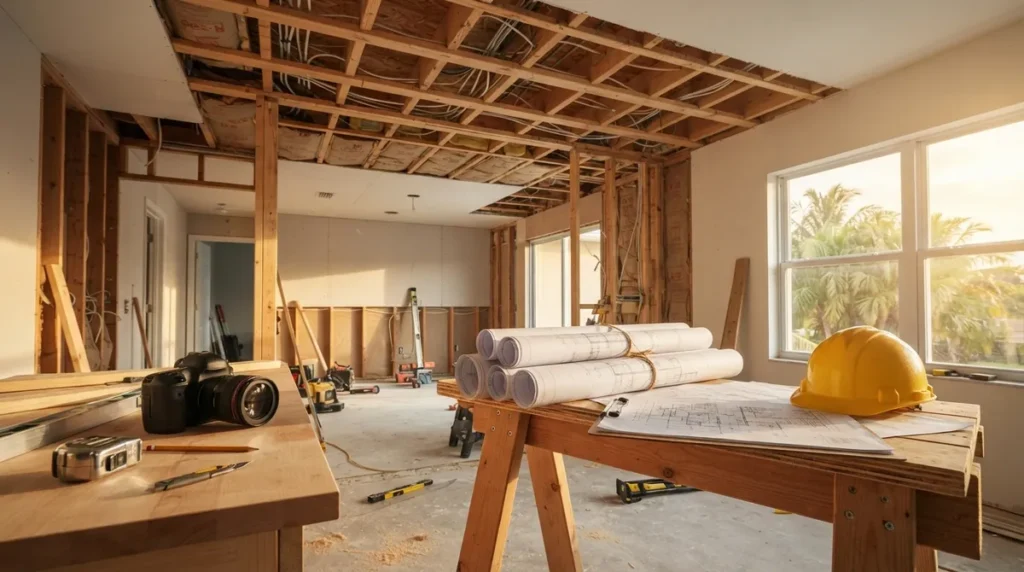
Act before someone else forces the issue: waiting for a code officer, lender, or buyer to find unpermitted work reduces your negotiating power and can trigger violations, fees, and closing delays.
-
Confirm the exact city or county with jurisdiction first, since Florida's 67 counties and many municipalities set their own application process, fees, and enforcement details.
-
Prepare accurate as-built drawings, site plans, and any required engineering or product approvals; a verbal explanation or contractor statement usually won't satisfy the building department.
-
Expect that concealed work may need verification, such as openings in walls or ceilings, so photograph and document everything and ask the jurisdiction upfront what it will require.
-
Don't treat filing as the finish line: keep the permit moving until final approval and get written confirmation that any code-enforcement case is closed.
-
There is no universal statewide after-the-fact fee; confirm the current fee schedule with the local agency, since additional fees vary by jurisdiction.
Picture this: you're closing on a home, finishing a remodel, or wrapping up a crew's work when someone mentions the dreaded words, "Was that permitted?" Your stomach drops. Maybe a prior owner enclosed the patio. Maybe a contractor swore they'd pull the permit and never did. Whatever the story, you're now staring at proactive after the fact permitting Florida style problems, and the clock feels like it's ticking.
Here's the good news: you are far from alone, and this is very fixable. In Florida, "proactive after-the-fact permitting" simply means getting ahead of the issue by working with your local building department to document, inspect, and bring unpermitted work into compliance, before a code officer, lender, or buyer forces the conversation.
The not-so-great news? Many people make avoidable mistakes in the process. They stall, guess, or take shortcuts that cost them time and money. Let's walk through the five biggest mistakes in 2026, and how to sidestep every one of them with a calm, step-by-step approach.
What Proactive After-the-Fact Permitting Actually Means in Florida
Before we get to the mistakes, let's get the basics straight. Florida Statutes §553.79(1)(a) assigns permitting responsibility to the appropriate state or local enforcing agency, and generally requires a permit before covered construction, alteration, repair, or demolition begins. Whether a specific project is exempt depends on the applicable code and your local rules.
"After-the-fact" (sometimes called retroactive) permitting means applying for the required permit after work has started or finished. It is not a rubber stamp. The work still has to be reviewed and shown to meet applicable building, structural, electrical, plumbing, mechanical, and fire-safety requirements.
"Proactive" is the key word. It means you come forward early, disclose honestly, and build a clear compliance path instead of waiting for a notice of violation. If you want a deeper primer, our guide on what after-the-fact permitting in Florida really is covers the fundamentals.
Quick Snapshot: Reactive vs. Proactive
| Approach | What It Looks Like | Typical Outcome |
|---|---|---|
| Reactive | Waiting for a neighbor complaint, code officer, appraisal, or closing hold | Notice of violation, added fees, rushed deadlines |
| Proactive | Stopping work, identifying the jurisdiction, and applying early with accurate documents | Clearer path, more control over timing and cost |
Early contact does not guarantee a waiver of penalties or enforcement action, but it often makes the compliance path much clearer.
Mistake #1: Waiting for Someone Else to Find the Problem
The most common mistake is also the most human one: hoping it goes away. Unpermitted work has a funny way of surfacing at the worst moments, including home inspections, appraisals, insurance claims, refinancing, and closings.
When an issue pops up mid-transaction, you lose negotiating power. Deadlines get tight, buyers get nervous, and everything feels urgent. If you're a realtor or investor, you've probably watched a deal wobble over a missing permit. Our write-up on an open permit found at closing shows how quickly that can escalate.
Why Waiting Costs More
- Enforcement risk: Unpermitted work can lead to notices of violation, stop-work directions, and code-enforcement proceedings.
- Transaction risk: Lenders, title companies, and buyers may require resolution before closing.
- Insurance risk: Unpermitted work can complicate claims.
- Fee risk: Florida Building Code §109.4 authorizes an additional fee when work begins before a permit is issued, and your local agency sets the amount.
The fix: Make the first move. Run an open permit search, confirm what is on record, and decide on a plan before anyone else forces your hand.
Mistake #2: Guessing at Jurisdiction and Local Rules
Florida has 67 counties and hundreds of municipalities, and they do not all play by the same playbook. The state sets the general requirement, but local jurisdictions determine the application process, additional fees, and enforcement details.
Near city lines, it's not always obvious who actually controls your property. You might think you're in the city when you're really under the county, or vice versa. Filing in the wrong place wastes weeks.
Why There's No Single Statewide Price or Penalty
Here's something people get wrong constantly: there is no universal statewide after-the-fact permit price, and no automatic doubling of fees everywhere. Some jurisdictions charge an additional fee, others handle it differently, and the amounts change. Always confirm the current fee schedule with the city or county that has jurisdiction.
| Question | Who Decides |
|---|---|
| Is a permit required for this work? | State law plus local building department |
| How much is the added fee? | Local jurisdiction (per its fee schedule) |
| What drawings are needed? | Local building official, based on scope |
| When is the case closed? | Local code enforcement or building department |
The fix: Start by confirming who really reviews your project. Our building department lookup and the article on which Florida jurisdiction reviews your project can save you a major headache. Working in a major market? We regularly help owners and contractors in Hillsborough County, Miami-Dade County, and Broward County, and every jurisdiction is a little different.
Mistake #3: Showing Up Without Proper As-Built Documentation
Here's where a lot of well-meaning owners and contractors stumble. They walk into the building department with a verbal explanation and a few photos, and then wonder why the application stalls.
The building department may require permit applications and plans reflecting existing conditions. That can include as-built drawings, surveys, product approvals, or calculations prepared or signed by qualified design professionals. A contractor's statement alone usually will not substitute for required documentation, and requirements vary with the work and the jurisdiction.
Common Documents Reviewers May Ask For
- Scaled as-built drawings that reflect what actually exists
- Site plans or surveys showing setbacks and structure placement
- Structural calculations or an engineer letter verifying load paths, connections, or truss details
- Product approvals for windows, doors, roofing, or other covered items
- Electrical, plumbing, or mechanical information when those systems were altered
This is exactly where in-house drafting and engineering pay off. At 1 Contractor Solutions, our drafting and engineering team is our largest department, and our own engineer signs and seals the work. When a reviewer flags a comment, we fix it directly instead of waiting on an outside consultant to call someone back.
The fix: Assemble accurate, professional documentation before you submit. If you already have your own engineer, our drafting-only service produces the permit set while you keep your seal and your client relationship.
Mistake #4: Assuming Concealed Work Will Pass Without a Look
This one surprises people. If the work is already covered by drywall, flooring, insulation, or roofing, you might assume the inspector will just take your word for it. Not so fast.
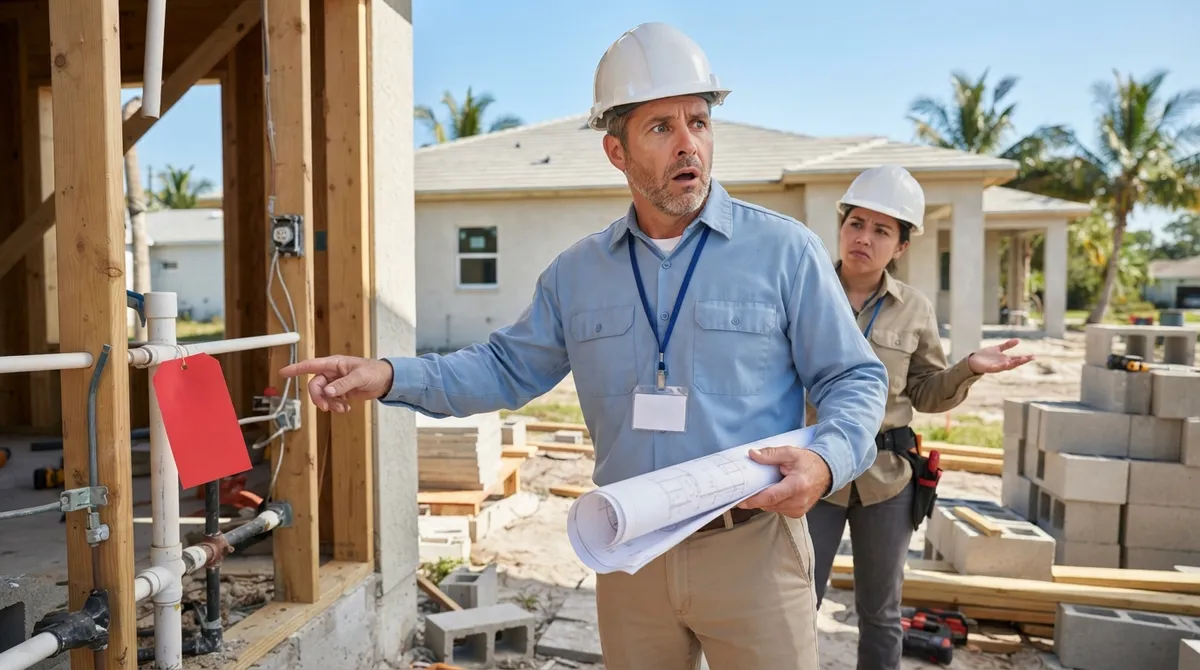
Inspectors may need access to concealed work to verify compliance. If framing, wiring, plumbing, or other regulated work is covered up, the jurisdiction may require openings or other verification before approval. The exact inspection and remediation requirements are project-specific, so there is no one-size-fits-all answer.
What Verification Can Look Like
- Document review: The building department reviews your as-builts and supporting calculations.
- Site inspection: An inspector visits to compare what exists with what the drawings show.
- Selective openings: If something is hidden, the inspector may request small openings to view framing, wiring, or connections.
- Corrections: If anything falls short of code, you correct it and request re-inspection.
- Final approval: Once the work passes, you obtain written confirmation.
Knowing this ahead of time keeps you from panicking when an inspector asks about an opening. Our overview of what happens during a Florida after-the-fact site inspection walks through the process in plain English, and our inspections team can help you prepare.
The fix: Photograph and document everything you can, keep receipts and product labels, and ask the jurisdiction up front what verification they will expect.
Mistake #5: Treating a Permit Application as the Finish Line
This might be the sneakiest mistake of all. You file the application, exhale, and assume you're done. But a permit application does not itself close an enforcement case.
If you received a notice of violation, you need written confirmation that the permit was approved, inspections passed, and the case was closed, where applicable. Skipping that final paperwork is how people end up with a "resolved" problem that quietly shows up again at closing time.
Your Closeout Checklist
- Permit issued and fees paid
- All required inspections passed
- Final approval or, where required, certificate of completion or occupancy
- Written confirmation that any code-enforcement case is closed
- Copies of everything saved in a safe place for future sales or refinancing
If your project also affects occupancy, our pages on certificate of occupancy and code compliance violations explain how those pieces fit together.
The fix: Treat closeout as its own step. Track the permit through final approval, and do not stop until you hold the documentation.
Putting It Together: A Simple Proactive Game Plan
If you take nothing else from this article, take this short roadmap. It reflects how a practical, proactive response usually looks in Florida.
- Stop ongoing work. Do not keep building while the permit question is open.
- Identify the permitting authority. Confirm the exact city or county that has jurisdiction.
- Disclose the real scope. Be accurate about what was done and what condition it is in.
- Ask what is required. Request the application, plan, inspection, and fee requirements in writing.
- Build compliant documentation. Prepare as-builts, calculations, and any sealed drawings the jurisdiction requires.
- Coordinate inspections and corrections. Respond to comments quickly and complete any fixes.
- Get written closeout. Do not assume it is finished until you have it in hand.
For a look at the practical steps from start to finish, see our guide on how to get an after-the-fact permit in Florida, or our walkthrough of how to legalize unpermitted work in Florida.
How a Florida Permitting Service Can Help (and What It Can't Do)
Let's be honest about the limits, because trust matters. A permitting service cannot guarantee approval, and it cannot replace the authority of the building official or the required licensed professionals. Anyone who promises a guaranteed outcome is not being straight with you.
What a good service can do is take the weight off your shoulders:
- Identify the correct jurisdiction and fee schedule
- Organize applications and supporting documents
- Coordinate with licensed architects, engineers, and contractors when needed
- Track review comments and manage revisions and resubmittals
- Arrange inspections and keep the project moving to closeout
That is the work our team does every day. At 1 Contractor Solutions, we act as Florida's outsourced permitting department, handling after-the-fact and expired permits that other firms decline. We have handled more than 5,000 permits and projects, filed in over 400 municipalities, and spent 15+ years in Florida permitting.
Who Benefits Most
| Reader | Typical Situation | Where Help Fits |
|---|---|---|
| General contractors | Sub or prior crew skipped a permit | Filing, sealed drawings, tracking |
| Solar companies | Install completed before permit finalized | Structural and electrical documentation |
| Realtors and investors | Closing held up by unpermitted work | Research, plans, and closing support |
| Homeowners | Inherited addition or enclosure | As-builts, inspections, closeout |
| Architects and trades | Need outsourced drafting and engineering | Drafting, MEP, structural, permit admin |
If you are a contractor or realtor, our pages for general contractors, realtors, and homeowners speak directly to your situation. And if you'd like to hear what others say, visit us on Google — 1 Contractor Solutions to read real customer reviews.
A Few Final Reassurances
If you take one feeling away from this article, let it be relief. Unpermitted work is common in Florida, and the path to fixing it is well worn. The people who come out ahead are the ones who act early, document honestly, and follow the process to the very end.
Remember the five mistakes: waiting too long, guessing at jurisdiction, skipping proper documentation, assuming concealed work gets a pass, and treating the application as the finish line. Avoid those, and you will be far ahead of most people in your shoes.
Ready to Get Ahead of It?
You do not have to untangle this alone. Our team answers around the clock, responds within 30 minutes day or night, and se habla español. We will tell you which jurisdiction controls your project, what it will take, and then we will go do the work. When you are ready, get a free quote and let's turn that knot in your stomach into a clear plan. You can also follow us on LinkedIn or follow us on Facebook for more Florida permitting tips.
FAQs
How do I get an after-the-fact building permit in Florida?
Stop any ongoing work, identify the city or county that has jurisdiction, and ask what application, plans, inspections, and fees they require. You'll typically submit as-built documentation that shows the work meets code, then complete any inspections or corrections. It's very doable when you go step by step.
Are after-the-fact permit fees doubled in every Florida county or city?
No, and that's a common myth. Florida Building Code §109.4 authorizes an additional fee when work starts before a permit is issued, but each local agency sets its own amount and procedures. Always check the current fee schedule with your specific jurisdiction.
Can a Florida inspector require me to open walls to inspect unpermitted work?
Yes, it's possible. If framing, wiring, plumbing, or other regulated work is concealed, the jurisdiction may require openings or other verification before approval. The exact requirements depend on your project and local rules, so ask early.
What happens if I ignore a notice for unpermitted construction in Florida?
Ignoring it can lead to added fees, required corrections, stop-work directions, or code-enforcement proceedings. A permit application alone doesn't close a case, so get written confirmation once everything is approved. Acting early gives you far more control.
Can a Florida permitting service help legalize unpermitted work?
Absolutely, within limits. A permitting service can identify the right jurisdiction, organize documents, coordinate drafting and engineering, track comments, and arrange inspections. It can't guarantee approval, since that decision belongs to the building official.
We do this work every day across all 67 Florida counties. Call (866) 314-6931 and we will tell you what your situation actually requires — including when you do not need us.
Related services
Permit Facilitation & Filing
You have a crew scheduled, a client asking for dates, and a permit sitting somewhere in a queue you cannot see. We file it, w…
See the servicePlan Review Coordination
A permit in plan review is not one queue. On a commercial project it can be six queues, each with its own reviewer, its own c…
See the serviceReady to get your permit moving?
One call tells you which jurisdiction controls your project, what it will take, and what it will cost. Most of the time we can scope it on the phone.