
Blog
11 Facts: Can I Get an After-the-Fact Permit in FL?
Wondering if you can get an after-the-fact permit for an addition in Florida? Here are 11 facts every owner should know before applying.
Key Takeaways
-
Florida allows after-the-fact permits for unpermitted additions, but approval requires compliance with current building code and zoning rules—the application doesn't erase the original violation, only brings work into compliance going forward.
-
Jurisdiction identification is critical: Florida's 67 counties have different building departments (some city-run, some county-run), and filing with the wrong office can waste weeks; use a Building Department Lookup tool to confirm which office has authority over your address.
-
After-the-fact permit fees can be significantly higher than standard permits, with surcharges up to 100% of the base fee under Florida Building Code 109.4, plus potential flat enforcement fees varying by jurisdiction.
-
Concealed work like structural changes and load-bearing walls typically require opening walls for inspection or obtaining a signed, sealed compliance report from a licensed architect or engineer to avoid demolition.
-
Unpermitted work by previous owners becomes the current owner's responsibility—you inherit the compliance burden when you purchase the property, and the issue can affect refinancing and sales since lenders and title companies flag these additions.
-
Required documentation typically includes a completed permit application, current survey, as-built drawings, trade certifications, and engineer letters; each jurisdiction has different checklists, so confirm local requirements before submitting.
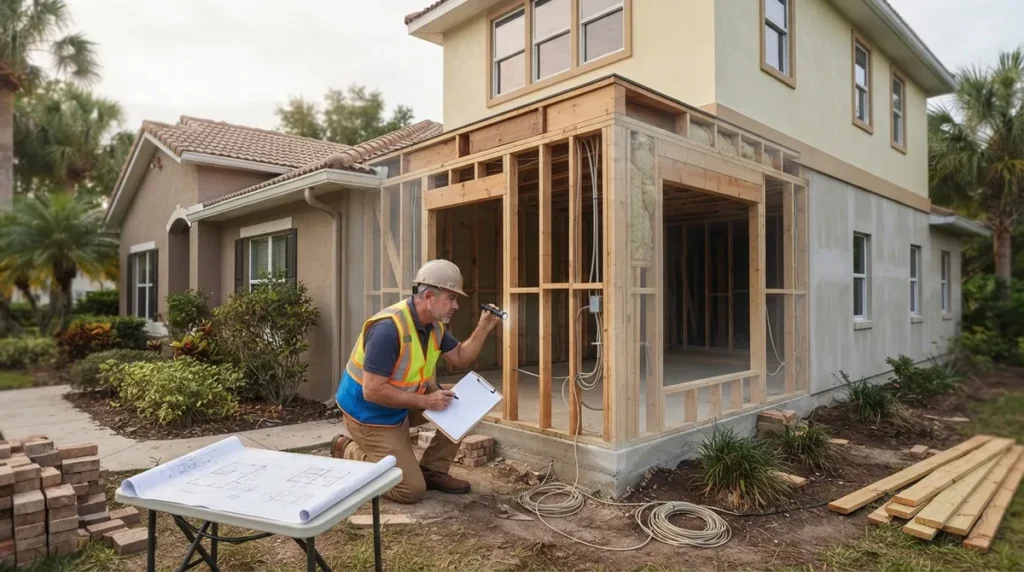
So you (or maybe the previous owner) built an addition without pulling a permit, and now you're wondering if there's a way to fix it without tearing the whole thing down. Take a breath — you're not alone, and the good news is that Florida does have a path forward. It's just not always simple, and it's definitely not the same in every county. That's exactly why we're breaking it down for you today, friend to friend.
Whether you're a homeowner who just found out about a garage conversion that was never permitted, a real estate agent trying to close a sale, or a general contractor picking up someone else's mess, this guide will walk you through exactly what to expect. We'll cover the real facts, the real fees, and the real steps — no scare tactics, just honest guidance.
Can I Get an After-the-Fact Permit for an Addition in Florida?
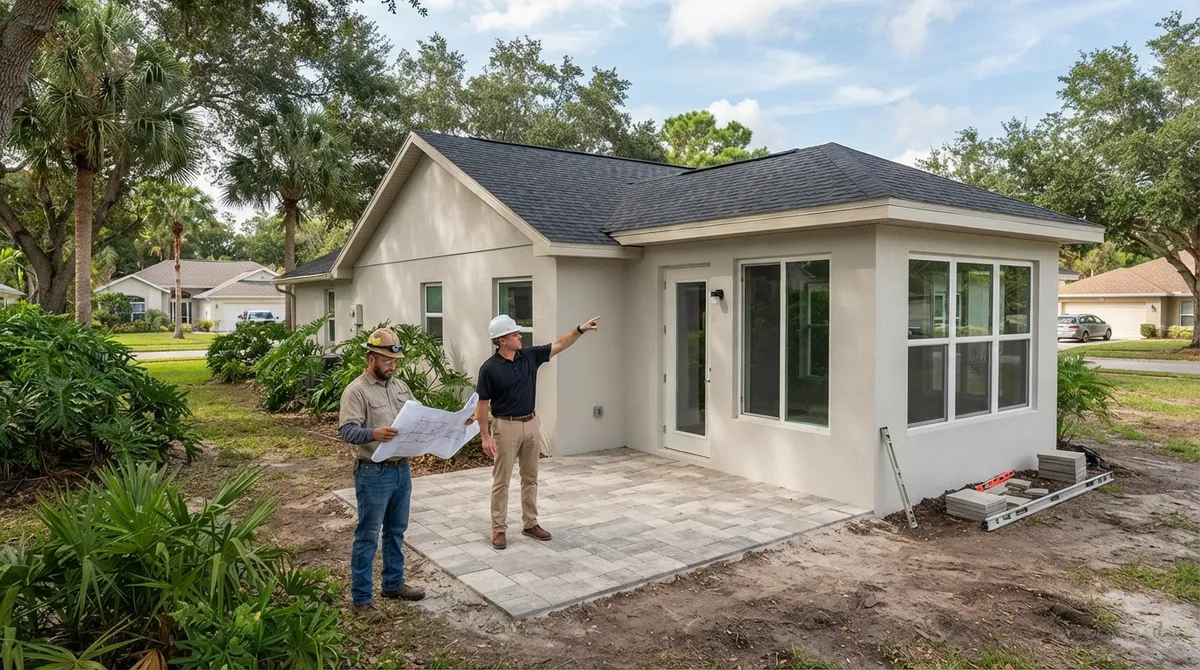
Yes — generally speaking, you can apply for a permit after an addition has already been built in Florida. But here's the important nuance: applying doesn't automatically legalize the work. Your local building department still has to evaluate the addition against the current Florida Building Code and local zoning rules before anything gets approved.
Florida Statutes section 553.79 makes it unlawful to construct or alter a building without first obtaining the required permit from the local enforcing agency. So an after-the-fact permit doesn't erase that original violation — it's simply the mechanism your jurisdiction uses to bring the work into compliance now.
One more thing worth knowing: there isn't one single, statewide "after-the-fact permit" form that works everywhere. Each city and county runs this through its own regular permitting system, sometimes calling it an after-the-fact, retroactive, corrective, or existing-work permit. That's part of why so many owners feel confused right out of the gate — and honestly, it's a completely reasonable thing to feel confused about!
Why Jurisdiction Matters More Than You Think
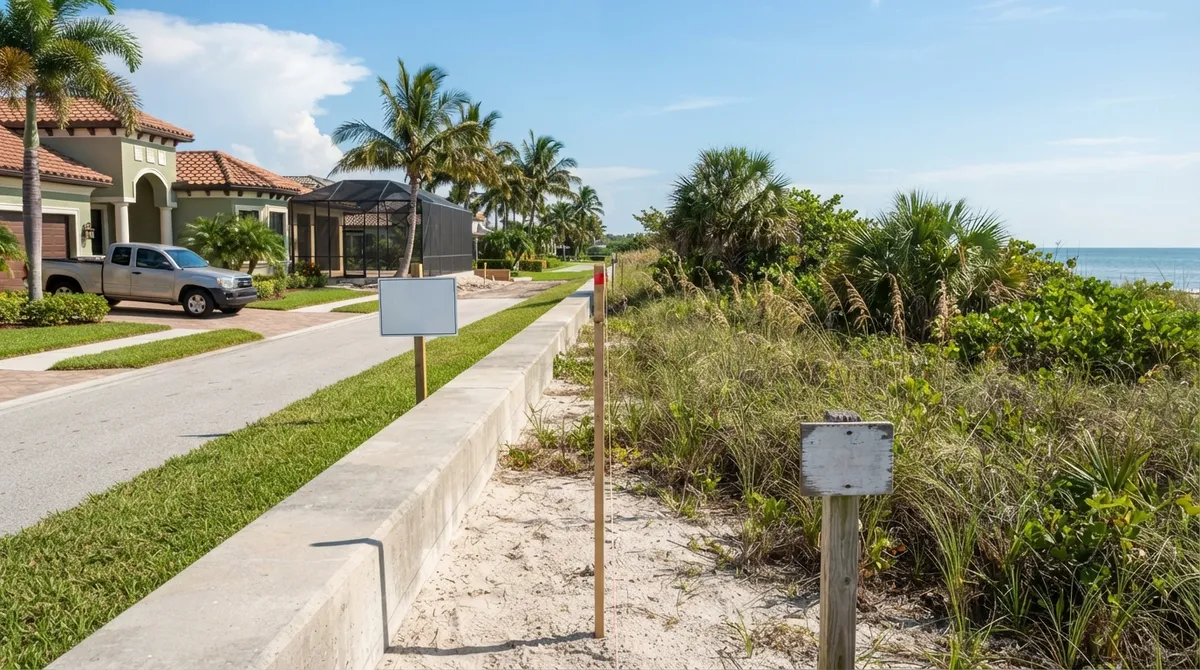
Florida has 67 counties, but the actual building department that reviews your case might be a county office or a city office, depending on exactly where your property sits. If you're near a boundary line, this gets tricky fast.
We've seen homeowners in Bradenton assume they needed to file with the county, only to discover the city handled it. The same mix-up happens constantly around Tampa, St Petersburg, and Fort Lauderdale. Getting this identification right at the start saves weeks of wasted effort later.
A quick way to confirm this yourself is through our Building Department Lookup tool, which helps pinpoint exactly which office has authority over your address before you submit anything.
11 Facts Every Florida Owner Should Know
- Yes, applications are generally accepted — but approval depends entirely on current code compliance, not just paperwork.
- The violation itself isn't erased — the permit application addresses the unpermitted status going forward, not the fact that work started illegally.
- Fees can be higher than normal. Florida Building Code section 109.4 allows an additional fee when work begins before a permit is issued, and some jurisdictions add up to 100% of the standard permit fee.
- You may need a Notice of Commencement. In places like Indian River County, this is required before the first inspection when job value exceeds $2,500.
- Concealed work may need to be exposed. Walls, ceilings, and foundations sometimes must be opened for inspection unless a licensed professional certifies compliance instead.
- Sealed drawings are often required for structural changes, load-bearing walls, flood zones, or complex additions.
- Trade certifications matter. Electrical, plumbing, mechanical, and roofing work may each need separate documentation or licensed contractor sign-off.
- Approval is never guaranteed. If the addition doesn't meet current code, you may need corrections, partial demolition, or a variance (which can't waive life-safety requirements).
- Prior owners' unpermitted work becomes your problem. If you bought a home with an existing addition, you can still apply — but you inherit the compliance burden.
- Selling or refinancing can be affected. Lenders and title companies frequently flag unpermitted additions during due diligence.
- Local procedures vary widely. Application forms, inspection steps, and required documents differ by city and county, so nothing here should be assumed universal.
What Documents Will You Likely Need?
While every jurisdiction has its own checklist, most after-the-fact addition applications ask for a similar core set of paperwork. Here's what tends to show up again and again:
- A completed permit application describing the scope of the existing addition
- A current survey or site plan showing setbacks and the addition's location
- As-built or construction drawings reflecting what was actually built
- Structural, electrical, plumbing, and mechanical documentation, as applicable
- A signed and sealed compliance report from a licensed architect or engineer, if concealed work can't be opened for inspection
- Proof of contractor licensing for any trade work being certified
If any of this sounds overwhelming, that's completely normal — most owners have never had to gather this kind of documentation before. Our As Built Drawings and Engineer Letters teams handle exactly this kind of documentation daily, and we're always happy to walk you through what applies to your specific property.
Fee Comparison: What to Expect
| Fee Type | Typical Range or Rule | Notes |
|---|---|---|
| Standard Permit Fee | Varies by jurisdiction | Based on project valuation |
| After-the-Fact Surcharge | Up to 100% of standard fee | Set locally per FBC 109.4 |
| Flat Enforcement Fee | Example: $100 (Miami Lakes) | May apply in addition to surcharge |
| Notice of Commencement | Required over $2,500 job value (some counties) | Confirm threshold locally |
Step-by-Step: How the Process Typically Works
- Stop any ongoing unpermitted work immediately to avoid compounding violations.
- Identify the correct building department using a jurisdiction lookup or by contacting the local office directly.
- Pull the property's permit and code violation history to understand what's already on file.
- Document existing conditions with photos, measurements, and a current survey.
- Hire a licensed architect, engineer, or contractor as required for your scope of work.
- Submit the after-the-fact application with all required supporting documents.
- Schedule and complete required inspections, including any opened-wall inspections if concealed work can't be certified another way.
- Correct any deficiencies flagged by the reviewer or inspector.
- Resubmit revised plans if needed and respond to plan review comments promptly.
- Pay all applicable fees, including any after-the-fact surcharges.
- Obtain final approval or permit closure to officially resolve the violation.
This is a lot of moving pieces, and honestly, most homeowners don't have the bandwidth to chase every step while also juggling work, family, and everyday life. That's a big part of why our After The Fact Expired Permits service exists — we take the files that feel too tangled for a DIY approach and carry them through to the finish line.
Who Should Be Involved in the Process?
General Contractors
If you're a contractor inheriting an after-the-fact situation on a job site, you know how quickly these can eat into your schedule. Coordinating Plan Review Coordination early can prevent surprise delays once inspections begin.
Solar Companies
Solar installers occasionally discover an unpermitted addition sitting beneath the array they're trying to permit. Since roof structure and load calculations matter for solar mounting, our Structural Engineering team frequently supports solar projects that hit this exact snag.
Real Estate Professionals
Unpermitted additions show up constantly during due diligence, and they can absolutely stall a closing. If you're representing a buyer or seller, our Realtor Closing Support service exists specifically to help move these situations toward resolution before the deal falls apart.
Florida Homeowners
If this is your first time dealing with permitting, please don't panic — this is far more common than people realize, and building departments see these applications regularly. You're simply doing the responsible thing by addressing it now.
Common Pitfalls to Avoid
- Assuming your county's rules apply to a city-controlled property (or vice versa)
- Skipping the survey or site plan step, which almost always gets requested anyway
- Hiring an unlicensed contractor to "certify" concealed work
- Ignoring flood zone requirements, which can significantly change documentation needs
- Ignoring the possibility that a variance won't be available for life-safety code items
- Assuming a previous owner's unpermitted work isn't your responsibility once you own the property
How a Permitting Service Fits Into This Picture
We won't pretend a permitting company can guarantee approval — that authority always sits with the local building official, and that's exactly how it should be. What a good permitting partner can do is remove the guesswork: identifying the right jurisdiction, assembling the correct plans and supporting documents, coordinating architects, engineers, and contractors, and tracking every inspection and correction until the permit is finalized.
At 1 Contractor Solutions, this is genuinely our bread and butter. Our in-house drafting and engineering team prepares sealed drawings when structural documentation is required, and because we're a licensed private provider, we can sometimes perform plan review ourselves instead of leaving you waiting in a county queue. Whether you're dealing with a property in Clearwater, Miami, or anywhere across our Florida service area, we've likely seen a version of your situation before.
You can also check our Open Permit Search tool to see what's already on file for your property before you start the process — knowledge is power here, and it's free to check.
Bringing It All Together
Dealing with an unpermitted addition can feel a little like admitting a mistake you didn't even make (especially if a previous owner is the one who skipped the permit). But here's the encouraging part: Florida's system, while not perfectly uniform, is absolutely built to help you get compliant. Thousands of owners walk this path every year, and most come out the other side with a legalized addition and real peace of mind.
If you want a second set of eyes on your specific situation, reach out and get a free quote from our team — we respond quickly, and we genuinely enjoy untangling these cases. You can also see what our clients say by visiting Visit us on Google — 1 Contractor Solutions, or connect with us on follow us on LinkedIn and follow us on Facebook for more permitting tips and updates across the state.
You've got this — and we're happy to help carry the load whenever you're ready.
FAQs
Can I get an after-the-fact permit for an addition in Florida?
Yes, generally you can apply — but the local building department still has to review the addition for compliance with current code before approving it. Applying doesn't automatically legalize the work, so it's worth going in with realistic expectations and good documentation from the start.
How much does an after-the-fact permit cost in Florida?
Costs vary by jurisdiction, but expect the standard permit fee plus a possible surcharge of up to 100% for work that started before permitting, per Florida Building Code section 109.4. Some cities also add flat enforcement fees, so it's smart to confirm the exact schedule with your local office.
Will I have to open walls or ceilings for an unpermitted addition inspection?
It depends on your jurisdiction and the type of work involved — some concealed structural or trade work may need to be exposed for inspection. In many cases, a licensed architect or engineer can submit a signed and sealed compliance report instead, which can save you from tearing anything open.
Can I get a permit for an addition built by a previous owner?
Yes, you absolutely can, and it's actually a really common situation! Since the violation runs with the property rather than the person, current owners can apply for the after-the-fact permit even if someone else built the addition years ago.
Does an after-the-fact permit remove fines or code-enforcement violations in Florida?
Not automatically — the permit process addresses bringing the work into compliance, but any existing fines or enforcement actions are typically handled separately by the local code enforcement office. It's worth asking your jurisdiction directly how the permit approval interacts with any outstanding penalties.
We do this work every day across all 67 Florida counties. Call (866) 314-6931 and we will tell you what your situation actually requires — including when you do not need us.
Related services
Permit Facilitation & Filing
You have a crew scheduled, a client asking for dates, and a permit sitting somewhere in a queue you cannot see. We file it, w…
See the servicePlan Review Coordination
A permit in plan review is not one queue. On a commercial project it can be six queues, each with its own reviewer, its own c…
See the serviceReady to get your permit moving?
One call tells you which jurisdiction controls your project, what it will take, and what it will cost. Most of the time we can scope it on the phone.