
Blog
11 After-the-Fact Permit Florida Steps That Work (2026)
Learn 11 practical steps for handling an after the fact permit in Florida, from documentation to code compliance and closing costs.
Key Takeaways
-
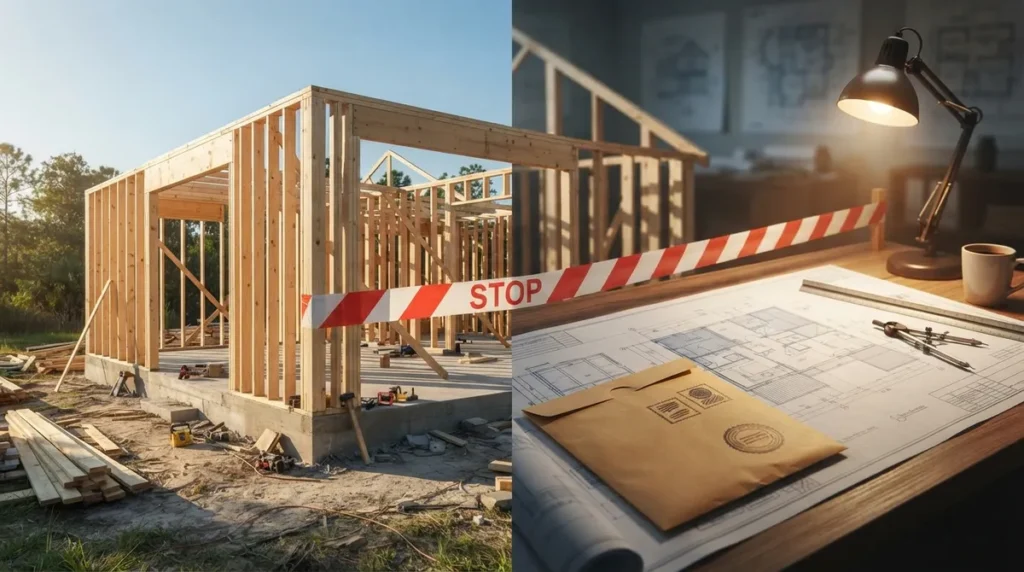
Florida law allows after-the-fact permits under §553.79 to retroactively legalize unpermitted work, but every jurisdiction has different fee schedules and requirements, so confirming the correct building department is your first critical step.
-
Budget for standard permit fees plus 25-100% ATF surcharges, plus $3,000-$10,000 for sealed as-built drawings from a licensed engineer or architect, making total costs unpredictable without direct jurisdiction consultation.
-
Stop work immediately if unpermitted construction is ongoing and do not cover up exposed work, as building inspectors must visually verify concealed work and covering it forces costly demolition to expose conditions later.
-
Unpermitted work discovered during refinancing, home sales, or inspections can stall closings because lenders, title companies, and insurers flag open permits and may deny claims on unpermitted alterations.
-
Related approvals beyond the building permit itself—including zoning, floodplain, environmental, septic, HOA, and utility approvals—may require separate processing, especially for additions, pools, or properties in flood zones.
-
Florida's 8th Edition Building Code (effective December 31, 2023) applies to ATF permits, so non-compliant work may require retrofits or partial reconstruction before approval is granted.
So you just found out that pool cage, garage conversion, or kitchen remodel your contractor finished last year was never actually permitted. Take a breath. You are not alone, and you are definitely not the first Florida homeowner or contractor to land in this spot. Every year, thousands of property owners across the state discover unpermitted work during a refinance, a home sale, or a routine inspection, and every year, most of them get it sorted out just fine. An after the fact permit Florida process exists precisely for situations like yours, and while it can feel intimidating, it is absolutely manageable when you know the right steps and have the right team in your corner.
This guide walks you through eleven concrete, actionable steps for handling an after the fact permit in Florida, whether you are a general contractor cleaning up a past job, a realtor trying to close a sale, or a homeowner who just wants peace of mind. We will cover what the law actually says, what documents you need, what it typically costs, and how to avoid the most common pitfalls. Let's get you moving toward resolution.

1. Understand What an After-the-Fact Permit Actually Is
An after-the-fact, retroactive, or as-built permit is simply the legal mechanism Florida uses to bring unpermitted construction, alteration, repair, or installation work into compliance after it has already been completed. Florida Statutes §553.79 generally requires that any covered construction, alteration, repair, modification, or demolition receive a permit before work begins, so when that step gets skipped, the ATF process is how you fix it retroactively.
The good news is that this process exists in every Florida jurisdiction, and building departments deal with these applications regularly. You are not asking for a special favor. You are simply following the established path for legalizing work that should have been permitted the first time around.
2. Stop Work and Resist the Urge to Cover Anything Up
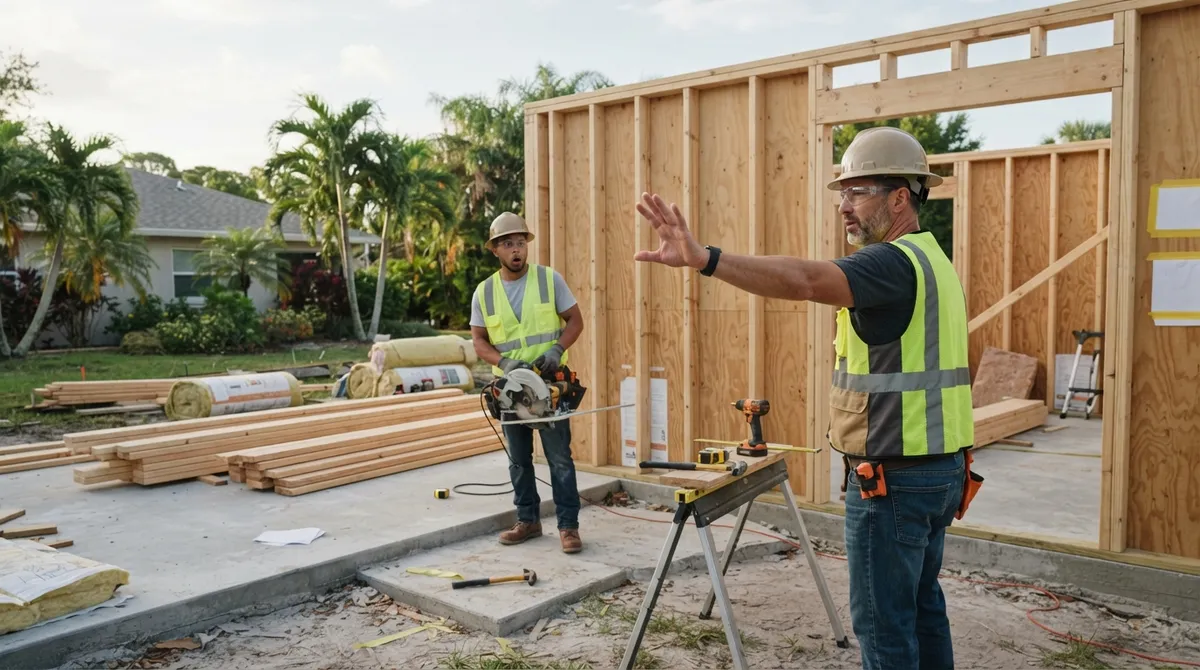
If work is still in progress when you discover the permit issue, stop immediately. Continuing without a permit only compounds the problem and can trigger a stop-work order or notice of violation under the enforcement authority granted by Florida Statutes §553.80.
Just as importantly, do not close up walls, cover electrical work, or finish surfaces over anything that was left exposed. Building departments often need to visually inspect concealed work, and covering it up before an inspector sees it can force you into costly demolition later just to reveal what is underneath.
3. Identify the Correct Enforcing Jurisdiction
Florida does not have one statewide after the fact permit application or fee schedule. Every city and county building department handles ATF permits a little differently, which means the very first practical step is confirming exactly which authority governs your property.
This matters more than people expect, especially near city borders where jurisdiction lines can be confusing. A property that looks like it is in one city might actually fall under county jurisdiction, or vice versa. Tools like the building department lookup can help you pinpoint the right office before you waste time filing in the wrong place.
Common Jurisdictions Handling ATF Permits
- County building departments for unincorporated areas
- City or municipal building departments within incorporated limits
- Special districts for certain environmental or floodplain-related approvals
- State agencies like FDEP for specific environmental permits
4. Gather Your Project Records and Documentation
Before you file anything, pull together everything you have related to the work. Building departments generally want a detailed description of what was done, property and ownership information, contractor details if applicable, and often plans or as-built drawings showing the finished condition.
Here is a practical checklist to get you started:
- Photographs taken during and after construction
- Any receipts, invoices, or contracts from the original work
- Prior inspection records, if any inspections did occur
- Property survey or existing site plan
- Contractor license information, if a licensed contractor performed the work
The more documentation you can provide upfront, the smoother your review will go. Missing paperwork is one of the biggest reasons ATF applications stall.
5. Get As-Built Drawings and Sealed Plans Prepared
For most structural work, mechanical, electrical, or plumbing changes, you will need drawings sealed by a Florida-licensed architect or engineer. This is where many homeowners and even general contractors get stuck, because reverse-engineering plans for something already built takes a different skill set than drawing new construction.
This is exactly the kind of work handled through as-built drawings services, where a licensed professional visits the site, measures and documents the existing conditions, and produces sealed plans that satisfy the building department's requirements. Having in-house engineering capability speeds this up considerably, since revisions and reviewer questions get answered without waiting on an outside consultant.
6. Expect Possible Opening or Exposure of Concealed Work
Because inspectors cannot see through drywall, insulation, or flooring, the building department may require you to open up portions of walls, ceilings, or floors so the work underneath can actually be verified. This is one of the more frustrating parts of the ATF process, but it is standard practice across Florida jurisdictions.
Photographs, engineer certifications, and testing reports sometimes help reduce the scope of what needs to be exposed, but acceptance of these substitutes varies by jurisdiction. It is worth discussing this possibility upfront with your permitting professional so you are not blindsided later.
7. Confirm Compliance With the Current Florida Building Code
The completed work needs to demonstrate compliance with the Florida Building Code, and the 8th Edition (2023) has been in effect statewide since December 31, 2023, according to the Florida Building Code website. If the original work does not meet current code requirements, you may need retrofits or repairs before the ATF permit gets approved.
In more serious cases, non-compliant work may require partial removal or reconstruction. This is not meant to scare you, it is meant to prepare you. A qualified structural engineering review early in the process can flag potential code issues before you submit, saving you time and money down the line.
8. Budget for Regular Permit Fees Plus Possible Surcharges
Most Florida jurisdictions charge the standard permit fee plus an additional ATF penalty or surcharge. Industry guidance commonly reports these surcharges ranging anywhere from about 25% up to double the regular permit fee, depending on the city or county and how the violation was discovered.
Here is a general breakdown of what property owners might expect to budget for, though actual numbers always depend on your specific jurisdiction and project scope:
| Cost Category | Typical Range | Notes |
|---|---|---|
| Standard permit fee | Varies by jurisdiction | Based on project valuation |
| ATF surcharge/penalty | 25% to 100% of permit fee | Not uniform statewide |
| Engineering/architectural fees | $3,000 to $10,000 | Depends on project complexity |
| Daily fines for continuing violations | Up to $500/day in some areas | Jurisdiction-specific enforcement |
Because these numbers shift so much from county to county, always confirm the current fee schedule directly with the local building department, or work with a permitting professional who already knows the local rules.
9. Address Related Approvals Beyond the Building Permit
An ATF building permit alone does not automatically resolve every related requirement. Zoning, land-use, floodplain, environmental, septic, utility, or homeowners' association approvals may still need separate attention, especially for additions, accessory structures, pools, roofs, or flood-zone properties.
Recent legislative changes under Florida HB 803 have also affected how certain permits get reviewed, including review timelines for smaller residential projects. Under Florida Statutes §553.792, existing single-family homes with work valued below $15,000 may qualify for a 5-business-day review period when the application is complete, while other project categories have 30- or 60-business-day statutory windows. Knowing which timeline applies to your project helps set realistic expectations.
Related Approvals to Check
- Floodplain management review for properties in flood zones
- Septic system permits through county health departments
- FDEP environmental permits for wetlands or coastal impacts
- HOA approval if applicable to your community
10. Understand How Unpermitted Work Affects Selling or Refinancing
If you are a real estate agent, investor, or buyer, unpermitted work discovered during a transaction can genuinely stall or even derail a closing. Lenders and title companies frequently flag open or missing permits, and insurance companies may deny claims tied to unpermitted alterations.
This is where realtor closing support becomes incredibly valuable, since resolving these issues quickly can mean the difference between a smooth closing and a deal falling apart. If you are researching a property before making an offer, running an open permit search ahead of time can save everyone a lot of stress later.
11. Bring In a Florida Permitting Professional Early
Trying to navigate an after the fact permit Florida application on your own is possible, but it is genuinely easier with an experienced team that already knows the quirks of each jurisdiction. At 1 Contractor Solutions, we handle after the fact and expired permits across all 67 Florida counties, and we do the heavy lifting: identifying the correct jurisdiction, preparing sealed plans, filing the application, tracking its progress, and working every reviewer comment until it is resolved.
Because our drafting and engineering happen in house, revisions get turned around fast instead of waiting on an outside consultant. We serve general contractors, solar contractors, realtors, and homeowners throughout counties including Hillsborough, Pinellas, and Manatee. You can also follow us on LinkedIn or follow us on Facebook for regular updates on Florida permitting changes.
A Quick Comparison: DIY Filing vs. Professional Permitting Support
| Factor | Filing It Yourself | Working With a Permitting Professional |
|---|---|---|
| Jurisdiction research | Time-consuming, easy to get wrong | Identified quickly and accurately |
| Sealed plans | Requires separate architect/engineer hire | Handled in house with faster revisions |
| Reviewer comments | You respond and resubmit yourself | Professionally tracked and resolved |
| Timeline | Often longer due to errors and resubmittals | Streamlined with fewer delays |
Whichever path you choose, the important thing is that you take action. Unpermitted work does not resolve itself, and the longer it sits, the more complicated it can become, especially if you are planning to sell, refinance, or add solar to the property down the road.
Wrapping It Up
Dealing with an after the fact permit in Florida might feel overwhelming at first, but thousands of property owners work through this process successfully every year, and you can too. Stop any ongoing work, gather your documentation, get sealed as-built drawings prepared, and confirm exactly which jurisdiction and fee schedule applies to your property. From there, it is really just a matter of following the steps and staying patient through inspections and reviewer feedback.
If you would rather have an experienced team manage the entire process for you, from identifying the right building department to filing, tracking, and closing out your permit, we would love to help. Feel free to get a free quote and let us take the stress off your plate. You can also see what our 1 Contractor Solutions customers are saying by visiting our Google Business Profile before you decide. We are here, we answer around the clock, and we are ready to get your project back on track.
FAQs
What is an after-the-fact permit in Florida?
It is the process of getting official approval for construction or trade work that was already completed without a permit. Basically, it lets you legalize the work retroactively by submitting plans, paying fees, and passing inspections, so your property is back in good standing.
Can I get a permit after construction is already completed in Florida?
Yes, absolutely! Florida building departments handle this all the time through what is called an after-the-fact or retroactive permit process. You will need to submit documentation, possibly sealed drawings, and go through inspections, but it is a well-established path to compliance.
How much does an after-the-fact permit cost in Florida?
Costs vary quite a bit depending on your jurisdiction, but you can generally expect the standard permit fee plus a surcharge that ranges from 25% to as much as double the regular fee. Engineering and drafting services for as-built drawings often run between $3,000 and $10,000 depending on complexity.
Will I have to open walls or remove finishes for an after-the-fact inspection?
It is possible, since inspectors need to verify that concealed work meets code, and photos alone do not always satisfy that requirement. Every jurisdiction handles this a little differently, so it is worth discussing with your building department or permitting professional before you start the process.
Can a Florida permitting service obtain an after-the-fact permit for me?
Yes, and honestly, it is one of the best ways to reduce stress and speed things along. A good permitting team will identify the right jurisdiction, prepare sealed plans, file everything correctly, and handle reviewer comments so you do not have to navigate it alone.
We do this work every day across all 67 Florida counties. Call (866) 314-6931 and we will tell you what your situation actually requires — including when you do not need us.
Related services
Permit Facilitation & Filing
You have a crew scheduled, a client asking for dates, and a permit sitting somewhere in a queue you cannot see. We file it, w…
See the servicePlan Review Coordination
A permit in plan review is not one queue. On a commercial project it can be six queues, each with its own reviewer, its own c…
See the serviceReady to get your permit moving?
One call tells you which jurisdiction controls your project, what it will take, and what it will cost. Most of the time we can scope it on the phone.