
Blog
Will a Florida Title Company Catch Unpermitted Work?
A Florida title company won't certify permits. Learn what title work misses, how to fix unpermitted work, and how to protect your closing in 2026.
Key Takeaways
-
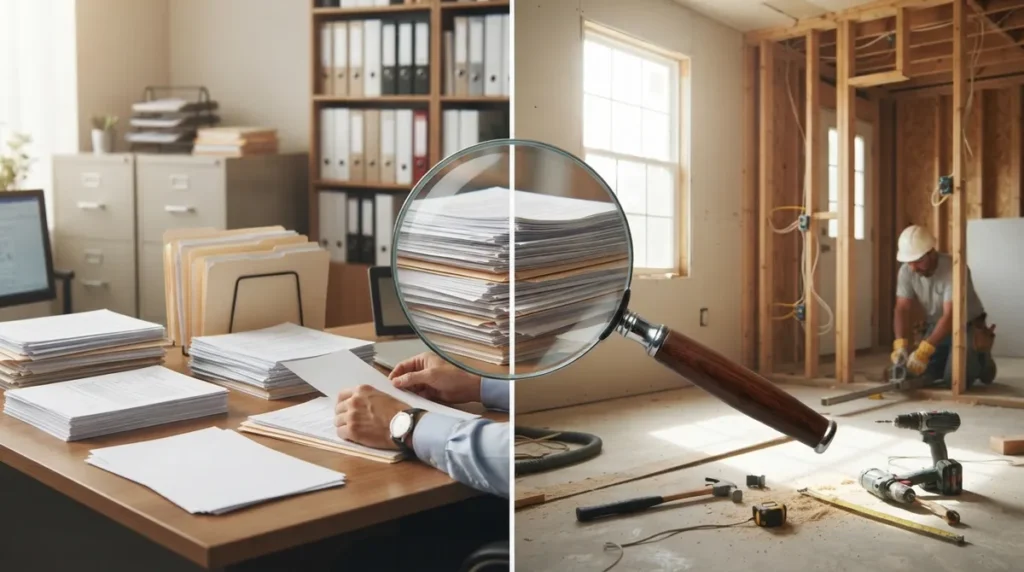
Title companies examine ownership and recorded matters, not building code compliance or permit status—they are not building inspectors and cannot reliably catch unpermitted work that leaves no paper trail.
-
Title insurance does not cover unpermitted renovations or building code violations; clear title means clean ownership records, not that all improvements are legally compliant or properly inspected.
-
Open permits and unpermitted work are different: open permits were issued but lack final inspections, while unpermitted work was done without any permit and requires an after-the-fact application to fix.
-
Unpermitted work often surfaces through buyer inspections, appraisals, lender questions, insurance claims, or neighbor complaints rather than title searches, since work without a permit leaves no local record.
-
Before closing, ask your title company in writing which searches are included, pull permit history directly from the local building department, and clarify who is contractually responsible for resolving any permit issues.
-
Florida law requires permits through local building departments (not statewide), and after-the-fact permitting requires as-built plans, inspections, and possible corrections—approval is not guaranteed and may require opening walls.
Picture this: the contract is signed, the movers are booked, and your closing date is circling on the calendar. Then someone mentions a screened porch that never had a permit. Suddenly everyone wants to know why the title company didn't catch it. It's a stressful moment, and honestly, it happens in Florida more often than anyone likes to admit.
Here's the friendly truth: a title company and a building department do very different jobs. When people search for title company unpermitted work Florida answers, they usually expect title work to flag every renovation that skipped a permit. It generally doesn't. Title work examines ownership and recorded matters, not whether your kitchen remodel was inspected.
In this guide, we'll walk through what a title company does and doesn't check, how open permits differ from unpermitted work, what it means for your closing, and how to fix problems before they derail a sale. Whether you're a homeowner, agent, investor, or contractor, you'll leave with a clear game plan.
What Does a Florida Title Company Actually Check?
A title company's main job is to examine the title to a property and help identify matters that affect the transaction. That means ownership history, recorded liens, mortgages, easements, and similar items. It is not a building inspector, and it does not certify that construction was done legally or to code.
That said, the scope of searches varies by closing agent, jurisdiction, and transaction. Some closing agents run a municipal lien search. Others do more or less depending on the deal. The smartest move is to ask, in writing, exactly which searches are included.
Here is a quick snapshot of what typically falls inside and outside a standard title review:
| Item | Usually Reviewed by Title Work? | Notes |
|---|---|---|
| Ownership and chain of title | Yes | Core purpose of title examination |
| Recorded mortgages and liens | Yes | Includes recorded code-enforcement liens |
| Municipal lien search | Varies | Depends on the closing agent and local practice |
| Open permits | Sometimes | May appear in local records, not guaranteed |
| Unpermitted improvements | Rarely | Often invisible if no record or complaint exists |
| Building code compliance | No | Handled by the local building department |
Notice that last row. Compliance with the Florida Building Code lives with your city or county building department, not with the title agent.

Does Title Insurance Cover Unpermitted Renovations?
This is one of the most common misconceptions we hear. Title insurance generally addresses covered title risks under the policy. It is not a warranty on the physical condition of a home, and it doesn't promise that renovations complied with building codes.
So if a prior owner enclosed a lanai without a permit, a standard title policy typically isn't the safety net that makes that problem disappear. Please don't assume a completed title search or an issued policy resolves permit concerns. Review the policy language and the search scope with your title agent or a real estate attorney.
Why This Misunderstanding Is So Common
Buyers see the words "clear title" and assume that means "clear everything." Clear title simply means ownership and recorded encumbrances look clean. A home can have perfect title and still carry an unpermitted addition, an expired roof permit, or a failed final inspection.
Open Permit vs. Unpermitted Work: Know the Difference
These two phrases get tossed around like they mean the same thing. They don't, and the difference matters when you're negotiating or planning a fix.
| Issue | What It Means | Typical Path Forward |
|---|---|---|
| Open permit | A permit was issued, but required inspections or final approval were never completed | Finish inspections, close or reinstate the permit |
| Expired permit | A permit lapsed before work was finalized | Reopen, renew, or reapply depending on the jurisdiction |
| Unpermitted work | Work was done without a required permit | After-the-fact permit, inspections, corrections |
| Code-enforcement lien | A recorded municipal charge tied to a violation | Resolve the violation and pay or settle the lien |
A recorded code-enforcement lien can affect a closing very differently from an open permit, which is not itself a recorded lien. If you're staring at an open permit during escrow, our guide on what to do when an open permit is found at closing walks through the next steps.
Why Title Searches Often Miss Unpermitted Improvements
A municipal lien or permit search may reveal local records, but it can't reveal what was never recorded. If a homeowner built a deck on a weekend and nobody complained, there may be no file anywhere. No permit, no complaint, no paper trail.
That's why unpermitted work tends to surface later, through channels like these:
- A buyer's home inspection that notices mismatched wiring or an unusual addition
- An appraisal that finds more square footage than county records show
- A lender asking questions about a converted garage or enclosed patio
- An insurance claim that reveals work was never inspected
- A code complaint from a neighbor
For more on how these discoveries happen, see how home inspections spot unpermitted work in Florida.
What Florida Law Says About Permits
Florida Statutes §553.79 is the principal statewide reference for building permits. It generally requires a permit before covered construction, alteration, repair, or demolition, subject to statutory exceptions. Please verify the current statutory text, since amendments can change details.
The important practical point is that permits are administered locally. Whether you're in Tampa, Miami, Orlando, or Jacksonville, the applicable city or county building department decides the application requirements, fees, and inspection steps. Not sure which office controls your property? Our building department lookup tool can point you in the right direction.
Can You Sell a Florida Home With Unpermitted Work?
In many cases, yes. There's no blanket rule that bars a sale. But unresolved permits and code violations can delay a sale or refinancing, prompt buyer or lender questions, and lead to enforcement costs. Deals can stall, renegotiate, or fall apart, particularly when financing is involved.
Disclosure Still Matters
Some sellers assume an "as-is" contract wipes out their duty to speak up. Not so fast. Under Florida's material-defect disclosure principles, known latent facts that materially affect value and aren't readily observable may need to be disclosed. Because every situation is different, sellers and buyers should get advice from a real estate attorney about their specific facts and contract terms. We cover this more in what disclosures are required for unpermitted work in Florida.
Who Is Responsible for Fixing It?
That's a contract question. Sellers, buyers, and agents negotiate who handles open permits or after-the-fact permitting before or after closing. Settle this early, in writing, so nobody is surprised at the closing table.
How to Get an After-the-Fact Permit in Florida
Good news: unpermitted work is often fixable. Florida has no single statewide after-the-fact application or uniform fee schedule, so the process runs through your local building department. While details vary, the general flow looks like this:
- Identify the correct jurisdiction. City lines can be tricky, and the wrong office wastes weeks.
- Document the existing work. Gather photos, measurements, and any receipts or contractor information.
- Prepare as-built plans. Many departments require drawings showing what was actually built.
- Get engineering support if needed. Structural, electrical, or other concerns may call for a sealed engineer letter.
- Submit the application and supporting documents. Fees and forms vary by jurisdiction and type of work.
- Pass review and inspections. Be ready to correct deficiencies the reviewer flags.
- Obtain final approval. This closes the loop and gives you a clean record.
If you want a deeper walkthrough, read how to get an after-the-fact permit in Florida or explore our after-the-fact and expired permit services.
Will the Building Department Make You Open the Walls?
It's possible, and it's worth setting expectations honestly. An after-the-fact application does not guarantee approval and doesn't automatically make the work compliant. The local authority may require engineering or as-built plans, access to concealed work, corrections, or even removal if compliance can't be demonstrated.
Here's how different types of work tend to be reviewed:
| Type of Work | What Reviewers May Ask For |
|---|---|
| Additions and enclosures | As-built plans, structural verification, foundation details |
| Electrical and plumbing | Inspection access, possible opened walls or ceilings |
| Roofs | Product approvals, truss or load path verification |
| Pools and cages | Site plans, barrier and wind-load documentation |
| Garage conversions | Egress, electrical, and energy compliance details |
A good package up front can reduce back-and-forth. That's where in-house drafting and sealed engineering really pay off, and you can see more about as-built drawings and engineer letters on our site.
What Buyers and Sellers Should Ask Before Closing
A little homework early can save a lot of heartache. Whether you're buying, selling, or representing a client, these questions are worth asking:
- Which searches is the title company running, and are they in writing?
- Does the search include a municipal lien and open permit check?
- Has anyone pulled the permit history from the local building department?
- Do the improvements match what's shown in county records?
- Are there recorded code-enforcement liens or pending violations?
- Who is responsible, by contract, for resolving permit issues?
Agents and investors can run a quick check with our open permit search tool, and our realtor closing support is built for exactly these time-sensitive situations. If a closing is already in jeopardy, see whether a permit hold can delay a Florida real estate closing.
Tips by Audience: Who Needs What
Different readers face different pressure points. Here's how we'd approach it:
- Homeowners and sellers: Address problems before listing. Quiet cleanup beats frantic negotiation.
- Buyers and investors: Pull permit history during your due diligence period and budget for possible remediation.
- Real estate professionals: Build permit checks into your listing and offer workflow.
- General contractors and trades: Keep clean documentation so your finished work never becomes someone's closing headache.
- Solar companies: Make sure installs are permitted and finaled, since unfinished solar permits often surface at sale time.
A Note on Numbers
You may wonder how often title companies find unpermitted work or what remediation typically costs. We looked, and there isn't a reliable statewide statistic we'd feel comfortable quoting. Permit procedures, fees, and inspection requirements are local, so real costs depend on your city or county and the type of work. The honest answer is to get a scope-specific estimate for your property.
Get Permit Problems Solved Before They Cost You a Closing
1 Contractor Solutions acts as Florida's outsourced permitting department. We handle permit filing and tracking, as-built drawings, sealed engineering, code compliance, and after-the-fact permits across all 67 Florida counties, with in-house drafting and our own engineer's seal. That means when a reviewer flags something, we fix it directly instead of waiting on an outside consultant. You can read what customers say in our reviews, and see what our 1 Contractor Solutions customers say on Google. You can also follow us on LinkedIn or follow us on Facebook for more Florida permitting tips.
Final Thoughts
A title company is a valuable partner, but it isn't a permit detective. If you're dealing with title company unpermitted work Florida concerns, remember the essentials: title work and permit compliance are separate worlds, search scope varies, open permits and unpermitted work require different fixes, and your local building department has the final say. The earlier you uncover issues, the more options you have.
If you suspect a permit problem before a closing, don't wait for it to surface at the worst moment. We respond within 30 minutes, day or night, and we're happy to help you map out a path forward. Get a free quote today and let's get your project moving.
FAQs
Does a Florida title company check for open permits or unpermitted work?
Sometimes, but not reliably. The scope of title and lien searches varies by closing agent and jurisdiction, and unpermitted work often leaves no record to find. Ask your title agent in writing which searches are included.
Does title insurance cover unpermitted renovations in Florida?
Generally no. Title insurance addresses covered title risks under the policy, not the physical condition of a property or building code compliance. Review your policy with the title agent or an attorney to be sure.
What is the difference between an open permit and unpermitted work?
An open permit was issued but still lacks required inspections or final approval. Unpermitted work was done without a required permit at all. Each has its own fix, so identifying which one you have is the first step.
Can I sell a Florida home with unpermitted work?
Often you can, but it may complicate financing, spark renegotiation, or require disclosure of known material defects. Resolving the issue before listing usually makes for a smoother closing.
How do I get an after-the-fact permit in Florida?
Contact your local building department, then submit the required application with as-built plans or other documentation, pass review and inspections, and correct any deficiencies. Requirements vary by city and county, and approval isn't guaranteed.
We do this work every day across all 67 Florida counties. Call (866) 314-6931 and we will tell you what your situation actually requires — including when you do not need us.
Related services
Permit Facilitation & Filing
You have a crew scheduled, a client asking for dates, and a permit sitting somewhere in a queue you cannot see. We file it, w…
See the servicePlan Review Coordination
A permit in plan review is not one queue. On a commercial project it can be six queues, each with its own reviewer, its own c…
See the serviceReady to get your permit moving?
One call tells you which jurisdiction controls your project, what it will take, and what it will cost. Most of the time we can scope it on the phone.