
Blog
Which Hurricane Shutter Permit Do You Need in Miami, FL?
Learn which hurricane shutter permit Miami, FL properties need, what documents to gather, and how to avoid failed inspections this storm season.
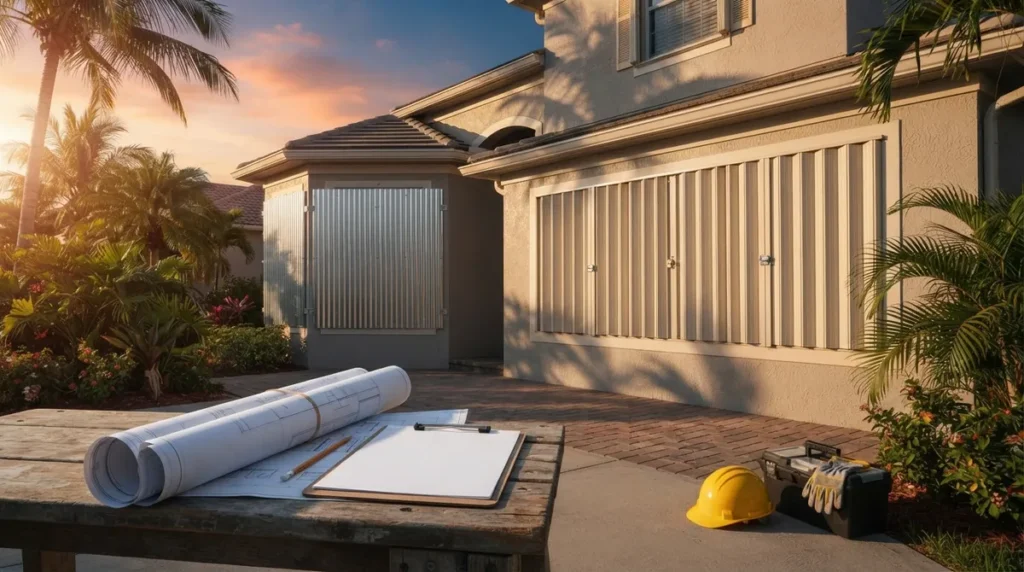
Key Takeaways
-
Miami hurricane shutter permits depend on your address: unincorporated Miami-Dade, the City of Miami, and other municipalities each have their own permitting office, so confirm yours before filing.
-
Use Category 101 for removable storm panels and Category 29 for permanent shutters; if you install both types on one project, Miami-Dade's checklist says to use Category 29.
-
Every shutter or panel needs a current Miami-Dade NOA or qualifying Florida Building Commission approval, and the installation must match the NOA's fasteners, spacing, and restrictions or inspection may fail.
-
Miami-Dade's online e-permitting for accordion shutters and storm panels is limited to unincorporated addresses with mean roof height of 25 feet or less, so city or taller-building projects may need a different route.
-
Your permit drawing should show each protected opening and the building's mean roof height, and permanent shutter projects may need HOA approval or zoning review, especially on commercial or multi-unit buildings.
-
Keep at least one first-floor door or window, excluding the garage, available as an interior exit when storm protection is installed. Qualifying low-income homesteaders may also get City of Miami permit-fee waivers for resilience work.
Hurricane season has a funny way of making everyone suddenly very interested in shutters. One week the panels are sitting in the garage collecting dust, and the next, half of Miami is asking the same question: do I actually need a permit for this? If that's you, take a breath. You're in good company, and the answer is easier to sort out than you might think.
A hurricane shutter permit in Miami, FL is a building permit for installing approved storm protection on your home or building. The tricky part isn't the permit itself. It's figuring out who issues it, because Miami-Dade County, the City of Miami, and other local municipalities don't all run things the same way. Add product approvals, HOA rules, and inspection requirements, and it's easy to feel a little tangled up.
This guide walks you through it all in plain English. Whether you're a homeowner, a general contractor, a realtor helping a buyer, or a design pro managing a client's project, you'll learn which permit applies, what documents to gather, and how to avoid the mistakes that cause failed inspections. Let's get your shutters legal and ready for storm season.
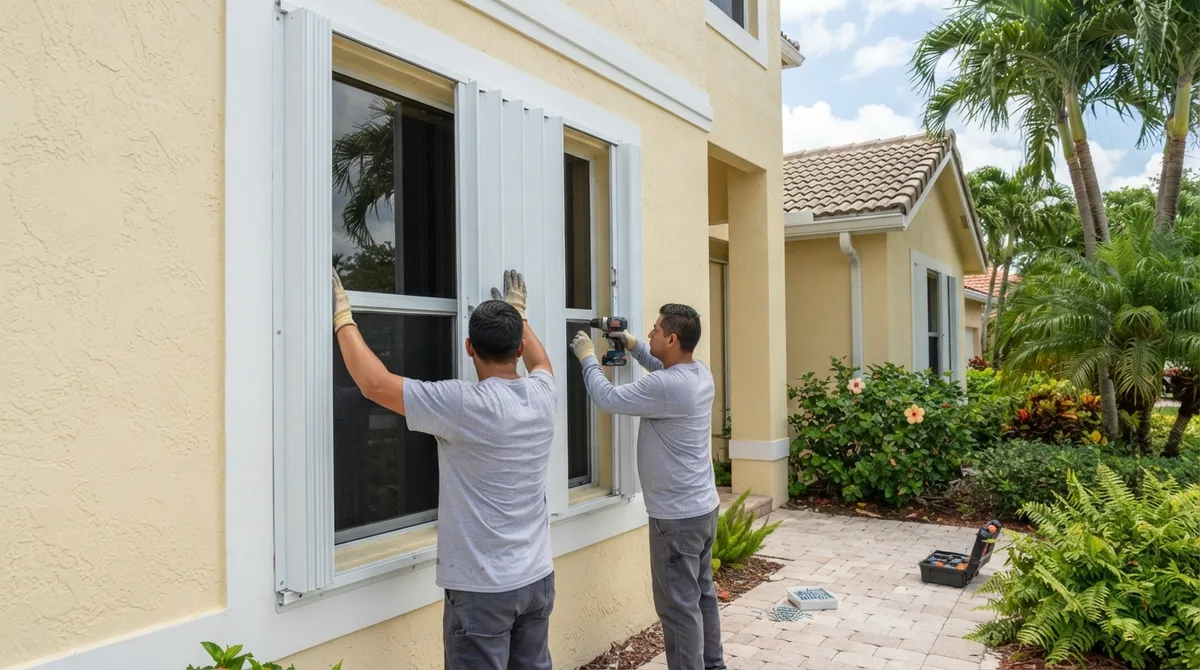
Do You Really Need a Permit to Install Hurricane Shutters in Miami?
In most cases, yes. A permit is generally required to install hurricane shutters or storm panels in Miami-Dade County. That surprises a lot of people, since shutters can feel like a simple bolt-on job. But shutters are structural protection tied to your building's openings, so local building departments want to confirm they're rated, installed correctly, and safe.
Here's the part that trips people up: the permitting authority depends on where your property sits. The City of Miami and other municipalities may administer their own permits, while Miami-Dade County handles unincorporated areas. Same county, different front door.
Why does this matter? Because filing with the wrong office wastes time, and during storm season, time is exactly what you don't have. Before you buy anything or schedule a crew, confirm the permitting authority for your specific address.
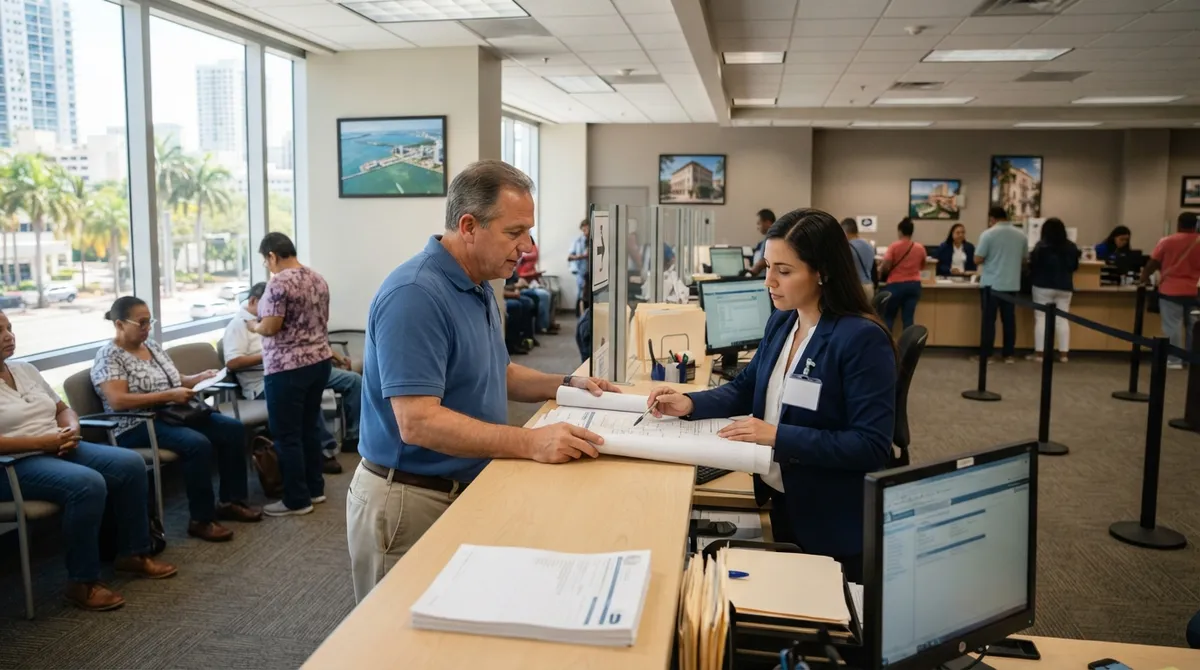
Which Office Issues Your Permit?
Think of this as a quick sorting exercise. Your address decides everything.
| Property Location | Who Typically Handles the Permit | What to Confirm |
|---|---|---|
| Unincorporated Miami-Dade County | Miami-Dade County building permitting | Online e-permitting eligibility and current checklist |
| City of Miami | City of Miami building department | City-specific application route and fee schedule |
| Other Miami-Dade municipality | That municipality's building department | Local forms, submittal method, and inspection process |
If you're not sure which category you're in, you're not alone. City lines in South Florida can be surprisingly blurry. A quick look at your property record or a call to the building department will settle it. And if you'd rather skip the guesswork entirely, we cover that in the permit help section below.
What Documents Does a Miami-Dade Hurricane Shutter Permit Require?
Miami-Dade County's shutter checklist is refreshingly short. Here's what you'll typically need to pull together:
- A completed building permit application that identifies the total shutter or panel area and, where applicable, the master permit number.
- A drawing showing the protected openings along with the building's mean roof height.
- Product approval documentation for the exact shutter or panel being installed.
- Any required HOA approval or attestation for permanent shutters, if your property is in an association.
That drawing doesn't need to be fancy, but it does need to be clear. Reviewers want to see which openings are being protected and understand the building's height, since that affects the wind-load requirements. If you've ever had a permit bounced because a sketch was missing a detail, you know how much a clean drawing helps. If you want a deeper look at what makes plans sail through, take a peek at how to get permit ready plans Florida officials approve.
Category 101 vs. Category 29: What's the Difference?
This is one of the most common points of confusion, and it's worth getting right. Miami-Dade County's application categories separate shutters into two buckets.
| Category | Applies To | Notes |
|---|---|---|
| Category 101 | Removable storm panels | Panels you install and remove seasonally |
| Category 29 | Permanent shutters | Accordion, roll-down, and similar fixed systems |
Here's the handy rule of thumb from the county checklist: if you're installing both types, use Category 29. Picking the wrong category can slow your application down, so it's worth a double-check before you submit.
Why Product Approval Matters So Much
Here's a truth that saves a lot of headaches: the permit is only as good as the product approval behind it. Every shutter or panel needs an applicable, current approval. Miami-Dade County accepts a county Notice of Acceptance (NOA) or a qualifying Florida Building Commission approval. The county's online e-permitting workflow for accordion shutters and storm panels specifically requires a valid Miami-Dade NOA.
Why so strict? NOA-approved products are designed to meet High-Velocity Hurricane Zone requirements, with codes designed for winds up to 175 mph (three-second gust) for typical buildings and structures, according to a 2026 county news item. That's a serious standard, and it's what keeps your shutters from becoming projectiles.
Match the Approval to the Real Installation
The approval has to match your actual product, installation method, fasteners, and site conditions. The county warns that ignoring an NOA's restrictions and installation instructions can result in a failed inspection. In other words, if the NOA says use a certain fastener at a certain spacing, that's not a suggestion.
A quick pre-submittal checklist can save you a lot of grief:
- Confirm the approval is current, not expired or superseded.
- Verify it covers your specific product model and size.
- Check the fastener type, spacing, and substrate requirements.
- Make sure the installation method on your plans matches the NOA.
Product approval numbers can look like alphabet soup at first glance, but they follow a pattern. If you work with roofing or exterior products, our guide on how to read a Florida product approval number for roofing will help the same logic click into place.
Can You Apply Online in Miami-Dade?
Possibly, but with caveats. Miami-Dade County's e-permitting workflow for accordion shutters and storm panels is currently described as available only for addresses in unincorporated Miami-Dade County. It also comes with limits, including a maximum 25-foot mean roof height in that workflow.
That means if your home is in the City of Miami or another municipality, you'll likely need to follow that city's own submittal process instead. And if your building is taller than 25 feet at the mean roof height, the online route may not be an option at all. Always confirm current eligibility before you start, since procedures change.
For contractors handling multiple shutter jobs across different cities, this patchwork of rules is exactly where things get time-consuming. We'll come back to that shortly.
HOA, Zoning, and Other Gotchas
Even with a perfect application, a few extra requirements can sneak up on you. Let's walk through them so nothing surprises you.
HOA Approval for Permanent Shutters
If your property sits in a homeowners association, permanent shutters may require HOA approval or an attestation. Many associations care about color, style, and how shutters look from the street. Getting that approval early keeps your permit from stalling later.
Zoning Review on Commercial Buildings
Miami-Dade County notes that permanent shutter work on commercial buildings, including condominiums and apartment buildings, may involve zoning review. If you're a property manager or contractor working on a multi-unit building, build extra time into your schedule.
Keep One Exit Available
Here's a safety detail that deserves a shout-out. The county checklist says at least one first-floor door or window, excluding the garage, must remain available as an exit from inside when storm protection is installed. Nobody wants to be shuttered in during an emergency, so plan your openings accordingly.
Step-by-Step: How to Get Your Hurricane Shutter Permit
Ready to put it all together? Here's a simple path to follow.
- Confirm your permitting authority. Check whether your address falls under the City of Miami, another municipality, or unincorporated Miami-Dade.
- Choose an approved product. Pick shutters or panels with a current Miami-Dade NOA or qualifying Florida approval.
- Gather your drawing. Show the protected openings and the building's mean roof height.
- Select the right category. Category 101 for removable panels, Category 29 for permanent shutters, or Category 29 if you're doing both.
- Secure HOA approval if needed. Do this before you file for permanent shutters.
- Submit your application. Use the correct portal or office for your jurisdiction and include the total shutter area.
- Schedule and pass inspection. Make sure the installed work matches the NOA exactly.
Follow those steps in order and you'll sidestep most of the delays people run into. And if your project has other moving parts, such as a roof, windows, or structural modifications, those can all tie into the same permitting picture.
What About Inspections?
Once your shutters or panels are installed, expect an inspection to confirm everything matches the approved product and installation instructions. This is where mismatched fasteners or substituted hardware can cause a failed inspection. The inspector isn't trying to catch you out; they're confirming that the installation will actually perform when the wind picks up.
Permit issuance and specific inspection requirements should always be confirmed with the local building department for your address, since practices can differ between jurisdictions. If an inspection does fail, don't panic. It's usually fixable, and our guide on what to do when a Florida final inspection fails walks you through the next steps.
Already Installed Shutters Without a Permit?
It happens more often than you'd think. Maybe a previous owner put them up, or a handyman said a permit wasn't needed. If your shutters are already on the house and there's no permit on record, you have options, and it's very much worth addressing before you sell, refinance, or file an insurance claim.
The path usually involves documenting what's installed, verifying it against product approvals, and bringing it into compliance. Our 7 steps to legalize unpermitted work in Florida (2026) breaks the process down clearly, and can I legalize unpermitted work in Florida answers the big "is this even possible?" question. For realtors and buyers, how to sell a Florida house with unpermitted additions is a handy companion read.
A Helpful Note on Fee Waivers
Here's some good news for qualifying homeowners. The City of Miami fee schedule states that qualifying low-income owners may receive permit-fee waivers for resilience work to a homesteaded property's exterior shell, including shutters, windows, and doors, for up to $50,000 in construction cost. Eligibility and current terms should be confirmed with the City, but it's absolutely worth asking about if budget is a concern.
How Professional Permit Help Makes This Easier
Let's be honest: none of this is rocket science, but it is a lot of small details that all have to line up. The wrong category, a mismatched NOA, or a missing drawing can send you back to square one right when storm season is ramping up.
That's where 1 Contractor Solutions comes in. We act as Florida's outsourced permitting department, handling permit filing, tracking, plan review coordination, and the drawings and engineering behind them. Our drafting and engineering are in house, with sealed drawings, so if a reviewer flags something we can fix it quickly rather than waiting on an outside consultant. We work across all 67 Florida counties and respond fast, day or night.
For general contractors juggling multiple shutter and window jobs, this means fewer trips to the counter and faster approvals. For homeowners, it means one less thing to worry about. And for realtors and property managers, it means closings and tenant timelines stay on track. If you'd like to see what other customers say, you can visit us on Google — 1 Contractor Solutions, and you can follow us on Facebook or follow us on LinkedIn for permitting tips as they come up.
Common Mistakes to Avoid
After seeing a lot of shutter permits come through, a few patterns stand out. Steer clear of these and you'll be ahead of the game:
- Filing with the wrong authority. Always confirm whether your address is in the city or unincorporated county.
- Using an expired or mismatched approval. The NOA must match your exact product and installation.
- Choosing the wrong application category. Remember the 101 versus 29 rule.
- Skipping HOA approval. This can quietly stall permanent shutter projects.
- Blocking every first-floor exit. Keep one door or window available from the inside.
- Assuming online filing works for everyone. The e-permitting workflow is limited to specific situations.
Ready to Get Your Shutters Permitted?
Getting a hurricane shutter permit in Miami, FL comes down to three things: knowing which office handles your address, choosing a properly approved product, and submitting clean documents that match your installation. Nail those, and the rest tends to fall into place.
If you'd rather have an expert handle the details, we'd love to help. Whether you're a homeowner getting ready for storm season, a contractor with a stack of jobs, or a realtor trying to keep a closing moving, our team is here to make permitting painless. Reach out today and get a free quote, and let's get your property protected the right way. For more on how marketing and digital support can help local pros grow, you can also check out Brain Buzz Marketing.
FAQs
Do I need a permit to install hurricane shutters in Miami, Florida?
In most cases, yes. A permit is generally required to install hurricane shutters or storm panels in Miami-Dade County, though the issuing office depends on whether your property is in the City of Miami, another municipality, or unincorporated Miami-Dade. A quick check of your address will point you to the right department.
What is the difference between Category 101 and Category 29 shutter permits?
Category 101 covers removable storm panels, while Category 29 covers permanent shutters like accordion or roll-down systems. If you're installing both types on the same project, Miami-Dade County's checklist says to use Category 29.
Does my hurricane shutter need a Miami-Dade NOA or Florida product approval?
Yes, your shutter or panel needs a current, applicable product approval. Miami-Dade County accepts a county Notice of Acceptance (NOA) or a qualifying Florida Building Commission approval, and the online workflow for accordion shutters and storm panels specifically requires a valid Miami-Dade NOA. Make sure the approval matches your exact product and installation method to avoid a failed inspection.
Can I apply for a Miami-Dade shutter permit online as a homeowner?
Possibly, but only in certain situations. The county's online e-permitting workflow for accordion shutters and storm panels is currently described as available only for unincorporated Miami-Dade County addresses, with a maximum 25-foot mean roof height. If you're in the City of Miami or another municipality, follow that jurisdiction's process, and always confirm current eligibility first.
Do I need HOA approval to install permanent hurricane shutters in Miami-Dade County?
Often, yes. Permanent shutters on properties in a homeowners association may require HOA approval or an attestation. It's smart to get that sorted out before you submit your permit application so nothing stalls later.
We do this work every day across all 67 Florida counties. Call (866) 314-6931 and we will tell you what your situation actually requires — including when you do not need us.
Related services
Permit Facilitation & Filing
You have a crew scheduled, a client asking for dates, and a permit sitting somewhere in a queue you cannot see. We file it, w…
See the servicePlan Review Coordination
A permit in plan review is not one queue. On a commercial project it can be six queues, each with its own reviewer, its own c…
See the serviceReady to get your permit moving?
One call tells you which jurisdiction controls your project, what it will take, and what it will cost. Most of the time we can scope it on the phone.