
Blog
How to Fix an Unpermitted Roof in Florida Fast
Learn exactly how to get an after the fact roofing permit in Florida, from confirming jurisdiction to gathering documentation and inspections.
Key Takeaways
-
Florida law requires roofing permits before work begins; after-the-fact permits are doable but each of Florida's 67 counties has different procedures, so confirming your specific jurisdiction first is critical.
-
Contact your local building department upfront and honestly about unpermitted work—they handle this constantly and have established processes; be ready to provide contractor license, insurance, product approvals, and photos of concealed work.
-
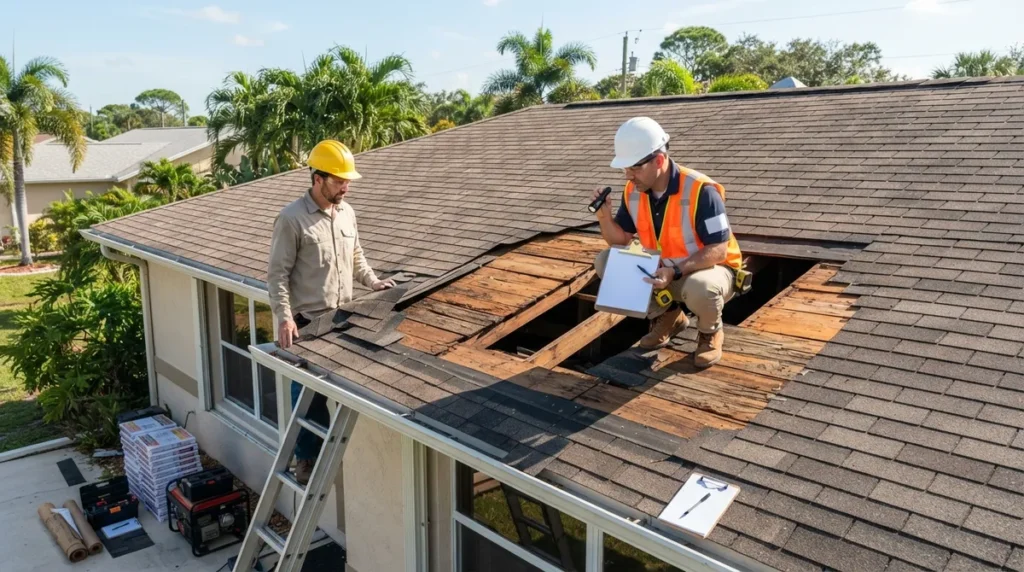
Building officials may require selective removal of roofing material to inspect decking and nailing patterns if photos and affidavits don't satisfy code compliance verification, so budget for potential corrections.
-
Unpermitted roofs can block real estate closings, trigger code enforcement cases, and complicate insurance claims; addressing it proactively protects you, buyers, and contractors from legal exposure.
-
Application eligibility varies by jurisdiction—many require a Florida-licensed roofing contractor to submit, though some allow owner-builders for owner-occupied homes; confirm your local rule before proceeding.
-
Costs include standard permit fees, after-the-fact penalty fees (often a multiplier), and potential reinspection charges; get a jurisdiction-specific quote rather than relying on general estimates across different counties.
So your roof is already done, and now you're wondering if you skipped a step somewhere. Take a breath — you're definitely not alone, and this is more common than you'd think. Whether a contractor told you "don't worry about the permit," you inherited a property with a mystery roof, or you're a solar company that needs a compliant roof deck documented before mounting panels, getting an after the fact roofing permit in Florida is absolutely doable. It just takes the right steps, the right paperwork, and a little patience with your local building department.
We talk to homeowners, general contractors, and realtors every week who are staring down this exact situation. The good news? Florida building departments deal with unpermitted reroofs constantly, and most have a defined process to get you back in compliance. The key is knowing what that process looks like in your specific jurisdiction, because — spoiler alert — it's not the same everywhere. Let's walk through exactly how this works, step by step, so you can stop stressing and start fixing it.
What Is an After the Fact Roofing Permit, Really?
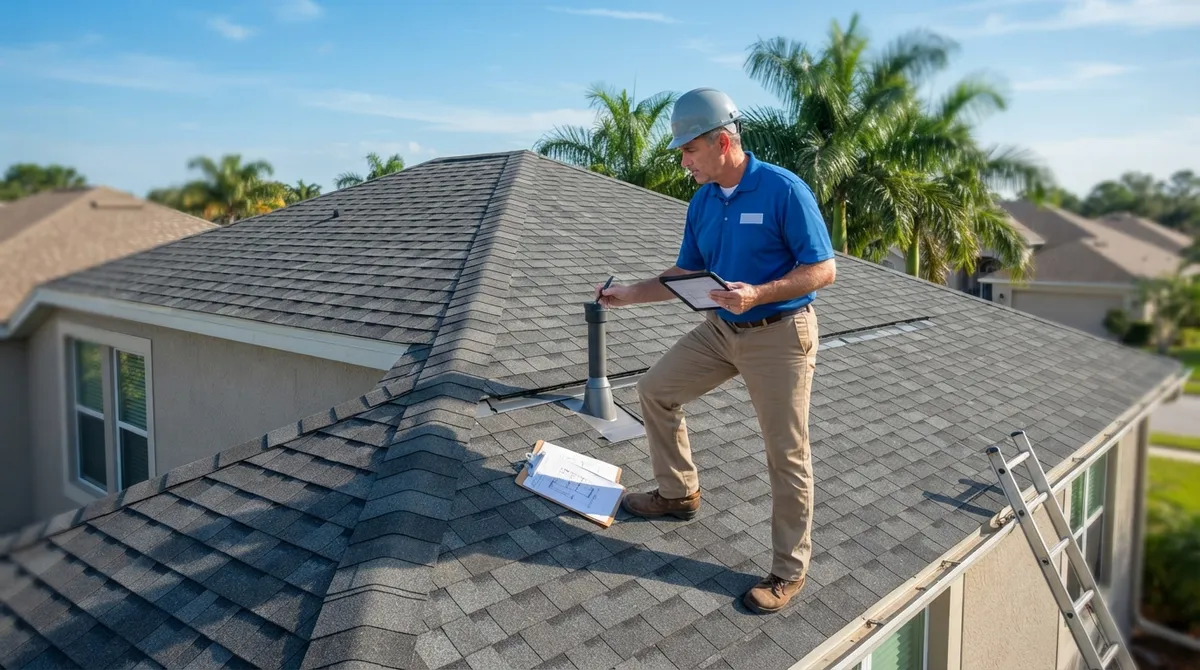
An after the fact roofing permit is simply a building permit applied for once roofing work has already started or finished, instead of before. Florida Statute §553.79 generally requires a permit before any covered construction, alteration, repair, or replacement begins. When that step gets missed, the fix isn't automatic — you can't just submit paperwork and call it done. The local building official reviews your situation and decides what documentation, inspections, and corrections are needed before the roof gets legalized.
Here's the part that trips people up: there's no single statewide form or checklist for this. Every city and county building department in Florida runs its own version of the after the fact process. That means what works in Hillsborough County might look completely different in Pinellas County or Miami-Dade County. That's why the very first move is always figuring out exactly which jurisdiction has authority over your address.
Why This Matters More Than You Might Think
Florida Statute §489.127 specifically calls out performing permit-required work without an effective permit as prohibited contractor conduct. That's a real legal exposure for contractors, and it's also a headache for homeowners trying to sell, refinance, or insure their property. An open or missing permit can hold up a real estate closing, trigger a code enforcement case, or create insurance claim complications down the road. Getting it resolved properly protects everyone involved — you, your buyer, and your contractor.
Step 1: Confirm Your Jurisdiction Before You Do Anything Else
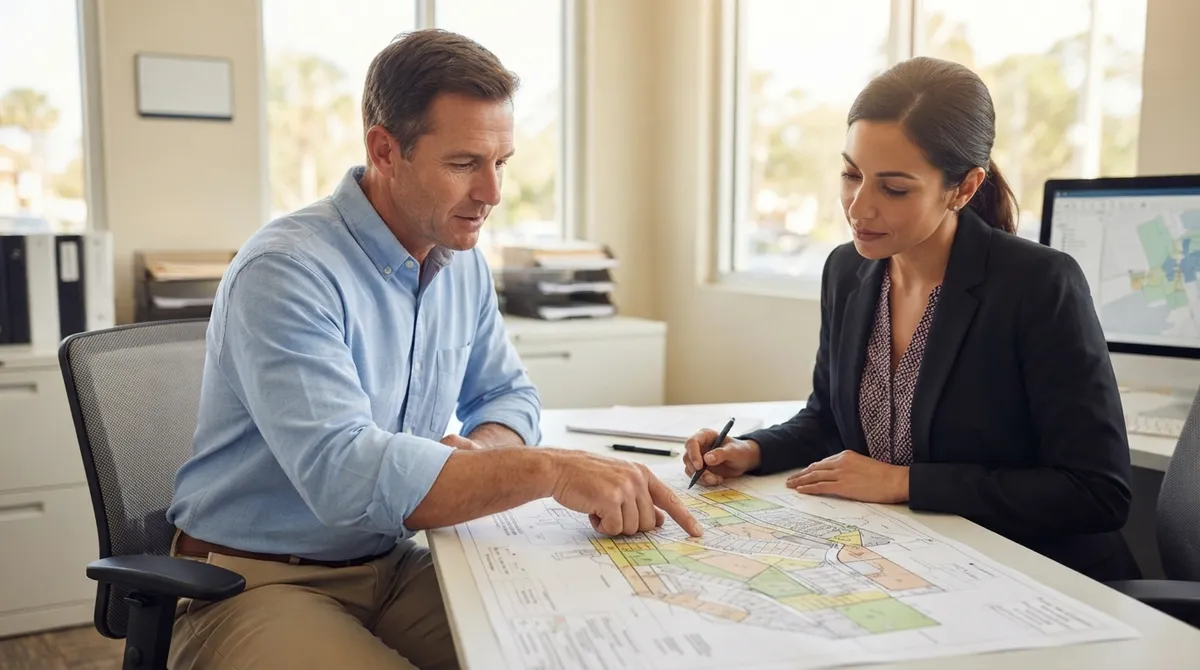
This sounds obvious, but it trips up more people than you'd expect, especially near city and county borders. Some addresses that feel like they're in the county are actually inside city limits, and vice versa. Before you submit anything, confirm whether your building department is the city or the county.
If you're not sure where to start, our building department lookup tool can help you pinpoint the correct office fast. We also maintain an open permit search tool so you can check whether there's already an active case, stop-work order, or code enforcement flag tied to the property before you even pick up the phone.
Step 2: Call the Building Department and Be Upfront
Once you know who to call, contact them directly and be honest that the roof work is already complete or underway. I know that feels uncomfortable, but building departments genuinely see this constantly, and being upfront almost always goes smoother than trying to sneak an application through as if it were brand new work.
Ask these specific questions:
- What is your process for an unpermitted or after the fact reroof?
- Is there already a stop-work order or code enforcement case on file for this address?
- Does the application need to be submitted by a Florida-licensed roofing contractor, or can an eligible owner-builder apply?
- What documentation, photos, or inspections will you require given that the roof is already covered?
Every jurisdiction answers these differently, so don't assume your neighbor's experience in a different county applies to you.
Step 3: Gather Your Documentation
Building departments generally want to see proof that the roof was installed to code, even though they can't physically watch it happen after the fact. Typical submittals include:
- A completed permit application with a clear scope of work
- Contractor license number and current insurance information
- Roof covering and underlayment product details
- Florida Product Approval documentation or a Miami-Dade Notice of Acceptance (NOA), along with installation instructions
- Dated photographs or other evidence showing the concealed work — decking, nailing pattern, underlayment, flashing
- Invoices, affidavits, or engineering reports if the building official requests them
Here's the honest truth: photos and affidavits are not automatically accepted as a substitute for inspection. The building official decides what's sufficient, and in some cases, they may require selective removal of roofing material to physically expose and verify the work underneath. It's frustrating, but it's their call, not yours or your contractor's.
Step 4: Understand Which Inspections You'll Need
Roof work typically involves a few inspection stages: decking or nailing verification, dry-in and underlayment/flashing, and a final inspection. When a roof is already finished, some of these stages are literally hidden under the new roofing system, which is exactly why documentation matters so much.
Different counties handle this differently. Take a look at how a few Florida jurisdictions structure their reroof inspection process:
| Jurisdiction | Inspection Stages Typically Required | Notable Local Rule |
|---|---|---|
| St. Lucie County | Decking (or eligible affidavit/photo process), dry-in, final | Permit generally required if reroof exceeds 25% of roof area within 12 months |
| Polk County | In-progress inspection, final inspection | Procedure structured around two key checkpoints |
| Hillsborough County | Varies by prior code compliance | Treatment differs depending on whether the existing roof complied with the 2007 Florida Building Code or a later edition |
| Lake County | Standard reroof checklist process | Notice of Commencement required for permits with job value over $5,000 |
See the pattern? No two counties run it exactly the same way. That's precisely why calling ahead and confirming the local rule — rather than assuming a "25% rule" or similar shortcut applies everywhere — is so important.
Step 5: Know Who Can Actually Submit the Application
This is a common point of confusion. In many Florida jurisdictions, roofing permits must be submitted by a Florida-licensed roofing contractor. Some jurisdictions allow an eligible owner-builder to apply instead, particularly for owner-occupied single-family homes, but the eligibility rules are strict and vary locally.
If you're a homeowner considering the owner-builder route, it's worth reviewing the requirements carefully before you commit, since taking on that responsibility means you're personally accountable for code compliance. Our owner-builder permits guidance can help clarify what that path actually involves before you decide.
What Happens If the Roof Fails Inspection?
Let's talk about the scenario nobody wants but everyone should plan for. If the building official can't verify the work meets code — whether through photos, affidavits, or a physical inspection — you may be asked to expose, repair, or replace portions of the roof. That could mean pulling back shingles or underlayment in specific spots so the inspector can see the decking and nailing pattern directly.
This is obviously not anyone's favorite outcome, but it's far better to deal with it now than to have it surface later during a home sale, insurance claim, or storm damage assessment. Additional permit fees, reinspection charges, or even code enforcement penalties can apply depending on local rules, so addressing it proactively really does save money and stress in the long run.
How Much Does This Actually Cost?
Costs vary quite a bit by jurisdiction and by how complicated your specific case is. Generally, expect to pay:
- The standard reroof permit fee for your jurisdiction
- An after the fact penalty fee, often a multiplier of the standard permit fee
- Possible reinspection fees if corrections are needed
- Engineering or documentation costs if the building official requires sealed drawings or an engineer's letter
Because pricing differs so much county to county, it really pays to get a clear answer specific to your address rather than relying on a general estimate. If you want a straightforward breakdown before you commit to anything, our team can walk you through it — feel free to get a free quote so you know what to expect financially before you start the process.
How a Permitting Partner Helps Move This Along
Here's where things get a lot less overwhelming. Navigating 67 different Florida counties, each with its own after the fact reroof procedure, isn't something most homeowners or even busy general contractors want to figure out solo. That's exactly the kind of coordination work we handle every day at 1 Contractor Solutions.
We help identify the correct jurisdiction, assemble the required application and product documentation, coordinate directly with the roofing contractor and building department, and track inspections or corrections from start to finish. We can't guarantee approval — nobody honestly can, since that decision always rests with the building official — but we can make sure your submission is complete, accurate, and moving forward instead of sitting in limbo.
Our in-house engineering team also seals structural documentation when a building department requests it, so you're not stuck waiting on an outside consultant to return a phone call. For roofing contractors handling multiple after the fact cases at once, our Roof Permit Partnership Program is built specifically to streamline that volume.
A Quick Comparison: DIY Approach vs. Working With a Permitting Team
| Task | Doing It Yourself | Working With a Permitting Partner |
|---|---|---|
| Identifying correct jurisdiction | Research each department individually | Confirmed quickly using established relationships |
| Gathering product approval docs | Time-consuming, easy to miss requirements | Assembled and organized for you |
| Tracking inspection status | Manual follow-up calls | Ongoing tracking and updates |
| Handling reviewer comments | Back-and-forth delays | Addressed directly, often same-day |
| Engineering documentation | Outside consultant required | In-house sealed drawings |
Special Situations Worth Knowing About
Realtors and Property Buyers
If you're a real estate professional and an unpermitted roof surfaces during a title search or inspection, this can absolutely delay or derail a closing. Our realtor and closing support services exist specifically to help get these issues resolved quickly, so your transaction doesn't stall indefinitely.
Solar Companies
If you're installing solar and discover the underlying roof was never permitted, that's a structural documentation gap you'll want addressed before mounting equipment. Our team works closely with solar contractors across Florida to make sure roof compliance and solar permitting move forward together, not in conflict.
General Contractors Managing Multiple Properties
If you're a general contractor juggling several after the fact cases across different counties, the jurisdictional differences multiply fast. Having one team tracking all of it consistently saves enormous amounts of administrative time.
Frequently Overlooked Details That Can Delay Your Permit
- Forgetting to check whether a Notice of Commencement is required — Lake County, for example, requires one for permits with a job value over $5,000.
- Assuming photos alone will satisfy the building official without confirming that in advance.
- Not verifying whether the roofing contractor's license and insurance are current with that specific municipality.
- Overlooking product approval documentation for the specific shingles, tile, or metal roofing system installed.
- Missing a scheduled reinspection window, which can restart parts of the process.
Catching these details early genuinely saves weeks. We've seen straightforward cases get held up for months simply because one document was missing from the initial submission.
Bringing It All Together
Getting an after the fact roofing permit in Florida isn't a punishment — it's simply the path back to a compliant, insurable, sellable property. Yes, it takes patience, documentation, and sometimes a bit of back-and-forth with your local building department. But thousands of Florida homeowners and contractors work through this exact process every year, and coming out the other side with a clean permit history is absolutely worth the effort.
If you're anywhere near Bradenton, Tampa, St. Petersburg, or really anywhere across our 67-county service area, we'd genuinely love to help you sort this out. You can also visit us on Google — 1 Contractor Solutions to see what other Florida property owners and contractors have experienced working with our team, and don't hesitate to follow us on LinkedIn or follow us on Facebook for ongoing updates on Florida permitting changes.
Ready to Get Your Roof Back in Compliance?
You've read through the steps, you understand the documentation, and now it's time to actually move forward. Every day you wait is another day that unpermitted roof could complicate a sale, an insurance claim, or a code enforcement case. Let our team confirm your jurisdiction, assemble your documentation, and start the conversation with your building department today — get a free quote and let's get this resolved together, the friendly and straightforward way.
FAQs
How do I apply for an after the fact roofing permit in Florida?
You'll start by confirming which city or county building department has jurisdiction over your address, then contact them directly to disclose that the roof work is already complete. They'll walk you through their specific process, which usually includes submitting an application along with product documentation and photos of the concealed work.
Can a homeowner apply for an after the fact roofing permit, or does it need to be a licensed roofer?
It really depends on the jurisdiction! Many Florida building departments require the application to come from a Florida-licensed roofing contractor, though some allow eligible owner-builders to apply for their own owner-occupied home. Your local building department can tell you exactly which path applies to your situation.
Will the building department make me remove shingles for inspection?
It's possible, though not guaranteed — this is entirely the building official's call. If photos, affidavits, and documentation aren't enough to verify the concealed decking, nailing, or underlayment, they may require selective removal so an inspector can physically confirm the work meets code.
What happens if my roof fails an after the fact permit inspection?
Don't panic — this is fixable! You may need to expose, repair, or replace portions of the roof before final approval, and there could be additional reinspection fees involved. It's a hassle, but resolving it now is much easier than dealing with it later during a home sale or insurance claim.
How much does an after the fact roofing permit cost in Florida?
Costs vary significantly by jurisdiction, but generally include the standard permit fee plus an after the fact penalty, which is often a multiplier of that base fee. Getting a quote specific to your address and situation is the best way to know exactly what you're looking at financially.
We do this work every day across all 67 Florida counties. Call (866) 314-6931 and we will tell you what your situation actually requires — including when you do not need us.
Related services
Permit Facilitation & Filing
You have a crew scheduled, a client asking for dates, and a permit sitting somewhere in a queue you cannot see. We file it, w…
See the servicePlan Review Coordination
A permit in plan review is not one queue. On a commercial project it can be six queues, each with its own reviewer, its own c…
See the serviceReady to get your permit moving?
One call tells you which jurisdiction controls your project, what it will take, and what it will cost. Most of the time we can scope it on the phone.