
Blog
How to Resolve a Code Violation After the Fact in Florida
Learn how to resolve a code violation after the fact in Florida: permit steps, inspections, fines, liens, and how to close out enforcement for good.
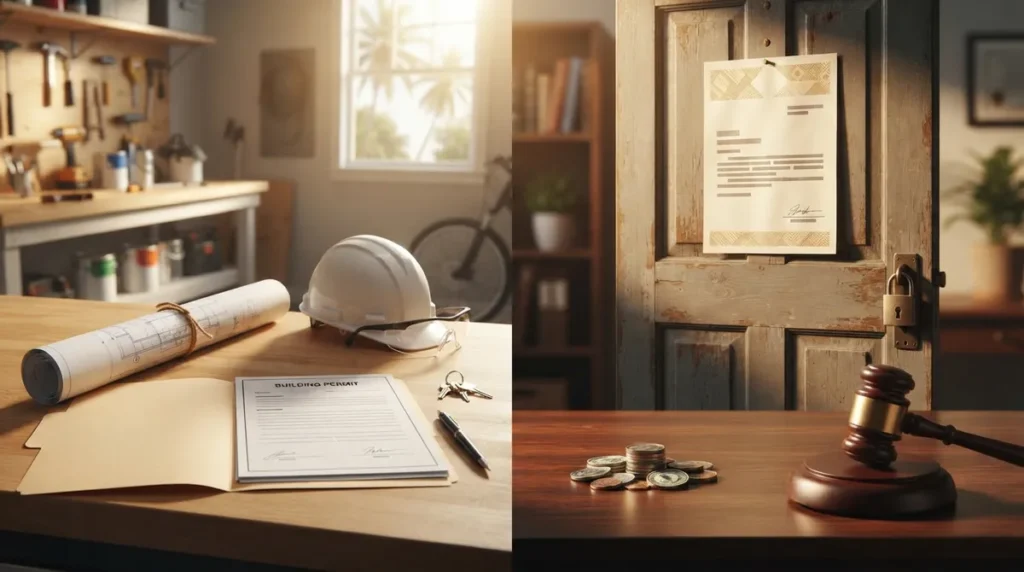
Key Takeaways
-
Resolving a Florida code violation requires two parallel tracks: legalizing the construction through the building department and closing the enforcement case with code enforcement, since passing inspections alone does not cancel a notice or fine.
-
Always get written confirmation from code enforcement that the case is closed; fixing the construction does not automatically clear the notice, hearing order, or fine.
-
Contact both the building department and code-enforcement office promptly, and do not open walls or remove work until you confirm what the jurisdiction will accept.
-
Under Florida Statutes §162.09, fines can reach $250 per day for a first violation and $500 per day for a repeat violation once a compliance date passes.
-
Unpaid fines can be recorded as liens, and after three months the enforcement board may authorize foreclosure or a money judgment, which can derail a sale through a title search.
-
Gather as-built drawings, site plans, and engineer letters early, since accurate documentation is often the biggest factor in a smooth after-the-fact permit approval.
Let's start with some good news: you are far from the first Florida property owner to open a letter from code enforcement and feel your stomach drop. A deck built years ago, a re-roof a previous owner skipped the permit on, a bathroom remodel your contractor swore was "no big deal" — these things happen every single day across the Sunshine State. And yes, there is a path forward.
Learning how to resolve a code violation after the fact in Florida comes down to handling two related tracks at the same time: getting the construction legalized through the building department, and closing out the enforcement case with the code-enforcement office. Miss either one, and the problem can follow you right into a closing table or a fine order.
In this friendly guide, we'll walk through how after-the-fact permitting works, what inspectors typically want to see, how fines and liens come into play, and what you can do right now to keep a small problem from becoming a big one. Whether you're a homeowner, general contractor, solar installer, or real estate pro, you'll find practical steps you can use today.
What "Resolving a Code Violation After the Fact" Really Means
Most people assume a code violation is one single problem. In reality, there are usually two separate matters running side by side:
- The construction issue: Work was done without a required permit, or a permit expired before final inspection.
- The enforcement issue: A notice, compliance deadline, hearing, or fine tied to that work.
Florida law is clear on the first point. Under Florida Statutes §553.79(1)(a), performing covered construction work without first obtaining the required permit is unlawful, and the local enforcing agency administers permits and may require corrective work before approval.
Here's the part that surprises people: an after-the-fact permit is not automatic approval or a waiver of code requirements. The work still has to meet the Florida Building Code. The building department simply gives you a legitimate path to prove that it does.
If you want a deeper look at the permit side of things, our guide on how to get an after-the-fact permit in Florida covers the application process in detail.
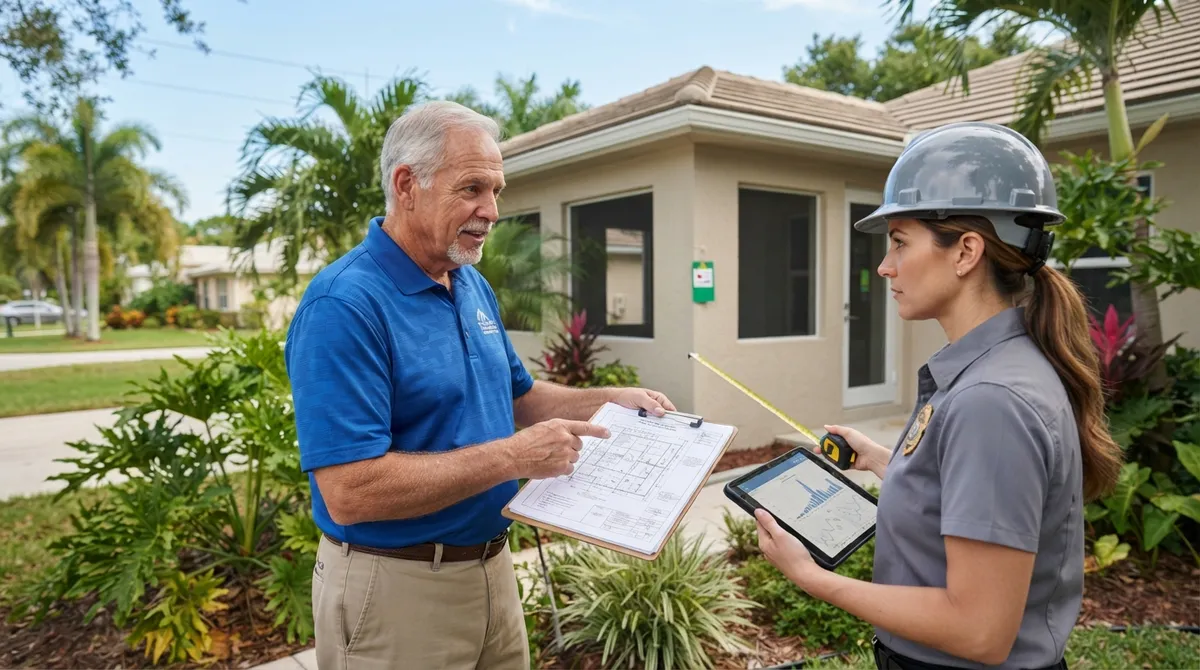
Step-by-Step: How to Resolve a Florida Code Violation After the Fact
Every city and county runs things a little differently, but the overall roadmap looks remarkably similar. Here's the sequence we see work best.
- Read the notice carefully. Note the violation description, the compliance deadline, the hearing date (if any), and the contact person. Deadlines matter enormously.
- Contact both offices. Reach out to the local building department and the code-enforcement office promptly. A friendly, proactive call often goes a long way.
- Identify exactly what was built. Document the scope: dimensions, location, materials, and which trades were involved (structural, electrical, plumbing, mechanical).
- Disclose the unpermitted work and apply. Submit the after-the-fact permit application with the plans and supporting documents your jurisdiction requests.
- Provide plans, drawings, or engineering. Many jurisdictions want as-built drawings, and some require sealed documentation from a licensed professional.
- Make the work available for inspection. Inspectors verify what they can see — and sometimes what they can't.
- Complete any corrective work. If something doesn't meet code, you'll fix it and schedule a re-inspection.
- Close the permit and confirm enforcement closure. Get written confirmation from code enforcement that the case is resolved.
That last step is the one people forget. Passing inspection fixes the construction. It doesn't automatically cancel a notice, a hearing order, or a fine. Always ask for written confirmation.
Building Permit vs. Code Enforcement: Two Tracks, One Goal
It helps to see the two tracks side by side. They're managed by different offices, follow different timelines, and close out in different ways.
| Item | Building Permit Track | Code Enforcement Track |
|---|---|---|
| Who handles it | Local building department | City or county code-enforcement office or board |
| Main goal | Verify work meets the Florida Building Code | Bring the property into compliance by a set date |
| What you submit | Application, plans, engineering, fees | Proof of compliance, permit documentation |
| How it closes | Final inspection passed, permit closed | Compliance confirmed in writing, fines resolved |
| Risk if ignored | Expired or denied permit, failed inspections | Daily fines and recorded liens |
Handling both tracks together keeps you from fixing the building while the fines quietly keep growing. If you've received a notice and aren't sure where to begin, our code compliance violation support is designed for exactly this situation.
What Documents and Plans Will You Need?
The exact paperwork varies by jurisdiction and project, but these items come up again and again:
- A completed after-the-fact or retroactive permit application
- Site plan or survey showing the location of the work
- As-built drawings showing what was actually constructed
- Structural, electrical, or mechanical details as applicable
- Engineer letters or sealed documentation when the work can't be visually verified
- Product approvals or manufacturer specifications for windows, doors, roofing, or equipment
- Contractor information, or owner-builder paperwork where allowed
Accurate drawings are often the single biggest factor in a smooth approval. Our as-built drawings service documents existing conditions the way reviewers expect to see them, and our engineer letters help when a structural or MEP question needs a professional answer.
Will Inspectors Make You Open Up Walls?
This is one of the most common worries, and it's a fair one. The honest answer is: sometimes.
Concealed work — framing behind drywall, wiring in walls, plumbing under a slab — may need to be exposed so an inspector can verify compliance. When it can't be exposed, the building department may accept alternatives such as:
- Engineering documentation or sealed letters
- Testing or specialized evaluation
- Photographic evidence from earlier stages of construction
- Limited, targeted openings (like a small inspection hole)
Before you open a single wall, check with the local building department about what it will accept. That one phone call can save you thousands of dollars in unnecessary demolition and repair. Some owners also explore private provider inspections where the jurisdiction allows them, which can keep scheduling moving.
What If the Work Doesn't Meet the Florida Building Code?
It happens, and it's not the end of the world. If the completed work can't be shown to meet applicable code, the building department may require one or more of the following:
- Testing or engineering evaluation
- Alterations or upgrades to bring the work into compliance
- Removal or reconstruction of the non-compliant portion
A common example is an addition framed without proper connections or a roof installed without the correct fastening pattern. A structural engineer can often evaluate the condition and specify practical, targeted fixes instead of a full tear-out. Our structural engineering team works with in-house sealed drawings, so reviewer comments get answered quickly instead of waiting on an outside consultant.
For a closer look at your options when work falls short, see our article on whether you'll really have to demolish unpermitted work.
Understanding Fines, Liens, and the Cost of Waiting
Let's talk about the part nobody enjoys: the money. Costs fall into two buckets — permit-related charges and enforcement penalties.
Permit and Inspection Costs
Permit fees, plan-review charges, inspection fees, and any extra charges for work begun without a permit are set locally. There is no single statewide after-the-fact fee. Ask your city or county building department for its current fee schedule, and see our breakdown of after-the-fact permit costs in Florida for typical ranges and cost drivers.
Code Enforcement Fines
Fines are where delays get expensive. Under Florida Statutes §162.09, a code enforcement board may impose daily fines when a violation remains uncorrected past the compliance date, or for a repeat violation.
| Violation Type | Statewide Maximum Under §162.09 |
|---|---|
| First violation | Up to $250 per day |
| Repeat violation | Up to $500 per day |
| Irreparable or irreversible violation | Up to $5,000 per violation |
Those figures are statewide maximums, and local procedures matter. The key takeaway is simple: the clock runs fast once a compliance date passes.
Can a Fine Become a Lien?
Yes. An unpaid fine order may be recorded as a lien against your property. According to §162.09, after three months from the filing of an unpaid lien, the enforcement board may authorize the local government attorney to foreclose or sue for a money judgment. A recorded lien can also surface during a title search and derail a sale.
If you're facing deadlines or hearings, acting early is almost always cheaper than waiting. Our urgent permit rescue service exists for exactly these time-sensitive situations.
Common After-the-Fact Scenarios We See Across Florida
Different audiences run into this problem in different ways. Here are a few familiar patterns and how they usually play out.
| Scenario | Who It Affects | Typical Path to Resolution |
|---|---|---|
| Previous owner skipped permits on an addition or remodel | Homeowners, buyers, realtors | As-built drawings, engineer letter, after-the-fact permit, inspections |
| Permit expired before final inspection | Contractors, homeowners | Reopen or reapply, schedule remaining inspections, close the permit |
| Solar or roof installed without proper permit | Solar and roofing companies | Documentation of equipment and attachment, engineering verification, permit filing |
| Open permit or violation found at closing | Sellers, agents, investors | Research open items, legalize work, obtain closure letters |
If you're a real estate professional wrestling with a deal that suddenly has a permit hold, our resources on open permits found at closing and realtor closing support can help you keep the transaction alive. And if you're a contractor trying to clean up an expired permit, see after-the-fact and expired permits for how we approach it.
Practical Tips to Make the Process Smoother
After helping owners and contractors through this process, a few habits consistently make the difference:
- Respond fast. Prompt, honest communication with both offices builds goodwill and often buys you time.
- Don't tear anything out first. Confirm requirements before opening walls or removing work.
- Keep records. Save receipts, photos, contracts, product specs, and any correspondence with the city or county.
- Know which jurisdiction controls your property. Properties near city lines can fall under surprising authorities. Our building department lookup tool helps you find the right office.
- Check for other open permits. Use our open permit search to see if older work is still lingering on the record.
- Get written closure. Always request confirmation that both the permit and the enforcement case are closed.
These small habits prevent the most frustrating outcome: thinking you're finished, only to discover a lingering fine or open permit months later.
How a Florida Permitting Service Can Help
A permitting service can organize the application, prepare plans, coordinate with the contractor, and follow up with the agency so you're not left guessing. It's important to be realistic, though: no one can guarantee approval, replace required licensed professionals and inspections, or override decisions by the local authority having jurisdiction.
What a good partner can do is take the legwork off your plate. At 1 Contractor Solutions, we handle permit facilitation and filing, plan review coordination, revisions, and resubmittals, backed by in-house drafting and engineering with our own sealed drawings. We work across all 67 Florida counties and respond fast — often within 30 minutes. You can also follow us on LinkedIn or follow us on Facebook for Florida permitting updates.
Curious how other Florida owners feel about working with us? You can see what our 1 Contractor Solutions customers say by checking Visit us on Google — 1 Contractor Solutions.
Your Next Steps
Resolving a code violation after the fact in Florida isn't about dread — it's about sequence. Read the notice, contact both offices, document the work, apply for the after-the-fact permit, prove compliance, pass inspections, and confirm that enforcement is closed in writing. Do those things in order, and most situations can be resolved.
The biggest mistake is waiting. Daily fines, expired deadlines, and recorded liens only get more complicated with time. A little action now almost always costs less than a lot of action later.
Ready to get your property back in good standing? Reach out and get a free quote from our team. Give us the address and the problem, and we'll tell you which jurisdiction controls it, what it will take, and then go do the work with you.
FAQs
How do I get an after-the-fact permit in Florida?
Start by contacting your local building department and being upfront about the unpermitted work. You'll submit an application along with any requested plans or supporting documents, then make the work available for inspection. Exact steps and paperwork vary by city and county, so ask what your jurisdiction requires.
Does getting a permit clear a code enforcement violation or fine in Florida?
Not automatically. A building permit case and a code-enforcement case can be separate, so passing inspections may fix the construction without closing the notice or fine. Always confirm with the code-enforcement office and get written confirmation that everything is resolved.
Can a Florida code enforcement fine become a lien on my property?
Yes. Under Florida Statutes §162.09, an unpaid fine order can be recorded as a lien, and after three months the enforcement board may authorize foreclosure or a money judgment. Acting before deadlines pass is the best way to avoid it.
Will inspectors make me open walls for unpermitted work?
Sometimes, if the work is concealed and can't be verified another way. Alternatives like engineering letters, testing, or small inspection openings are often accepted, so check with your building department before you cut anything open.
How much does an after-the-fact permit cost in Florida?
There's no single statewide fee. Permit, plan-review, inspection, and any extra charges for work started without a permit are set by your local city or county. Ask your building department for its current fee schedule to get an accurate number.
We do this work every day across all 67 Florida counties. Call (866) 314-6931 and we will tell you what your situation actually requires — including when you do not need us.
Related services
Permit Facilitation & Filing
You have a crew scheduled, a client asking for dates, and a permit sitting somewhere in a queue you cannot see. We file it, w…
See the servicePlan Review Coordination
A permit in plan review is not one queue. On a commercial project it can be six queues, each with its own reviewer, its own c…
See the serviceReady to get your permit moving?
One call tells you which jurisdiction controls your project, what it will take, and what it will cost. Most of the time we can scope it on the phone.