
Blog
Who Can Pull a Building Permit in Port Charlotte? (2026)
Wondering who can pull a building permit in Port Charlotte? Learn the roles of contractors, owner-builders, and permitting agents in 2026.
Key Takeaways
-
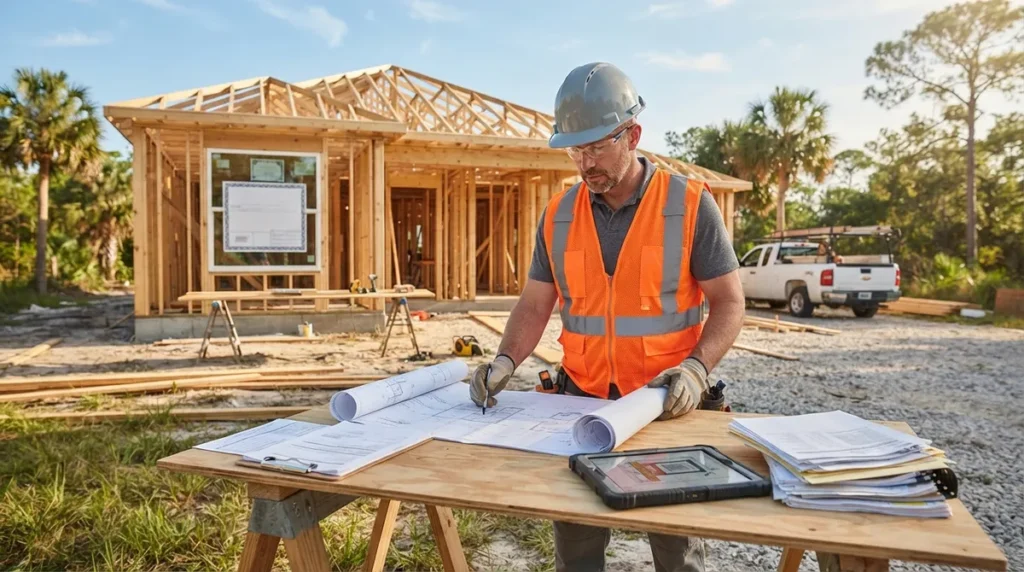
In Port Charlotte, a building permit can be pulled by a Florida-licensed contractor, an eligible owner-builder, or an authorized agent such as a permitting company, but each route carries different responsibilities.
-
Verify any contractor's license through the Florida DBPR online search, confirming it is active, matches your project type, and has no discipline history before signing anything.
-
Owner-builders must personally sign the application, supervise the work on site, and not rent or sell the property within one year after the permitted work is completed.
-
A permitting company or expediter can prepare, submit, and track your application, but it does not replace a licensed contractor or transfer legal responsibility for the work.
-
Charlotte County requires a recorded Notice of Commencement for improvements with a direct contract price over $5,000, submitted before the first inspection.
-
Always confirm the parcel's jurisdiction first, since some Port Charlotte addresses fall under a different permitting authority than Charlotte County.
So you have a project in Port Charlotte, the crew is nearly ready, and then someone asks the question that stops everything: who is actually going to pull the permit? If you have ever stared at a county website wondering whether that person is you, your contractor, or somebody else entirely, welcome. You are in very good company.
The good news is that the answer is pretty clear once you know the rules. In Charlotte County, a permit can be applied for by a properly licensed contractor, by an eligible owner-builder, or by an authorized agent who helps with filing and coordination. Each route comes with its own responsibilities, and choosing the wrong one can cause delays, fines, or even trouble at closing.
In this friendly guide, we will walk through who can pull a building permit for me in Port Charlotte, what each option really means, and how to pick the path that fits your project. Whether you are a homeowner planning a remodel, a general contractor juggling a dozen jobs, a solar installer, or a realtor helping a client, you will leave knowing exactly who to call and what to ask.
Who Can Pull a Building Permit in Port Charlotte?
In Port Charlotte, building permits are handled through Charlotte County's Community Development and Building Construction department. Florida Building Code Section 105.1 says an owner or an authorized agent must apply for and obtain the required permit before regulated work begins. That wording matters, because it opens the door to more than one type of applicant.
Here is the short version of who can pull a permit:
- A Florida-licensed contractor working within the scope of their license
- An eligible property owner using the owner-builder exemption
- An authorized agent, such as a permitting company, who prepares, submits, and tracks the application on behalf of the contractor or owner
One quick note before we go deeper: some Port Charlotte addresses can fall under a different permitting authority. Always confirm the parcel's jurisdiction first so you file with the right office.
Option 1: A Licensed Contractor Pulls the Permit
For most projects, this is the cleanest and most common route. A Florida-licensed contractor applies for the permit in their own name, and they become the responsible party of record for the work.
Why This Route Works So Well
When the contractor pulls the permit, they carry the accountability for code compliance, subcontractor coordination, and inspections. That is a big relief for busy homeowners who would rather not manage every detail.
- The contractor is generally responsible for the work and its compliance
- The permit stays tied to a licensed professional who knows the process
- Scope matters: the contractor can only pull permits for work covered by their license
How to Verify a Contractor's License
Before you hand anyone your project, take two minutes to check them out. A friendly handshake is lovely, but a verified license is better.
- Ask for the contractor's full name, business name, and license number.
- Look up the license through the Florida Department of Business and Professional Regulation (DBPR) online license search.
- Confirm the license is active and matches the type of work you need.
- Check for any discipline history or complaints.
- Make sure the contractor is registered or otherwise authorized to work in Charlotte County.
If a contractor ever suggests that you pull the permit so they can skip the paperwork, pause and ask why. That is a classic warning sign of unlicensed activity, and our guide on 15 unlicensed contractor mistakes Florida owners make explains how to avoid the most expensive ones.
Option 2: The Homeowner Pulls the Permit as an Owner-Builder
Yes, a homeowner can pull their own permit in Charlotte County, but only if they truly qualify. Florida Statute 489.103 sets the rules, and they are more serious than many people expect.
Who Qualifies as an Owner-Builder
The exemption generally covers a one- or two-family residence or a farm outbuilding that you build or improve for your own use or occupancy. It can also apply to certain commercial work with a contract price that does not exceed $75,000.
What You Are Signing Up For
Being an owner-builder is not just a form. It is a commitment. Here is what comes with it:
- You must personally sign the application and complete the required disclosure
- You are responsible for direct, on-site supervision of the work
- You are responsible for code compliance
- You cannot hire an unlicensed person to act as the contractor
- You cannot hand supervision off to an unlicensed person
Charlotte County also states that an owner-builder must not rent or sell the property within one year after the permitted work is completed. Exceptions and details can change, so verify the current requirements directly with the county before you apply. If you are weighing this path, our page on owner-builder permits breaks down the process in plain English.
Option 3: A Permit Expediter or Permitting Company
Here is where a lot of people get confused, so let us clear it up. A permit expediter or permitting-services company can often prepare, submit, track, and coordinate your application as an authorized agent. That is real, valuable help, and it can save you weeks of back-and-forth.
But there is an important line. Administrative help does not make a company a licensed contractor, and it does not transfer the contractor's legal responsibilities. The licensed contractor or the eligible owner still signs the required documents and stays responsible for the work.
What an Authorized Agent Can Typically Do
- Gather and organize the required documents
- Prepare and submit the application
- Track the permit through plan review
- Respond to reviewer comments and handle revisions
- Coordinate with the contractor, engineer, and county staff
- Help schedule inspections and move toward closeout
County authorization requirements can vary, so a good agent will confirm exactly what Charlotte County needs for your project. That is the kind of detail permit facilitation and filing professionals handle every day.
Comparing Your Options at a Glance
Sometimes a quick comparison makes the choice obvious. Here is how the three routes stack up:
| Who Pulls the Permit | Responsible Party | Best For | Key Limits |
|---|---|---|---|
| Licensed contractor | The contractor of record | Most remodels, additions, roofs, and new builds | Only within the scope of their license |
| Owner-builder | The property owner | Hands-on owners building for their own use | Must supervise on site; one-year no rent or sell rule |
| Authorized agent or expediter | The contractor or owner still signs and stays responsible | Anyone who wants help with filing, tracking, and coordination | Not a licensed contractor; does not take on legal responsibility for the work |
What You Need Before the Permit Gets Pulled
No matter who files, the county wants a complete package. Requirements depend on the project, but Charlotte County commonly lists items like these:
- A completed construction permit application
- Plans or engineering, when the project calls for them
- Subcontractor information, when applicable
- Zoning review and right-of-way review, when applicable
- A recorded Notice of Commencement, when applicable
On that last one: the county states that a Notice of Commencement is required for improvements with a direct contract price greater than $5,000, and it must be submitted before the first inspection. Missing it is a surprisingly common snag.
Plans are often the piece that slows people down. Structural and MEP drawings usually need a licensed professional's seal, and our explainer on who seals structural drawings for Florida permits shows how that works. If you need drawings prepared, plans and engineering support can keep everything under one roof.
What Does a Building Permit Cost in Port Charlotte?
Fees depend on the type and value of the project, so treat any number as a starting point and check the current county fee schedule. As an example, Charlotte County's residential miscellaneous permit page lists the following:
| Fee Item | Example Detail |
|---|---|
| Building flat fee | $90 |
| Surcharge | 0.025 times the building fee |
| Building fee for projects valued at $50,000 or more | 0.004 times ICC valuation |
| Zoning review (if applicable) | $22 |
| Right-of-way review (if applicable) | $90 |
Fees are project-specific and can change, so confirm everything against the county's current published schedule before you budget.
Which Option Is Right for You?
Every reader comes to this question from a slightly different place, so here is a friendly cheat sheet.
Florida Homeowners and Residential Property Owners
If you are planning an addition, remodel, or repair, hiring a licensed contractor to pull the permit is usually the smoothest path. If you want to be the owner-builder, go in with eyes open about supervision and the one-year rule. Either way, an authorized agent can take the paperwork stress off your plate.
General Contractors and Design Trade Professionals
You already know the contractor-of-record route. Your real bottleneck is often volume: tracking dozens of permits, answering reviewer comments, and keeping drawings compliant. Outsourcing drafting, engineering, and filing lets you stay on job sites instead of inside county portals.
Solar Companies
Solar projects need code-compliant structural and electrical documentation, and approvals move faster when the package is right the first time. Our solar contractor page shows how permitting support fits into distributed energy work.
Real Estate Professionals
If you are buying, selling, or flipping, permit history can make or break a closing. Knowing who pulled what, and whether it was closed out, protects everyone involved. Our guides on how to sell a Florida house with unpermitted additions and realtor and closing support are great starting points.
Common Mistakes to Avoid
A little caution up front saves a lot of headaches later. Watch out for these:
- Letting an unlicensed person run the job while you pull the permit as owner-builder
- Skipping the permit entirely because the work seemed small
- Forgetting the Notice of Commencement on jobs over $5,000
- Assuming the address is in Charlotte County without checking the parcel's jurisdiction
- Hiring a permit helper who promises to act as your contractor, which is not what an authorized agent is
If work already happened without a permit, do not panic. It is fixable, and our guide on 7 steps to legalize unpermitted work in Florida lays out the road back to compliance.
How Long Does It Take to Get a Permit?
Timelines vary with project type, plan quality, and county review workload. Simple permits can move quickly, while projects that need engineering, zoning review, or revisions take longer. The biggest time-saver is a complete, accurate submission the first time. Incomplete plans and missing signatures are the usual culprits behind delays, and a rejected application means another round of review.
Why Many Port Charlotte Owners Choose a Permitting Partner
Here is the honest truth: pulling a permit is not hard, but doing it well takes practice. A seasoned partner knows which documents the county expects, how to answer reviewer comments, and how to keep a project moving from application to closeout.
1 Contractor Solutions serves all 67 Florida counties, including Charlotte County, and works as an outsourced permitting department for contractors, solar companies, realtors, and homeowners. With in-house drafting and engineering, sealed drawings, and same-day response, issues get fixed instead of bounced around. You can follow us on LinkedIn or follow us on Facebook to see how we help projects across the state, and you can visit our 1 Contractor Solutions location on Google to read what customers say.
For deeper statutory background, the Florida Legislature publishes the full text of Florida Statute 489.103, which governs the owner-builder exemption.
Final Thoughts and Next Steps
So, who can pull a building permit for you in Port Charlotte? A licensed contractor, an eligible owner-builder, or an authorized agent helping with the filing, depending on your project and your comfort level. For most people, a licensed contractor pulling the permit, with a permitting partner handling the paperwork, is the least stressful combination.
Ready to take the guesswork out of it? Tell us your address and your project, and we will tell you which jurisdiction controls it and what it will take to get it approved. Get a free quote today, and let us help you get permits approved and projects moving.
FAQs
Can a homeowner pull their own building permit in Charlotte County?
Yes, but only if you qualify as an owner-builder under Florida Statute 489.103. You must personally sign the application, complete the disclosure, and supervise the work on site yourself. Charlotte County also says you must not rent or sell the property within one year after the permitted work is finished, so check current requirements before you apply.
Can a permit expediter pull a permit for me in Port Charlotte?
A permitting company can often prepare, submit, track, and coordinate your application as an authorized agent, which is a huge help. It does not replace a licensed contractor, though, and the contractor or eligible owner still signs the required documents and stays responsible for the work.
Do I need a Notice of Commencement in Charlotte County?
Charlotte County states that a Notice of Commencement is required for improvements with a direct contract price greater than $5,000. It must be submitted before the first inspection, so it is smart to record it early rather than scramble later.
How do I verify that a contractor is licensed in Florida?
Use the Florida Department of Business and Professional Regulation's online license search to confirm the license is active and matches your type of work. Also check for any discipline history, and make sure the contractor can work in Charlotte County before you sign anything.
How much does a building permit cost in Charlotte County?
It depends on the project. For example, the county's residential miscellaneous permit page lists a $90 building flat fee, a surcharge of 0.025 times the building fee, and 0.004 times ICC valuation for projects valued at $50,000 or more. Zoning ($22) and right-of-way ($90) reviews may also apply, so always confirm against the current fee schedule.
We do this work every day across all 67 Florida counties. Call (866) 314-6931 and we will tell you what your situation actually requires — including when you do not need us.
Related services
Permit Facilitation & Filing
You have a crew scheduled, a client asking for dates, and a permit sitting somewhere in a queue you cannot see. We file it, w…
See the servicePlan Review Coordination
A permit in plan review is not one queue. On a commercial project it can be six queues, each with its own reviewer, its own c…
See the serviceReady to get your permit moving?
One call tells you which jurisdiction controls your project, what it will take, and what it will cost. Most of the time we can scope it on the phone.