
Blog
What Does a Condo Structural Inspection in Venice Involve?
Learn how a condo structural inspection in Venice works, who needs one, key deadlines, and how repair permits fit in.
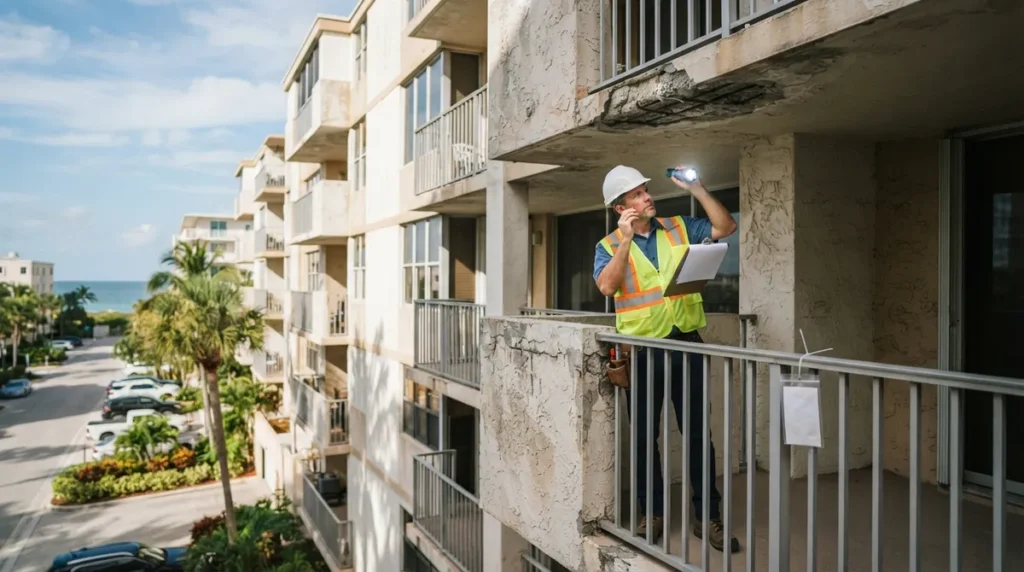
Key Takeaways
-
Florida's milestone inspection law (§553.899) generally applies to condo buildings of at least three habitable stories, with the first inspection due by December 31 of the year the building reaches 30 years from its certificate of occupancy.
-
Venice's Gulf-front location may allow the local enforcement agency to require an earlier 25-year inspection, so never assume the 30-year deadline applies without confirming with the Venice building official.
-
The association must notify unit owners within 14 days after receiving the enforcement agency's written notice stating the inspection deadline.
-
A milestone inspection checks structural safety for substantial deterioration, while a SIRS estimates remaining useful life and replacement costs of key components; both are required and serve different purposes.
-
Milestone inspections must be performed by a Florida-licensed architect or engineer, and a phase two investigation may follow if phase one reveals a need for deeper testing or analysis.
-
Repairs recommended after an inspection often require City of Venice permits and sealed engineering documents, so boards should line up engineers, contractors, and a permitting partner before the report arrives.
If you own or manage a condo in Venice, Florida, you have probably heard the words "milestone inspection" tossed around at board meetings, and maybe felt a little knot in your stomach. Take a breath. A condo structural inspection in Venice is a manageable process, and understanding it ahead of time makes everything smoother for owners, boards, and the contractors who may end up doing the repairs.
Here is the friendly truth: Florida's rules exist to keep buildings safe and residents protected, and Venice's Gulf-front location makes this topic extra relevant. Salt air, humidity, and storms are tough on concrete, steel, and waterproofing. In this guide, we will walk through what a condo structural inspection really is, who needs one, how the deadlines work, how it differs from the Structural Integrity Reserve Study (SIRS), and how permits fit in when repairs are needed. Whether you are a board member, a unit owner, a realtor, or a contractor, you will leave with a clear game plan.
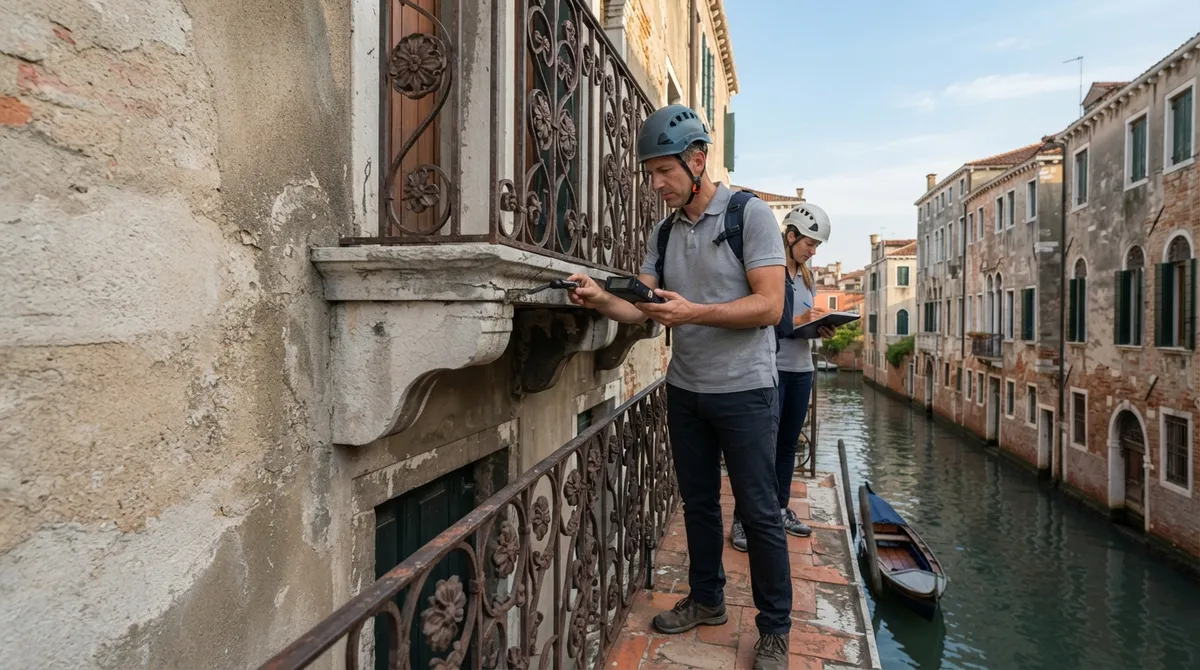
What Does "Condo Structural Inspection" Mean in Venice?
In everyday conversation, a condo structural inspection in Venice usually refers to Florida's statutory milestone inspection. This is a required evaluation of a condominium building's structural condition, performed by a licensed professional, and it applies to qualifying residential buildings across the state, including those in Venice and Sarasota County.
Two separate requirements often get blended together, so it helps to name them clearly:
- Milestone inspection: A structural examination of the building by a Florida-licensed architect or engineer, looking for signs of substantial structural deterioration.
- Structural Integrity Reserve Study (SIRS): A study of key building components that estimates their remaining useful life and replacement costs, so the association can fund reserves properly.
Both matter, and both can lead to repair work that may require permits through the City of Venice or the relevant jurisdiction. That is where permitting expertise becomes valuable.
Does Your Venice Condo Need a Milestone Inspection?
Florida's milestone inspection law (Florida Statutes §553.899) generally applies to condominium buildings that are at least three habitable stories tall. If your building falls into that category, the clock starts ticking from the date of the building's certificate of occupancy.
| Requirement | Standard Rule | Notes |
|---|---|---|
| Building height | 3 or more habitable stories | Applies to qualifying condominium buildings |
| First inspection due | By December 31 of the year the building reaches 30 years from its certificate of occupancy | Local agency may require earlier |
| Repeat inspections | Every 10 years after the first | Ongoing obligation |
| Early inspection option | 25 years, where local conditions warrant | May apply near salt water |
| Who arranges it | The condominium association | Responsible for compliance |
Because Venice sits right on the Gulf, a local enforcement agency can decide that conditions, such as proximity to salt water, justify the earlier 25-year schedule. That is why you should never assume the 30-year mark applies to your specific building. Confirm the schedule with the authority having jurisdiction for your property.
How Do You Find Your Building's Deadline?
The local enforcement agency determines and communicates the deadline. Once the association receives that written notice, it must notify unit owners within 14 days and state the inspection deadline. Here is a simple way to pin down your timeline:
- Locate your certificate of occupancy date. This is the starting point for the 30-year (or 25-year) calculation.
- Contact the local building official. Ask which schedule applies to your Venice building and whether the earlier 25-year threshold has been triggered.
- Watch for written notice. The enforcement agency's notice is what starts the association's 14-day owner-notification window.
- Confirm with association counsel. Statutory language and transition provisions can change, so a quick legal check is smart.
- Calendar everything. Work backward from the deadline to leave time for the inspection, any phase two testing, and repairs.
If you are unsure where your property stands, a building department lookup can help you identify which office actually controls your address, which is not always obvious near city and county lines.
Who Can Perform a Condo Milestone Inspection?
A milestone inspection must be performed by a Florida-licensed architect or engineer authorized under the statute. This is not a job for a general handyman or a standard home inspector. The professional evaluates the building and delivers a report to the association and the local enforcement agency.
If you are curious about the qualifications side of things, our guide on how to find who can perform a milestone inspection in FL breaks it down in detail. And if you are budgeting, how much a milestone inspection costs in Florida is a helpful read.
Phase One vs. Phase Two: What Actually Happens?
The milestone inspection happens in two possible phases, and understanding both removes a lot of the mystery.
Phase One: The Visual Examination
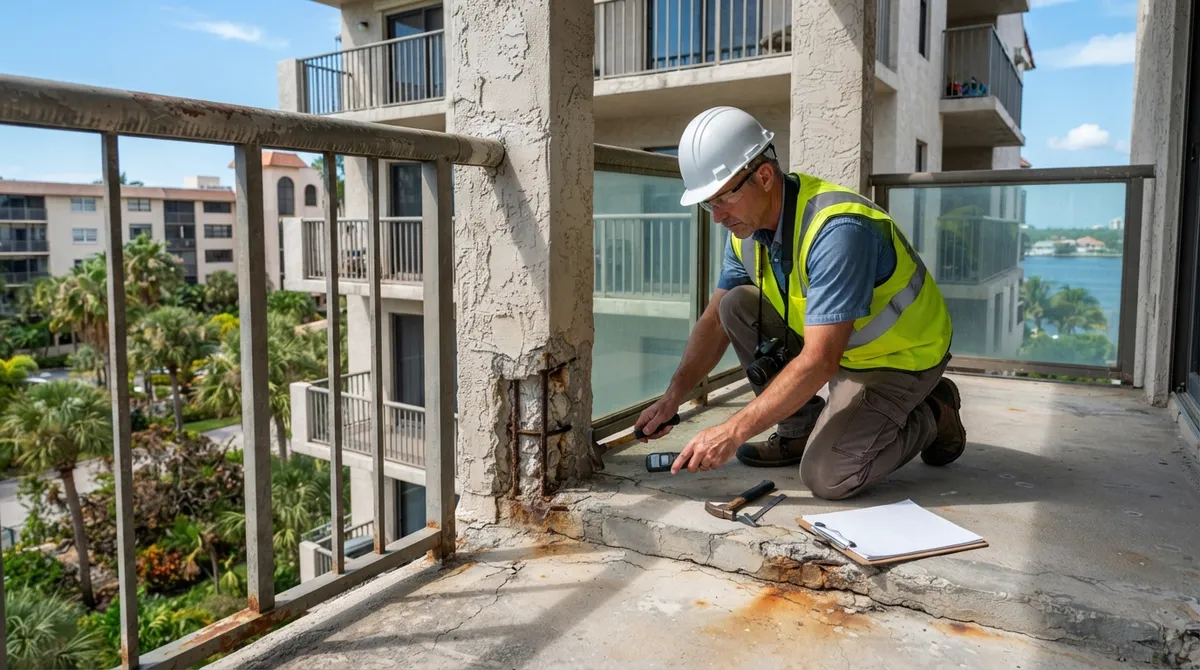
In phase one, the architect or engineer performs a visual examination of the building, looking for signs of substantial structural deterioration. Think cracking, spalling concrete, corroded reinforcement, water intrusion, and similar warning signs in structural elements.
Phase Two: Deeper Testing and Analysis
If the professional determines it is necessary, phase two involves more detailed testing or analysis. That can include material sampling, load evaluation, or other investigations to understand the extent of a problem. Not every building needs phase two, but when it is called for, it is important to move promptly.
For a deeper comparison, see Phase 1 vs. Phase 2 Milestone Inspection in Florida (2026).
Milestone Inspection vs. SIRS: What Is the Difference?
This is one of the most common points of confusion for Venice condo owners. They are related, but they are not the same thing.
| Feature | Milestone Inspection | Structural Integrity Reserve Study (SIRS) |
|---|---|---|
| Main purpose | Assess structural safety and signs of substantial deterioration | Estimate remaining life and replacement costs of key components |
| Performed by | Florida-licensed architect or engineer | Qualified professional per statute |
| Frequency | At 30 years (or 25 if required locally), then every 10 years | At least once every 10 years |
| Applies to | Qualifying condo buildings of 3+ habitable stories | Qualifying buildings of 3+ habitable stories |
| Outcome | Report on structural condition; may trigger phase two | Reserve funding picture for long-term repairs |
| Governing statute | Florida Statutes §553.899 | Florida Statutes §718.112 |
The SIRS covers specified components, including the roof, structure, fire-protection systems, plumbing, electrical systems, waterproofing and exterior painting, and windows and exterior doors. One transition provision is worth noting: for certain existing associations with a milestone inspection due on or before December 31, 2026, the SIRS may be completed at the same time, but no later than December 31, 2026. Because statutory text and applicability can change, verify the current language with the local building official and your association's counsel before relying on it.
What Happens If the Inspection Finds a Problem?
Finding an issue is not the end of the world. It is the reason the inspection exists. If the architect or engineer identifies substantial structural deterioration, the association will need to act on the findings, which may include further testing, repair design, and construction work.
This is where the permitting side enters the picture. Repairs identified through either a milestone inspection or a SIRS can require permits. And if a deadline is missed, things can get complicated quickly, so it is worth reading what happens if a Florida condo misses its milestone deadline before you find yourself in that situation.
Do Repairs Require Permits in Venice?
The City of Venice Building Department offers online permitting and inspection services. Its guidance indicates that permits are generally required for construction, alteration, repair, demolition, occupancy changes, and work on electrical, gas, mechanical, or plumbing systems. Whether the specific repairs recommended after your inspection need a permit depends on the proposed scope and the applicable code.
In practical terms, condo repair projects often involve some combination of the following, each of which may require sealed documents and careful coordination:
- Structural repairs: Concrete restoration, reinforcement repair, balcony and railing work, and load-path corrections.
- Waterproofing and envelope work: Sealants, coatings, and exterior repairs that affect structural elements.
- MEP repairs: Mechanical, electrical, and plumbing system work that must meet code.
- Window and door replacement: Often tied to product approvals and wind-load requirements.
- Roof repairs or replacement: Frequently permit-driven and engineering-supported.
For related reading on the engineering side, take a look at who seals structural drawings for Florida permits and structural plans for a Florida residential permit in 2026.
How to Prepare Your Venice Condo for an Inspection
A little preparation goes a long way. Boards that organize early tend to save time, stress, and money. Here is a friendly checklist to get you started:
- Gather building records. Original plans, prior repair records, past permits, and maintenance logs help the inspector work efficiently.
- Check for open or expired permits. Old open permits can surface during repair work and slow things down. An open permit search is a smart early step.
- Plan access. Inspectors need access to roofs, balconies, garages, stairwells, and common structural areas.
- Communicate with owners. Remember the 14-day owner-notification requirement after receiving the agency's written notice.
- Line up your repair team. If phase two or repairs are likely, identify engineers, contractors, and a permitting partner before the report lands.
Why Permitting Support Matters for Condo Repairs
Here is something many boards do not realize until they are in the middle of it: the inspection is only the first chapter. Once the report is delivered, the real work begins, and that work often runs straight through the permit office.
Contractors, board members, and property managers all benefit from having someone who can prepare or review plans, file the application, track it, answer reviewer comments, and carry it through approval and closeout. That is exactly what 1 Contractor Solutions does across all 67 Florida counties, including Sarasota County and the Venice area. Our drafting and engineering are in house, and our own engineer signs and seals the work, so when a reviewer flags something, we can address it directly instead of waiting on an outside consultant.
If your repairs touch structural, mechanical, electrical, or plumbing systems, our structural engineering and MEP engineering teams can help, and our permit facilitation and filing service keeps the paperwork moving. If your building is also dealing with an expired or unfinished permit, our after-the-fact and expired permits service is built for exactly that. Venice contractors may also find how to register your contractor license in Venice, FL useful, and neighbors in Bradenton can read 11 things to know about condo structural inspection in Bradenton.
You can learn more about our local presence on our Venice page, and see what customers say when you visit our 1 Contractor Solutions location on Google.
Who Benefits Most From Knowing This?
This topic touches more people than you might think. Here is how it lands for different readers:
- Condo boards and property managers: You own the compliance responsibility, so early planning protects residents and budgets.
- General contractors: Condo repair projects mean sealed drawings, product approvals, and multi-system permits.
- Solar companies: Roof and structural conditions flagged in an inspection can affect rooftop solar plans on condo buildings.
- Realtors and buyers: Inspection status and reserve funding can influence a purchase, so it pays to ask early.
- Unit owners: Understanding the process helps you make sense of notices, assessments, and timelines.
A Quick Note on Staying Current
Florida's condo safety rules have evolved quickly, and the statutes cited here reflect the 2026 Florida Statutes (§§553.899 and 718.112). Because deadlines, transition provisions, and local requirements can shift, always confirm your building's exact obligations with the local building official and association counsel. Think of this guide as your friendly roadmap, not a substitute for official confirmation.
Wrapping It Up: Your Next Steps
A condo structural inspection in Venice does not have to be overwhelming. Start by confirming whether your building is covered, learn your deadline from the local enforcement agency, hire a qualified Florida-licensed architect or engineer, and plan ahead for any repairs that may require permits. The earlier you organize, the smoother the whole journey becomes, and your residents, your budget, and your blood pressure will all thank you.
When the inspection report points to repairs, you do not have to navigate the permit process alone. Get a free quote from the 1 Contractor Solutions team, and we will help you sort out the jurisdiction, prepare the plans, and move your project from report to approved permit. Want to stay connected? Follow us on LinkedIn or follow us on Facebook for Florida permitting tips, and if you are curious about the marketing team behind our content, say hello to Brain Buzz Marketing.
FAQs
Does my Venice, Florida condo need a milestone inspection?
Most likely, if your condo building is at least three habitable stories tall. The first inspection is generally due by December 31 of the year the building reaches 30 years from its certificate of occupancy, though the local enforcement agency can require it earlier. Check with the Venice building official to confirm your building's exact schedule.
Can Venice or Sarasota County require a condo inspection at 25 years?
Yes, a local enforcement agency may require inspections earlier, by the year a building reaches 25 years, when local conditions warrant it, including proximity to salt water. Since Venice is a Gulf-coast community, it is smart to confirm which timeline applies to your building.
What is the difference between a milestone inspection and a SIRS?
A milestone inspection is a structural safety examination by a licensed architect or engineer, while a Structural Integrity Reserve Study estimates the remaining life and replacement costs of key building components so reserves can be funded. Qualifying buildings generally need a SIRS at least once every 10 years.
Do repairs recommended by a condo inspection require a building permit in Venice?
Often, yes. The City of Venice generally requires permits for construction, alteration, repair, demolition, and work on electrical, gas, mechanical, or plumbing systems. Whether your exact repairs need one depends on the scope and applicable code, so confirm with the building department.
Who is responsible for arranging the inspection and notifying owners?
The condominium association arranges the milestone inspection and is responsible for compliance. After receiving the local enforcement agency's written notice, the association must notify unit owners within 14 days and state the inspection deadline.
We do this work every day across all 67 Florida counties. Call (866) 314-6931 and we will tell you what your situation actually requires — including when you do not need us.
Related services
Permit Facilitation & Filing
You have a crew scheduled, a client asking for dates, and a permit sitting somewhere in a queue you cannot see. We file it, w…
See the servicePlan Review Coordination
A permit in plan review is not one queue. On a commercial project it can be six queues, each with its own reviewer, its own c…
See the serviceReady to get your permit moving?
One call tells you which jurisdiction controls your project, what it will take, and what it will cost. Most of the time we can scope it on the phone.