
Blog
Standby vs. Portable Generator Permit in North Port: Which?
Standby or portable? Learn when a generator permit is required in North Port, FL, what documents the City asks for, and how to avoid costly delays.
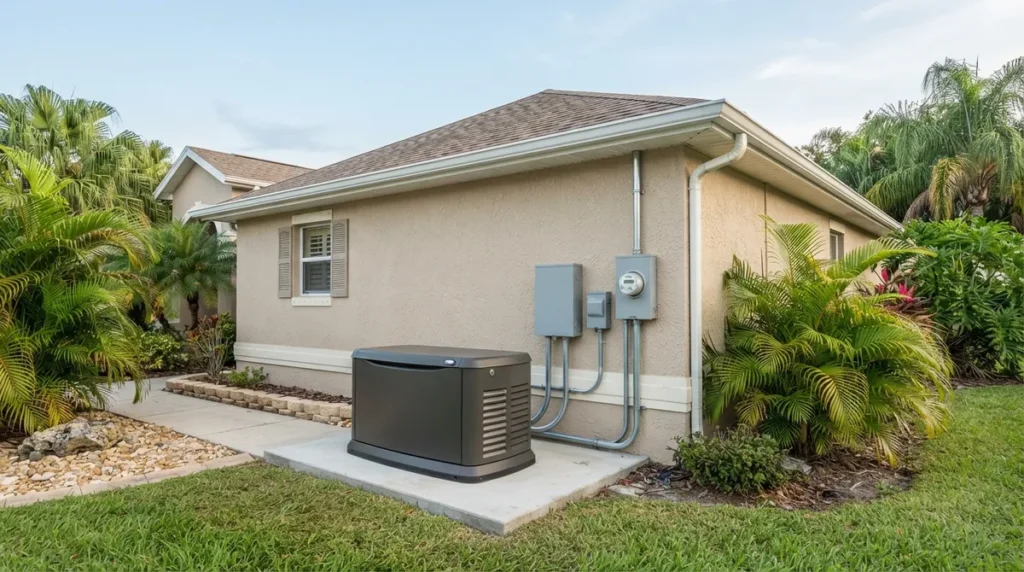
Key Takeaways
-
Connecting a generator to your home's electrical service in North Port generally requires a City permit, plans, and an inspection, while a portable unit used only through its built-in outlets is exempt according to City guidance.
-
Never back-feed a generator through a household wall outlet using a homemade cord; this is prohibited and dangerous to you and to utility crews.
-
A North Port generator permit submittal typically requires a parcel ID, three sets of site plans showing the generator and fuel source, manufacturer specs, an itemized electrical-load list, and a feeder diagram.
-
The City's standard generator application fee is listed as $80 plus applicable surcharges, but fees can change, so verify the current amount with the Building Division before applying.
-
The City's inspection must be approved before FPL restores service when power was disconnected for the work, so contact FPL in advance and never break a meter seal yourself.
-
Confirm zoning setbacks, HOA rules, fuel-system requirements, and equipment clearances before setting a pad, since the City's checklist does not state generator-specific setbacks.
Hurricane season has a way of turning a casual "maybe I should buy a generator" thought into a very real shopping trip. If you live in North Port, you already know how a long outage feels in a Florida summer. But before the generator arrives on a pallet, there is one question worth answering: do you need a permit? Getting a generator permit North Port homeowners are asked about is usually simple when you know the rules, and surprisingly annoying when you learn them after the install.
Here is the short version. The City of North Port treats a generator that ties into your home's electrical service very differently from a portable unit that only runs through its own built-in outlets. One path generally needs plans, a City permit, and an inspection. The other, according to the City's own guidance, does not.
In this friendly 2026 guide, we compare standby (permanent) generators against portable generators, walk through what the City asks for, and point out the mistakes that slow people down. Whether you are a homeowner, a general contractor, a solar company adding backup power, or a real estate pro helping a client, you will leave knowing which path fits and what to do next.
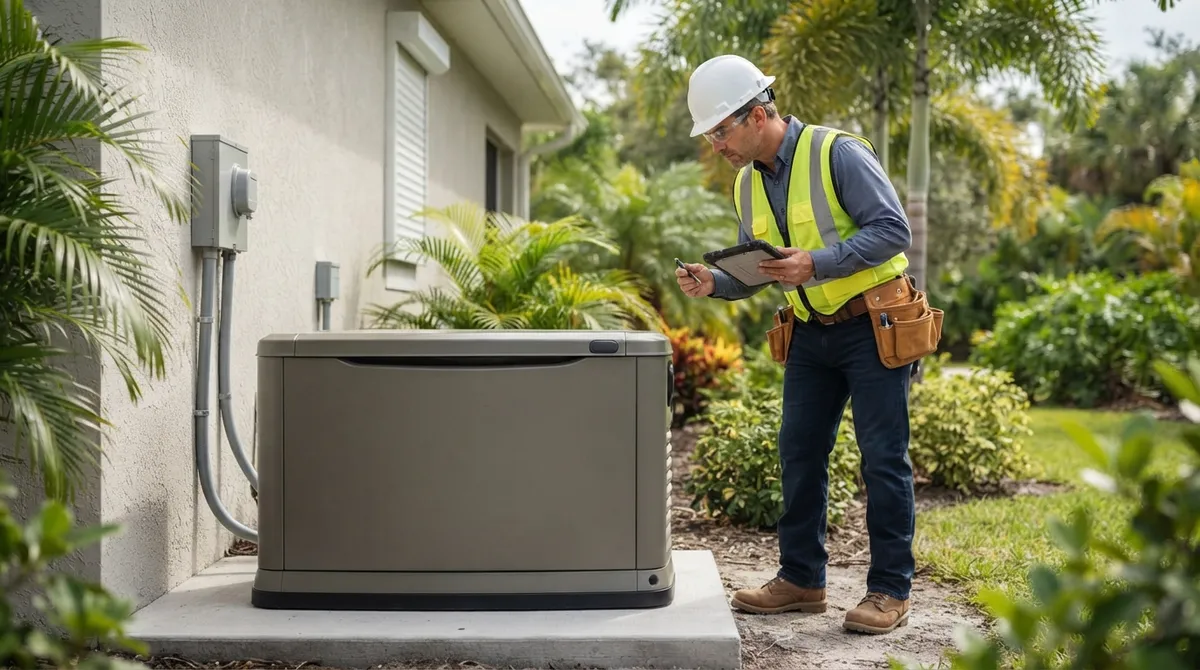
Why Generator Permits Exist in the First Place
A generator is not just an appliance. The moment it connects to your home's wiring, it becomes part of your electrical system. That raises real safety questions, and permits are how cities make sure those questions get answered before anyone flips a switch.
The biggest concern is back-feeding. If a generator pushes power into the grid through your house wiring, it can seriously endanger utility workers who believe a line is dead. Proper transfer equipment prevents this. Then there are fuel connections, load calculations, clearances, and the plain old risk of carbon monoxide.
A permit and inspection give you a second set of trained eyes. They also protect you later. Unpermitted electrical work can surface during a home sale, an insurance claim, or an appraisal, and fixing it afterward costs more than doing it right the first time. If you ever find yourself in that spot, our guide on 5 Things to Know About a Whole House Generator Permit in FL is a helpful read.
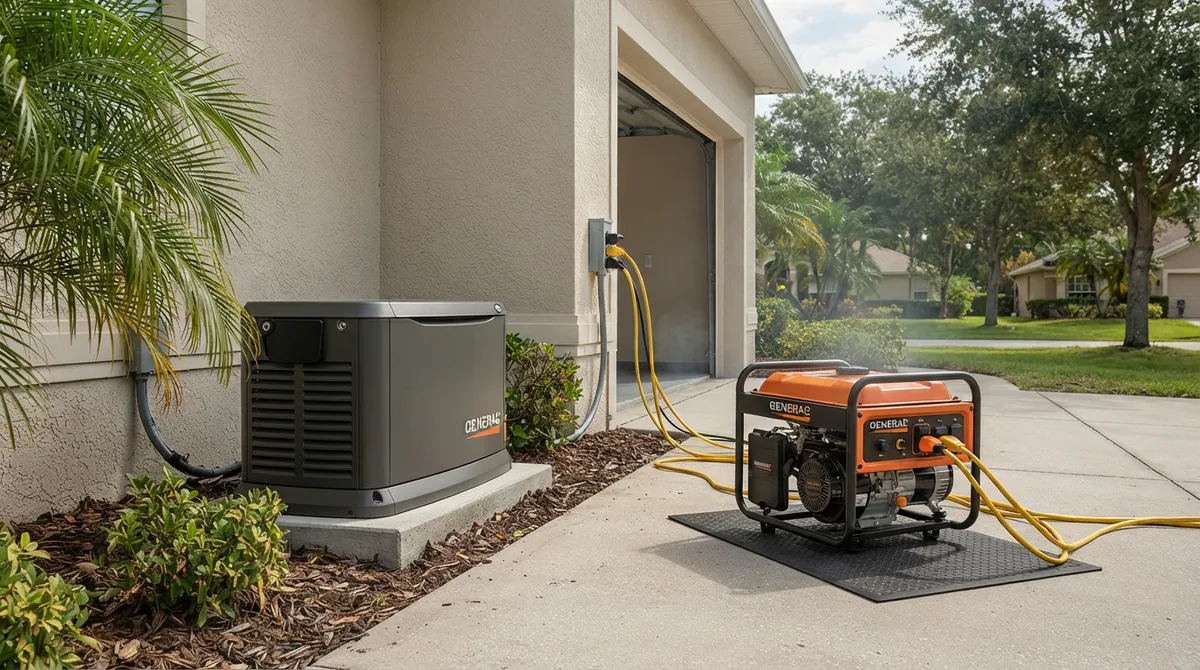
Standby vs. Portable: The Core Difference
The City of North Port draws a clear line. A portable generator used only through its built-in receptacles, meaning you plug appliances or extension cords directly into the unit, is identified by the City as an exception and does not require a permit or inspection. Once you connect a generator to your home's electrical service, the picture changes.
| Feature | Portable (Built-In Outlets Only) | Portable (Connected to House Wiring) | Permanent Standby Generator |
|---|---|---|---|
| How it powers the home | Extension cords to appliances | Inlet, interlock, or manual transfer equipment | Automatic transfer equipment |
| City permit generally needed? | No, per City guidance | Yes | Yes |
| Inspection required? | No | Yes | Yes |
| Load calculation? | No | Yes, for the connection | Yes, required |
| Typical fuel setup | Gasoline, stored by owner | Gasoline or similar | Natural gas or propane, often plumbed in |
| Convenience during an outage | Manual setup each time | Moderate | Automatic, hands-off |
In plain terms, the question is not "portable or permanent?" so much as "does it connect to my house wiring?" If it does, plan on a permit.
The Case for a Portable Generator Without a Permit
If your goals are modest, a portable generator that you use only through its own outlets can be a perfectly reasonable choice. You keep the fridge cold, charge phones, run a fan, and power a lamp or two with heavy-duty extension cords.
Pros of staying portable and unconnected
- No permit or inspection required, according to the City's guidance.
- Lower upfront cost compared with a permanent installation.
- Flexible for camping, tailgating, or job sites.
- No site plan or feeder diagram needed.
Cons to keep in mind
- Manual effort every outage: hauling, fueling, and running cords.
- Limited circuits. You cannot easily power a well pump, central AC, or hardwired appliances.
- Safety responsibility is on you. Always run it outdoors and well away from windows and doors.
One friendly warning: never plug a generator into a wall outlet with a homemade "suicide cord." The City prohibits back-feeding through household receptacles, and it is dangerous for you and for utility crews.
The Case for a Permitted Connection or Standby Unit
If you want your home to feel normal during an outage, with lights, refrigeration, and maybe even air conditioning, a connected system is the way to go. That is where the permit comes in.
Portable generator connected to house wiring
For a portable unit tied into your electrical panel, North Port requires suitable listed manual transfer equipment or an interlock that prevents the generator and utility power from being connected at the same time. The City's guidance also specifies a UL Standard 231 listed power outlet for the connection device. This setup is a popular middle ground: more capability than extension cords, at a lower cost than a full standby system.
Permanent standby generator
A permanent generator with automatic transfer equipment must meet the applicable National Electrical Code provisions, use listed transfer equipment, and include load calculations. The City's guidance says the calculated load must not exceed the generator's output, and demand-load estimates are not accepted in place of the required calculation. This is not the place for guesswork, which is why many owners lean on a pro for the paperwork.
What North Port Asks For: The Submittal Checklist
Here is where most people get tripped up. The City's generator submittal checklist is specific, and missing one item can stall your application. Based on the City's published checklist, you should expect to provide the following.
- A permit application that includes the parcel ID.
- Three current site plans showing existing structures, the proposed generator location, and the fuel source.
- Three copies of manufacturer specifications or an equipment list.
- Three copies of an itemized electrical-load list, including motor starting loads.
- Three copies of a feeder diagram identifying conductor size and type.
Notice how much of this is technical. A clean site plan and a correct load calculation are the pieces that most often need a second pass. If you would rather hand that off, our team handles permit facilitation and filing along with site plans and MEP engineering so the package is ready the first time.
Costs, Codes, and Contacts
The City's published generator guidance lists a standard application cost of $80 plus applicable surcharges. Fee schedules can change, so confirm the current amount with North Port before you apply. The permit application also identifies the applicable Florida Building Code as the 8th Edition (2023).
| Item | Detail |
|---|---|
| Standard application cost | $80 plus applicable surcharges (verify current fees) |
| Building Division phone | (941) 429-7044 |
| bldginfo@northportfl.gov | |
| Inspection scheduling | (855) 941-4636 |
| Location | Development Services, 4970 City Hall Boulevard, North Port, FL 34286 |
| FPL (for service disconnection) | 1-800-226-3545 |
Keep in mind that the permit fee is only one slice of the budget. Equipment, fuel line work, electrical labor, and any engineering all add up. If you are budgeting for several jobs at once, our walkthrough on how to estimate after-the-fact permit costs in Florida shows how fees can stack up when permits are missed.
Inspection and FPL: The Part People Forget
After installation, North Port requires an inspection. The City says its approval must occur before Florida Power & Light restores service when power was disconnected for the work. That ordering matters.
If your install requires de-energizing service or opening the meter enclosure, contact FPL in advance. Do not break a meter seal on your own. Coordinating the disconnect, the work, the inspection, and the reconnection in the right order saves you from sitting in the dark longer than necessary.
A quick tip for contractors and solar companies: schedule the inspection while the work is still accessible and the crew is on site. A failed inspection because a diagram was missing is a frustrating way to lose a day.
Zoning, Setbacks, and Fuel: Do Not Assume
Here is an honest limitation. The City's generator checklist does not itself state generator-specific zoning setbacks. What it does require is that your site plan show the proposed location and the fuel source.
That means you should confirm the following before you set a pad:
- Applicable zoning rules for your parcel.
- Fuel-system requirements for natural gas or propane.
- Manufacturer clearance from windows, doors, and vents.
- Any HOA restrictions on placement, screening, or noise.
- Utility constraints near meters and service equipment.
Skipping this step is how a brand-new generator ends up needing to be moved. If your project involves other site changes, such as a new slab, screening, or an enclosure, those may require their own review. Our guide to permit-ready plans explains what reviewers want to see.
Who Can Install It: DIY or Licensed Pro?
Many readers ask whether they can install a connected generator themselves. The honest answer is that this is electrical work tied to your home's service, and the requirements for who may pull and perform it are set by Florida licensing rules and the City. Verify eligibility directly with the Building Division before you commit.
Even where an owner is allowed to do some work, the code requirements for transfer equipment, load calculations, and fuel connections are unforgiving. For most homeowners, hiring a licensed electrical contractor is the safer path. Our comparison, DIY vs. Pro Help: Florida Code Compliance Showdown, breaks down when each approach makes sense.
Which Option Wins for Your Situation?
| If you are... | Best fit | Why |
|---|---|---|
| A renter or occasional-use homeowner | Portable, built-in outlets only | No permit, low cost, flexible |
| Wanting to power a few hardwired circuits affordably | Portable with listed interlock or transfer equipment | More capability, permit and inspection required |
| Wanting automatic, whole-home resilience | Permanent standby generator | Hands-off power, full permit package |
| A solar company adding backup power | Coordinated electrical and generator documentation | Clear load and feeder diagrams avoid review delays |
| A realtor or buyer evaluating a property | Verify existing generator permit history | Unpermitted installs can complicate closings |
If you already have a generator installed without a permit, do not panic. That is a common situation and it is fixable. Start with our overview, 7 Steps to Legalize Unpermitted Work Florida (2026), and if a sale is pending, read how to sell a Florida house with unpermitted additions. For North Port specifically, our piece on after-the-fact permits vs. tear-out in North Port is worth a look.
Common Mistakes That Slow Down a Generator Permit
- Submitting an incomplete package. Missing the feeder diagram or load list is the classic stall.
- Using demand-load estimates instead of the required calculation.
- Forgetting the fuel source on the site plan.
- Skipping the FPL call when service must be disconnected.
- Ignoring HOA rules until after the pad is poured.
- Back-feeding through a household outlet. Prohibited and unsafe.
Most of these come down to preparation. A reviewer cannot approve what they cannot see, so a thorough submittal pays off. If your application does get kicked back, see who can rescue a denied building permit in Florida for next steps.
How 1 Contractor Solutions Can Help
Permitting is exactly what we do. 1 Contractor Solutions acts as Florida's outsourced permitting department, handling permit filing, tracking, plan review coordination, and revisions across all 67 counties. Our drafting and engineering are in house, and our own engineer signs and seals the work, so when a reviewer has a comment, we can address it quickly instead of waiting on an outside consultant.
For a generator project, that can mean preparing the site plan, building the load list and feeder diagram, and coordinating the submittal to the City. Curious what others say about working with us? You can read what 1 Contractor Solutions customers say on Google. We also share Florida permitting tips when you follow us on LinkedIn or follow us on Facebook, and you can see our marketing partner's work at Brain Buzz Marketing. For more on our local coverage, visit our North Port page.
Final Thoughts and Next Steps
So, standby or portable? If you only need basic power through a unit's own outlets, a portable generator is simple and, per the City's guidance, permit-free. If you want your home's wiring to carry the load, whether through an interlock or an automatic standby system, plan on a North Port permit, a complete submittal, and an inspection before FPL restores service.
The best time to sort this out is before storm season, not during it. Confirm current fees, zoning, and fuel requirements with the City, line up your documents, and give yourself time. When you are ready to skip the paperwork headache, get a free quote and let us take the generator permit off your plate.
FAQs
Do I need a permit to install a standby generator in North Port, Florida?
Generally, yes. A generator that connects to your home's electrical service typically needs a City permit and an inspection. Confirm current requirements with North Port's Building Division before you start.
Does a portable generator need a permit in North Port if it only uses its built-in outlets?
According to the City's guidance, no. A portable generator used only through its own receptacles is an exception and does not require a permit or inspection. Just keep it outdoors and never back-feed through a household outlet.
What documents are required for a North Port generator permit application?
The City's checklist calls for a permit application with the parcel ID, three current site plans showing the generator and fuel source, and three copies each of manufacturer specifications, an itemized electrical-load list, and a feeder diagram. Having these ready up front helps avoid delays.
How much does a generator permit cost in North Port?
The City's published guidance lists a standard application cost of $80 plus applicable surcharges. Fees can change, so double-check the current amount with the Building Division before you apply.
What inspection is required after installing a generator in North Port?
North Port requires an inspection after installation, and the City says its approval must happen before FPL restores service when power was disconnected for the work. Schedule it at (855) 941-4636 and coordinate any disconnect with FPL in advance.
We do this work every day across all 67 Florida counties. Call (866) 314-6931 and we will tell you what your situation actually requires — including when you do not need us.
Related services
Permit Facilitation & Filing
You have a crew scheduled, a client asking for dates, and a permit sitting somewhere in a queue you cannot see. We file it, w…
See the servicePlan Review Coordination
A permit in plan review is not one queue. On a commercial project it can be six queues, each with its own reviewer, its own c…
See the serviceReady to get your permit moving?
One call tells you which jurisdiction controls your project, what it will take, and what it will cost. Most of the time we can scope it on the phone.