
Blog
5 Things to Know About a Whole House Generator Permit in FL
Wondering if you need a permit for a whole house generator in Florida? Here are 5 key things to know about permits, plans, and local rules.
Key Takeaways
-
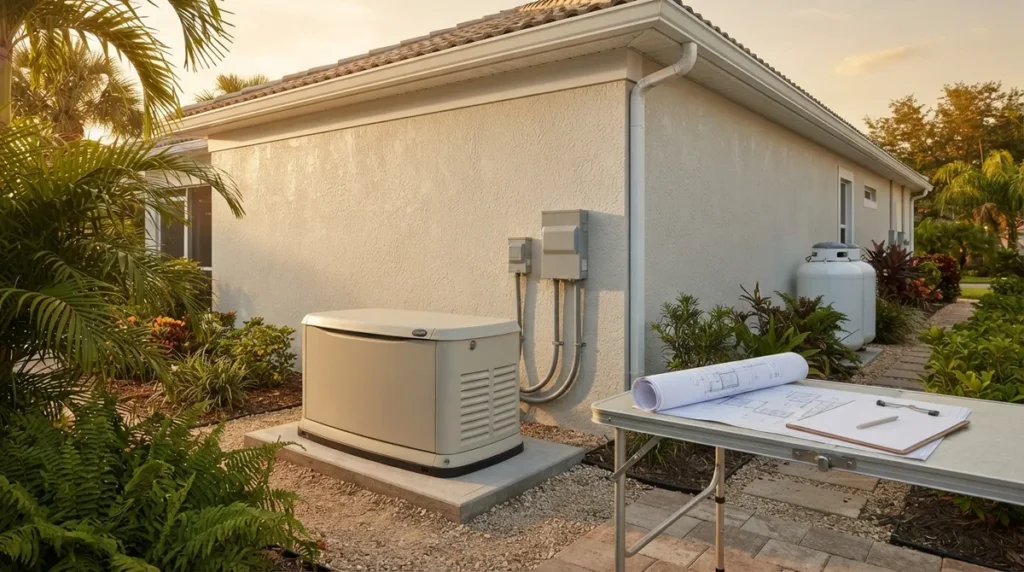
A permanently installed standby generator in Florida almost always needs a permit, with the exact path (building, electrical, fuel-gas) set by your local city or county building department.
-
Connecting a portable generator to your home's electrical panel typically requires an electrical permit, even when a standalone portable unit powering a few appliances may be exempt.
-
Florida has no statewide generator permit fee, timeline, or sealed-plan threshold; these vary by jurisdiction, so get the current checklist before submitting.
-
Permit packages usually need a site plan, generator and transfer switch specs, electrical diagrams with load calculations, and fuel-piping details for gas or propane units.
-
Placement matters: setbacks, exhaust clearances, anchoring, propane tank separation, and flood-zone elevation in Special Flood Hazard Areas can all cause rejection.
-
If a generator was installed without a permit, many Florida jurisdictions allow after-the-fact permitting, which typically involves documentation, possibly as-built drawings, and inspection.
Hurricane season has a way of making everyone suddenly very interested in backup power. If you have ever sat in a dark, sticky house in August listening to your neighbor's generator hum along, you know the feeling. So you start shopping, and a very reasonable question pops up: do I need a permit for a whole house generator in Florida?
Here is the short, friendly answer: in most cases, yes. A permanently installed standby generator in Florida typically needs a permit, and the exact process is set by your local city or county building department. The tricky part is that the details change depending on where you live, what fuel the unit uses, and how it connects to your home.
Don't worry, though. This guide walks you through the five biggest things to understand before you hire an installer or pick up a wrench. Whether you are a homeowner, a general contractor, a solar company adding storage, or a Realtor helping a client, you will walk away knowing what to expect and how to avoid the delays that frustrate so many generator projects.
1. Yes, a Permanent Standby Generator Almost Always Needs a Permit
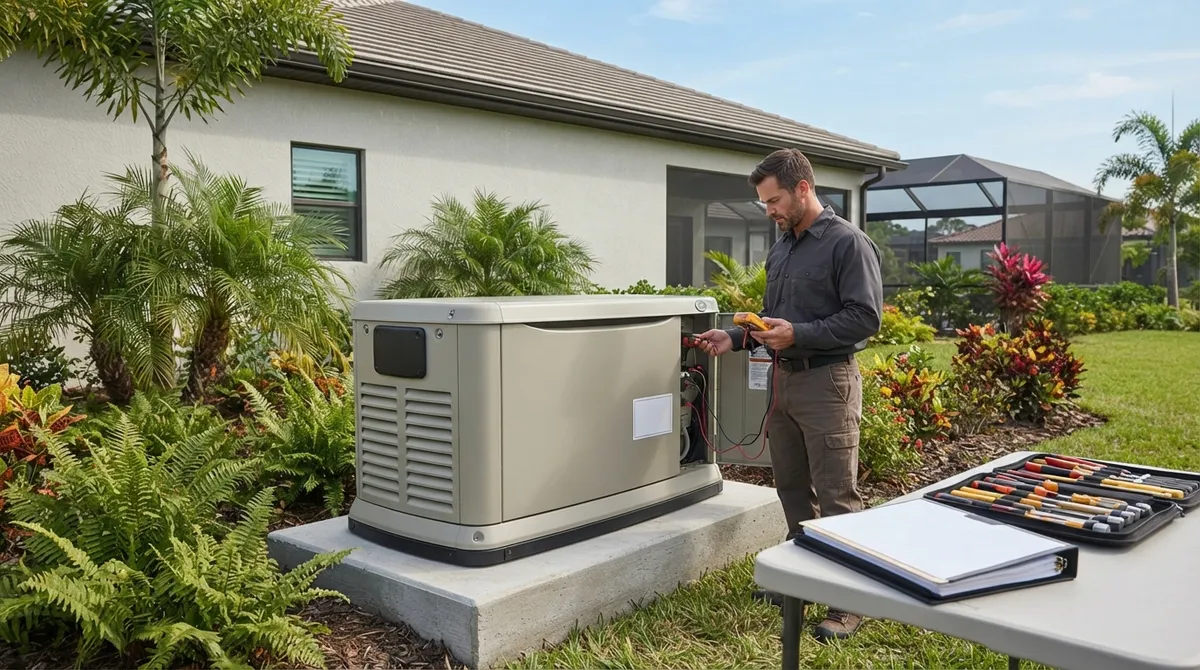
Let's start with the big question. A whole house standby generator is bolted down, wired into your electrical system, and often tied to a natural gas line or propane tank. That is real construction work, and Florida jurisdictions treat it that way.
Generally, the local building department decides which application path applies. Depending on your city or county, the project may involve:
- Building or zoning review for placement, setbacks, and site conditions
- An electrical permit for the generator wiring and transfer switch
- A fuel-gas permit or review for natural gas or propane piping
Some departments bundle these into one application. Others issue them separately. That is why the honest answer to do I need a permit for a whole house generator in Florida is "almost certainly, but confirm the exact path with your local authority before work begins."
Florida's current building framework is the 8th Edition (2023) Florida Building Code, and local generator guidance cites it. Installations must also follow applicable electrical and fuel-gas provisions, the manufacturer's instructions, and the equipment's listing conditions. Some local checklists reference the 2020 National Electrical Code and, where relevant, NFPA standards.
Not sure which office actually controls your property? Our building department lookup tool is a handy place to start, since property lines near city borders are not always obvious.
2. Portable Generators Are Treated Differently
Here is where people sometimes get tripped up. Not every generator needs the same level of paperwork. A portable unit that you roll out of the garage and plug a few appliances into is a very different animal from a permanent whole-house system.
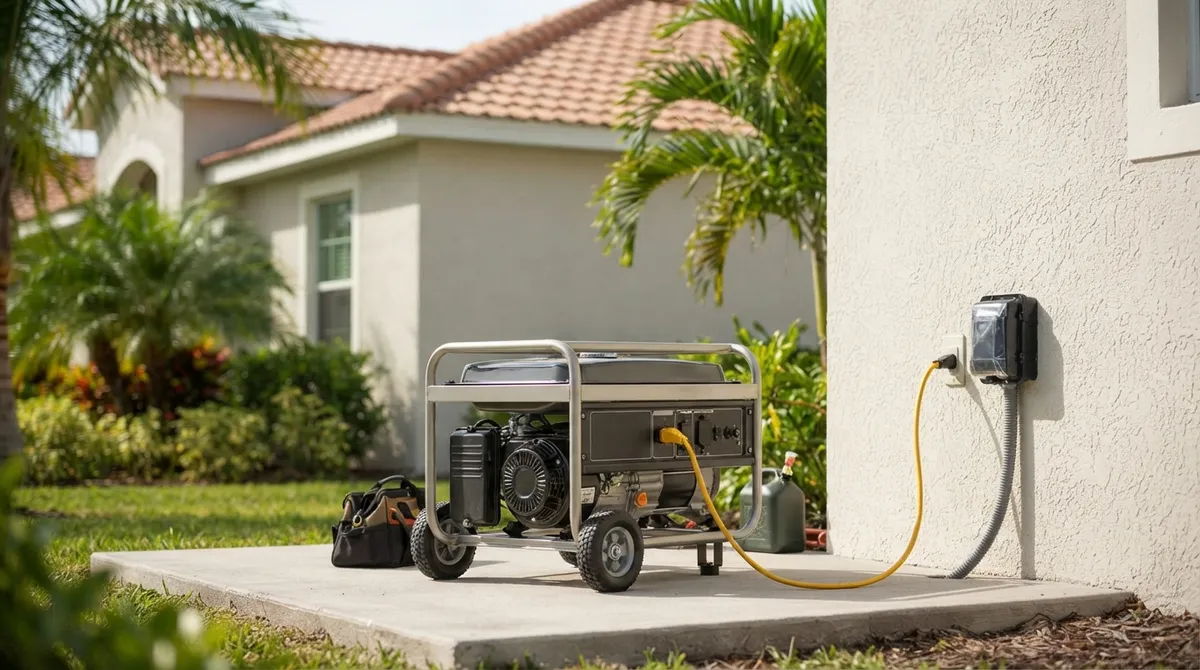
Miami-Dade County is a helpful example. It says a building permit is not required for a portable unit used for a few appliances or lights connected directly. However, an electrical permit is required to connect a portable generator to a building's electrical system. In other words, the moment you tie a generator into your home's panel, you are in permit territory.
| Generator Type | How It Connects | Permit Likely? |
|---|---|---|
| Portable, plugged directly into a few appliances | Extension cords, no panel connection | Often no building permit (varies locally) |
| Portable connected to your home's electrical system | Inlet box, interlock, or transfer switch | Electrical permit typically required |
| Permanent whole-house standby unit | Hardwired with automatic transfer switch | Yes, building/zoning plus electrical, and often fuel-gas |
Because rules vary by jurisdiction, always confirm with your local building department before assuming a portable setup is exempt.
3. What a Generator Permit Application Usually Includes
Think of the permit package as telling the reviewer a clear story: where the generator goes, how it is powered, how it connects, and why it is safe. While checklists differ by county and city, a typical application package includes the following.
- A site plan. This shows the generator location, property lines, structures, openings, fuel equipment, and required clearances.
- Generator and transfer switch specifications. Reviewers want to see the manufacturer data and listings.
- Electrical diagrams and load calculations. These show how the unit ties into your service and that the system is sized correctly.
- Fuel-piping details for gas-fueled units. This includes a piping layout with pipe sizes, lengths, pressures, regulators, and appliance demand.
- Contractor and owner information, plus any local forms. Some jurisdictions add extra requirements based on project value.
For example, Lake County's checklist states that a Notice of Commencement is required for permits with a job value over $5,000. That is a local requirement, so verify it for your own project. If you want to understand that document better, we break it down in our guide to the Notice of Commencement in Florida.
Bay County's generator checklist references NEC 2020 Articles 220, 250, 408.4, 445, and 702, along with Florida Building Code fuel-gas provisions. That gives you a sense of how technical these reviews can get, and why a clean, complete package matters.
4. Placement, Clearances, and Flood Zones Matter More Than You Think
Even a perfectly wired generator can get rejected if it is parked in the wrong spot. Local reviewers commonly check several things:
- Setbacks and zoning from property lines and structures
- Exhaust clearances from doors, windows, and air intakes
- Anchoring of the unit to its pad
- Propane tank separation where propane is the fuel source
- Flood-zone elevation if your property is in a Special Flood Hazard Area
This is a big deal in Florida. Nassau County's standby-generator application, for instance, states that installations in a Special Flood Hazard Area must meet applicable elevation requirements, citing the 2023 Florida Building Code-Residential and the county's flood ordinance. A generator that floods during the very storm it was bought for is not much of a backup plan.
One important reminder: do not assume one county's clearance rules or checklist apply statewide. A layout approved in one city may not fly in the next town over. If your property sits in a coastal or low-lying area, it is smart to review our overview of flood zone permitting in Florida before you finalize the location.
5. Plans, Seals, Fees, and Timelines Vary by County
Here is the part that surprises people most. There is no single statewide generator permit price tag, review timeline, or plan requirement. It all depends on the jurisdiction.
| Jurisdiction Example | What It Highlights |
|---|---|
| Miami-Dade County | Describes plan review and design-professional plans for permanent installations |
| Nassau County | Calls for Florida-registered electrical engineer plans for generators exceeding an aggregate service capacity of 600 amps at 240 volts |
| Charlotte County | Lists a $22 zoning fee plus valuation-based building fees |
| Lake County | Requires a Notice of Commencement for jobs valued over $5,000 |
Each of these is a jurisdiction-specific example, not a statewide rule, and fees can change. Always check the current fee schedule and submittal requirements with your local authority.
Do You Need Sealed Plans?
Sometimes yes, sometimes no. The threshold depends on the jurisdiction and the size of the system. Larger installations may require signed-and-sealed electrical engineering, while smaller residential units may not. When sealed drawings are required, having engineering and drafting under one roof saves a lot of back-and-forth. Learn more about engineering services and our MEP engineering support for generator and electrical projects.
Who Is Allowed to Do the Work?
Generator installations involve licensed trades, since electrical and gas work are regulated. If you are a homeowner thinking about going the owner-builder route, read up on the rules first through our page on owner-builder permits, and check who can pull a permit in Florida so you know your options.
What Happens If You Skip the Permit?
It is tempting to think a generator tucked beside the house will go unnoticed. But unpermitted work has a funny way of surfacing at the worst times: during a home sale, an insurance claim, an appraisal, or a neighbor's complaint.
If a generator was installed without a permit, the good news is that it can usually be fixed. Many Florida jurisdictions allow after-the-fact permitting, which typically involves documenting the installation, sometimes with as-built drawings or an engineer letter, and passing inspection. If this describes your situation, our team can help through after-the-fact and expired permit services. And if a closing is on the line, our Realtor and closing support is built for exactly that kind of time crunch.
A Simple Game Plan Before You Install
To keep your project smooth, here is a friendly checklist to follow:
- Identify your jurisdiction. Confirm whether your property is under a city or county building department.
- Ask for the current generator checklist. Requirements change, so get the latest version.
- Pick your fuel source early. Natural gas versus propane changes the paperwork and clearance rules.
- Prepare a clear site plan. Show the generator, property lines, openings, and fuel equipment.
- Confirm whether sealed plans are required. Know this before you submit, not after a rejection.
- File, track, and respond to comments quickly. Fast replies to reviewer notes keep the clock moving.
If something does come back rejected, do not panic. It happens to experienced pros too. Our post on why building permits get rejected explains the usual culprits, and our revisions and resubmittals service can get you back on track.
Why Work With a Permitting Team
Think of 1 Contractor Solutions as your outsourced permitting department. We handle permit filing, tracking, plan review coordination, and the plans and engineering behind them, across all 67 Florida counties. Our drafting and engineering are in house, and our own engineer signs and seals the work, so when a reviewer flags something, we can fix it quickly instead of waiting on an outside consultant. You can see what customers say when you visit us on Google — 1 Contractor Solutions.
We also love staying connected, so feel free to follow us on LinkedIn or follow us on Facebook for Florida permitting tips and updates. For official code information, the Florida Building Commission is a reliable public resource.
Ready to Power Up the Right Way?
So, do I need a permit for a whole house generator in Florida? For a permanent standby system, almost certainly yes, and the specifics depend on your local jurisdiction, your fuel source, and your property conditions. The good news is that with the right documents and a little planning, the process is very manageable.
Whether you are a contractor lining up a crew, a solar company adding backup power, or a homeowner getting ready for the next storm, you do not have to figure it out alone. Ready to get moving? Get a free quote from our team, and let us handle the permit while you handle everything else. Permits approved. Projects moving.
FAQs
Do I need a building permit for a standby generator in Florida?
In most cases, yes. A permanently installed standby generator typically requires a permit, and the exact application path is set by your local city or county building department. Always confirm the current requirements before work begins.
Do I need separate electrical and gas permits for a whole house generator?
It depends on where you live. Some Florida jurisdictions bundle building, electrical, and fuel-gas reviews together, while others issue them separately, so check with your local building department.
Do I need a permit to connect a portable generator to my home's electrical panel?
Usually, yes. Miami-Dade, for example, says a building permit is not required for a portable unit powering a few appliances directly, but an electrical permit is required to connect a portable generator to a building's electrical system.
What documents are required for a Florida generator permit application?
A typical package includes a site plan, generator and transfer switch specs, electrical diagrams and load calculations, and for gas units, a fuel-piping layout. Checklists vary by county, so get your local version before you submit.
What if my generator was installed without a permit?
Don't worry, it can often be fixed. Many Florida jurisdictions allow after-the-fact permitting, which usually involves documenting the installation, sometimes with as-built drawings or an engineer letter, and passing inspection.
We do this work every day across all 67 Florida counties. Call (866) 314-6931 and we will tell you what your situation actually requires — including when you do not need us.
Related services
Permit Facilitation & Filing
You have a crew scheduled, a client asking for dates, and a permit sitting somewhere in a queue you cannot see. We file it, w…
See the servicePlan Review Coordination
A permit in plan review is not one queue. On a commercial project it can be six queues, each with its own reviewer, its own c…
See the serviceReady to get your permit moving?
One call tells you which jurisdiction controls your project, what it will take, and what it will cost. Most of the time we can scope it on the phone.