
Blog
Mold Assessment for Permit in North Port: What to Know
A mold assessment isn't a building permit. Learn how Florida licensing and North Port permits work together for mold-related repairs.
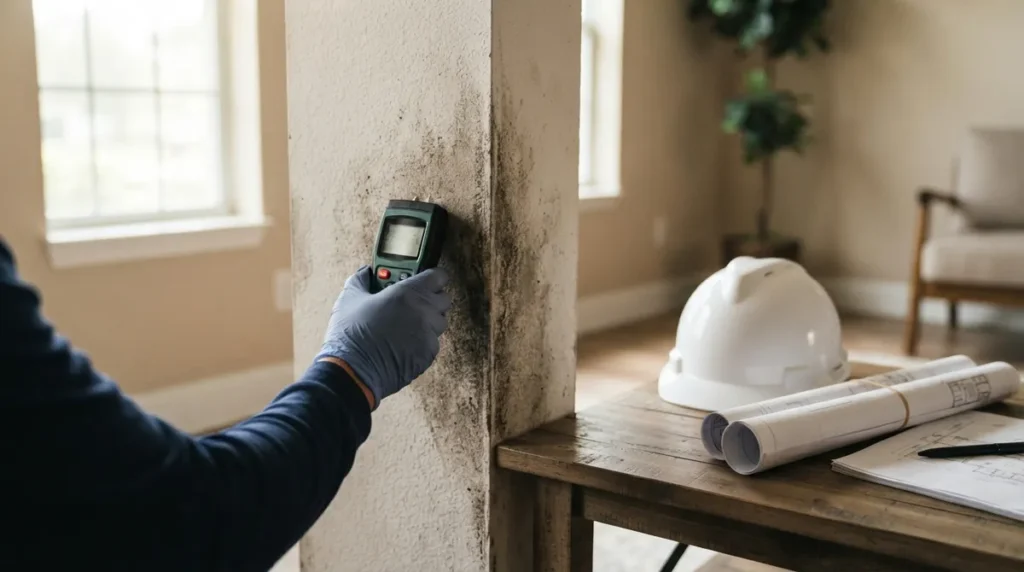
Key Takeaways
-
Mold assessment and building permits are separate tracks: a licensed assessor documents conditions, while the City of North Port's Building Division decides whether repair scope needs a permit. A mold report does not grant a permit.
-
Verify every mold assessor and remediator through the Florida DBPR license search before hiring, since DBPR (not the Department of Health) licenses these professionals under Florida Statutes Part XVI of Chapter 468.
-
The Florida Department of Health advises that routine mold sampling is generally not needed before cleanup; focus first on fixing the moisture source and removing visible mold.
-
Whether a permit is needed depends on the repair scope: structural framing, electrical, plumbing, HVAC, roofing, and window work commonly require permits, while simple cleaning may not.
-
Confirm the $7,500 single-family exemption (effective July 1, 2026) with the city before relying on it, since it does not exempt work from mold licensing or safety code requirements.
-
Do not close up walls before permitted work is inspected, and ask the Building Division before covering rotted framing or damaged wiring found during demolition.
Finding mold in your North Port home or building is stressful enough. Then someone mentions a permit, and suddenly you're wondering how an assessment, a remediation company, and a building department all fit together. Take a breath. You're not the first person to feel tangled up, and the answer is simpler than it looks once you separate the moving parts.
Here's the key idea: a mold assessment for permit North Port projects is really two different conversations. One is about Florida's licensing rules for mold professionals. The other is about whether the repair or rebuild work needs a building permit from the city. A mold report does not grant a permit, and a permit does not replace a licensed mold assessment when one is legally required.
In this friendly guide, we'll walk through who does what, when permits come into play after water damage or mold removal, which documents help, and how to avoid the delays that trip up homeowners, contractors, and agents. Let's get you moving.
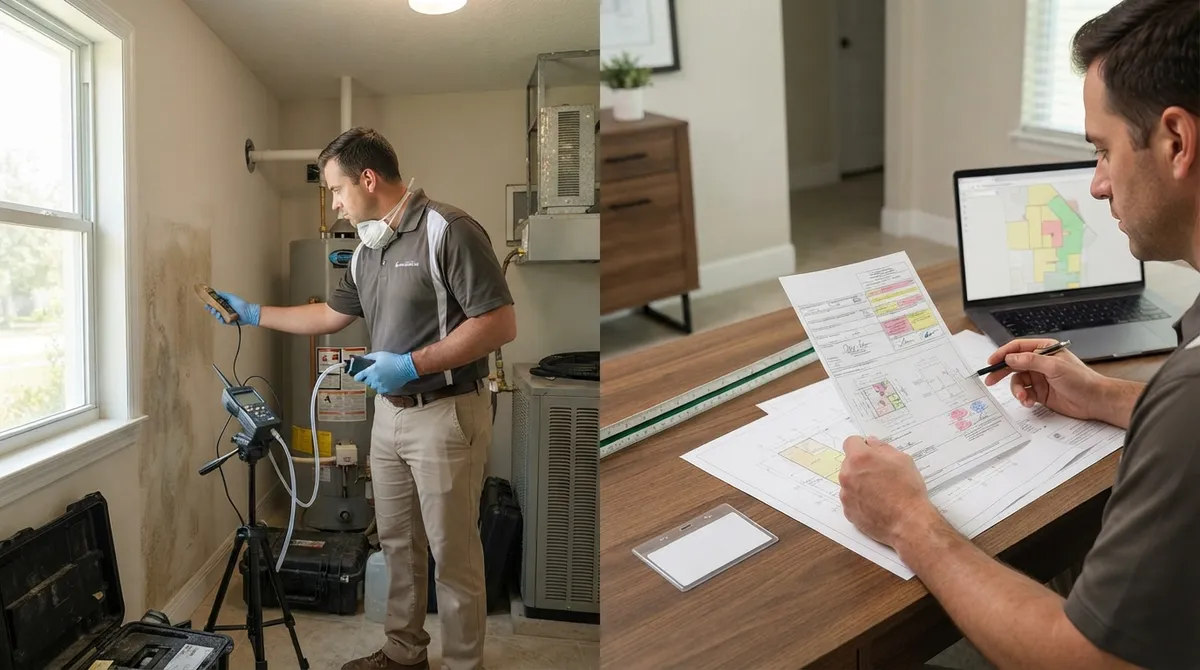
Two Separate Questions Hiding in One Keyword
When people search for a mold assessment for a permit in North Port, they usually mean one of two things. Sorting out which one applies to you saves a lot of back-and-forth.
- The professional side: Florida regulates mold assessors and mold remediators under Florida Statutes, Part XVI of Chapter 468. Licensing is handled by the Florida Department of Business and Professional Regulation (DBPR).
- The construction side: If cleanup means tearing out drywall, replacing framing, or touching electrical, plumbing, or mechanical systems, the City of North Port may require building permits and inspections.
These two tracks run side by side. A licensed assessor documents conditions. A licensed contractor does the repair. The building department reviews the permitted scope of work. Nobody on one track can sign off for the other.
What a Mold Assessment Actually Does
A mold assessment is a professional evaluation. It can document observed conditions, moisture sources, affected materials, and recommended next steps. Think of it as a roadmap for the repair, not a permit.
That roadmap is genuinely useful. It helps contractors scope the work, helps insurers understand the loss, and helps buyers or sellers understand what's going on before a closing. But it is not an approval from the city.
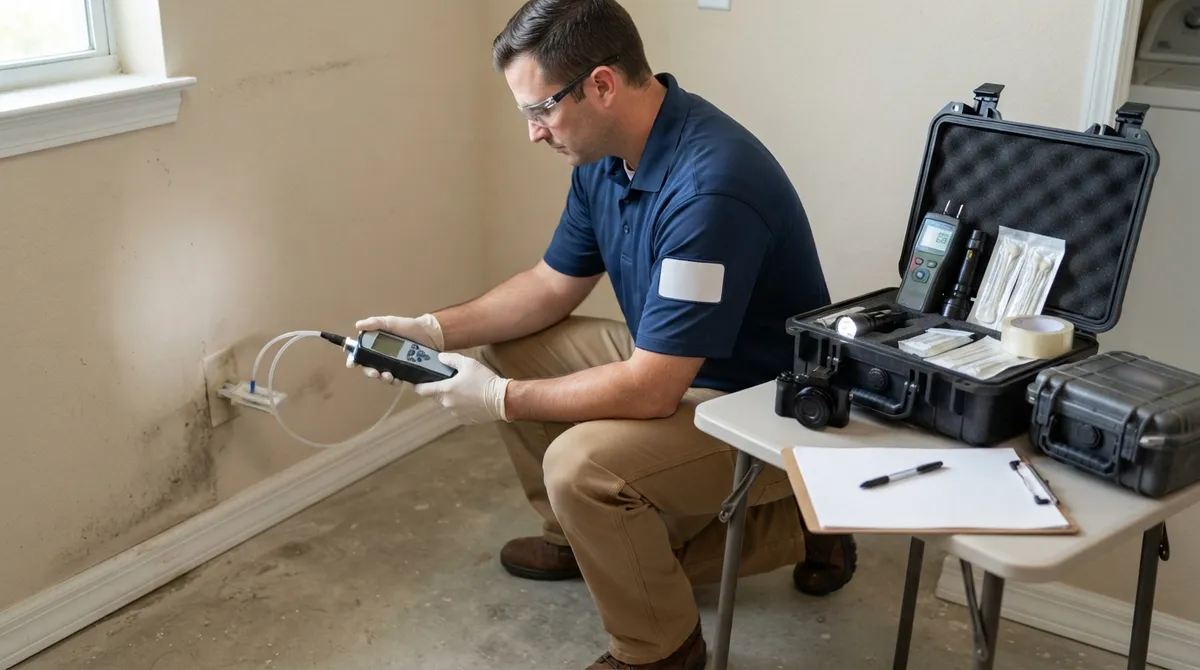
What Florida Law Says About Mold Professionals
Florida law generally requires a state license to perform mold assessment or remediation for compensation, subject to statutory exemptions. The qualification pathways are spelled out in Florida Statutes §468.8413. In general terms, applicants need either a relevant associate degree with at least 30 semester hours in specified or related fields plus at least one year of relevant experience, or a high school diploma or equivalent plus at least four years of relevant field experience. They must also meet examination and other licensing requirements.
You don't need to memorize the statute. You just need to verify the license before you hire. DBPR, not the Florida Department of Health, licenses these professionals, and you can look up a provider's current status through the DBPR license search.
| Role | What They Do | Who Licenses Them |
|---|---|---|
| Mold assessor | Evaluates conditions, documents moisture sources and affected materials, recommends next steps | Florida DBPR |
| Mold remediator | Performs the actual cleanup and removal work | Florida DBPR |
| Licensed contractor | Handles construction repairs, such as drywall, framing, and finishes | Florida DBPR (contractor licensing) plus local registration |
| Building department | Reviews permit applications and performs inspections for permitted work | City of North Port |
Assessor vs. Remediator: Why the Difference Matters
In Florida, the person who assesses the problem and the person who fixes it have separate roles. Keeping them distinct helps avoid conflicts of interest and keeps the paperwork clean. If your project involves both, expect two scopes, two sets of documentation, and often two different companies.
Do You Even Need Mold Testing First?
This one surprises many people. The Florida Department of Health advises that routine mold testing or sampling is generally not needed to determine whether a mold problem exists or to identify the type of mold. The state emphasis is on fixing the moisture problem and cleaning up visible mold, rather than relying on a lab number.
The Department of Health also does not provide a statewide numeric mold concentration threshold for deciding whether a building is safe. So if someone tells you a specific spore count is required before you can pull a permit, ask them to show you where that rule comes from.
That said, an assessment can still be valuable. Sampling may be considered in particular circumstances, such as legal disputes, unusual health concerns, or insurance documentation. The point is that sampling is not a prerequisite to cleanup, and it is not a prerequisite to a building permit.
When Mold Repairs Need a Building Permit in North Port
Whether you need a permit depends on the scope of the repair, not on the mold itself. The City of North Port's Building Division handles permit applications, and the city provides online permitting resources and application forms. Always confirm current rules directly with the city before you start work.
Here are the kinds of repair activities that commonly raise permit questions after mold or water damage:
- Removing and replacing structural framing, trusses, or sheathing
- Replacing or relocating electrical wiring, panels, or outlets
- Repairing or replacing plumbing lines, fixtures, or water heaters
- Replacing HVAC equipment or ductwork
- Roof repairs or replacements that address the leak source
- Window or door replacement tied to water intrusion
Simple cleaning, surface treatment, and some cosmetic repairs may not require a permit. But the line between "cosmetic" and "permitted" can be blurry, especially after demolition. When in doubt, ask the city.
The $7,500 Threshold: Read the Fine Print
North Port's permitting information references a state-law change: effective July 1, 2026, owners of single-family dwellings and their contractors may be exempt from a building permit for work valued under $7,500. That's helpful, but treat it with care. Because this threshold is new and may be refined, confirm with the city how it applies, how work is valued, and what exceptions exist before you rely on it.
Also remember that an exemption from a building permit does not exempt anyone from mold licensing rules, electrical or plumbing safety requirements, or common-sense code compliance. If you're unsure, a quick call to the Building Division can prevent a costly mistake.
A Simple Step-by-Step Path After Mold or Water Damage
Here's a practical sequence that keeps both the licensing track and the permit track organized.
- Stop the moisture. Fix the leak, dry the area, and address humidity. Mold keeps coming back if the water source isn't solved.
- Document conditions. Take dated photos and keep invoices. This helps with insurance, contractors, and any later permit review.
- Decide whether you want an assessment. It's not automatically required for cleanup, but it can help scope the work and document the situation. If you hire one, verify the DBPR license first.
- Verify every professional. Check mold assessor and remediator licenses through DBPR, and confirm contractor licensing and local registration for construction work.
- Define the repair scope. List what will be demolished and rebuilt, including any electrical, plumbing, mechanical, or structural elements.
- Confirm permit requirements with North Port. Ask the Building Division whether the scope needs permits and inspections.
- File, track, and respond to comments. If a permit is required, submit complete documents and respond promptly to any reviewer questions.
- Schedule inspections and close out. Make sure every permitted item is inspected and finaled.
Documents That Help When You Apply
Permit packages move faster when they're complete on day one. Depending on the scope, a North Port application after water damage or mold may involve some combination of the following.
| Document | Why It Helps |
|---|---|
| Permit application and city forms | Starts the formal review |
| Scope of work and cost valuation | Clarifies what's being repaired and whether any threshold applies |
| Contractor license and registration info | Confirms who is authorized to do the work |
| Photos and damage documentation | Shows pre-repair conditions |
| Mold assessment report (if obtained) | Supports the repair scope; does not replace the permit |
| Plans or sketches | Needed when walls, layouts, or structural elements change |
| Engineer letter or sealed drawings | Required when structural elements are repaired or altered |
If your repair touches structure, you may need professional drawings. Our guide on who seals structural drawings for Florida permits explains how that works, and structural plans for a Florida residential permit in 2026 covers the basics in more depth.
Tips for Contractors, Agents, and Homeowners
Different readers feel this process differently, so here are a few focused thoughts.
For General Contractors and Design Trades
Don't let a mold report be mistaken for permit authorization. If your demo reveals rotted framing or damaged wiring, pause and confirm scope with the Building Division before closing walls. Covered work that misses inspection becomes its own headache, as we explain in how to handle covered work that missed inspection in FL.
For Real Estate Professionals
Mold findings during a sale often open the door to permit questions, especially if previous repairs were done informally. Check for open or missing permits early. Our article on who pays for open permits when buying a Florida home can help you plan, and you can read more about fixing a Florida closing held up by unpermitted work.
For Florida Homeowners and Residential Property Owners
You don't have to become a permitting expert overnight. Start with the moisture fix, verify licenses, and ask the city one clear question: "Does this repair scope need a permit?" If your property already has unpermitted repairs from a prior owner, see 4 steps if a prior owner skipped permits in Florida.
For Solar Companies
Roof leaks and hidden moisture can surface during solar planning. If decking or framing needs repair before panels go on, the repair scope may need its own permit and documentation, which can affect your schedule. Plan ahead and coordinate with the property owner.
What If Repairs Were Already Done Without a Permit?
It happens more often than people admit. A neighbor's contractor tears out drywall, someone rewires a bathroom, and nobody calls the city. If you discover mold-related repairs that should have been permitted, the situation is fixable. Florida has pathways to legalize work after the fact, usually involving as-built documentation, engineering review, and inspections.
Our resources on 7 steps to legalize unpermitted work in Florida (2026) and after-the-fact permit vs. tear-out in North Port walk through your options. If a notice has already arrived, read how to clear a stop work order for a sense of how those situations are resolved.
Why Hurricane and Storm Damage Complicates Things
Moisture and mold frequently follow storm damage in Southwest Florida. When mold is tied to a storm event, repairs may involve roofing, windows, and structure all at once. Our hurricane damage permit guide for North Port breaks down how to handle those larger repair scopes.
Common Mistakes to Avoid
- Assuming a mold report equals a permit. It doesn't. They're separate.
- Skipping license verification. Always check DBPR before hiring an assessor or remediator.
- Treating testing as mandatory. State health guidance does not call for routine sampling before cleanup.
- Relying on an exemption without checking. Confirm the $7,500 threshold and its exceptions with the city.
- Closing up walls before inspection. Permitted work must be inspected before it's covered.
- Forgetting the moisture source. Cleanup without a leak repair is only a temporary fix.
How 1 Contractor Solutions Can Help
If you're staring at a mold report on one side and a permit application on the other, you don't have to bridge the gap alone. 1 Contractor Solutions acts as Florida's outsourced permitting department, handling permit filing, tracking, plan review coordination, and revisions across all 67 Florida counties. Our in-house drafting and engineering team can prepare plans and sealed drawings when structural or MEP repairs are part of the job, and we respond fast. You can learn more about our asbestos, mold and environmental support and our North Port permitting services.
We're proud of the feedback from neighbors across Florida. You can visit us on Google — 1 Contractor Solutions to see what 1 Contractor Solutions customers say, or follow along on LinkedIn and Facebook for permitting tips.
Final Thoughts
A mold assessment for a permit in North Port isn't one single document or one single step. It's a licensed professional documenting conditions, a properly licensed team doing the repairs, and the city reviewing any work that needs a permit. Keep those roles separate, verify every license, and confirm your scope with the Building Division before you start.
Ready for a hand untangling the paperwork? We'd love to help you get moving. Get a free quote and let our team take the permitting off your plate.
FAQs
Do I need a mold assessment to get a building permit in North Port?
Not automatically. A mold assessment documents conditions, but it isn't a building permit and isn't generally a prerequisite to one. Whether your repair needs a permit depends on the scope of work, so confirm directly with the City of North Port's Building Division.
How can I verify that a Florida mold assessor is licensed?
Florida's Department of Business and Professional Regulation (DBPR) licenses mold assessors and remediators, and you can look up a provider's current license status through the DBPR license search. It only takes a minute and is well worth doing before you sign anything.
Does Florida require mold testing before cleanup or repairs?
No. The Florida Department of Health advises that routine mold testing or sampling is generally not needed to determine whether a mold problem exists. The emphasis is on fixing moisture problems and cleaning up visible mold.
Do I need a permit to remove drywall or rebuild after mold remediation in North Port?
It depends on what's being removed and rebuilt. Work involving structure, electrical, plumbing, or mechanical systems commonly needs permits, while limited cosmetic work may not. Because rules and thresholds can change, check with the city before you begin.
What's the difference between a mold assessor and a mold remediator in Florida?
A mold assessor evaluates and documents conditions and recommends next steps, while a mold remediator performs the actual cleanup. Both are regulated by DBPR, and they are generally kept as separate roles to keep the process clear and trustworthy.
We do this work every day across all 67 Florida counties. Call (866) 314-6931 and we will tell you what your situation actually requires — including when you do not need us.
Related services
Permit Facilitation & Filing
You have a crew scheduled, a client asking for dates, and a permit sitting somewhere in a queue you cannot see. We file it, w…
See the servicePlan Review Coordination
A permit in plan review is not one queue. On a commercial project it can be six queues, each with its own reviewer, its own c…
See the serviceReady to get your permit moving?
One call tells you which jurisdiction controls your project, what it will take, and what it will cost. Most of the time we can scope it on the phone.