
Blog
How to Legalize an Unpermitted Outdoor Kitchen in FL
Learn how to legalize an unpermitted outdoor kitchen in Florida, from finding your building department to passing final inspection.
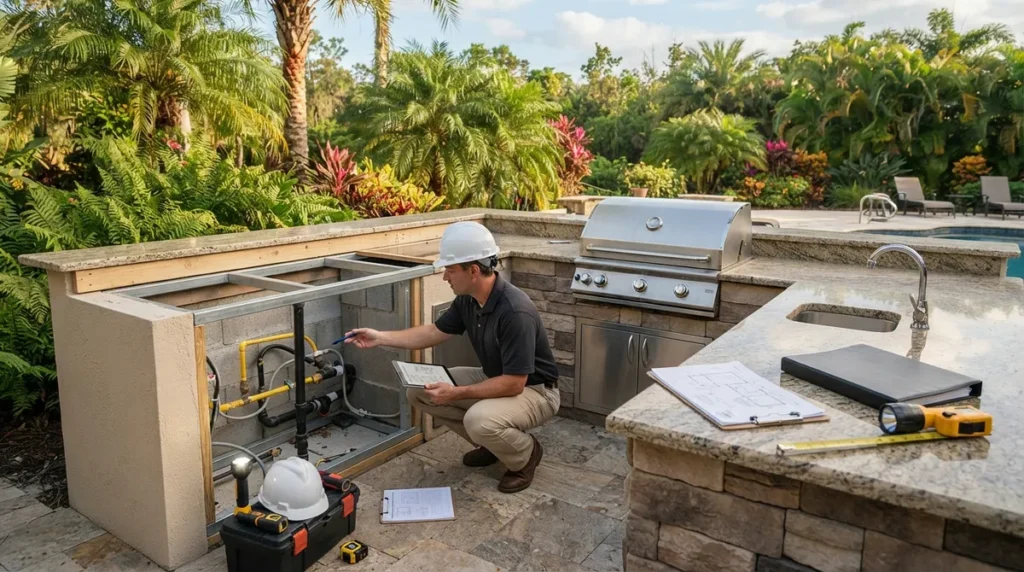
Key Takeaways
-
Contact your local building department voluntarily and ask about after-the-fact permit requirements, applicable fees, and inspection needs specific to your jurisdiction, as Florida has no statewide process and each county/city operates differently.
-
Prepare as-built drawings showing actual dimensions, materials, and layout of the finished structure, which most jurisdictions require instead of pre-construction plans for unpermitted work that already exists.
-
Prepare for inspections of concealed work like buried gas lines or hidden wiring, which may require exposing sections of countertops, walls, or concrete for visual verification during the approval process.
-
Understand that unpermitted outdoor kitchens can trigger multiple permits simultaneously (building, electrical, gas, plumbing) and may require sealed documentation from a Florida-licensed architect or engineer if structural work is involved.
-
Address potential code deficiencies before inspection, such as insufficient grill clearances, incorrect gas line sizing, missing GFCI protection, or setback violations, as the kitchen may not meet current Florida Building Code requirements.
-
Resolve permitting issues before selling your home, since buyers' inspectors flag unpermitted additions, lenders may withhold funding, and title companies increasingly flag permit discrepancies, potentially delaying or stalling closings.
So you built (or bought a house with) a gorgeous outdoor kitchen, and somewhere along the way, nobody pulled a permit. Maybe your contractor said "you don't need one for that," maybe the built-in grill and gas line went in years ago under a previous owner, or maybe you did the work yourself over a few weekends and didn't realize the county cared. Take a breath — you're definitely not alone, and this is fixable. Every week, homeowners, real estate agents, and even general contractors reach out asking exactly this question: how do I legalize an outdoor kitchen built without a permit in Florida?
The good news is that Florida doesn't have some scary one-size-fits-all punishment for unpermitted outdoor kitchens. What it does have is a patchwork of local building departments, each with its own process, paperwork, and patience level. This guide walks you through what actually needs to happen, in plain English, so you can move from "uh oh" to "approved" without losing your weekend grilling sessions — or your sanity.
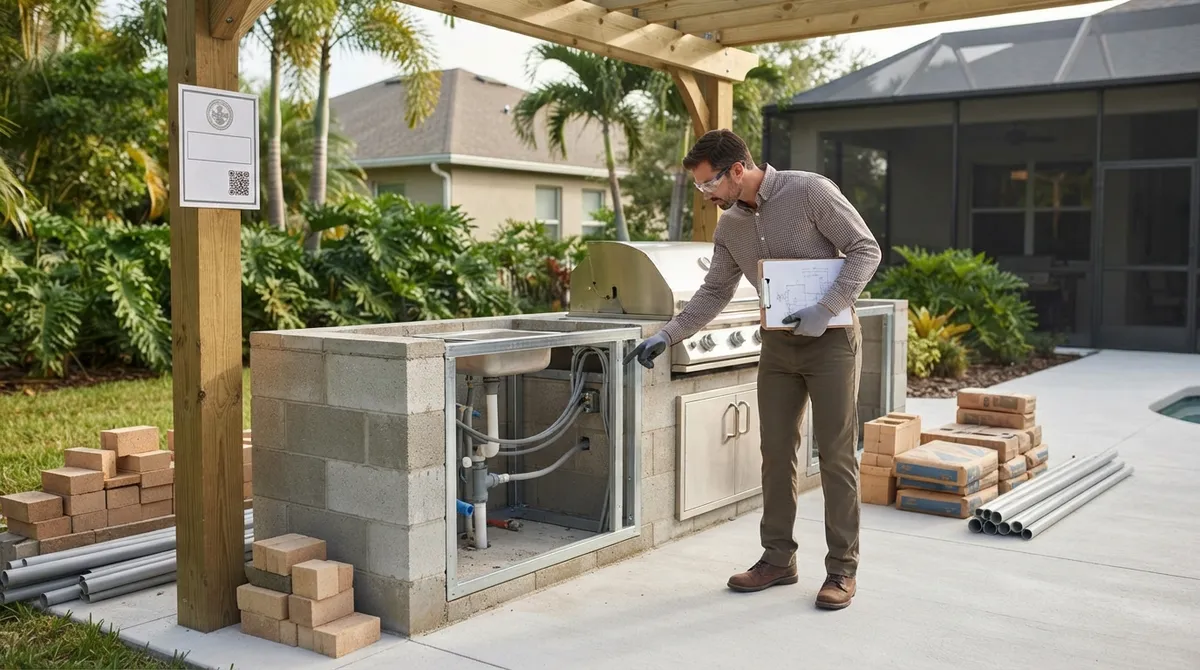
Why Outdoor Kitchens Need Permits in the First Place
It's easy to assume an outdoor kitchen is just patio furniture with a fancy grill attached. In reality, most outdoor kitchens involve several regulated systems at once. That combination is exactly why building departments care.
- Structural work: masonry or block construction, footings, countertops, and roof or pergola tie-ins
- Gas lines: natural gas or propane piping run to a built-in grill, burner, or fireplace
- Electrical: outlets, lighting, refrigerator or ice-maker circuits, and sometimes a sub-panel
- Plumbing: sinks, ice makers, or drain lines connected to a water source
Under the Florida Building Code, 8th Edition (2023), which took effect December 31, 2023, permits are generally required before regulated construction begins and before installing, altering, repairing, or replacing electrical, gas, mechanical, or plumbing systems. An outdoor kitchen can trigger a building permit plus several separate trade permits, depending on scope. That's a lot of moving parts for something that looks simple from the patio.
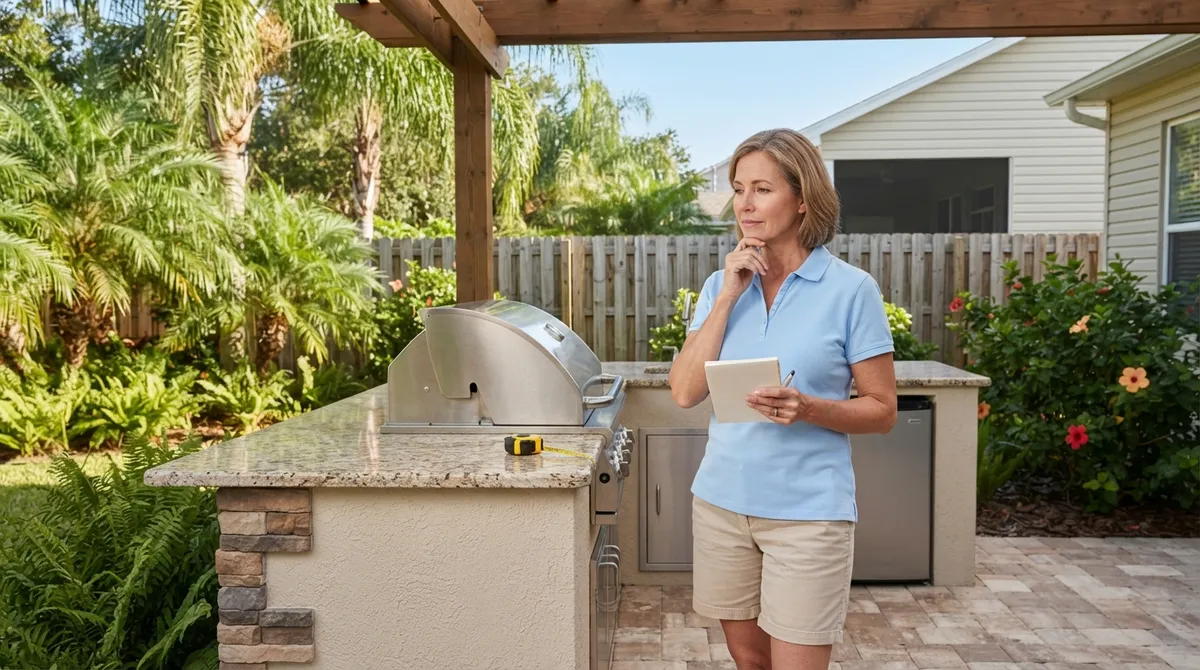
Step 1: Stop, Assess, and Don't Panic
Before you call anyone, take a moment to get organized. Rushing into a building department office with no information rarely goes well, and it definitely won't get you a faster answer.
- Stop any additional construction on the kitchen immediately, even minor finishing touches
- Pull the property's permit history to see what, if anything, was ever filed for that address
- Check for any existing code enforcement cases or violation notices tied to the property
- Gather what you know: when it was built, who built it, and what systems are involved
- Take clear photos of the entire structure, including any visible wiring, gas connections, or plumbing
If you're not sure where to start, our open permit search tool can help you check whether anything was ever filed for the address, and our building department lookup tells you exactly which office has jurisdiction — city or county — which matters more than most people realize, especially near municipal boundary lines.
Step 2: Contact the Right Building Department
There is no statewide "outdoor kitchen legalization" form. Florida's 67 counties, plus hundreds of individual cities, each run their own permitting process. This means the department that has authority over your Sarasota backyard kitchen operates completely differently from one in Tampa or Miami.
When you contact the department, be upfront that the work is already complete. Building officials generally respond better to voluntary disclosure than to a violation discovered during a neighbor complaint or a real estate closing. Ask specifically about:
- Which permit applications are required for your scope of work
- Whether an after-the-fact or retroactive permit process applies to your project
- What plans, drawings, or documentation you'll need to submit
- Applicable fees, including any additional charges for unpermitted work
- Inspection requirements for concealed wiring, gas piping, or structural elements
- Exposing sections of wiring or gas piping for inspection
- Removing portions of finished countertops, tile, or stucco
- Digging test pits near footings to confirm depth and reinforcement
- Providing photo documentation taken during original construction, if available
- Insufficient clearance between the grill and combustible materials
- Gas line sizing that doesn't match current code for the appliance load
- Electrical circuits without proper GFCI protection in wet locations
- Structural elements that don't meet wind-load requirements for the region
- Setback violations relative to property lines or easements
- Lenders may require proof of a valid permit before funding
- Insurance carriers can deny claims tied to unpermitted structures
- Code enforcement violations discovered late can delay closing by weeks
- Buyers may request price reductions or repair credits for open permit issues
Since the local building official determines exactly which code sections and documents apply to your specific situation, this conversation is not optional. It's the foundation for everything that follows.
Step 3: Prepare As-Built Drawings and Supporting Documents
Because the kitchen already exists, most jurisdictions will ask for as-built drawings rather than typical pre-construction plans. These documents show the structure exactly as it was built, not as it was originally intended.
| Document Type | What It Typically Shows | When It's Required |
|---|---|---|
| Site plan | Location of the kitchen relative to property lines, setbacks, and easements | Nearly always |
| As-built drawings | Actual dimensions, materials, and layout of the finished structure | Standard for after-the-fact permits |
| Structural documentation | Footings, block work, roof or pergola connections | When structural elements are involved |
| Electrical/gas/plumbing riser diagrams | Circuit routing, gas line sizing, plumbing connections | When those trades are part of the build |
| Photos and product information | Visual documentation and equipment specs (grills, appliances) | Frequently requested |
Structural work or complex conditions may require plans prepared or reviewed by a Florida-licensed architect or engineer. This is where a lot of homeowners get stuck, since most people don't have a relationship with a structural engineer sitting around. That's exactly the gap that as-built drawings and engineer letters are designed to fill — sealed documentation that satisfies the reviewer without requiring you to start from scratch.
Step 4: Prepare for Inspections of Concealed Work
Here's the part nobody loves talking about: inspectors need to verify things they can't see. If your gas line is buried in a concrete slab or your electrical wiring is hidden inside a finished block wall, the inspector may not be able to sign off without visual confirmation.
This can mean:
If concealed work can't be verified any other way, you may have to open it up and then patch it back afterward. It's not fun, but it's usually far less invasive than starting the whole kitchen over. Having inspections coordinated properly from the start helps minimize how much needs to be exposed.
Step 5: Correct Any Code Deficiencies
Sometimes the as-built kitchen simply doesn't meet current Florida Building Code requirements, especially if it was built more than a few years ago under older standards. Common issues include:
None of this means demolition is automatic. In most cases, corrections are targeted fixes, not full teardowns. But you shouldn't assume the permit gets rubber-stamped just because the kitchen looks great and the burgers taste amazing.
What This Process Actually Costs
There's no single statewide fee for legalizing an outdoor kitchen. The Florida Building Code allows local building officials to set additional fees for work started without a permit, and those amounts vary widely by city and county. Plan review charges, inspection fees, and any after-the-fact penalty are all locally determined.
| Cost Factor | What Influences It |
|---|---|
| Base permit fees | Set by the local jurisdiction, based on project valuation |
| After-the-fact penalty | Often a multiplier on standard fees, varies by county/city |
| Plan review and drafting | Complexity of structure, whether sealed engineering is required |
| Inspection and corrective work | Extent of concealed work that must be exposed or fixed |
Because these numbers shift from one municipality to the next, getting a written estimate directly from your building department — or from a permitting team that already knows the local fee schedules — saves you from unpleasant surprises. If you want a clearer picture before you commit to anything, you can get a free quote and get straight answers about your specific address and scope.
How This Affects Home Sales, Insurance, and Closings
If you're a homeowner selling, or a real estate agent representing one, unpermitted outdoor kitchen work can absolutely stall a closing. Buyers' inspectors are trained to spot obvious additions that don't match public permit records, and title companies increasingly flag these discrepancies before closing.
If you're navigating this as part of a pending sale, our realtor and closing support service exists specifically to resolve these issues fast, before they blow up a deal. We also work directly with realtors across Florida who need permitting research done quickly and accurately.
Who Should Handle This For You
Legalizing an outdoor kitchen touches building, electrical, gas, plumbing, and sometimes structural review — all at once. Coordinating that yourself means juggling multiple inspectors, multiple applications, and multiple sets of paperwork, often across departments that don't talk to each other.
This is exactly the kind of tangled, multi-trade permitting mess that 1 Contractor Solutions handles daily across all 67 Florida counties. Our in-house drafting and engineering team prepares sealed as-built drawings, our permitting specialists file and track the applications, and we work every reviewer comment until the project closes out clean. Whether you're a homeowner in Bradenton, a general contractor managing a backlog of after-the-fact files, or a solar company dealing with an unrelated permit issue on the same property, we bring the same same-day response and no-nonsense coordination to every case. Our after-the-fact and expired permits team specializes in exactly this type of retroactive filing.
You can also browse our full list of permitting services to see how drafting, engineering, and filing work together, or check out how to fix an unpermitted kitchen remodel in Florida if your indoor kitchen has a similar story. For more background on Florida's code requirements, the Florida Building Commission's code resource page is a solid reference, and Martin County's public guidance on when a permit is required is a helpful example of how one jurisdiction explains the rules to residents.
Comparing DIY Legalization vs. Professional Coordination
| Factor | Doing It Yourself | Working With a Permitting Team |
|---|---|---|
| Time investment | Weeks of phone calls and research per department | Handled in parallel, with tracking and follow-up |
| Drafting/engineering | You find and hire separately | In-house sealed drawings, ready to submit |
| Reviewer comments | You interpret and respond alone | Addressed directly by the team that drew the plans |
| Risk of missed steps | Higher, especially with multi-trade permits | Lower, since the whole scope is coordinated |
If you want to see what other Florida property owners have experienced, you can visit us on Google — 1 Contractor Solutions and read real feedback, or follow us on Facebook for updates on code changes and permitting tips across the state. You can also follow us on LinkedIn for industry news relevant to contractors and real estate professionals working through similar issues.
Bringing It All Together
Legalizing an unpermitted outdoor kitchen in Florida isn't glamorous, but it's absolutely doable, and it protects you from bigger headaches down the road — failed inspections at resale, insurance denials, or a code enforcement notice showing up out of nowhere. The process boils down to disclosure, documentation, and patience with your local building department. Every jurisdiction handles it a little differently, but the core steps stay the same: stop work, find your department, prepare accurate as-built plans, get inspections done, and fix whatever doesn't meet code.
If all of that sounds like more than you want to manage solo, that's exactly why we exist. Our team can research your jurisdiction, prepare sealed as-built drawings, and file everything on your behalf, so your outdoor kitchen ends up fully legal and worry-free. Reach out today to get a free quote and let's get your backyard officially back in good standing.
FAQs
Q: Do I need a permit for an outdoor kitchen in Florida?
A: In most cases, yes — outdoor kitchens typically involve structural, electrical, gas, or plumbing work, and each of those can trigger its own permit under the Florida Building Code. Even if it feels like "just a grill and a counter," it's worth checking with your local building department before assuming otherwise.
Q: How do I get an after-the-fact permit for an outdoor kitchen in Florida?
A: You'll contact the building department that has jurisdiction over your property, disclose that the work is already built, and ask what applications, plans, and inspections apply to your specific situation. There's no single statewide form, so the process really does vary by city or county, which is why local knowledge matters so much here.
Q: Will inspectors make me open up walls or concrete to check unpermitted work?
A: It's possible, especially if wiring, gas lines, or structural elements are hidden and can't be verified any other way. Nobody loves hearing this, but exposing a small section is usually much less painful than tearing the whole kitchen down and starting over.
Q: How much does it cost to legalize an unpermitted outdoor kitchen in Florida?
A: Costs vary quite a bit by jurisdiction, since local building officials set their own after-the-fact fees, plan review charges, and inspection costs. Getting a written estimate from your specific building department, or from a permitting team familiar with local fee schedules, is the best way to avoid surprises.
Q: Can an unpermitted outdoor kitchen affect selling my home?
A: Absolutely — unpermitted structures can delay closings, trigger insurance issues, and sometimes lead buyers to ask for price reductions or repair credits. It's much easier to resolve this before you list the property than to scramble once a buyer's inspector flags it.
We do this work every day across all 67 Florida counties. Call (866) 314-6931 and we will tell you what your situation actually requires — including when you do not need us.
Related services
Permit Facilitation & Filing
You have a crew scheduled, a client asking for dates, and a permit sitting somewhere in a queue you cannot see. We file it, w…
See the servicePlan Review Coordination
A permit in plan review is not one queue. On a commercial project it can be six queues, each with its own reviewer, its own c…
See the serviceReady to get your permit moving?
One call tells you which jurisdiction controls your project, what it will take, and what it will cost. Most of the time we can scope it on the phone.