
Blog
5 Mistakes When Asking Who Can Pull a Permit in St. Pete
Wondering who can pull a building permit in St. Petersburg? Learn who qualifies, avoid 5 costly mistakes, and get your permit filed right in 2026.
Key Takeaways
-
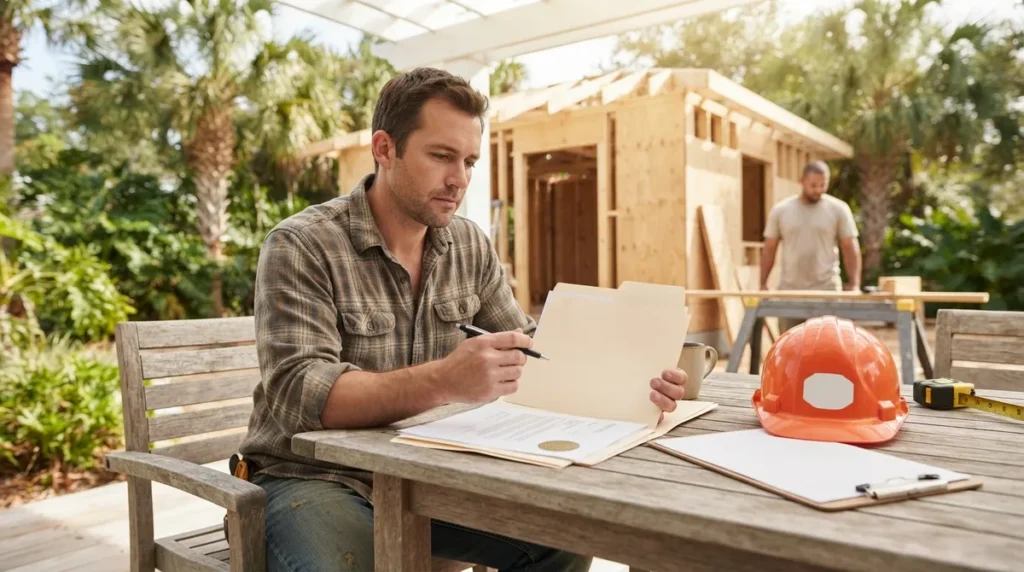
Only the licensed contractor responsible for the work, their written authorized agent, or a qualifying owner-builder under Florida Statutes §489.103(7) can generally pull a St. Petersburg building permit.
-
Effective October 1, 2025, St. Petersburg requires a notarized permit application before a permit is issued, so get it notarized early to avoid delays.
-
Unlicensed handymen, friends, or side-job workers cannot pull a permit or act as the contractor of record, and filing under their name can lead to rejection or stop-work orders.
-
A permitting service can prepare, submit (as an authorized agent), and track applications, but it cannot replace the licensed contractor required for regulated construction work.
-
The owner-builder exemption generally covers only owner-occupied one- or two-family residences or farm outbuildings, not properties offered for sale or lease, and the owner must personally sign and supervise the work.
-
Incomplete plans or missing documents such as sealed drawings, site plans, or product approvals are a common cause of reviewer comments, so verify requirements on the City's online permit portal before filing.
So you have a project in St. Petersburg, a building plan that's ready to go, and a nagging question: who can pull a building permit for me in St. Petersburg? It sounds simple. It isn't always. And here's the friendly truth: most of the delays we see start with a wrong assumption about who is allowed to sign that application.
Maybe you assumed your handyman could file it. Maybe a buddy offered to "just put it under his name." Or maybe you figured a permitting company could replace your contractor entirely. Each of those ideas feels reasonable, and each one can stall your project, trigger a rejection, or create real legal headaches.
The good news? Once you understand how Florida law and the City of St. Petersburg handle permit applications, the path gets much clearer. In this guide, we'll walk through the five most common mistakes, explain who actually qualifies to pull a permit, and show you how to get your application filed correctly the first time. Whether you're a general contractor, a solar installer, a realtor, or a homeowner planning a remodel, there's something here for you.
The Short Answer: Who Can Pull a Building Permit in St. Petersburg?
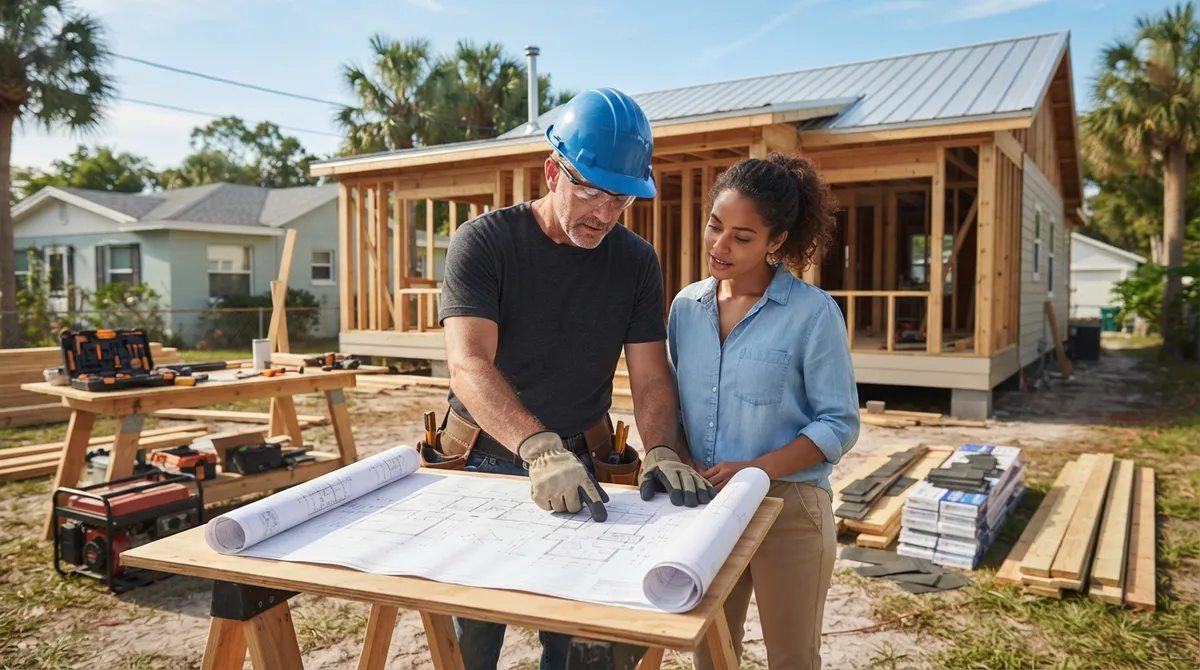
Let's start with the direct answer, because you deserve one. In St. Petersburg, a building permit is generally applied for by the licensed contractor responsible for the work, or by that contractor's authorized agent. The City's online permit portal states that applications must be signed by the license holder or an authorized agent. Effective October 1, 2025, the portal also requires a notarized application before a permit is issued.
There's a second path, too. A qualifying property owner can apply as an owner-builder under Florida Statutes §489.103(7), but that route comes with real responsibilities. We'll unpack it below.
| Who | Can Pull the Permit? | Key Condition |
|---|---|---|
| Licensed contractor | Yes | License must match the scope of work |
| Contractor's authorized agent | Yes | Must have written authorization from the license holder |
| Qualifying owner-builder | Yes | Must personally sign, supervise, and meet statute conditions |
| Unlicensed handyman | No | Cannot act as the contractor |
| Permitting service (alone) | Only as an agent | Cannot replace a required licensed contractor |
Now let's look at the mistakes that trip people up.
Mistake #1: Assuming Anyone Can Pull a Permit
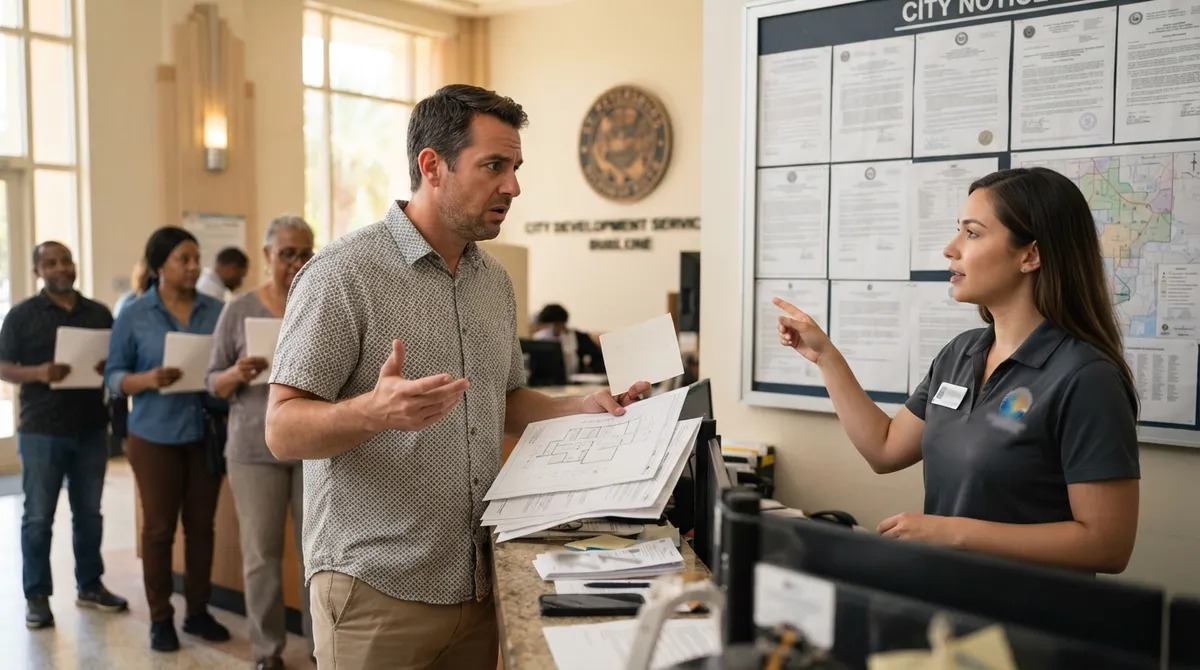
This is the big one. Many homeowners and even some newer contractors assume the permit application is just paperwork that anyone can submit. In reality, a building permit is tied to legal responsibility for the work.
When a permit is issued, someone is on the hook for code compliance, inspections, and workmanship. That's why Florida law ties permit applications to licensed contractors, authorized agents, or qualifying owner-builders. An unlicensed friend, a neighbor with construction experience, or a "guy who does side jobs" doesn't fit into any of those categories.
Why This Mistake Hurts
- Application rejection: The City can reject the filing outright if the signer isn't eligible.
- Stop work orders: If unlicensed work is discovered mid-project, the job can be shut down.
- Legal exposure: Unlicensed contracting is a serious issue in Florida, and the homeowner can get pulled into the problem.
- Insurance and resale trouble: Work done outside proper permitting can complicate claims and closings later.
If you've already run into this situation, our guide on 15 unlicensed contractor mistakes Florida owners make is a helpful next read.
Mistake #2: Confusing a Permitting Service With a Licensed Contractor
Here's where things get a little nuanced, so let's slow down and make it easy.
A Florida permitting service can help with a lot: preparing paperwork, coordinating plan review, submitting applications as an authorized agent where the City accepts it, tracking status, and responding to reviewer comments. That's real, valuable work. But a permitting service does not replace the licensed contractor required for regulated construction work.
Think of it this way. A permitting service is like a skilled project coordinator who speaks fluent building department. The licensed contractor is the person legally responsible for the construction. You usually need both working together.
What a Permitting Service Can Do
- Prepare and organize permit applications and supporting documents
- Submit as an authorized agent when properly authorized by the license holder
- Track the application and coordinate plan review
- Handle revisions and resubmittals after reviewer comments
- Coordinate drawings, engineering, and sealed documents
What a Permitting Service Cannot Do
- Act as the contractor of record without holding the proper license
- Override the contractor-license requirements for regulated trades
- Substitute for the owner-builder's personal signature and supervision
At 1 Contractor Solutions, we act as Florida's outsourced permitting department. We're not a construction contractor. Contractors call us when the permit is the thing standing between them and a scheduled crew, and we handle filing, tracking, and revisions from start to finish.
Mistake #3: Misunderstanding the Owner-Builder Exemption
The owner-builder route is real, and it's available. But it's often misunderstood, and the misunderstanding is expensive. Let's clear it up.
Under Florida Statutes §489.103(7), a property owner may act as their own contractor for certain work. Generally, the exemption covers a qualifying owner's one- or two-family residence or farm outbuilding that is for the owner's own use and not offered for sale or lease. It also covers certain owner-occupied commercial building work costing no more than $75,000, subject to the statute's conditions.
What Owner-Builders Must Actually Do
- Personally appear and sign the permit application. You can't send a stand-in to do it for you under the exemption.
- Demonstrate understanding of your legal responsibilities, as required by the local permitting agency.
- Directly supervise onsite work that isn't performed by licensed contractors.
- Hire licensed contractors for any work that requires a license.
- Not sell or lease the property within the timeframe and conditions the statute describes.
The Trap to Avoid
Here's the part that catches people off guard: an owner-builder cannot simply hire an unlicensed person to act as the contractor under the exemption. The responsibility for onsite supervision stays with you, and you can't delegate it to an unlicensed individual. If you're planning to rely on this path, read the statute carefully and confirm current requirements with the City.
For more on how this works in practice, take a look at our owner-builder permits page, or see our friendly walkthrough of owner builder permits in 2026.
| Owner-Builder Scenario | Likely Eligible? | Why |
|---|---|---|
| Owner-occupied single-family addition | Often yes | One- or two-family residence for owner's own use |
| Investor flipping a house for sale | No | Property offered for sale does not fit the exemption |
| Rental property renovation | No | Property offered for lease does not fit the exemption |
| Owner-occupied commercial work under $75,000 | Possibly | Subject to the statute's conditions |
| Owner hires an unlicensed friend to run the job | No | Owner must supervise; cannot delegate to the unlicensed |
Mistake #4: Skipping the New Notarization Requirement
This one is fresh, and it's catching people by surprise. According to the City of St. Petersburg's online permit portal, effective October 1, 2025, a notarized application must be received before permit issuance. The application must be signed by the license holder or an authorized agent.
Why does this matter to you in 2026? Because plenty of applicants still file the way they did a couple of years ago, then wonder why their permit sits idle. A missing notary stamp is a simple fix, but it can cost you days if you don't catch it early.
A Quick Pre-Filing Checklist
- Confirm who the permit holder will be (licensed contractor, authorized agent, or owner-builder).
- Make sure the signer is the right person for the role.
- Get the application notarized before it's needed for issuance.
- Verify the current forms and supporting documents for your specific project type.
- Confirm any written agent authorization is complete and on file.
Requirements and supporting documents vary by project type, so always verify current forms, plans, signatures, and review requirements with the City's online permit portal. We'd rather you double-check than guess.
Mistake #5: Filing Without Complete Plans and Documents
Even when the right person pulls the permit, an incomplete package can sink the application. Reviewers want to see plans that match the scope of work, and many projects need sealed drawings, structural or MEP details, site plans, or engineer letters.
This is especially true for additions, structural changes, roofing, solar installations, and anything touching load paths or electrical systems. If the drawings don't address the reviewer's questions, you'll get comments, and each round of comments adds time.
Common Documents That May Be Needed
- Completed and notarized permit application
- Plans or drawings appropriate to the scope of work
- Site plan or survey where applicable
- Structural and MEP documentation for larger or more complex projects
- Contractor license information and proof of insurance
- Product approvals for items like roofing or windows, where applicable
Because St. Petersburg is a busy jurisdiction, getting this right the first time is the fastest way to move forward. If you want to dig into what quality drawings look like locally, check out what architectural drafting services in St. Petersburg should include, and avoid the pitfalls in 6 permit drawing mistakes that stall St. Petersburg jobs.
How to Get Your St. Petersburg Permit Pulled the Right Way
Now that you know what to avoid, here's a simple roadmap. Think of it as a friendly step-by-step you can follow no matter which audience you belong to.
- Define the scope. Be clear about exactly what work you're doing and whether it triggers a permit.
- Identify the right permit holder. Licensed contractor, authorized agent, or qualifying owner-builder.
- Gather your plans and documents. Drawings, engineering, site plan, product approvals, and license information.
- Confirm current City requirements. Use the City of St. Petersburg's online permit portal as your starting point.
- Complete and notarize the application. Make sure the signature and notarization meet current rules.
- Submit, track, and respond. Watch for reviewer comments and answer them quickly.
- Schedule inspections and close out. Don't leave the permit hanging after the work is done.
That last step matters more than people realize. Open or expired permits can create problems at closing. If that's a concern, see who pays for open permits when buying a Florida home.
Who Should Use Which Option? A Quick Guide by Audience
Different readers need different things, so let's tailor this a bit.
| If You Are... | Best Approach | Helpful Resource |
|---|---|---|
| General contractor | Pull under your license or authorize a trusted agent to file and track | Services for general contractors |
| Solar company | Use code-compliant structural and electrical documentation and an authorized agent for filing | Services for solar contractors |
| Realtor or investor | Research open permits and legalization needs before closing | Realtor and closing support |
| Homeowner | Hire a licensed contractor, or qualify as an owner-builder if eligible | Homeowner services |
| Architect, designer, or specialty trade | Outsource drafting, engineering, and permit administration | Drafting-only services |
What If Work Was Already Done Without a Permit?
Sometimes you're not asking who can pull a permit for a future project. You're staring at work that was already done. Maybe a previous owner skipped permits, a contractor vanished, or an inspector flagged something. Take a breath. It's more common than you'd think, and there are paths forward.
Florida allows legalization of many unpermitted projects through after-the-fact permitting, though the process depends on the type of work and the jurisdiction. You can start with 7 steps to legalize unpermitted work in Florida (2026), or read about after-the-fact permit requirements in Florida to see what to expect.
If a permit has been denied and you're stuck, who can rescue a denied building permit in Florida walks through your options.
Why Working With a Florida Permitting Team Helps
Here's a little honesty: you can absolutely navigate this process on your own. But permitting is a specialized skill, and the details change. A notarization requirement appears. A form updates. A reviewer asks for a structural clarification you didn't anticipate.
That's where a dedicated permitting partner earns their keep. A good team prepares the application, coordinates with the right jurisdiction, tracks every step, and handles reviewer comments so your crew isn't waiting around. And when drafting and engineering are handled in house, fixing a reviewer's concern doesn't mean waiting on an outside consultant to call back.
1 Contractor Solutions works across all 67 Florida counties and has filed in more than 400 municipalities. We provide permit facilitation and filing, plans and engineering with in-house sealed drawings, and plan review coordination, and we respond within 30 minutes day or night. You can explore our permit facilitation and filing services to see how it works, or learn more about our St. Petersburg permitting support.
Curious what others say? Read 1 Contractor Solutions reviews on Google and see how we've helped contractors and homeowners across the state. You can also follow us on LinkedIn or follow us on Facebook for permitting tips, and the team at Brain Buzz Marketing helps keep our resources fresh and easy to find.
Final Thoughts: Get the Right Person on the Application
So, who can pull a building permit for you in St. Petersburg? In short: a licensed contractor responsible for the work, that contractor's authorized agent, or a qualifying owner-builder who meets the Florida statute's conditions. A permitting service can support the process as an authorized agent, but it doesn't replace the licensed contractor required for regulated work.
Avoid the five mistakes we covered: assuming anyone can file, confusing a permitting service with a contractor, misreading the owner-builder exemption, skipping the notarization requirement, and filing with incomplete plans. Do that, and you'll sidestep most of the delays we see.
Ready to get your permit moving without the guesswork? Get a free quote and let our team handle the filing, tracking, and revisions while you focus on the work itself. We're happy to help, and we promise to keep it friendly and stress-free.
FAQs
Who is allowed to pull a building permit in St. Petersburg, Florida?
Generally, the licensed contractor responsible for the work, or that contractor's authorized agent, applies for the permit. A qualifying property owner may also apply as an owner-builder under Florida Statutes §489.103(7), as long as they meet the statute's conditions.
Can a homeowner pull their own building permit in St. Petersburg?
Yes, if you qualify for Florida's owner-builder exemption. You'll need to personally appear and sign the application, directly supervise any onsite work not done by licensed contractors, and use licensed pros for work that requires a license. Always confirm current requirements with the City first.
Can a permitting service apply for a permit on my behalf in St. Petersburg?
A permitting service can help prepare, coordinate, and submit paperwork as an authorized agent where the City accepts it. It can't replace the licensed contractor required for regulated construction work, so be sure the agent's authorization is documented before filing.
Does a St. Petersburg permit application need to be notarized?
According to the City's online permit portal, a notarized application must be received before permit issuance, effective October 1, 2025. The application must also be signed by the license holder or an authorized agent, so check the portal for the latest details.
What documents do I need to apply for a building permit in St. Petersburg?
Requirements vary by project type, but you'll typically need a completed application, plans appropriate to the scope of work, and contractor license information. Larger jobs may also call for site plans, structural or MEP documents, and product approvals, so verify the current list with the City's portal.
We do this work every day across all 67 Florida counties. Call (866) 314-6931 and we will tell you what your situation actually requires — including when you do not need us.
Related services
Permit Facilitation & Filing
You have a crew scheduled, a client asking for dates, and a permit sitting somewhere in a queue you cannot see. We file it, w…
See the servicePlan Review Coordination
A permit in plan review is not one queue. On a commercial project it can be six queues, each with its own reviewer, its own c…
See the serviceReady to get your permit moving?
One call tells you which jurisdiction controls your project, what it will take, and what it will cost. Most of the time we can scope it on the phone.