
Blog
How to Get an After-the-Fact HVAC Permit in Florida
Wondering if you can get an after-the-fact permit for HVAC in Florida? Learn the steps, documents, inspections, and tips to legalize completed work.
Key Takeaways
-
Most Florida building departments allow an after-the-fact mechanical permit for completed HVAC work, but approval is never automatic and the installation must meet code and pass inspection.
-
Start by confirming which city or county building department controls your property address, since rules, fees, and procedures vary by jurisdiction and city lines can be unclear.
-
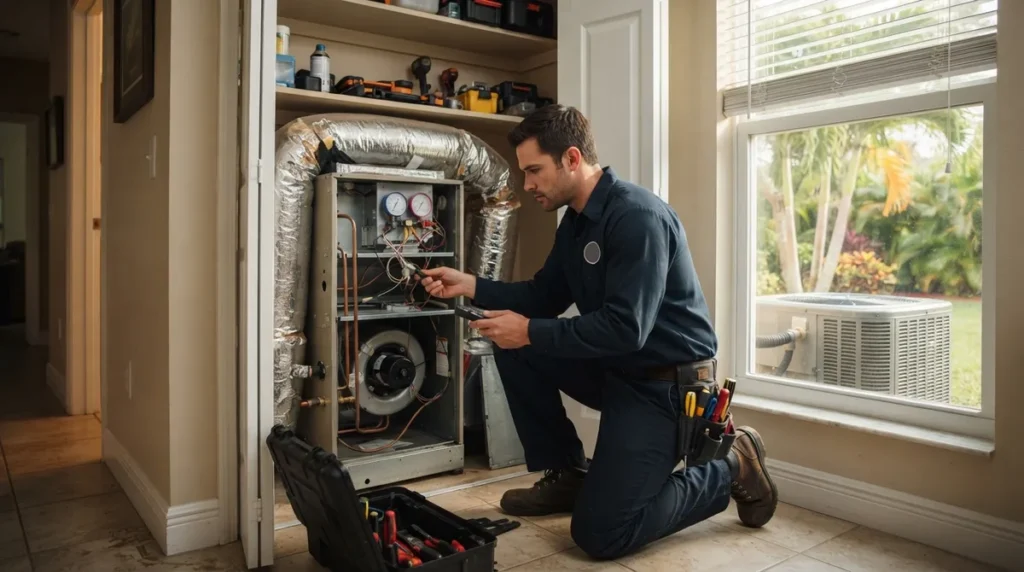
Have a licensed HVAC contractor evaluate the existing system before filing so you can identify code problems early and avoid surprise inspection failures.
-
Gather documentation such as equipment make, model, tonnage, and efficiency ratings, plus as-built layouts and Manual J load or energy calculations where required.
-
Expect that concealed components like refrigerant lines or ductwork may need to be exposed for inspection, and that related electrical work often requires a separate electrical permit.
-
Failed inspections are common and fixable: typical corrections include condensate line terminations, electrical disconnects, duct sealing, and clearances, followed by a reinspection request.
So you just found out that the air conditioner in your Florida property was installed without a permit. Maybe a previous owner skipped it. Maybe a contractor swore up and down they would pull it and then disappeared. Maybe a home inspector flagged it two days before closing. Take a breath. You are far from alone, and there is usually a path forward.
The question we hear all the time is simple: can I get after the fact for HVAC in Florida? In many cases, the answer is yes. Most Florida building departments allow an owner to apply for an after-the-fact mechanical permit when HVAC work was already completed without one. The catch is that approval is never automatic. The local building department decides what it needs, and the work still has to meet code.
In this guide, we will walk through exactly how the process works, what documents you may need, what inspectors look for, and how to avoid the mistakes that slow people down. Whether you are a homeowner, a general contractor, or a real estate professional, you will leave with a clear plan.
Can You Really Get an After-the-Fact Permit for HVAC in Florida?
Yes, in many jurisdictions you can. Florida Statutes §553.79 generally requires a permit before regulated construction, alteration, repair, or installation work begins. When that step gets skipped, most city and county building departments offer a way to legalize the work after it is finished.
Here is the honest part. An after-the-fact permit is not a rubber stamp. The department reviews your application, and the installation must satisfy applicable code requirements and pass inspection. If it does, the permit can be closed out. If it does not, you will be asked to make corrections.
Because rules, fees, and procedures vary by jurisdiction, always confirm details with the building department that covers the property address. Our building department lookup tool can help you figure out who actually controls your address, which is not always obvious near city lines.
What Counts as HVAC Work That Needs a Permit?
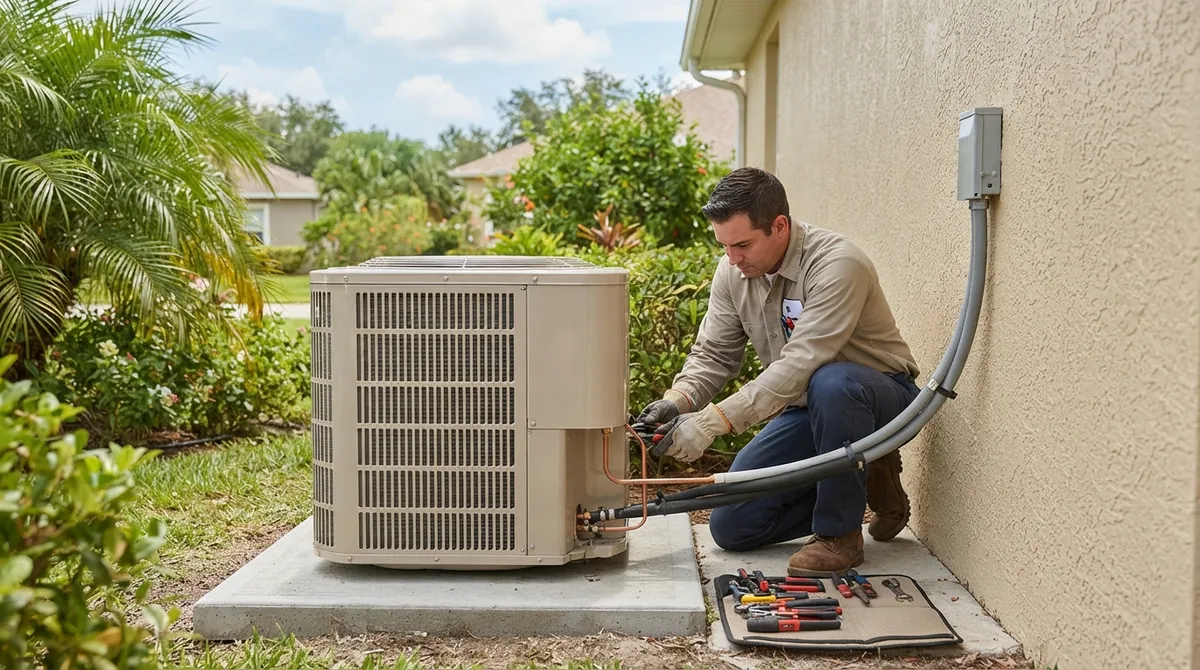
HVAC installations, replacements, and modifications generally require a mechanical permit. Lee County's mechanical permitting guide, for example, identifies HVAC equipment and ductwork installation, alteration, or replacement as work requiring a mechanical permit, and it references the 2023 Florida Building Code, 8th Edition.
Common examples include:
- Replacing an air handler, condenser, or full split system
- Installing a new ducted system or modifying existing ductwork
- Adding a mini-split or ductless system
- Relocating equipment to a new pad, closet, or attic platform
- Changing system size or capacity
Exemptions and thresholds can differ from one jurisdiction to the next, so confirm before assuming your project was exempt.
Who Can Apply for an After-the-Fact HVAC Permit?
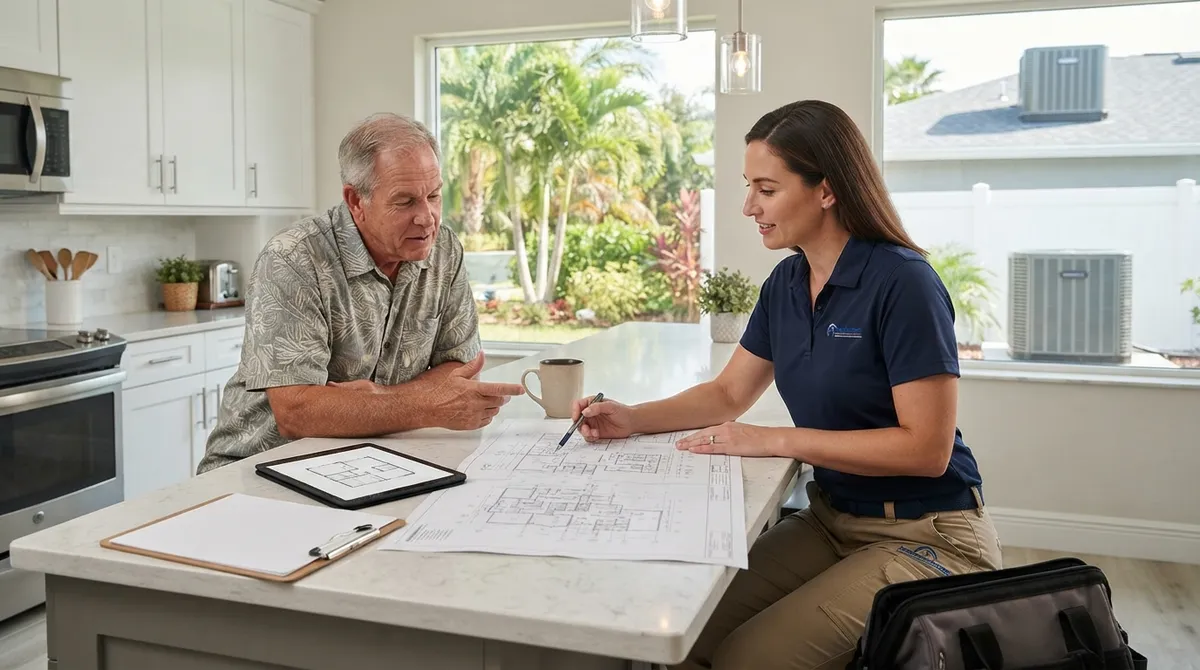
Depending on the situation, several people may be able to start the process. The right one depends on who owns the property and who did the work.
| Applicant | Typical Situation | What to Expect |
|---|---|---|
| Licensed HVAC contractor | Contractor or new contractor inspects the existing system and files | Contractor verifies installation and submits supporting documents |
| Property owner (owner-builder) | Homeowner legalizing work on their own property | May require owner-builder paperwork; local rules vary |
| General contractor | GC managing a larger project with HVAC included | Coordinates mechanical, electrical, and other trades |
| Permitting company | Owner or agent wants a professional to handle the process | Files, tracks, and responds to review comments |
If you are thinking about going the owner route, take a look at our overview of owner-builder permits to see whether that fits your situation. Also keep in mind that who can legally pull a permit in Florida depends on licensing rules, so it helps to read up on who can pull a permit in Florida before you start.
How to Get an After-the-Fact HVAC Permit in Florida: Step by Step
Every county does things a little differently, but the overall flow looks very similar. Here is a friendly roadmap you can follow.
- Confirm the jurisdiction. Figure out whether the city or the county reviews your address. Mistakes here waste weeks.
- Call or check the building department's website. Ask specifically about their after-the-fact or unpermitted work process for mechanical installations.
- Have the existing system evaluated. A licensed HVAC contractor should inspect what is installed and confirm it is safe and code compliant.
- Gather your documentation. This often includes equipment information, as-built details, and load or energy calculations.
- Submit the application. File the mechanical permit application along with the required documents and fees.
- Respond to review comments. Reviewers may ask for clarification or additional paperwork.
- Schedule and pass inspections. The inspector verifies the completed installation.
- Close the permit. Once approved, the permit is finaled and the record is cleared.
Each step can trip people up if they are unfamiliar with local expectations. That is exactly why many property owners lean on a team that files these every week. You can learn more about how the process works statewide in our guide on how to get an after-the-fact permit in Florida.
Documents You May Need for the Application
Requirements are set locally, so treat this list as a starting point rather than a guarantee. Many departments ask for some combination of the following.
- A completed mechanical permit application
- Proof of ownership or authorization to apply
- Contractor license and insurance information, when a contractor is filing
- Equipment specifications, including make, model, tonnage, and efficiency ratings
- As-built drawings or a simple equipment and duct layout
- Manual J load calculations or energy calculations, where required
- A Notice of Commencement, depending on project cost and local rules
On that last point, Alachua County's residential HVAC replacement checklist says a Notice of Commencement must be uploaded before inspections when the project cost is $15,000 or more. Again, confirm current local requirements with your county before filing. If you want a deeper explanation, see our article on the Notice of Commencement in Florida.
When Drawings Matter
For a typical residential change-out, you may not need a full engineered plan set. Larger or commercial systems are a different story. Lee County's guide notes that certain projects, such as systems of 15 tons or more, projects valued at $125,000 or more, or systems serving 100 or more people, may require a design professional. Whether that applies to you depends on the project and local review.
If you need drawings, as-built drawings and MEP engineering support can fill that gap with sealed documents ready for submission.
What Inspectors Look for on Completed HVAC Work
Here is where after-the-fact work gets a little different from a standard permit. Normally, an inspector checks the work at defined stages. When the work is already finished, the inspector has to verify things after the fact.
Expect the inspector to review items such as:
- Equipment matches the submitted information and is properly rated
- Condensate drain lines are installed and terminate correctly
- Clearances, platforms, and access for service are adequate
- Refrigerant line sets are properly supported and insulated
- Duct connections, sealing, and insulation meet requirements
- Disconnects, wiring, and breakers are appropriate for the equipment
Will Concealed Work Need to Be Exposed?
Possibly. If important components are hidden behind drywall, above ceilings, or inside closed chases, the inspector may require them to be exposed so they can be verified. That can mean small access openings or temporary removal of finishes. It is not fun to hear, but it is a normal part of the process, and it is often more manageable than owners fear.
If you want to know more about what to expect, our article on what happens during a Florida ATF site inspection walks through it in detail, and our inspections service page explains how we support the final stages.
Do You Need a Separate Electrical Permit Too?
Often, yes. HVAC replacements frequently involve related electrical changes, such as new wiring, upgraded breakers, or a new disconnect. Those changes may require a separate electrical permit in addition to the mechanical permit.
This is one of the most common surprises. Owners legalize the mechanical side and then discover the electrical work was never covered. Ask the building department up front so you can handle both at the same time. We cover this topic more in our post about unpermitted electrical work in Florida.
What About Fees, Penalties, and Timelines?
Fees, penalties, required documents, and inspection steps are all set or administered locally. Some jurisdictions charge a standard permit fee, while others add extra charges for work started without a permit. Timelines can range from a few days to a few weeks depending on staffing, workload, and whether corrections are needed.
Because we cannot predict your exact numbers without knowing the address, here is a quick comparison of what typically varies.
| Factor | What Can Change | Why It Matters |
|---|---|---|
| Permit fee | Base fee, possible after-the-fact surcharge | Affects your total budget |
| Required documents | Equipment data, calculations, as-builts | Missing items cause delays |
| Inspection steps | Single final or multiple inspections | Impacts timeline |
| Exposure of concealed work | Required or not | Can add repair and finish costs |
| Review time | Days to weeks | Matters if a closing is looming |
For a broader look at pricing, check out our guide on after-the-fact permit costs in Florida, and if you are curious about consequences of skipping permits entirely, read about the penalty for building without a permit in Florida.
What Happens If the Work Fails Inspection?
Do not panic. A failed inspection is not the end of the road. The inspector will typically list what needs to be corrected, and you will have the opportunity to fix those items and request a reinspection.
Common correction items for HVAC work include:
- Improperly terminated or unsupported condensate lines
- Missing or undersized electrical disconnects
- Inadequate duct sealing or insulation
- Equipment not matching the submitted documentation
- Missing clearances or service access
In rare cases where the installation cannot be brought into compliance, the department may require changes more significant than a simple fix. That is why having a licensed professional evaluate the system before you file is such a smart move. It helps you spot problems early and avoid surprise failures.
Tips for a Smoother After-the-Fact HVAC Permit
After helping with countless Florida permits, here are some friendly pointers that make a real difference.
- Do not hide the situation. Building departments handle these requests all the time, and honesty usually leads to a smoother path than hoping nobody notices.
- Get the system evaluated first. Know what you have before you submit.
- Gather paperwork early. Old invoices, equipment labels, and warranty cards can help prove what was installed.
- Ask about related permits. Electrical and sometimes plumbing items may be tied to the install.
- Plan around closing dates. If you are selling or buying, start immediately. A permit hold can complicate a closing, as we explain in our guide on open permits found at closing.
Special Notes for Real Estate and Investor Clients
If you are a buyer, agent, or investor, unpermitted HVAC can show up during inspections, appraisals, or title work. Resolving it before closing keeps deals on track. Our realtor closing support is built for exactly that scenario, and you can search for existing records with our open permit search tool.
Special Notes for Contractors
General contractors and HVAC companies sometimes inherit jobs where earlier work was never permitted. If you step in, document what you find, verify compliance, and be upfront with the owner. Coordinating the mechanical and electrical permits together keeps the file clean. Our team supports general contractors with filing, tracking, and revisions so crews stay productive.
How 1 Contractor Solutions Can Help
We are Florida's outsourced permitting department. When an HVAC job needs to be legalized, we figure out which jurisdiction controls the address, tell you what it will take, and then handle the filing, tracking, reviewer comments, and closeout. Our drafting and engineering are done in house, so if a reviewer asks for an as-built, a calculation, or a sealed letter, we can produce it without sending you hunting for an outside consultant.
You can learn more about our after-the-fact and expired permit services, or see how we handle permit facilitation and filing across all 67 Florida counties. If your timeline is tight, our urgent permit rescue option is designed for stop-work orders, denials, and closings on the line.
Curious how others feel about working with us? See what customers say on our reviews page, and you can also Visit us on Google — 1 Contractor Solutions to read feedback from people we have helped across Florida. We would love to connect with you online too, so feel free to follow us on LinkedIn.
For authoritative background on the law itself, you can review the official text of Florida Statutes §553.79 on the Florida Legislature's website.
Wrapping Up: Yes, You Can Fix This
So, can you get after the fact for HVAC in Florida? In many cases, absolutely. The key is to confirm your local requirements, gather the right documentation, expect inspections, and be ready to make corrections if the inspector asks for them. Related electrical work may need its own permit, and concealed components may need to be exposed. None of it is impossible, and plenty of owners get through it every month.
You do not have to figure it out alone. If you are ready for a clear plan and a team that handles the paperwork, get a free quote today and tell us your address and what happened. We respond fast, we know the Florida jurisdictions, and we will help you get that HVAC permit closed so you can get back to your life.
FAQs
Can I get an after-the-fact permit for HVAC work in Florida?
In many cases, yes. Most Florida building departments allow an after-the-fact mechanical permit for completed HVAC work, but approval is not automatic. The work must meet code and pass inspection, and the local department decides exactly what is required.
Do I need a permit to replace an air conditioner in Florida?
Generally, yes. HVAC installations, replacements, and modifications typically require a mechanical permit under Florida's permitting framework. Because rules and exemptions can vary by jurisdiction, it is smart to confirm with the building department for your property address.
Will an inspector need to see concealed HVAC work?
Possibly. If key components are hidden behind walls or ceilings, the inspector may ask for them to be exposed so they can be verified. Planning for small access openings early can save you stress later.
Do I need a separate electrical permit when replacing an HVAC system?
Often you do. Changes to wiring, breakers, or disconnects related to your new system may require a separate electrical permit in addition to the mechanical permit. Ask your building department so both can be handled together.
Are there extra fees for an after-the-fact HVAC permit in Florida?
It depends on where you live. Fees, penalties, and inspection steps are set locally, and some jurisdictions add charges for work started without a permit. Contact the building department for your address before assuming a specific cost or timeline.
We do this work every day across all 67 Florida counties. Call (866) 314-6931 and we will tell you what your situation actually requires — including when you do not need us.
Related services
Permit Facilitation & Filing
You have a crew scheduled, a client asking for dates, and a permit sitting somewhere in a queue you cannot see. We file it, w…
See the servicePlan Review Coordination
A permit in plan review is not one queue. On a commercial project it can be six queues, each with its own reviewer, its own c…
See the serviceReady to get your permit moving?
One call tells you which jurisdiction controls your project, what it will take, and what it will cost. Most of the time we can scope it on the phone.