
Blog
How to Get a Hurricane Damage Permit in Tampa (2026 Guide)
Learn how to get a hurricane damage permit in Tampa: jurisdiction, exemptions, flood-zone rules, and a simple step-by-step filing process for 2026.
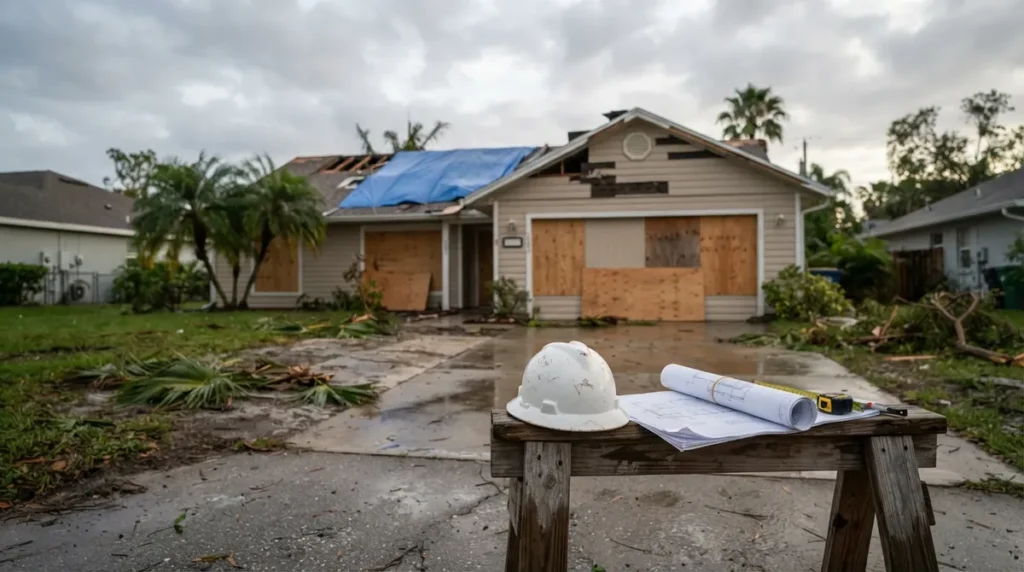
Key Takeaways
-
Confirm which authority covers your property first: a Tampa mailing address doesn't guarantee City of Tampa jurisdiction, since many homes fall under unincorporated Hillsborough County or other cities.
-
Emergency work to protect life or property, like tarping a roof or boarding windows, can proceed before a permit is issued, but permanent repairs often still require one.
-
Permit exemptions for repairs like roofs of 500 sq ft or less depend on a declared disaster with activated emergency powers, so confirm current eligibility with the City before relying on them.
-
Electrical work, HVAC and water-heater change-outs, garage doors, and structural wall repairs require permits even after a storm.
-
In a Special Flood Hazard Area, repair costs exceeding 50% of the pre-damage structure value can trigger flood-resistant standards under the FEMA 50% rule, even for some otherwise exempt repairs.
-
Schedule inspections and get a licensed electrician's work checked before restoring power to flood-damaged electrical systems, and keep all photos, receipts, and inspection records together.
Nobody plans for the morning after a hurricane. One day you're checking the forecast, and the next you're standing in your driveway with a tarp, a phone full of damage photos, and a long list of questions. Do I need a permit to fix this? Which office do I call? Can I start repairs today? If that's you, take a breath. You're not alone, and this is far more manageable than it feels.
Getting a hurricane damage permit in Tampa comes down to three questions: Which authority covers your property? Does your repair actually need a permit? And does your flood zone change the rules? Tampa's recovery numbers show how many neighbors have walked this road. The City reported roughly 6,500 homes with storm damage, about 2,300 with major damage, and 65 completely destroyed (City of Tampa, October 2025). It also issued more than 1,500 permits in the weeks that followed.
This friendly, step-by-step guide walks you through the whole process in 2026, so you can protect your home, your insurance claim, and your resale value.
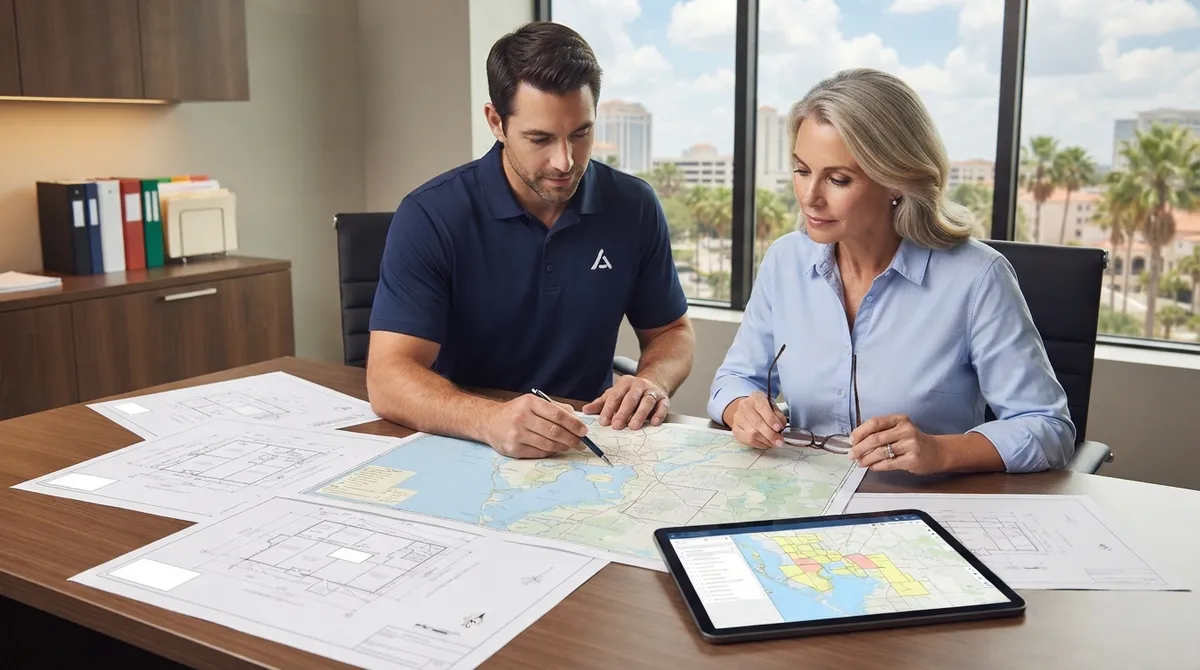
Step 1: Confirm Which Jurisdiction Covers Your Property
Before anything else, figure out who actually issues your permit. A Tampa mailing address does not always mean you're inside Tampa city limits. Plenty of "Tampa" homes sit in unincorporated Hillsborough County, Temple Terrace, or Plant City, and each has its own process.
- City of Tampa: Handled by Construction Services under the City's post-hurricane rules.
- Unincorporated Hillsborough County: Handled through the county's HillsGovHub portal.
- Other municipalities: Separate departments with their own forms and fees.
Not sure? Our building department lookup tool can point you in the right direction, and our guide on which Florida jurisdiction reviews your project explains the city-line confusion in more detail. You can also browse our Tampa permitting page or our Hillsborough County page for local context.
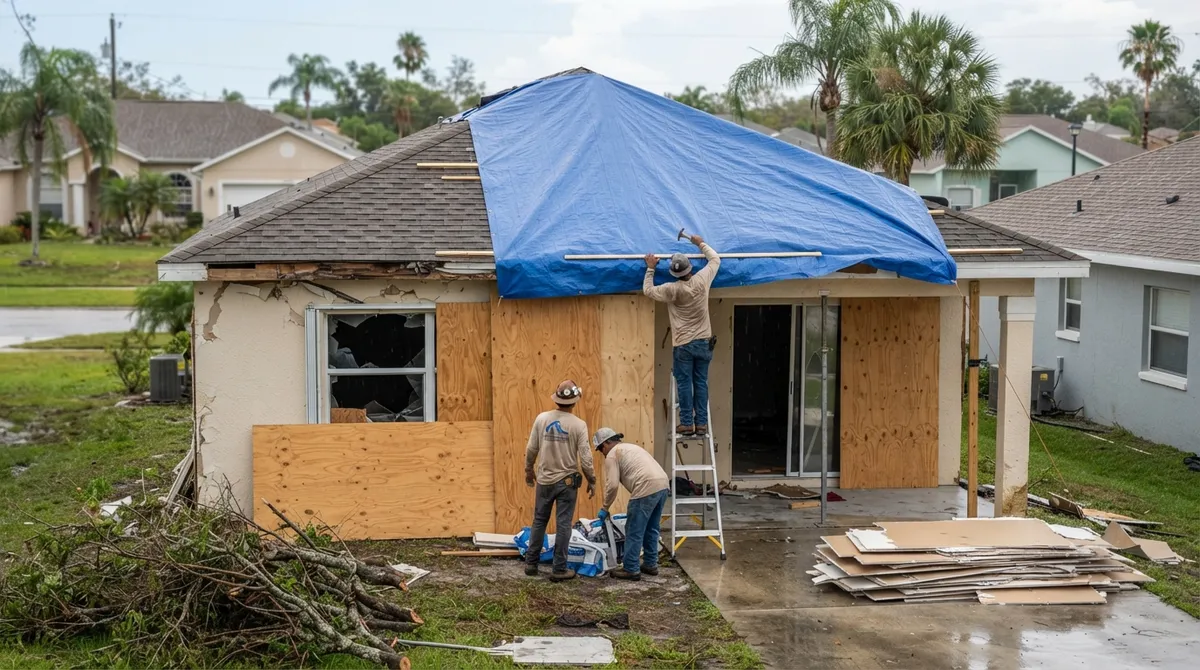
Step 2: Handle Emergency Protection First
Here's the good news: you don't have to wait on paperwork to keep your home from getting worse. Tampa allows ordinary emergency work to protect life or property before a permit is issued. Think tarping a damaged roof, boarding broken windows, or shutting off damaged utilities.
Permanent repairs are a different story, and many of them do require permits. The City advises contacting Construction Services to confirm what applies to your situation.
What to Document Right Away
- Take wide and close-up photos of every damaged area before you touch anything.
- Photograph your emergency protection work (tarps, boards, water extraction).
- Keep every receipt, contractor estimate, and invoice.
- Save insurance claim numbers and adjuster correspondence.
- Write down dates for each step. Inspectors and insurers love a clear timeline.
Check with your insurer and mortgage lender before starting permanent work. Their requirements can affect how and when repairs happen.
Step 3: Find Out Whether Your Repair Needs a Permit
This is where most homeowners get tripped up. Tampa's post-hurricane guidance lists some repairs that may be permit-exempt, but only after a declared disaster and only when the Mayor has activated emergency powers. Those exemptions are conditional, not permanent, so always confirm current eligibility with the City before you rely on them.
| Repair Type | Permit Status Under Tampa's Post-Hurricane Guidance |
|---|---|
| Roof repair or replacement of 500 sq ft or less | May be exempt (when emergency provisions are active) |
| Roof repair exceeding 500 sq ft | Permit required |
| Drywall repair no more than 2 ft above finished floor | May be exempt |
| Standalone finish work (paint, flooring, etc.) | May be exempt |
| Qualifying fence repairs | May be exempt |
| Soffit and fascia repairs | May be exempt |
| Size-for-size front or rear door replacement, existing framing | May be exempt |
| Storm-related electrical work | Permit required |
| Garage-door replacement | Permit required |
| HVAC change-outs | Permit required |
| Water-heater change-outs | Permit required |
| Structural wall repair or replacement | Permit required |
Notice the 500-square-foot line for roofing. A small patch might qualify for the exemption, while a bigger repair needs a full permit. If you're weighing a repair versus a replacement, our roof permit services can help you sort out the right path. Roofers handling multiple storm jobs may also like our Roof Permit Partnership Program.
Don't Forget Fee Waivers and Expedited Review
After the recent storms, Tampa waived more than $500,000 in permit fees and offered expedited reviews (City of Tampa, October 2025). These are conditional disaster measures, not guarantees, so ask whether any waivers or fast-track options are active for your project today.
Step 4: Check Your Flood Zone and the FEMA 50% Rule
If your home sits in a Special Flood Hazard Area, an extra layer applies, and it can apply even when your repair itself needs no permit. After a declared disaster with emergency powers activated, Tampa requires a Substantial Improvement Determination (SID) for properties in these zones.
It all ties back to the FEMA 50% rule. If repair or improvement costs exceed 50% of the structure's pre-damage value, flood-resistant standards may apply. That could mean elevating the home or bringing it up to current floodplain requirements. Hillsborough County uses a similar threshold and may ask for a Substantial Damage Packet, even for some cosmetic repairs that are otherwise permit-exempt.
We break down how the numbers work in our article on the FEMA 50 percent rule in Florida, and our post on flood zone permitting steps goes deeper.
| Question | City of Tampa | Hillsborough County |
|---|---|---|
| Application portal | Construction Services / Q-Up appointments | HillsGovHub |
| Flood zone review | Substantial Improvement Determination (SID) | Substantial Damage Packet |
| Key threshold | FEMA 50% rule | FEMA 50% rule |
| Contact | 813-274-3100 | permitting@HCFL.gov |
Step 5: Gather What You Need to Apply
A clean application moves faster. Here's a simple checklist to pull together before you file:
- Property address and parcel information
- Licensed contractor details (or owner-builder paperwork, if you qualify)
- A clear scope of work with materials and square footage
- Damage photos and repair estimates
- Sealed drawings or an engineer letter when structural work is involved
- Flood-zone documentation if your home is in a Special Flood Hazard Area
Structural repairs often need professional drawings. Our team provides structural engineering and engineer letters with in-house sealed work, so reviewers get what they need the first time. Curious how sealed documents work in Tampa? Read our 10 facts about sealed drawings for permit in Tampa.
Going the DIY route as a homeowner? Look into owner-builder permits to see what you can and can't pull yourself. Our guide on who can pull a permit in Florida is a handy companion.
Step 6: File Your Application and Use Virtual Help
Tampa offers Q-Up virtual appointments for permit and plan-review consultations, which is a lifesaver when you'd rather not sit in a lobby. Construction Services can be reached at 813-274-3100. For unincorporated Hillsborough County, applications go through HillsGovHub, and substantial-damage questions can go to permitting@HCFL.gov.
- Confirm jurisdiction and whether emergency provisions are currently active.
- Choose your portal (City of Tampa or HillsGovHub).
- Upload your documents and scope of work.
- Pay fees or request any available waiver.
- Track the review and respond quickly to comments.
If filing feels like a second job, that's where we come in. Our permit facilitation and filing team prepares, submits, and tracks applications, and our plan review coordination handles reviewer comments. Wondering about timelines? See how long a building permit takes in Florida.
Step 7: Schedule Inspections Before Restoring Power
Flood-damaged electrical systems are a real safety concern. Repairs may need a licensed electrician, and building officials may need to inspect the work before power is restored. Don't flip that breaker back on just because things look dry.
Keep your inspection records together with your permit file. They protect you with your insurer and become important documents if you ever sell. Our inspections support can help you schedule and prepare, and private provider options may speed things up when the county queue is long. Compare the two routes in our post on private provider vs. building department.
Common Mistakes to Avoid
- Assuming an exemption applies forever. Tampa's exemptions depend on a declared disaster and activated emergency powers.
- Skipping the flood-zone check. A cosmetic fix can still trigger review in a Special Flood Hazard Area.
- Hiring unlicensed help. It can void insurance coverage and create permit headaches.
- Throwing away documentation. Photos and receipts are your best friends.
- Working without a permit. Unpermitted storm repairs can complicate closings and insurance claims later.
Already completed repairs without a permit? Don't panic. There are fixes, and our resources on hurricane repair permit mistakes and storm repairs you can do without a permit are great starting points. For open or lapsed files, see after-the-fact and expired permits.
Who Needs Extra Support After a Storm?
Different readers face different hurdles, so here's a quick snapshot:
| You Are a... | Biggest Post-Storm Challenge | Helpful Resource |
|---|---|---|
| Homeowner | Knowing what needs a permit | Homeowner services |
| General contractor | Volume of jobs and review comments | GC services |
| Roofer or solar company | Fast turnaround on repairs | Roofing support |
| Restoration company | Emergency-to-permanent transition | Restoration support |
| Realtor or investor | Open permits at closing | Realtor support |
How 1 Contractor Solutions Can Help
Think of 1 Contractor Solutions as your outsourced permitting department. We work across all 67 Florida counties, respond fast, and keep drafting and sealed engineering in house, so a reviewer comment gets fixed instead of becoming a delay. Whether you need a structural letter, a filing, or a rescue for a stalled application, our urgent permit rescue service is built for stressful moments like these.
Want to see how other customers feel about working with us? Visit us on Google — 1 Contractor Solutions to read reviews, and feel free to follow us on LinkedIn or follow us on Facebook for Florida permitting tips. For official guidance, the City of Tampa also publishes a post-hurricane permitting guide worth bookmarking.
Wrapping Up: You've Got This
Recovering from storm damage is stressful, but the permit side doesn't have to be. Confirm your jurisdiction, protect your property, check which repairs need permits, watch for flood-zone rules like the FEMA 50% threshold, and keep great records. Rules and waivers can change with each disaster declaration, so always verify current requirements with the City of Tampa or Hillsborough County before starting permanent work.
Ready to hand the paperwork to people who do this every day? We'd love to help you get your project moving. Reach out today to get a free quote, and let's get your home back to normal.
FAQs
Do I need a permit to repair hurricane damage in Tampa?
It depends on the repair. Emergency work to protect life or property, like tarping a roof, can happen before a permit, but permanent repairs often need one. Some limited repairs may be exempt after a declared disaster with activated emergency powers, so confirm with Tampa Construction Services at 813-274-3100 first.
What hurricane repairs can I do without a permit in Tampa?
Under Tampa's post-hurricane guidance, certain work may be permit-exempt when emergency provisions are active, such as roof repairs of 500 square feet or less, drywall repair up to 2 feet above the floor, qualifying fence repairs, and size-for-size door replacement. Electrical work, HVAC and water-heater change-outs, garage doors, and structural wall repairs still need permits.
What is the FEMA 50% rule and how does it affect my Tampa home?
If the cost to repair or improve your home exceeds 50% of its pre-damage value, flood-resistant standards may apply, especially in a Special Flood Hazard Area. In Tampa, that review is called a Substantial Improvement Determination, and Hillsborough County may require a Substantial Damage Packet.
How do I know if I'm in Tampa city limits or Hillsborough County?
A Tampa mailing address doesn't guarantee city jurisdiction, since many homes sit in unincorporated Hillsborough County or nearby cities. Check with the building department or use a lookup tool before applying, because each authority has its own portal and rules.
Can I restore power right after flood damage?
Not right away. Flood-damaged electrical systems may need repairs by a licensed electrician and an inspection by building officials before power is restored. It's the safest route, and it keeps your insurance paperwork in good shape too.
We do this work every day across all 67 Florida counties. Call (866) 314-6931 and we will tell you what your situation actually requires — including when you do not need us.
Related services
Permit Facilitation & Filing
You have a crew scheduled, a client asking for dates, and a permit sitting somewhere in a queue you cannot see. We file it, w…
See the servicePlan Review Coordination
A permit in plan review is not one queue. On a commercial project it can be six queues, each with its own reviewer, its own c…
See the serviceReady to get your permit moving?
One call tells you which jurisdiction controls your project, what it will take, and what it will cost. Most of the time we can scope it on the phone.