
Blog
4 Storm Repairs Florida Homeowners Can Do Without a Permit
Storm damage doesn't automatically skip permits in Florida. Learn which 4 repairs may be exempt, plus the risks and how to stay compliant.
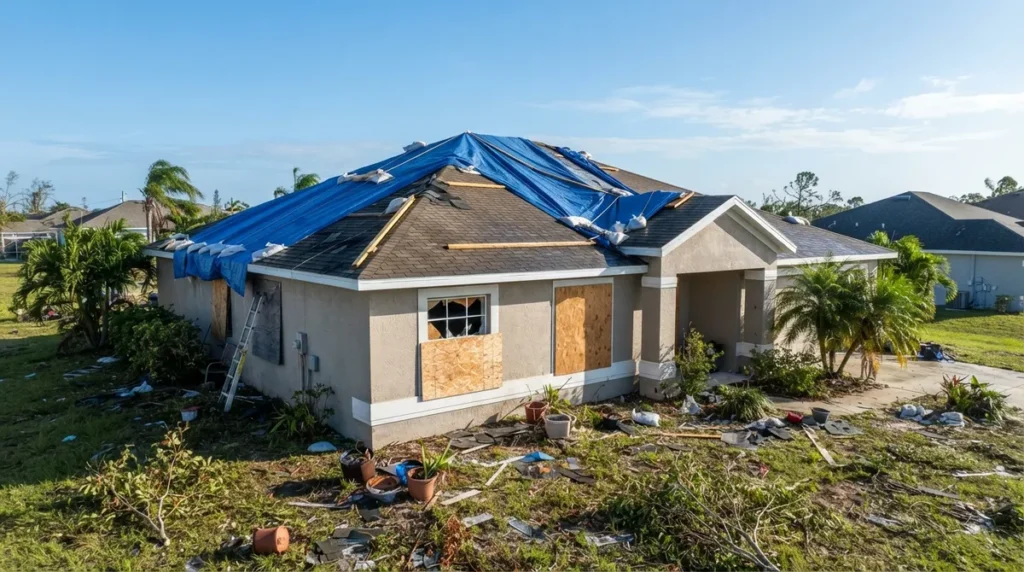
Key Takeaways
-
Florida law generally requires permits for storm damage repairs, but temporary measures like roof tarping and window boarding are often exempt—verify with your local building department since rules vary significantly by jurisdiction.
-
Four repair types may not need permits: temporary roof tarping, boarding up windows/doors, debris removal, and small non-structural repairs under local dollar thresholds, but permanent replacements almost always require permits.
-
Permit exemptions do not waive contractor licensing requirements, so verify that anyone you hire holds a valid license even for permit-exempt work to avoid fines up to $10,000.
-
Skipping required permits can result in stop-work orders, required corrective work, extra fees, resale complications, and insurance claim issues—a 5-minute call to your building department is far cheaper than these consequences.
-
Dollar thresholds for minor repairs vary widely by location (ranging from $2,500 to $7,500) and do not apply statewide, so always confirm current local rules in writing before starting work.
-
If repairs were already completed without required permits, most Florida jurisdictions allow after-the-fact permitting through documentation and inspections rather than facing enforcement action.
The wind has finally died down, the sun is out, and your roof looks like it lost a fight with a hurricane. Your first instinct? Fix it fast. We totally get it. But before you grab a hammer, there is one big question worth asking: do you need a permit?
Here is the honest answer. Storm damage does not automatically make repairs permit-free. Florida law generally requires a permit before repairing, altering, or replacing a building, and your local building department decides how that plays out. That said, storm damage repair without permit in Florida is sometimes possible for a short list of temporary and minor jobs.
In this guide, we walk through four types of repairs that may not need a permit, the limits that go with them, and the mistakes that can cost you later. Whether you are a homeowner, a general contractor, a realtor, or a solar installer, this will help you move quickly without creating a bigger problem. Let's dive in.
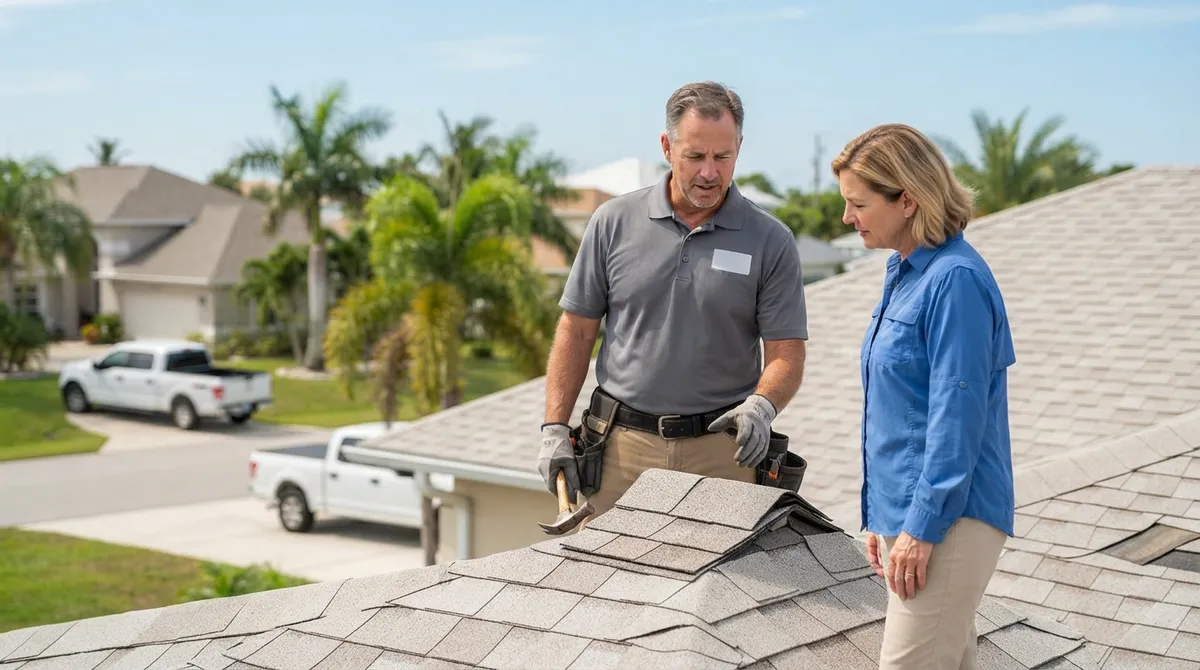
The Baseline: What Florida Law Actually Says
Before we get to the list, it helps to understand the rule that sits underneath everything. Florida Statutes §553.79(1)(a) sets the general requirement that a permit must be obtained before covered construction, alteration, repair, or demolition. The local building department enforces it.
Exemptions exist, but they are narrow. They also vary a lot from one city or county to the next. A repair that is exempt in one place may need a full permit just a few miles away.
Three factors usually decide whether a permit is needed:
- The type of work: Temporary protection is treated very differently from permanent replacement.
- The scope and value: Many jurisdictions set dollar thresholds for minor repairs.
- Structural and life-safety effects: Anything touching structure, egress, or fire resistance is much more likely to need a permit.
If you are not sure which office controls your address, the building department lookup tool is a handy starting point. Boundaries near city lines are not always obvious, so it pays to check.
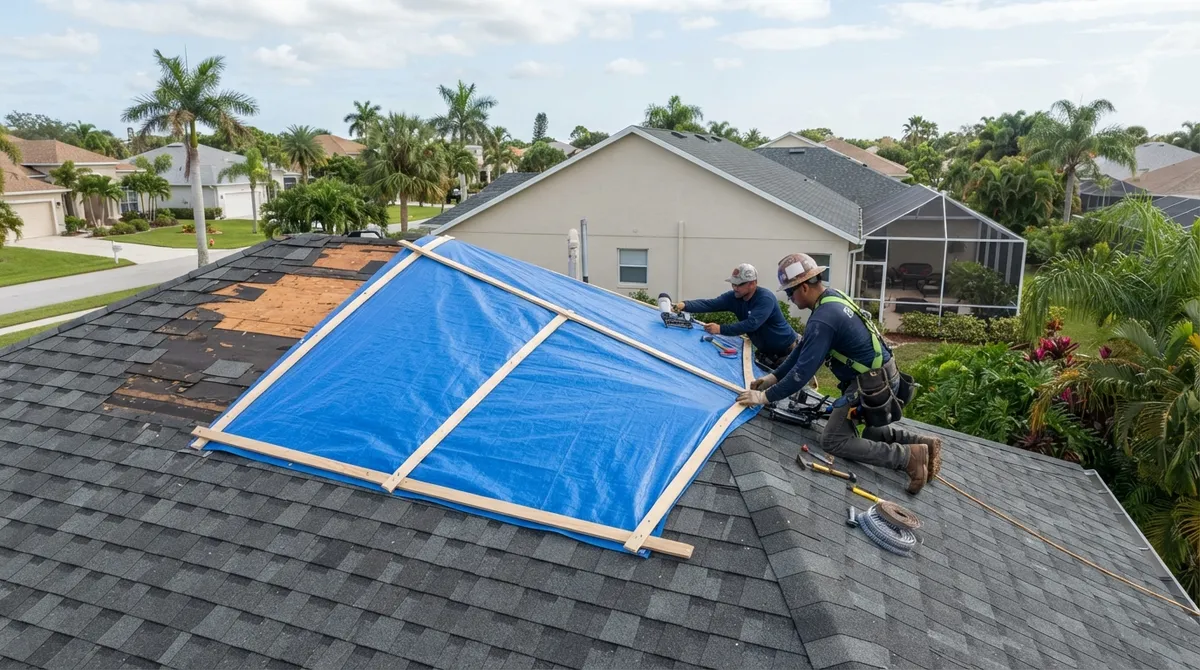
1. Temporary Roof Tarping
This is the classic first move after a storm, and it is the one most likely to be allowed without a permit. A tarp keeps rain out while you sort through insurance and schedule real repairs. Local post-storm guidance in many Florida jurisdictions treats temporary roof tarping as exempt work.
Why It Is Usually Allowed
Tarping is temporary protection, not a permanent repair. It does not alter the structure, and it helps prevent further damage. Building departments generally want you to do it, because water intrusion makes everything worse.
What to Watch Out For
- A tarp is a stopgap, not a fix. Permanent roof work is a different story.
- Document everything with dated photos before and after tarping. Your insurance adjuster will thank you.
- Keep receipts. Emergency mitigation costs are often reimbursable.
Here is the friendly warning. A permit exemption does not automatically exempt the person doing the work from contractor licensing rules. Local guidance is clear that permit exemption is not a contractor-license exemption. So be careful about who you hire, even for a simple tarp.
2. Boarding Up Windows and Doors
Plywood over a shattered window is another temporary measure that local guidance commonly lists as exempt. The goal is security and weather protection, not permanent replacement.
Here is where people get tripped up. Boarding up a window is one thing. Replacing that window is another. Replacing windows and doors commonly requires a permit, and in many areas the new products must meet impact or wind-load requirements. Lake County, for example, lists window and door replacement as work that generally needs a permit.
| Task | Typically Permit-Free? | Notes |
|---|---|---|
| Boarding up a broken window | Often yes | Temporary protection only |
| Securing a damaged door with plywood | Often yes | Verify with your local department |
| Replacing a window or door | Usually no | Commonly requires a permit and approved products |
| Installing new impact-rated openings | Usually no | Product approval and inspection typically required |
If your project involves replacement, our team handles impact window and door permits so your installer does not lose days waiting on paperwork.
3. Debris Removal and Cleanup
Hauling away fallen branches, broken fencing pieces, soggy drywall scraps, and shredded siding is typically not a permitted activity at all. Debris removal appears on local lists of work that does not need a building permit.
A few quick cautions keep this one simple:
- Demolition is different from cleanup. Pulling out debris is fine. Tearing down a damaged structure or major portion of one may require a demolition permit.
- Watch for hazards. Older homes may contain asbestos in materials like flooring, ceiling texture, or insulation. If you suspect it, stop and get it tested first. Our team can point you to asbestos and mold support.
- Mold moves fast. Wet materials in Florida's humidity can grow mold within days, so move quickly on drying and removal.
Take photos of the damage before you haul anything away. Those pictures are valuable for insurance and for any future permit application that documents the storm-related scope.
4. Small, Non-Structural Minor Repairs
This is the trickiest category, and it is where thresholds matter most. Some jurisdictions exempt small repairs that stay under a certain dollar value and do not affect structure, egress, fire resistance, or wall ratings. The key word is some. There is no statewide threshold.
Here are real examples from local guidance, shown only to illustrate how much the rules vary:
| Jurisdiction | Example Exemption | Key Conditions |
|---|---|---|
| St. Lucie County | Certain minor repairs valued below $2,500 | Must not affect structural integrity, egress, fire resistance, or wall ratings |
| Hillsborough County | Nonstructural work under $7,500 for qualifying single-family homes | Eligibility conditions and an exemption application apply |
| Miami-Dade County | Limited roof-covering repair by a licensed roofer, up to two roofing squares and $2,000 in labor and materials | Licensed roofing contractor required |
| Lake County | Roof shingle replacement of 100 square feet (one square) or less | Local conditions and current rules apply |
These numbers are local examples, not statewide rules. They can also change, so always confirm current applicability with your building department before you start. Do not assume that what worked for your neighbor in the next county will work for you.
What Does Not Qualify
Even in friendly jurisdictions, certain work almost always needs a permit:
- Full roof replacement or large roof repairs. Roofing is one of the most commonly permitted post-storm jobs. See our roof permit services for how we handle it.
- Structural repairs. Damaged trusses, rafters, framing, or load-bearing walls need engineering review and inspections.
- Electrical, plumbing, and mechanical work. Water-damaged panels, rewiring, and replaced HVAC systems usually need permits and licensed trades.
- Replacement of windows and doors. As covered above.
What About Emergency Procedures?
Here is a point many people miss. Some counties have emergency procedures after a declared disaster. Hillsborough County guidance, for instance, describes a process for certain disaster-related emergency repairs, including situations where an application may be postponed until after work begins.
This is not a free pass. Emergency procedures are local and conditional. They usually come with eligibility rules, documentation requirements, and deadlines. If you rely on one without confirming the details, you could end up with an unpermitted repair and a headache.
Before you lean on any emergency process, do these things first:
- Call or check the website of your local building department.
- Confirm that the emergency procedure applies to your type of repair.
- Ask about deadlines for filing after the work is done.
- Keep photos, invoices, and written notes about the storm-related scope.
What Happens If You Skip a Required Permit?
Let's be real for a moment, because this is the part nobody likes to talk about. Doing permit-required work without a permit can lead to some frustrating outcomes. Florida Statutes §553.79 authorizes enforcement by the local agency, and consequences depend on the jurisdiction and the facts.
Common results include:
- Stop-work orders that freeze your project mid-repair.
- Required inspections or corrective work, sometimes meaning you open up finished walls or ceilings.
- Extra fees on top of the original permit cost.
- Trouble selling or refinancing. Open or missing permits can surface during closing and delay or derail a sale.
- Insurance complications. Unpermitted work can create questions during future claims.
There is also the contractor side. Florida Statutes §§489.13 and 489.127 address unlicensed contracting. Administrative fines can reach up to $10,000 in specified circumstances, among other remedies. That concerns unlicensed contracting specifically, not every instance of unpermitted work. Still, it is a strong reason to verify a contractor's license, even for work that is permit-exempt.
Already Did the Work? There Is a Path Forward
If repairs were completed without a required permit, do not panic. Many Florida jurisdictions allow you to bring the work into compliance after the fact. It usually involves documentation, sometimes engineering, and inspections. Our after-the-fact and expired permit service exists for exactly this situation, and our guide on how to legalize unpermitted work in Florida walks through the process step by step.
Already received a notice? Our code compliance violation support can help you respond, and our urgent permit rescue team handles stop-work orders and time-sensitive problems.
How to Check Your Local Rules in 5 Steps
Since the rules vary so much, a quick bit of homework goes a long way. Here is a simple routine that works for homeowners and contractors alike.
- Identify the authority having jurisdiction. This could be a city or the county, and it is not always obvious near boundaries. Use the building department lookup.
- Look for post-storm guidance. After major storms, many departments publish lists of exempt work and emergency procedures.
- Check dollar thresholds and conditions. Minor-repair exemptions often hinge on value and on not affecting structure or life safety.
- Verify contractor licensing. Confirm the license status of anyone you hire.
- Get it in writing. If a building official tells you something is exempt, ask for confirmation by email or on the department's website.
Who Should Care Most About This?
Different readers feel this issue in different ways. Here is a quick snapshot.
| Reader | Biggest Risk | Smart Move |
|---|---|---|
| Homeowners | Insurance issues and delayed resale | Document everything and confirm exemptions locally |
| General contractors | Stop-work orders and liability | Verify scope against local rules before mobilizing crews |
| Solar companies | Storm-damaged roofs blocking installs or reinstalls | Confirm roof repair permits are closed before solar work |
| Realtors and investors | Open permits surfacing at closing | Run an open permit search early |
If you work with roofers, our roofing contractor resources and restoration company support were built for the post-storm rush.
How a Permitting Partner Can Help
You do not have to figure this out alone. A Florida permitting service can identify the right jurisdiction, check current local exemptions, prepare and submit applications, coordinate plan review and inspections, and help document storm-related scope. To be clear, no one can guarantee an exemption or override a building official's decision.
At 1 Contractor Solutions, we act as Florida's outsourced permitting department. Our in-house drafting and engineering team seals the work, so when a reviewer flags something, we fix it quickly. We work across all 67 Florida counties, from Hillsborough County to Lee County to Miami-Dade County. Curious how others feel about working with us? See what customers say on Google when you visit us on Google — 1 Contractor Solutions.
We also love sharing helpful updates, so feel free to follow us on LinkedIn and follow us on Facebook. For the statutory baseline, you can also read Florida Statute 553.79 directly.
The Bottom Line
Storm damage repair without permit in Florida is possible only in limited situations. Temporary tarping, boarding up, debris removal, and some small non-structural repairs may be exempt, depending on where you live. Roofing, structural work, electrical, plumbing, and window or door replacement usually need a permit.
When in doubt, ask first. A five-minute call to your building department is far cheaper than a stop-work order. And if a permit is needed, a good partner makes the process much smoother.
Ready to get your storm repairs moving the right way? Reach out today to get a free quote, and let us handle the permit while you focus on getting life back to normal.
FAQs
Do I need a permit to repair storm damage in Florida?
In most cases, yes. Florida law generally requires a permit before repairing, altering, or replacing a building, and storm damage does not automatically change that. A few temporary and minor repairs may be exempt, so check with your local building department first.
Can I tarp my roof or board up windows without a permit after a hurricane?
Often, yes. Temporary tarping and boarding up are commonly listed as exempt work in local post-storm guidance. Just remember that permanent roof repair or window replacement usually needs a permit, and permit exemption does not waive contractor licensing rules.
What happens if I repair storm damage without a permit in Florida?
You could face stop-work orders, required inspections or corrective work, extra fees, and trouble when selling or refinancing. The exact consequences depend on your jurisdiction, but fixing it early is almost always easier and cheaper than waiting.
Can I get a permit after storm repairs are already done?
Often you can. Many Florida jurisdictions allow after-the-fact permitting, which typically involves documentation, possible engineering, and inspections. A permitting professional can help you pursue it without guessing your way through the process.
How do I find out which building department handles my storm repair permit?
Start by identifying whether your address falls under a city or county authority, since boundaries are not always obvious. A building department lookup tool or a permitting service can confirm the right office quickly so you file in the right place the first time.
We do this work every day across all 67 Florida counties. Call (866) 314-6931 and we will tell you what your situation actually requires — including when you do not need us.
Related services
Permit Facilitation & Filing
You have a crew scheduled, a client asking for dates, and a permit sitting somewhere in a queue you cannot see. We file it, w…
See the servicePlan Review Coordination
A permit in plan review is not one queue. On a commercial project it can be six queues, each with its own reviewer, its own c…
See the serviceReady to get your permit moving?
One call tells you which jurisdiction controls your project, what it will take, and what it will cost. Most of the time we can scope it on the phone.