
Blog
How to Get a Hurricane Damage Permit in Bradenton
Learn how to get a hurricane damage permit in Bradenton: confirm jurisdiction, know what needs permits, handle the 50% rule, and avoid delays.
Key Takeaways
-
Confirm first whether your property is in the City of Bradenton or unincorporated Manatee County, since the permitting office differs and a Bradenton mailing address doesn't guarantee city jurisdiction.
-
Storm damage does not make permanent repairs permit-exempt: roofing, windows/doors, electrical, plumbing, framing, siding, decks, and fences generally require permits.
-
Removing wet materials to prevent mold may proceed without a permit in described circumstances, but replacing most of those materials requires a permit, so verify before rebuilding.
-
If your flood-zone home is repaired at a cost of 50% or more of its market value, it counts as substantially damaged and may need to meet current floodplain rules, such as elevation.
-
Incomplete applications are the top cause of delays, so prepare a written scope, contractor details, dated photos, estimates, and any elevation certificate or sealed plans before submitting.
-
Do not cover work before inspections; drywall over uninspected framing or wiring can force costly tear-out. Manatee County targets same-day to three-day review for complete applications, but these are not guarantees.
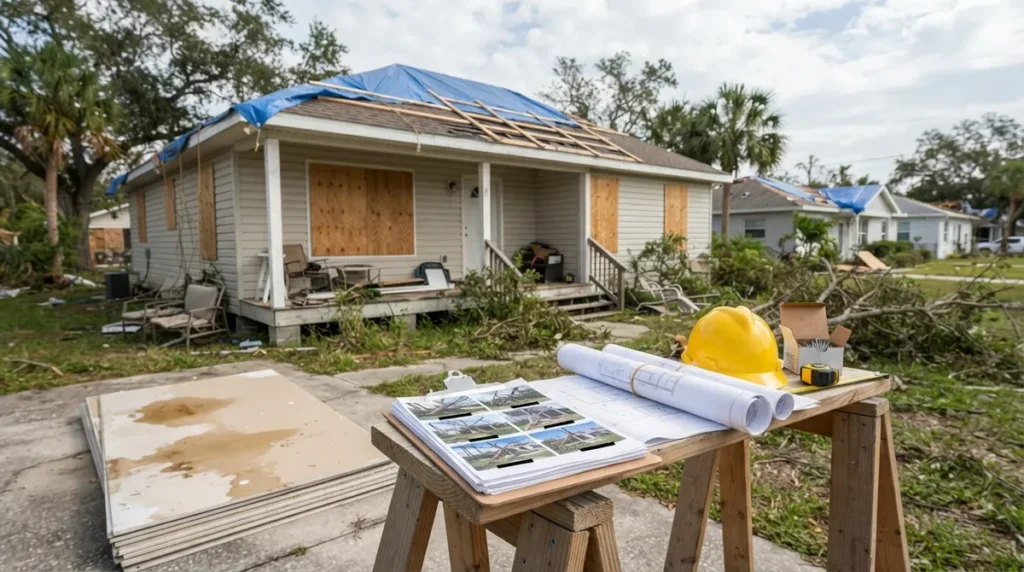
The wind has died down, the sky is blue again, and now you are standing in your Bradenton yard looking at a missing shingle field, a soaked living room, or a fence lying flat. First of all, take a breath. You are not the first Manatee County neighbor to be here, and there is a clear path forward.
Here is the part that trips people up: getting a hurricane damage permit in Bradenton is not one single process. Whether you deal with the City of Bradenton or with unincorporated Manatee County depends on where your property sits. The repair scope, and whether you are in a flood zone, change the paperwork too.
This friendly guide walks you through the whole thing in plain English. You will learn how to confirm your jurisdiction, which repairs need permits, what the 50% rule means, what documents to gather, and how to keep your project moving. Whether you are a homeowner, a contractor, a roofer, or a realtor helping a client, you will leave with a game plan.

Step 1: Confirm Who Actually Issues Your Permit
"Bradenton" can mean two different things on a permit application. Addresses near city lines are famously confusing, and a mailing address that says Bradenton does not guarantee the City of Bradenton handles your permit.
- City of Bradenton: Handled by Planning and Community Development. The City's storm guidance points applicants to permitting@bradentonfl.gov or 941-932-9400.
- Unincorporated Manatee County: Handled by Manatee County Development Services at 941-748-4501, extension 3800.
Before you do anything else, confirm the right office. Our building department lookup tool can help, and our local page for Bradenton explains how permitting works in the area. For county-level details, see our Manatee County page.
Step 2: Figure Out Which Repairs Need a Permit
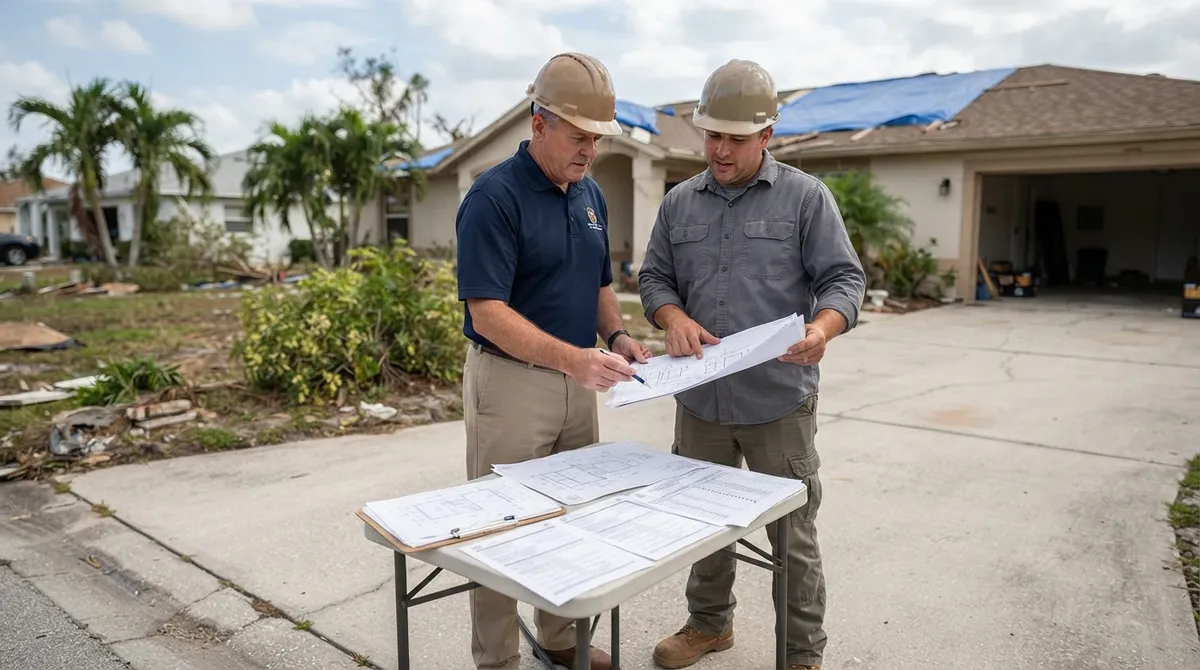
It is tempting to assume that storm damage means the rules are relaxed. Florida law generally requires a permit before regulated building work, including construction, alteration, repair, or demolition. Storm damage does not automatically make permanent repairs permit-exempt, so always confirm your specific scope with the local building department.
Manatee County's post-storm planning lists common permit-triggering repairs. Here is a quick reference:
| Repair Type | Permit Typically Needed? | Notes |
|---|---|---|
| Roofing (replacement or major repair) | Yes | See our roof permits service |
| Windows and doors | Yes | Impact products may need product approval documentation |
| Electrical, plumbing, mechanical | Yes | Separate trade permits are common |
| Drywall, framing, stucco, siding | Yes | Replacement generally triggers a permit |
| Decks, sheds, pool cages, fences | Yes | Many owners overlook these |
| Demolition | Yes | See demolition permits |
| Removing wet materials to prevent mold | Often no (confirm locally) | City guidance allows this in described circumstances |
| Minor roof repair (100 sq ft or less) | May not be required | City example; verify current applicability |
That last pair of rows deserves a gentle caution. Exceptions exist, but they are narrow and local guidance changes. A quick phone call before you start can save you a very unpleasant conversation later.
What About Tearing Out Wet Drywall?
Good news here. The City of Bradenton's post-storm FAQ says removing wet materials to prevent mold may proceed without a permit in the circumstances described. Replacing most of those materials, though, requires a permit. So demo fast to protect your home, but hold off on rebuilding until you have confirmed the paperwork.
While you demo, take lots of photos. Those pictures matter for permits, insurance, and any flood review. If mold is already a concern, our environmental, asbestos, and mold service page covers what to expect.
Step 3: Check Your Flood Zone and the 50% Rule
This is the step that surprises the most people. If your property is in a flood zone and your home took flood damage, the building department may need to run a substantial-damage review before they issue permits for repairs.
What Is the 50% Substantial-Damage Rule?
In simple terms, if the cost to repair the damage equals or exceeds 50% of the structure's market value, the building is considered substantially damaged. That triggers a requirement to bring the structure into compliance with current floodplain rules, which can include elevating the home or other upgrades.
A few details worth knowing:
- The City of Bradenton FAQ describes a 50% threshold based on repair cost versus building value.
- The City also describes a one-year look-back period for substantial-improvement calculations, so recent renovations can count.
- Manatee County guidance explains that substantial damage can make later repairs subject to substantial-improvement requirements.
- Ask the floodplain office how it calculates the threshold and what documentation it requires. Methods differ, and you want your numbers to match theirs.
Want a deeper dive? Our article on the FEMA 50 percent rule in Florida breaks it down, and flood zone permitting steps can help you plan.
Step 4: Gather Your Documents Before You Apply
A complete application is the single best way to avoid delays. Incomplete submittals are the number one reason storm-repair permits sit in limbo. Here is a handy checklist, in the order most people need it:
- Proof of ownership and property details: parcel number, address, and confirmation of jurisdiction.
- Written scope of work: exactly what is being repaired or replaced, room by room or component by component.
- Contractor details: license information and contact info, or owner-builder paperwork if applicable.
- Damage photos: dated, clear, and showing before and during conditions.
- Estimates or contracts: these support the cost side of any substantial-damage review.
- Flood-zone documents (if applicable): elevation certificate, base flood elevation information, or a substantial-damage assessment.
- Plans or engineer letters when needed: structural repairs often require sealed drawings.
Flood-zone properties often need a FEMA packet. The City's FAQ notes a possible exception where the living level was built in compliance with floodplain rules and is supported by an Elevation Certificate. Manatee County similarly advises that elevation certificates, base flood elevation information, or substantial-damage assessments may be required.
If your repairs touch structure, such as rafters, trusses, wall framing, or foundations, sealed plans are usually part of the picture. Our team prepares structural engineering documents and engineer letters in house, so a reviewer comment does not turn into a week of phone tag.
Step 5: Submit, Track, and Respond to Reviewers
Once your documents are ready, submit through the correct jurisdiction's official channel. You can also look up existing records with the Manatee County permit records search, which is handy for checking status or verifying what is already on file for a property.
How Long Does It Take?
Timing varies, so set expectations kindly with yourself. Manatee County's post-storm permitting plan states that, when a complete application is submitted, certain listed essential repair permits may be reviewed the same day. Other essential repairs may take one to three business days. These are plan targets, not guarantees, and they assume complete applications.
| Scenario | Typical Pace (Plan Targets) | What Helps |
|---|---|---|
| Like-for-like essential storm repair, complete application | Same day for certain listed permits | Clear scope, photos, contractor info |
| Other essential repairs | 1 to 3 business days | Complete submittal on the first try |
| Flood-zone or substantial-damage review | Longer; varies | Elevation certificate, cost estimates ready |
| Structural changes needing plans | Varies with reviewer comments | Sealed drawings prepared up front |
If a reviewer sends comments, respond promptly and completely. Our guide on why building permits get rejected covers the most common culprits, and our revisions and resubmittals service exists for exactly this moment.
Step 6: Schedule Inspections Before You Close Things Up
Here is a lesson learned the hard way by many homeowners: do not cover the work before it is inspected. Drywall over uninspected framing or wiring can mean tearing it back out. Schedule required inspections at the right stages, and keep your approved plans and permit card handy on site.
If you want faster inspection pathways, ask whether a private provider approach makes sense for your project. We are a licensed private provider and can often perform plan review and inspections without waiting in the county queue.
What If Repairs Were Already Done Without a Permit?
It happens, especially in the chaos after a storm. A well-meaning contractor starts right away, or a neighbor-recommended crew skips the paperwork. If that is you, do not panic. There are ways to fix it, and fixing it sooner is much cheaper than getting caught later.
Start with our guides on hurricane repair permit mistakes and after-the-fact permits. Unpermitted work can also complicate insurance and closings, as explained in expired permits and insurance claims.
Tips for Each Type of Reader
For Homeowners
- Photograph everything before touching it.
- Ask your contractor who is pulling the permit, and get it in writing.
- Keep copies of every estimate and receipt.
For Contractors and Roofers
- Verify jurisdiction on every address, since city lines are tricky.
- Batch similar jobs, and consider our Roof Permit Partnership Program for volume work.
- Confirm municipality registration requirements; see Florida contractor municipality registration.
For Realtors and Investors
- Pull open permit records before you list or buy using our open permit search.
- Flag any storm-damaged property for possible substantial-damage review.
A Quick Word About Fee Waivers
You may hear neighbors mention fee waivers. Manatee County did waive building permit fees for residential and commercial properties affected by Hurricanes Debby, Helene, and Milton through March 1, 2025. That was a time-limited historical measure, so do not assume it applies now. Always ask the permitting office about current fees.
Why Many Bradenton Owners Hand This Off
Permitting after a hurricane is a lot to juggle while you are also dealing with insurance adjusters, contractors, and a disrupted household. That is where an outsourced permitting department earns its keep. At 1 Contractor Solutions, we confirm the controlling jurisdiction, prepare or review plans, file the application, track it, work reviewer comments, and carry it through approval and closeout. We respond within 30 minutes, day or night, and se habla español.
You can also see what neighbors say by visiting our 1 Contractor Solutions location on Google, and you are welcome to follow us on LinkedIn or follow us on Facebook for Florida permitting updates.
Your Bradenton Hurricane Permit Game Plan
Let us pull it all together. Confirm whether you are in the City of Bradenton or unincorporated Manatee County. Identify which repairs trigger permits, and remember that wet-material removal is treated differently than rebuilding. Check your flood zone and the 50% rule, gather your documents, submit a complete application, and schedule inspections before covering work.
Recovery is a marathon, and the paperwork is one part you do not have to run alone. If you would like a hand getting your storm repairs approved quickly and correctly, get a free quote today and let our team take the permitting off your plate so you can get back home.
FAQs
Do I need a permit to repair hurricane damage in Bradenton, Florida?
In most cases, yes. Roofing, structural, electrical, plumbing, mechanical, window and door, drywall, stucco, and similar permanent repairs generally require permits. Some narrow exceptions exist, like removing wet materials to prevent mold, so check with your local office before you start.
How do I know if I'm in the City of Bradenton or unincorporated Manatee County?
Your mailing address alone is not a reliable clue, since city limits and county lines can be tricky. Use a building department lookup or call the City of Bradenton at 941-932-9400 or Manatee County Development Services at 941-748-4501, extension 3800, to confirm who handles your parcel.
What is the 50% substantial-damage rule?
If the cost to repair a flood-damaged building equals or exceeds 50% of its market value, it is considered substantially damaged and must typically meet current floodplain requirements. The City of Bradenton also describes a one-year look-back for improvements, so ask the floodplain office how they calculate it.
How long do storm-repair permits take in Manatee County?
Manatee County's post-storm plan targets same-day review for certain listed essential repairs and one to three business days for others, as long as the application is complete. These are targets rather than guarantees, and flood-zone or structural reviews can take longer.
What documents do I need for a flood-damage repair permit?
Plan on a written scope of work, contractor details, damage photos, repair estimates, and any floodplain paperwork such as an elevation certificate or substantial-damage assessment. Structural repairs may also need sealed plans or an engineer letter.
We do this work every day across all 67 Florida counties. Call (866) 314-6931 and we will tell you what your situation actually requires — including when you do not need us.
Related services
Permit Facilitation & Filing
You have a crew scheduled, a client asking for dates, and a permit sitting somewhere in a queue you cannot see. We file it, w…
See the servicePlan Review Coordination
A permit in plan review is not one queue. On a commercial project it can be six queues, each with its own reviewer, its own c…
See the serviceReady to get your permit moving?
One call tells you which jurisdiction controls your project, what it will take, and what it will cost. Most of the time we can scope it on the phone.