
Blog
5 Fixes When a Mortgage Stalls Over Unpermitted Work FL
Discover 5 proven ways to resolve unpermitted work delaying a Florida mortgage closing, from permit research to legalization steps.
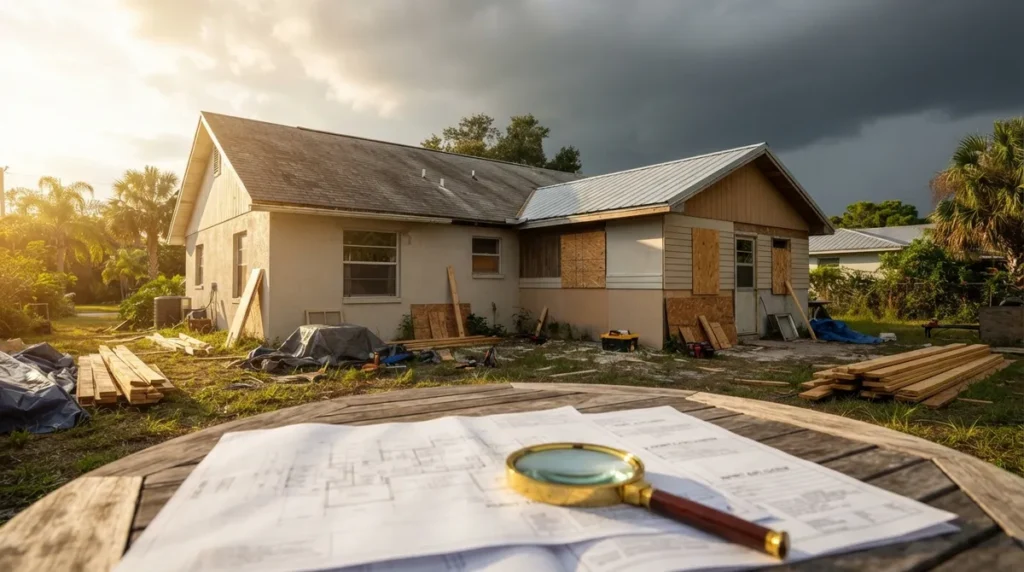
Key Takeaways
-
Florida Statute §553.79 requires permits for virtually all construction work, and unpermitted work discovered during underwriting can halt mortgages; lenders, appraisers, and title companies all flag mismatches between physical property and official records as red flags.
-
Lender policies on unpermitted work vary significantly by loan program and underwriter—outcomes range from requiring full legalization before closing to approving with escrow holdbacks; get written requirements upfront from your lender, title company, and insurer.
-
After-the-fact permits are the most common resolution and typically require as-built drawings, structural verification, wall openings for inspection, code corrections, and final inspection; timelines range from weeks for simple work to months for full additions depending on the county.
-
Identify your local building department's jurisdiction first using permit lookup tools, then pull the full permit history—this research step prevents guessing and often saves weeks by revealing exactly what's missing or never finalized.
-
Unpermitted work performed by unlicensed contractors adds enforcement complexity; verify contractor licensing through DBPR and ensure any legalization involves properly licensed, registered professionals to satisfy building departments and lenders.
-
Structural changes and life-safety systems (electrical, plumbing, additions) draw far more lender scrutiny than cosmetic updates; communicate progress in writing early and continuously rather than waiting until closing to disclose legalization efforts.
Picture this: you're 48 hours from closing on your dream home, or you're a contractor waiting to get paid on your last draw, and suddenly the lender's underwriter flags an old screened-in porch or a garage conversion that was never permitted. Deep breath — you are not alone, and this is more common than you'd think across the Sunshine State. A mortgage held up by unpermitted work in Florida is one of the most frustrating (and fixable) speed bumps in real estate and construction, and understanding exactly why it happens is the first step toward getting your closing back on track.
Whether you're a homeowner who inherited a mystery addition, a realtor trying to save a deal, or a general contractor juggling multiple projects, this guide walks you through five practical, proven paths to resolving unpermitted work so your mortgage (or your client's) can move forward. We'll also cover the Florida statutes involved, what lenders actually look for, and how a permitting partner like 1 Contractor Solutions can shortcut months of frustration into weeks. Let's get your closing table moment back on schedule.
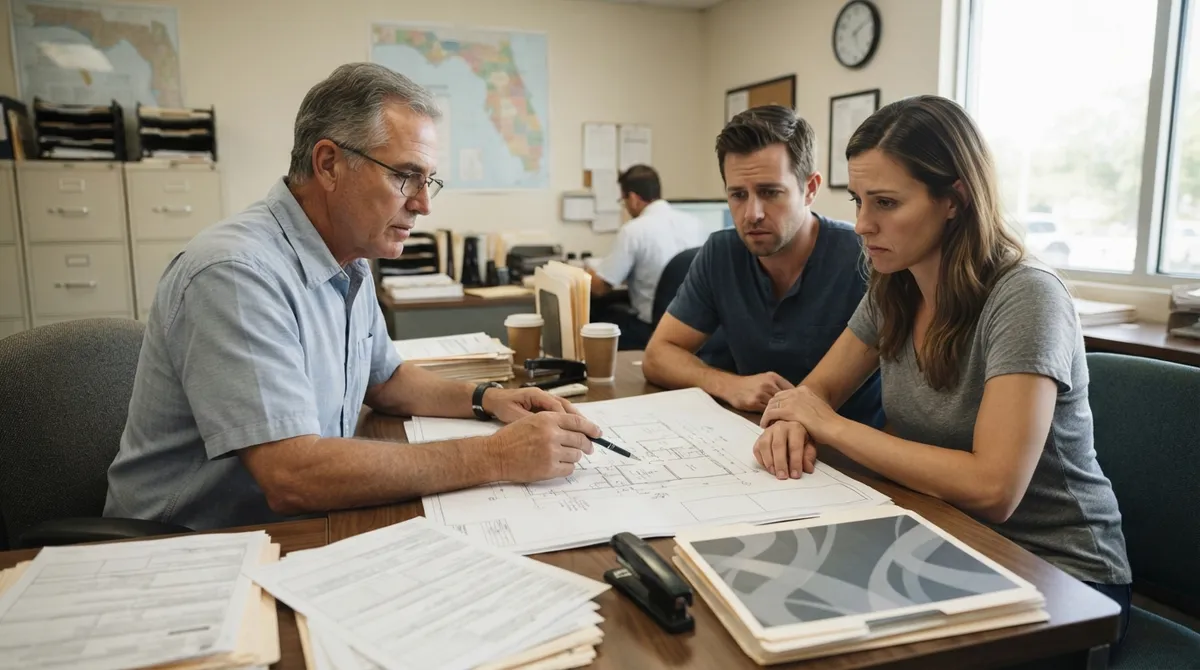
Why Unpermitted Work Stops Florida Mortgages in Their Tracks
Under Florida Statutes §553.79, virtually all construction, alteration, repair, or demolition work requires a permit from the local building department before work begins. When that step gets skipped — often by a previous owner, a well-meaning DIYer, or a contractor cutting corners — it creates a paper trail problem that surfaces later, usually at the worst possible time: during underwriting.
Lenders, appraisers, title companies, and insurers all have a stake in making sure a property's physical condition matches its official records. If your tax rolls show a two-bedroom home but there's a permitted-looking third bedroom addition with no paperwork, that's a red flag. Appraisers may reduce value or refuse to complete the appraisal. Title companies may flag it as a title risk. Insurers may deny coverage or limit it. And underwriters may simply pause the file until it's resolved.
It's Not One-Size-Fits-All Across Lenders
Here's something that surprises a lot of first-time sellers and buyers: there's no single Florida-wide rule for how lenders handle unpermitted work. Policies vary by loan program, lender, and even the specific underwriter reviewing your file. Some possible outcomes include:
- Requiring the work to be fully legalized and finaled before closing
- Approving the loan with an escrow holdback for repairs (where permitted by the loan program)
- Requesting documentation proving the work is safe, even without a full permit
- Declining the loan altogether until the issue is resolved
Because outcomes vary so much, the smartest move is always to get ahead of it — ideally before you even list the property or apply for financing.

5 Ways to Get Your Florida Mortgage Unstuck
1. Pull the Property's Full Permit History First
Before you can fix anything, you need to know exactly what's missing. Every Florida building department maintains permit and inspection records, though the format and accessibility vary wildly by county and city. Start by identifying which jurisdiction actually has authority over the property — this isn't always obvious, especially near city boundaries or in unincorporated areas.
Our Building Department Lookup tool and Open Permit Search tool can help you quickly figure out which authority governs the address and whether there are any open, expired, or missing permits tied to it. This research step alone often saves weeks because it tells you exactly what you're dealing with instead of guessing.
2. Apply for an After-the-Fact or Retroactive Permit
Once you know what's missing, the most common resolution is applying for what many Florida jurisdictions call an "after-the-fact" permit, sometimes labeled a retroactive or violation permit depending on the county. This process legalizes existing construction by having it reviewed against current or applicable code, often requiring:
- As-built drawings showing exactly what was constructed
- Engineering or structural verification for load-bearing changes
- Opening up walls or ceilings for inspection of concealed electrical, plumbing, or structural work
- Correction of any code deficiencies discovered during review
- Final inspection and closeout documentation
This is exactly the kind of work our team handles daily. Because our drafting and engineering departments are in-house, we can prepare as-built drawings and engineer letters quickly, without waiting on an outside consultant. If you want a deeper dive into this exact process, our guide on how to legalize unpermitted work in Florida walks through it step by step.
3. Close Out Permits That Were Issued But Never Finaled
Here's a scenario that trips up a lot of sellers: a permit was pulled years ago, but the final inspection never happened. From the lender's perspective, this can look just as problematic as work that was never permitted at all. The fix involves pulling the inspection record, identifying which inspections failed or were never scheduled, completing any outstanding corrections, and requesting the final sign-off.
If this describes your situation, our article on how to close an expired permit in Florida breaks down the exact steps county by county, since procedures and terminology differ from Tampa to Miami to Orlando.
4. Verify Licensing and Address Enforcement Risk
If the original work was performed by an unlicensed contractor, Florida Statutes §489 and local enforcement rules can complicate the legalization process further. Local building departments may withhold final approval or pursue additional enforcement steps until the work is verified by a licensed professional. If you suspect unlicensed work was involved, the Florida Department of Business and Professional Regulation maintains a hotline (866-532-1440) and a public complaint search for unlicensed activity.
This is also where working with a properly registered team matters. Our DBPR licensee processes and municipality registration services ensure that any legalization work moving forward is tied to properly licensed, registered professionals — which building departments and lenders both want to see.
5. Loop In Your Lender, Title Company, and Insurer Early — In Writing
This step gets skipped more often than it should. Once you've started the legalization process, don't wait until the very end to tell the parties involved. Get written requirements upfront from your lender, title company, and insurer about exactly what documentation they need to clear the file. This might include:
- Final inspection approval or Certificate of Completion
- A Certificate of Occupancy or Certificate of Use, depending on the scope of work
- Updated as-built drawings matching the permitted condition
- An engineer's letter confirming structural adequacy
- Proof of licensed contractor involvement
Insurance is a related but separate hurdle. Insurers may request permit documentation, a 4-point inspection, or evidence that renovations meet current code — and unresolved permitting issues can affect eligibility, premiums, or claims down the road. For more on how these two systems intersect, see our piece on expired permits and insurance claims in Florida.
Common Scope-of-Work Categories and Lender Scrutiny Levels
Not all unpermitted work is treated equally. Structural changes and life-safety systems tend to draw far more attention than cosmetic updates. Here's a general breakdown to help set expectations:
| Type of Work | Typical Lender Scrutiny | Common Requirement |
|---|---|---|
| Cosmetic updates (paint, flooring, cabinets) | Low | Rarely triggers a hold |
| Additions or room conversions | High | As-built drawings, structural review, final inspection |
| Electrical or plumbing changes | High | Opening walls for inspection, licensed contractor verification |
| Roof replacement or repair | Moderate to High | Roof permit closeout, wind-mitigation documentation |
| Pool, spa, or pool cage installation | Moderate | Permit history check, structural/electrical verification |
| Garage or carport conversion | High | Zoning review, occupancy classification, permit legalization |
What Each Audience Should Watch For
For Real Estate Professionals and Investors
Realtors and investors often discover unpermitted work during due diligence, sometimes just days before closing. Our realtor and closing support service exists specifically for this moment — we can quickly research permit history, coordinate legalization, and provide the documentation buyers, sellers, and lenders all need to move forward. If you handle multiple transactions across counties like Miami-Dade, Broward, or Pinellas, having a permitting partner on speed dial can be the difference between a closing that happens on time and one that falls apart.
For General Contractors
If you inherited a job where a previous contractor skipped permits, or you discover mid-renovation that prior work was never documented, don't let it stall your current project. Our team can prepare sealed drawings and coordinate directly with the building department to get things back on track. Learn more about our services built specifically for general contractors.
For Solar Companies
Solar installations often uncover unrelated unpermitted work on the roof or electrical panel during the permitting process. Since solar contractors need fast, code-compliant approvals to keep installation schedules on track, resolving these legacy issues quickly matters. We handle structural and electrical documentation so your project doesn't get stuck behind someone else's paperwork gap.
For Homeowners
If you're a homeowner trying to refinance, sell, or simply sleep better at night knowing your addition is legit, don't panic. Most unpermitted work situations are resolvable with the right documentation and a cooperative building department. Our homeowner services are designed to walk you through this without the jargon overload.
How Long Does This Actually Take?
Timelines vary significantly by jurisdiction, scope of work, and whether corrections are needed. A minor after-the-fact permit for something like a water heater replacement might close out in a couple of weeks. A full addition legalization involving structural review, multiple inspections, and corrections could take a few months. Since Florida's permitting process is locally administered, county and city differences matter enormously — what takes three weeks in one municipality might take three months in another.
For a broader sense of expected timelines across the state, our resource on how long a building permit takes in Florida is a helpful starting point, even though after-the-fact permits often follow a slightly different track than new construction.
Steps to Take Right Now if You're Facing a Mortgage Delay
- Identify the correct local building department with jurisdiction over the property
- Request the full permit and inspection history for the address
- Determine whether the work needs an after-the-fact permit or simply a final inspection on an existing permit
- Engage a licensed professional or permitting service to prepare as-built drawings and coordinate with the jurisdiction
- Communicate proactively and in writing with your lender, title company, and insurer about your timeline and progress
This is precisely the kind of urgent, time-sensitive work our urgent permit rescue service was built for — when a closing is on the line and you need someone who already knows how each Florida building department operates.
Why Local Expertise Matters So Much in Florida Permitting
With 67 counties and hundreds of municipalities, Florida's permitting landscape is anything but uniform. A process that works smoothly in Tampa might look completely different in Bradenton or St. Petersburg. Having filed in more than 400 municipalities across the state, we've learned that knowing the right contact person and the right terminology at each building department often saves weeks compared to going in cold.
Curious what other Florida homeowners and professionals have experienced working with a permitting team? You can visit us on Google — 1 Contractor Solutions to see real feedback, or check out our reviews page directly. We also share updates and helpful tips if you follow us on LinkedIn or follow us on Facebook.
A Final Word of Encouragement
If your mortgage is currently held up by unpermitted work in Florida, take a breath — this is genuinely one of the more common hiccups in Florida real estate, and it almost always has a resolution path. It might take some patience, a little paperwork, and coordination between a few different parties, but you are absolutely not the first person to navigate this, and you won't be the last. The key is acting quickly, documenting everything, and working with people who understand exactly how your local building department operates.
Whether you're trying to save a closing this week or you're proactively getting ahead of a future sale, our team is ready to help you sort out the permit history, prepare the right drawings, and carry the file through to final approval. Ready to get moving? Request your free quote today and let's get your Florida property's paperwork matching reality — so your mortgage, your closing, or your next project can move forward with confidence.
FAQs
Will a Florida mortgage lender approve a house with unpermitted work?
It really depends on the lender, loan program, and how significant the unpermitted work is! Some lenders may approve with conditions like an escrow holdback, while others will want the work fully legalized first. The best move is always to ask your lender directly and get their requirements in writing so there are no surprises.
How do I legalize unpermitted work after the fact in Florida?
You'll typically need to contact the local building department, pull the property's permit history, and apply for an after-the-fact (or retroactive) permit. This usually involves as-built drawings, possible structural verification, and a final inspection — and yes, it's very doable with the right help!
How long does it take to get a retroactive permit in Florida?
Timelines vary quite a bit depending on your county and the scope of work — a simple case might close in a couple of weeks, while a full addition could take a few months. The good news is that having your paperwork organized ahead of time can genuinely speed things up.
Can an escrow holdback fix an unpermitted-work mortgage issue in Florida?
Sometimes, yes! Depending on the loan program and lender policy, an escrow holdback can allow closing to proceed while repairs or permitting are completed afterward. It's worth asking your lender early on whether this option is available for your situation.
What happens if a Florida building permit was issued but never finaled?
This can create a similar headache to work that was never permitted at all, since the file technically remains open. The fix is to review the inspection record, complete any missing corrections, and request a final inspection — and once that's done, you're in great shape!
We do this work every day across all 67 Florida counties. Call (866) 314-6931 and we will tell you what your situation actually requires — including when you do not need us.
Related services
Permit Facilitation & Filing
You have a crew scheduled, a client asking for dates, and a permit sitting somewhere in a queue you cannot see. We file it, w…
See the servicePlan Review Coordination
A permit in plan review is not one queue. On a commercial project it can be six queues, each with its own reviewer, its own c…
See the serviceReady to get your permit moving?
One call tells you which jurisdiction controls your project, what it will take, and what it will cost. Most of the time we can scope it on the phone.