
Blog
How to Choose a Flat-Fee After-the-Fact Permit Pro in Florida
Wondering who to hire for flat-fee after-the-fact permitting in Florida? Learn the roles, scope, costs, and seven steps to hire with confidence in 2026.

Key Takeaways
-
A permitting consultant or expediter with experience in your specific city or county is the best starting point, working alongside a Florida-licensed contractor, architect, or engineer as your scope requires.
-
A flat fee only covers what the contract spells out, so get a written, project-specific scope that lists deliverables, revisions, and exclusions before you pay.
-
Government permit fees, investigation fees, and penalty or double fees are often billed separately, and they vary by jurisdiction; St. Lucie County, for example, doubles its after-the-fact fee.
-
No consultant can guarantee approval or waive code requirements; the building official issues the permit and decides, so treat promises of guaranteed approval as a red flag.
-
Concealed work may need to be opened for inspection, and opening and restoration are usually excluded from flat fees, so ask about this up front.
-
Verify every license through the Florida DBPR or the relevant licensing board, and check the address for open permits and violations before signing anything.
So you've discovered that a deck, a roof, a garage conversion, or a bathroom remodel was never permitted. Take a breath. You are far from alone, and in Florida this is a very fixable situation. The next question is the big one: who should I hire for flat fee after the fact permitting in Florida, and how do I know I'm not signing up for a surprise bill?
The short answer is this. You want a permitting consultant or expediter with real experience in your specific city or county. You also want the licensed contractor, architect, or engineer your scope requires, working alongside them. A flat fee is a wonderful thing when it is clearly written, but it only covers what the contract says it covers.
In this guide, we'll walk through who to hire, how to read a flat-fee quote, what the building department still charges you separately, and a simple step-by-step process you can follow today. Whether you're a homeowner, a general contractor, a realtor, or a solar company cleaning up an old install, you'll leave with a clear plan.
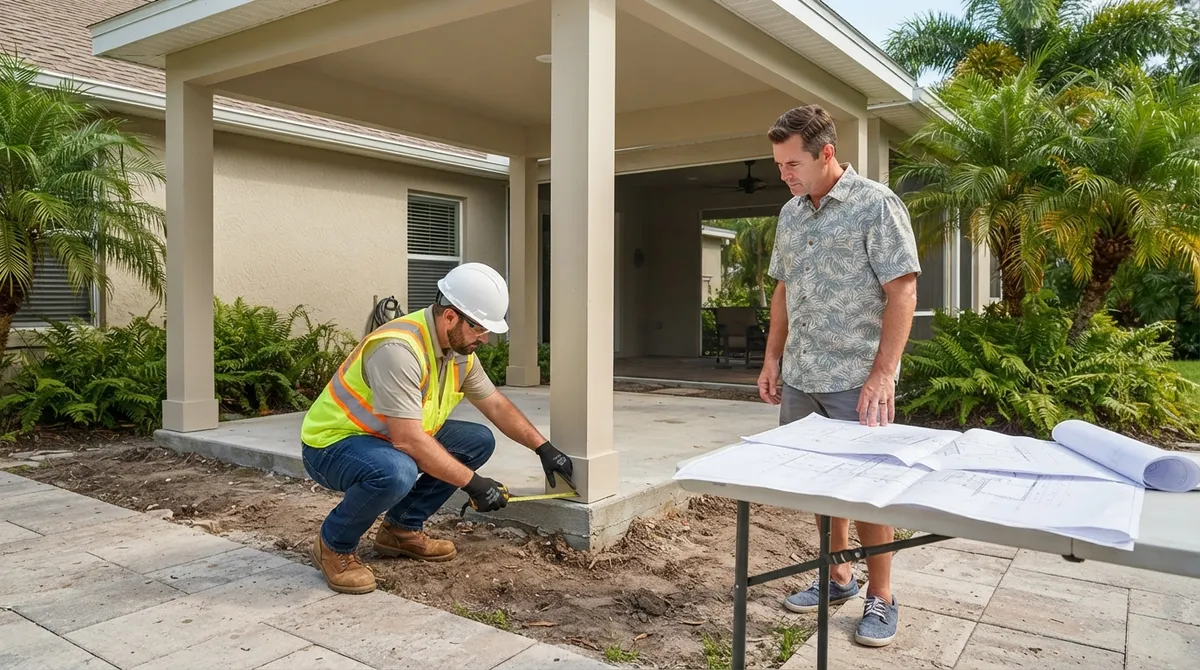
What After-the-Fact Permitting Actually Means in Florida
An after-the-fact permit (often called an ATF, retroactive, or "as-built" permit) is a permit you apply for once the work is already finished or partly finished. For covered work, Florida law generally requires the permit to be obtained before construction or alteration begins. Florida Statutes section 553.79 sets up that framework, and the local enforcing agency reviews plans for code compliance.
Here is the part many people miss. The building department issues the permit, not a private consultant. A permitting professional prepares, files, tracks, and coordinates. They do not approve, waive, or guarantee anything.
If you want the full overview of how the process works, our guide on how to get an after-the-fact permit in Florida is a great companion read. You can also see our dedicated service page for after-the-fact and expired permits.

Who Should You Hire? The Four Roles Explained
Most after-the-fact jobs involve more than one professional. Knowing who does what keeps you from paying the wrong person for the wrong job.
| Professional | What They Do | What They Cannot Do |
|---|---|---|
| Permitting consultant / expediter | Researches the jurisdiction, reviews records, prepares and files the application, answers review comments, coordinates inspections | Issue permits, waive code, guarantee approval, or seal technical drawings |
| Licensed contractor | Takes responsibility for the construction named on the permit, performs corrections | Replace a required engineer or architect |
| Florida-licensed engineer or architect | Prepares and seals as-built plans, structural or MEP documentation, engineer letters | Handle the permit paperwork unless that is part of their scope |
| Building department | Reviews, issues the permit, performs inspections, closes out | Act as your advocate or consultant |
Think of it as a small team. The consultant is your project manager for the paperwork. The engineer or architect supplies the technical proof. The contractor stands behind the work. And the building official makes the final call.
When a Consultant Alone Is Enough
Some simple jobs only need coordination and basic drawings. A water heater swap or a minor electrical item may fall here, depending on the jurisdiction. Always confirm directly with your local building department.
When You Need a Team
Structural changes, additions, enclosures, roofs, trusses, and anything involving load paths usually need sealed documents. In those cases, hiring a firm that coordinates the consultant, drafter, and engineer under one roof can save you a lot of back-and-forth. Our plans and engineering services work this way.
How to Hire for Flat Fee After-the-Fact Permitting in Florida: 7 Steps
Here is a friendly, practical roadmap. Follow these steps in order and you'll avoid the most common hiring mistakes.
- Confirm your exact jurisdiction. Addresses near city lines can surprise you. A property with a Tampa mailing address may fall under the county, or the reverse. Our building department lookup tool helps, and our article on which Florida jurisdiction reviews my project explains why this matters.
- Check for open permits and violations. Before you pay anyone, search the address. An open permit search can reveal expired permits, prior notices, or code cases that change your strategy.
- Decide what technical documents you need. Ask the building department, or your consultant, whether as-built drawings, an engineer letter, or a structural evaluation will be required.
- Verify every license. Check any contractor through the Florida DBPR. Check any architect or engineer through the relevant Florida licensing board. Confirm the license actually covers your type of work.
- Get a written, project-specific flat fee. It should name the address, the scope, and the deliverables. More on this below.
- Ask who talks to code enforcement. If a violation exists, you want to know exactly who communicates with the county or city and when.
- Confirm the permit closeout plan. The job is not done when the application is filed. It is done when inspections pass and the permit is closed.
What a Good Flat-Fee Scope Should Include
Not all flat fees are comparable. One firm may include everything from research to closeout, while another may only cover submitting a form. Ask for the scope in writing, and look for each of these items.
- Jurisdiction research and records review
- Violation and open-permit review
- Preparation of the permit application and supporting documents
- Submittal to the correct building department or portal
- Responses to plan-review comments and resubmittals
- Inspection scheduling and coordination
- Permit closeout through final approval
If a plan reviewer sends comments back, ask whether revisions are included or billed separately. Our service page on revisions and resubmittals shows why this detail matters so much.
Red Flags in a Flat-Fee Quote
- No mention of what is excluded
- A promise of guaranteed approval
- A promise to "waive" fees or code requirements
- No named licensed professional for sealed work
- Pressure to pay in full before any scope is defined
A building official decides approval. No consultant can guarantee it, and honest professionals will tell you so.
What a Flat Fee Does Not Cover
This is where homeowners get blindsided, so let's be upfront. A professional flat fee is usually their fee. It does not automatically include the government's charges or the cost of fixing problems.
| Cost Category | Usually Included in Flat Fee? | Notes |
|---|---|---|
| Consultant coordination and filing | Yes, if the scope says so | Confirm what "filing" includes |
| Government permit and investigation fees | Often excluded or itemized | Set by the local jurisdiction |
| Penalty or double fees | Not included | Varies by city and county |
| Design, drafting, and engineering | Depends on the contract | Sealed work needs a licensed Florida professional |
| Testing or third-party analysis | Usually excluded | May be required for concealed work |
| Opening up and restoring finished work | Usually excluded | Needed if inspectors must see concealed elements |
| Contractor corrections | Excluded | Priced by the contractor |
Local Fees Vary Widely
As one example, St. Lucie County states that its after-the-fact permit fee is double the regular fee, and it notes that concealed work may require third-party engineering analysis. That is a local rule, so please don't assume it applies statewide. Another jurisdiction may charge differently. Our article on after-the-fact permit costs in Florida goes deeper, and the St. Lucie County page covers local details.
Concealed Work May Need to Be Exposed
Here is the honest truth that no one loves hearing. A building official may require plans, inspections, engineering documentation, or even that concealed work be opened so it can be seen. Walls, wiring, plumbing runs, and framing behind drywall are the usual suspects. A permit expediter cannot guarantee that existing work will pass inspection, which is why a pre-check by an engineer or inspector can be worth its weight in gold.
Matching the Right Pro to Your Situation
Different readers have different needs. Here is how we'd think about it.
Florida Homeowners and Residential Property Owners
Start by checking whether the previous owner left unpermitted work behind, then decide whether you need a consultant alone or a full team. If you plan to act as your own contractor, note that owner-builder exemptions under section 489.103(7) are limited and come with conditions. They are not a general shortcut around licensing or permitting. Our page on owner-builder permits explains the guardrails, and our homeowner resources are a good starting point.
General Contractors and Design Trade Professionals
If you inherited a messy job or a client skipped permits, you need someone who can handle volume and document accuracy. Look for in-house drafting and sealed engineering so reviewer comments get fixed quickly. See our resources for general contractors, and read 9 pros a Florida GC should hire for after-the-fact permits.
Solar Companies
Older installs sometimes went live without a permit or inspection. You will want a partner who understands structural and electrical documentation for distributed energy projects. Our guide on legalizing unpermitted solar installs walks through the process, and our solar contractor page shows how we support these teams.
Realtors and Investors
When a buyer's inspection or an appraisal flags unpermitted work, the clock is ticking. You need someone who can research quickly, set expectations, and help keep the closing alive. Read whether a home sale can close with unpermitted work in Florida and explore our realtor closing support.
Questions to Ask Before You Sign Anything
A great consultant welcomes questions. Use this checklist on every call.
- Have you worked with this exact city or county building department before?
- What is included in the flat fee, and what is excluded?
- Are government fees, double fees, and investigation fees billed separately?
- Who prepares and seals any technical documents?
- What happens if the reviewer asks for revisions?
- Who communicates with code enforcement if a violation exists?
- What if concealed work must be exposed?
- How will you keep me updated, and how fast do you respond?
If the answers are vague, keep shopping. Clear answers are the best sign of a trustworthy partner.
A Quick Note on Notices of Commencement
Some jurisdictions bring up the Notice of Commencement during permitting. For example, Panama City Beach's Building FAQ cites Florida Statutes section 713.13 and says a Notice of Commencement is required for improvements with a direct contract price over $5,000, or over $15,000 for mechanical work. Requirements and thresholds can change, so confirm current rules with your local building department. Our article on Notice of Commencement in Florida explains the basics.
Why Local Experience Matters So Much
Florida has 67 counties and hundreds of municipalities, each with its own portal, forms, and habits. What works in Miami-Dade may not work in Hillsborough or Duval. A professional who files in your jurisdiction every week will know which documents reviewers expect, which inspectors prefer certain evidence, and which shortcuts to avoid.
If you're in a major market, these local pages are handy: Hillsborough County, Miami-Dade County, Broward County, Orange County, and Sarasota County. You can also browse our full Florida service area.
We're proud of our team at 1 Contractor Solutions. We work as Florida's outsourced permitting department, and because our drafting and sealed engineering are in-house, reviewer comments get answered without waiting on an outside consultant. You can visit us on Google — 1 Contractor Solutions to see what customers say, and you can follow us on LinkedIn or follow us on Facebook for Florida permitting tips.
Common Mistakes to Avoid
- Hiring on price alone. A low flat fee with a thin scope often costs more later.
- Skipping license checks. Always verify through the official Florida boards.
- Assuming statewide rules. Local fees and procedures differ.
- Ignoring open violations. A code case can change your timeline and your costs.
- Expecting a guarantee. Approval belongs to the building official.
Ready to Get Your Permit Back on Track?
Hiring for flat-fee after-the-fact permitting in Florida comes down to three things: local experience, verified licenses, and a written scope with clear exclusions. Get those right and you'll turn a stressful discovery into a closed permit and peace of mind.
If you'd like a hand, our team is happy to review your address, tell you which jurisdiction controls it, and map out the path to approval. We respond fast, day or night. When you're ready, get a free quote and let's get your project moving again.
FAQs
Who can help me get an after-the-fact permit in Florida?
A Florida permitting consultant or expediter with experience in your specific city or county is the best starting point. Depending on your scope, they'll work alongside a licensed contractor, architect, or engineer. The building department still issues the permit, so your team's job is to prepare, file, and coordinate.
Are after-the-fact permit fees doubled in Florida?
Not everywhere, so it pays to check locally. St. Lucie County, for example, says its after-the-fact permit fee is double the regular fee, but that is a local rule and not a statewide schedule. Ask your building department for the exact fees that apply to your address.
Can a permit expediter get a permit for work already completed?
An expediter can prepare and submit your application and coordinate with the building department, but they can't issue the permit or guarantee approval. The building official reviews the work, and may require plans, inspections, or engineering documentation before deciding.
Will I need an engineer or architect for an after-the-fact permit?
It depends on the scope. Structural changes, additions, roofs, enclosures, and similar work often need sealed documents from a licensed Florida engineer or architect. Your local building department can confirm exactly what they'll want to see.
Can unpermitted work be required to be opened up for inspection?
Yes, it can. If work is concealed behind finished surfaces, the building official may require it to be exposed or may request third-party engineering analysis. Ask your consultant up front whether opening up and restoration are excluded from the flat fee.
We do this work every day across all 67 Florida counties. Call (866) 314-6931 and we will tell you what your situation actually requires — including when you do not need us.
Related services
Permit Facilitation & Filing
You have a crew scheduled, a client asking for dates, and a permit sitting somewhere in a queue you cannot see. We file it, w…
See the servicePlan Review Coordination
A permit in plan review is not one queue. On a commercial project it can be six queues, each with its own reviewer, its own c…
See the serviceReady to get your permit moving?
One call tells you which jurisdiction controls your project, what it will take, and what it will cost. Most of the time we can scope it on the phone.