
Blog
How Do I Get As-Built Drawings for Unpermitted Work in FL?
Wondering how to get as-built drawings for unpermitted work in Florida? Learn the steps, who prepares them, and what to expect during approval.
Key Takeaways
-
Contact the city or county building department with jurisdiction over your property first, since Florida has no single statewide after-the-fact permit process and local rules decide requirements.
-
Ask your building department exactly what it needs to legalize the work, such as as-built drawings, surveys, calculations, or sealed plans, before commissioning any drawings.
-
Check permit and code-enforcement records early to find open, expired, or unpermitted work and active violations that could change your approach.
-
Concealed work may need verification: ask the department whether engineer letters, photos, or limited exploratory openings are acceptable before opening walls or slabs.
-
Structural work, additions, and wind-load items often require an engineer's seal, so confirm signing and sealing requirements early to avoid rejections.
-
Expect possible corrections or upgrades to meet current code, and check whether your jurisdiction requires a licensed contractor or charges double fees for after-the-fact permits.
Maybe you bought a home with a mystery sunroom. Maybe your last contractor poured a slab and then vanished. Or maybe a buyer's inspector just flagged the garage conversion your seller swore was "totally fine." Whatever brought you here, take a breath. You are far from the first person in Florida to ask, how do I get as-built drawings for unpermitted work in Florida? And the good news is that there is a real, well-worn path to follow.
Here is the short version. You start by contacting the city or county building department that has authority over your property. You ask what it requires to legalize the work after the fact. Then a qualified professional documents the work exactly as it exists today and prepares the drawings the department asks for. Review, inspections, and fees follow from there.
This guide walks you through each step in plain English. We will cover what as-built drawings actually are, who prepares them, what can complicate approval, and what to expect along the way. Whether you are a homeowner, a general contractor, a solar installer, or a real estate pro, you will leave with a clear game plan.
What Are As-Built Drawings for Unpermitted Work?
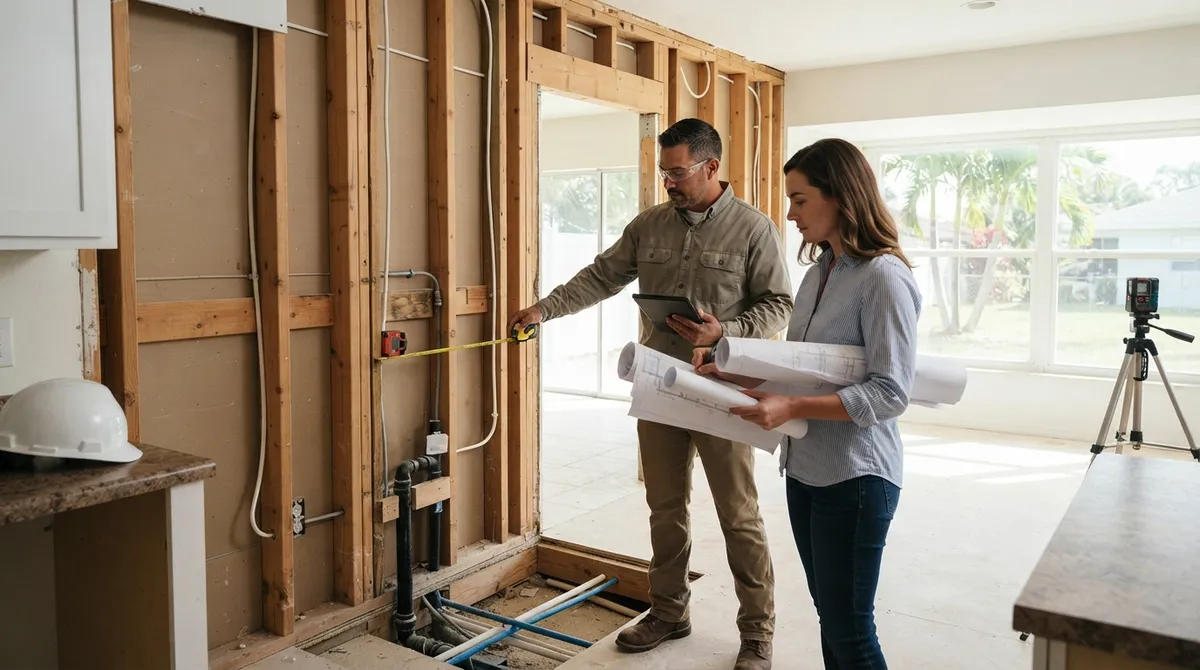
As-built drawings document what was actually built. They are not the original design, and they are not a proposed fix. They are a snapshot of the work as it sits right now.
When work was done without a permit, there are usually no approved plans to compare against. So the as-builts become the foundation of your entire after-the-fact application. They tell the building department what exists, where it sits on the property, and how it was put together.
Depending on the project, as-built drawings may show:
- Dimensions, layout, and room use
- Materials and finishes that matter for code review
- Structural elements such as framing, footings, and connections
- Electrical, plumbing, and mechanical work, where relevant
- Location of the structure on the lot, including setbacks
If you want a closer look at this service, our as-built drawings page explains how we document existing conditions for Florida jurisdictions.
Is There a Statewide Process for Legalizing Unpermitted Work?
This is where many people get tripped up. Florida does not have one statewide procedure called an "after-the-fact permit," and approval is never guaranteed. The city or county building department with jurisdiction over your property decides the application steps, required documents, inspections, and fees.
Florida Statute §553.79 generally requires a permit before covered construction, alteration, repair, or demolition. It also calls for plan review before a permit is issued, subject to statutory exceptions. But the details of what a particular department needs for your particular project come from local officials.
That means one county's rules do not automatically apply in the next county over. Some departments are flexible about owner-builders. Others are not. Fees vary, too. For example, the City of Pembroke Pines publishes guidance saying its after-the-fact permits generally require a licensed contractor, are not available as owner-builder permits (with a limited residential exception for certain purchasers), and carry double permit fees. That is a local rule, not a statewide guarantee, so always confirm with your own department.
Step-by-Step: How to Get As-Built Drawings for Unpermitted Work
Every project is a little different, but most successful legalizations follow the same basic rhythm. Here is the process in order.
- Confirm who has jurisdiction. The property address determines which city or county building department reviews your work. Near city lines, this is not always obvious. Our building department lookup tool can help you sort it out.
- Check permit and code-enforcement records. Find out whether any permits were ever pulled, whether any are open or expired, and whether there are active violations. You can start with our open permit search.
- Ask the department what it requires. Call or visit and ask exactly how to legalize the specific work. Ask whether it wants as-built drawings, a survey, calculations, sealed plans, or other supporting documents.
- Document existing conditions. A qualified professional visits the site, measures, photographs, and records what was built.
- Prepare the drawings and supporting documents. This may include floor plans, elevations, structural details, site plans, and engineer letters.
- Submit the after-the-fact application. The package goes to the building department for plan review.
- Respond to review comments. Reviewers may ask for corrections or more information. Quick, accurate responses keep things moving.
- Complete inspections and corrections. Inspectors verify the work in the field.
- Obtain final approval. Once everything passes, the permit is closed out and the work is legal on the record.
It sounds like a lot, but each step is manageable when you take them one at a time. And you do not have to do them alone.
Who Can Prepare As-Built Drawings in Florida?
The right person depends on the project and on what your building department requires. In general, you will work with a design or building professional who can accurately measure and document the work, and in some cases an engineer who can evaluate and seal the drawings.
Here is a quick comparison of common needs.
| Situation | Typical Documentation | Who Often Helps |
|---|---|---|
| Simple interior remodel | As-built floor plan, possibly electrical and plumbing details | Drafter or designer |
| Room addition or enclosed patio | As-built plans, site plan, structural verification | Drafter plus structural engineer |
| Roof, truss, or wind-load concerns | Engineer letter and structural documentation | Structural engineer |
| Electrical, plumbing, or HVAC changes | MEP diagrams and load information | MEP engineer or licensed trade |
| Work near property lines or setbacks | Site plan or survey | Drafter, surveyor |
Whether drawings must be signed and sealed also varies by jurisdiction and project, so confirm that early. An engineer's seal can be the difference between a quick approval and a round of rejections. Our engineer letters and structural engineering services exist for exactly those moments.
What Can Complicate Approval?
Let us be honest about the bumps in the road. Legalizing unpermitted work is usually doable, but a few things can make it harder.
Concealed Work
Once a wall is closed up or a slab is poured, an inspector cannot see what is inside. The building department may require other evidence that the work complies. If it cannot be verified, you may need to open walls, ceilings, or finished areas, and then correct any deficiencies. Before anyone grabs a sledgehammer, confirm with the local department which verification methods it will accept. Sometimes engineer letters, photographs, or limited exploratory openings can satisfy the requirement.
Work That Does Not Meet Current Code
Unpermitted work was never reviewed, so it may not match what the code requires today. If deficiencies show up, you may need to upgrade or correct them before the department approves the permit. The extent of corrections depends on the department and the nature of the work.
Licensing and Contractor Rules
Some departments want a licensed contractor to pull the after-the-fact permit. Others handle owner-builders differently. If you are curious about your options, see our guides on who can pull a permit in Florida and owner-builder permits.
Fees and Penalties
Some jurisdictions charge extra for after-the-fact permits, such as double fees. Because there is no reliable statewide figure for typical costs or timelines, ask your department for its current fee schedule. For a broader look at pricing factors, read our article on after-the-fact permit costs in Florida.
What Does the Process Look Like Behind the Scenes?
It helps to picture the timeline so nothing surprises you. Here is a simplified view of how the stages usually fit together.
| Stage | What Happens | What You Do |
|---|---|---|
| Research | Records and violations are reviewed | Gather deeds, surveys, prior permits |
| Site documentation | Work is measured and photographed | Provide access to the property |
| Drawing preparation | As-builts and supporting documents are drafted | Review for accuracy |
| Application and review | Department reviews the package | Respond to comments promptly |
| Inspections | Inspectors verify work in the field | Schedule and be available |
| Closeout | Permit is approved and finalized | Keep your final records |
No single statewide timeline exists, so do not trust anyone who promises an exact number of days before looking at your project. What we can say is that complete, accurate submittals generally move more smoothly than incomplete ones.
Tips for Different Readers
Homeowners and Residential Property Owners
Start by locating anything you already have, such as closing documents, old surveys, and photos from before the work. Then talk to the building department before you hire anyone. Knowing the department's expectations saves you from paying for drawings that do not meet its format. If you live in the Tampa Bay area, our Tampa and Pinellas County pages are good starting points.
Real Estate Professionals and Investors
Unpermitted work can derail a closing fast. Pull permit records early in the process, ideally before the listing goes live or before you make an offer. If you find a problem, plan for time to document and legalize. Our realtor closing support is built for tight deadlines.
General Contractors and Design Trade Professionals
If you inherit a job with unpermitted work from a prior contractor, document conditions before you touch anything. Photographs and measurements taken up front protect you and speed up the as-built process. Outsourcing drafting and permit administration also frees your crew to keep building. Learn more on our general contractors page.
Solar Companies
If a system was installed without a permit, you will likely need documentation of the structural attachment and the electrical work as built. Coordinate with the building department on its specific requirements for distributed energy systems. Our solar contractor page covers how we support that work.
Where 1 Contractor Solutions Fits In
At 1 Contractor Solutions, we act as Florida's outsourced permitting department. We work across all 67 counties, and our drafting and engineering are in house, so when a reviewer flags something, we can fix it without waiting on an outside consultant. We prepare as-built drawings, coordinate engineer letters, file the application, track it, work every reviewer comment, and carry it through closeout. You can see how our after-the-fact and expired permit service works, or browse our guide to legalizing unpermitted work in Florida for more detail.
Curious how other owners have fared? Visit us on Google — 1 Contractor Solutions to read what clients say. You can also follow us on LinkedIn or follow us on Facebook for permitting tips as rules change.
Common Mistakes to Avoid
A few missteps come up again and again. Dodging them can save you real time and money.
- Hiring a drafter before calling the building department. Drawings that do not match the department's requirements often need to be redone.
- Assuming another county's rules apply. Contractor, sealing, and fee rules differ by jurisdiction.
- Ignoring concealed work. Ask early how the department will verify what is behind walls or under slabs.
- Waiting for a violation notice. Voluntarily addressing the issue often goes better than reacting to enforcement.
- Skipping records research. An old open permit may change your whole approach.
For more on pitfalls, our 14 steps to get as-built drawings for Florida permits article goes deeper.
Ready to Get Moving?
Unpermitted work feels stressful, but it is a solvable problem. Confirm your jurisdiction, ask what the department requires, document the work as it exists, and move through review and inspections one step at a time. With the right team beside you, the permit stops being the thing standing in your way.
If you would like a hand, get a free quote and tell us your address and what was built. We will tell you which jurisdiction controls it, what it will take, and then we will go do it. Permits approved. Projects moving.
FAQs
How do I find out which Florida building department handles my property?
Start with your property address and check whether it sits inside city limits or in unincorporated county territory. That determines whether the city or the county reviews your work. Our building department lookup tool can help, and it is worth confirming near city lines, where the answer is not always obvious.
Do as-built drawings for unpermitted work need to be signed and sealed in Florida?
It depends on your jurisdiction and the type of work. Structural elements, additions, and anything involving wind loads often call for an engineer's seal, while simpler projects may not. Ask your building department what it requires before you commission any drawings.
Can I get an after-the-fact permit in Florida without a licensed contractor?
That is a local decision, not a statewide rule. Some departments, like Pembroke Pines, generally require a licensed contractor for after-the-fact permits, with limited exceptions. Others handle owner-builders differently, so check with your specific department first.
Will I have to open walls or ceilings for an after-the-fact inspection?
Possibly, but not always. If the department cannot verify concealed work by other means, it may require openings so inspectors can see the work. Ask early what verification methods it accepts, such as engineer letters or documentation, before you open anything up.
What happens if unpermitted work does not meet current code?
The building department may require corrections or upgrades before it approves the permit. The scope depends on the work and the local rules. A professional review up front can help you understand what fixes to expect so there are fewer surprises.
We do this work every day across all 67 Florida counties. Call (866) 314-6931 and we will tell you what your situation actually requires — including when you do not need us.
Related services
Permit Facilitation & Filing
You have a crew scheduled, a client asking for dates, and a permit sitting somewhere in a queue you cannot see. We file it, w…
See the servicePlan Review Coordination
A permit in plan review is not one queue. On a commercial project it can be six queues, each with its own reviewer, its own c…
See the serviceReady to get your permit moving?
One call tells you which jurisdiction controls your project, what it will take, and what it will cost. Most of the time we can scope it on the phone.