
Blog
How Do I Find After-the-Fact Permitting Help in Florida?
Learn how to find after-the-fact permitting help in Florida: confirm jurisdiction, call the building department, and choose the right licensed team.
Key Takeaways
-
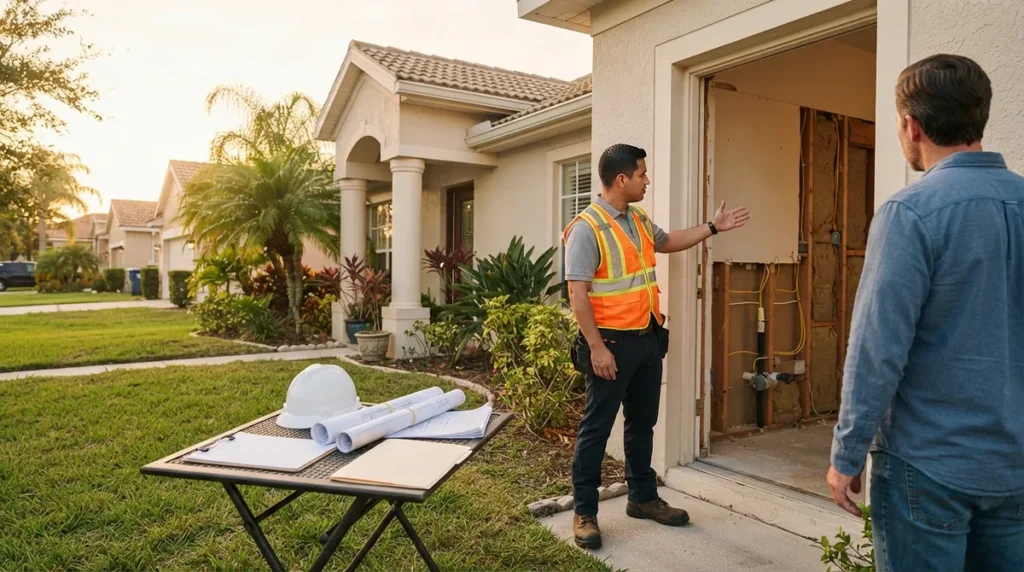
Florida after-the-fact (ATF) permits don't guarantee approval or erase penalties; the local building official decides what proof of code compliance is needed, which may include plans, engineering, and opened walls.
-
Determine jurisdiction first: city building departments handle properties inside municipal limits, county departments handle unincorporated areas, and near city lines you should verify rather than guess.
-
Check the property's permit history through the local online portal to see whether work has no record, an expired permit, an open permit, or an active violation notice, since each requires a different next step.
-
Do not cover up unpermitted work before the building department reviews it, because closed walls or ceilings may have to be reopened later.
-
Match your help to the need: permitting consultants coordinate filings, drafters prepare as-built plans, and licensed engineers or contractors handle structural verification and repairs; only the building official grants approval.
-
Respond to every violation notice by its deadline, since unresolved violations can lead to fines or liens, and verify any small-project exemption under Florida Statute 553.79 with your local department before relying on it.
So you just found out that the deck, the roof, the pool cage, or the garage conversion at your property was never permitted. Maybe a home inspector flagged it. Maybe a buyer's lender is asking questions. Maybe a letter showed up from the city. First, take a breath. You are far from alone, and in most cases there is a path forward.
The big question most people ask next is simple: how do I find after the fact permitting help near me in Florida? The honest answer starts with figuring out who actually controls your property, and then finding a team that knows how to work with that office. This guide walks you through exactly that, step by step, in plain English.
Whether you are a homeowner, a general contractor cleaning up a past job, a solar company with an install that skipped a step, or a Realtor with a closing on the clock, the roadmap is similar. Let's get you moving.
What After-the-Fact Permitting Actually Means in Florida
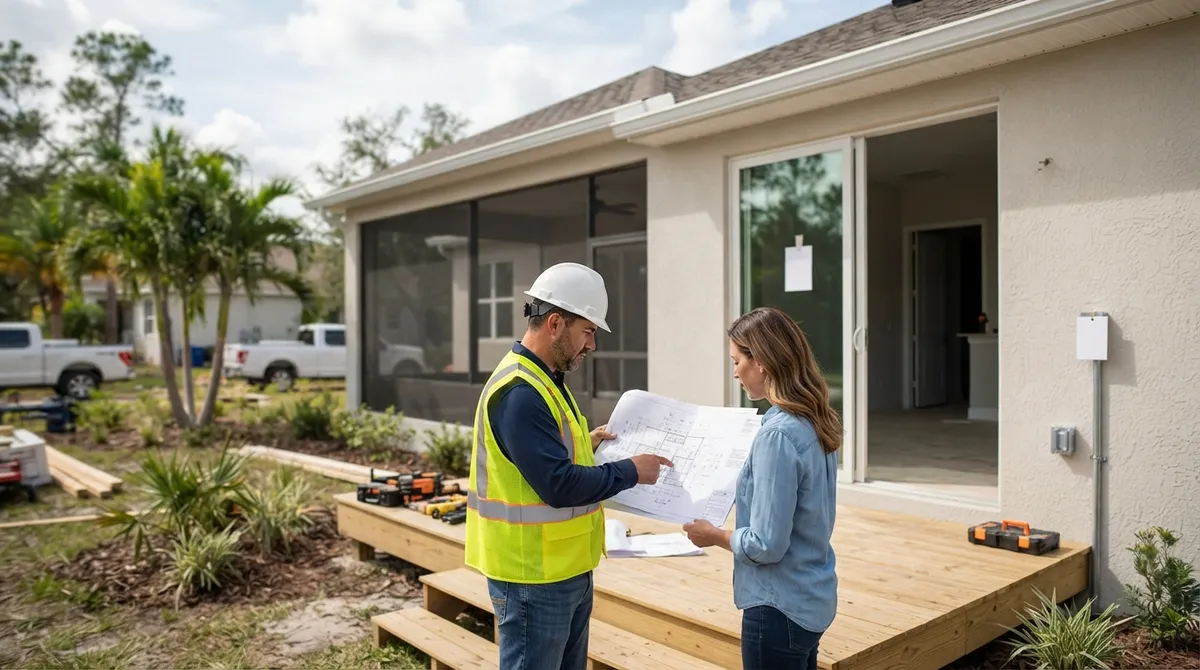
"After-the-fact" (often shortened to ATF) permitting is the process of applying to your local building department for approval of work that was started or finished before the required permit was pulled. Florida law generally requires a permit before regulated construction, alteration, repair, or demolition begins. When that step gets skipped, the ATF process is how many owners get back into compliance.
Here is the important part: an ATF application does not guarantee approval, and it does not automatically erase penalties. The local building official decides what is needed to prove the work meets code. That may include plans, engineering, inspections, and sometimes opening up finished walls or ceilings.
If you want a deeper walkthrough of the process itself, our guide on how to get an after-the-fact permit in Florida covers the basics, and our after-the-fact and expired permits service page explains how we handle these files.
Step 1: Figure Out Which Office Actually Has Jurisdiction
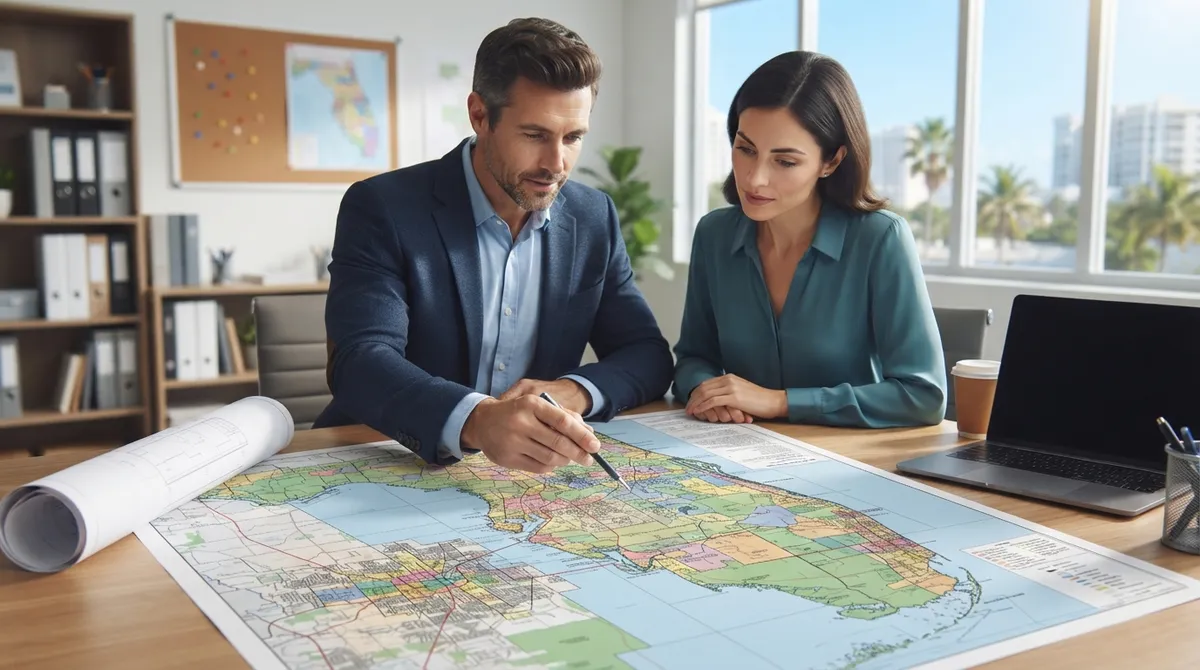
This is where a lot of people lose weeks. Florida has 67 counties and hundreds of municipalities, and each one sets its own procedures, fees, and enforcement approach. The office that handles your ATF permit depends on where the property sits.
- Inside city limits: the city building department usually handles it.
- Unincorporated area: the county building department handles it.
- Near a city line: do not guess. County rules do not necessarily apply inside a municipality, and mailing addresses can be misleading.
Miami-Dade County, for example, directs applicants to the relevant city building department when the property is within municipal boundaries. The same logic applies across the state.
A quick way to confirm is to use a building department lookup tool, check your county's parcel or GIS map, or read our explainer on which Florida jurisdiction reviews your project.
Step 2: Research the Property's Permit History
Before you call anyone, it helps to know what is already on file. Many local governments offer an online permit portal where you can search by address. You may find open permits, expired permits, or no record at all for the work in question.
You can also run a quick check with our open permit search tool. Knowing whether you are dealing with a never-permitted project or an expired permit changes the strategy completely.
| Situation | What It Usually Means | Typical Next Step |
|---|---|---|
| No permit record at all | Work was never permitted | Ask the building department about its ATF process |
| Permit exists but expired | Work started, never closed out | Reinstate, renew, or reapply per local rules |
| Permit open, work finished | Final inspection was never requested | Schedule inspections or close the permit |
| Violation notice received | Code enforcement is already involved | Respond by the deadline and pursue compliance |
Step 3: Call the Building Department With the Right Questions
You do not have to hand over every detail on the first call, but you do want clear answers. Contact the permitting office for your address and ask specifically about its after-the-fact or unpermitted-work process. Good questions include:
- What application type should be used for work that is already built?
- Does all work need to stop while the application is pending?
- What plans, product approvals, or contractor documents are required?
- How will concealed work be evaluated?
- What are the fees, and are they doubled?
- Are there enforcement deadlines I need to know about?
Write down the name of the person you speak with, the date, and what they said. Keep copies of every application, receipt, notice, and email. A tidy paper trail helps later if questions come up.
Step 4: Know What Kind of Help You Actually Need
Once you know the local rules, you can match them to the right kind of professional. After-the-fact projects often need more than one skill set, and understanding that up front saves money and frustration.
| Type of Help | What They Do | When You Need It |
|---|---|---|
| Permitting consultant or facilitator | Coordinates the application, tracks reviews, answers reviewer comments | Nearly every ATF project |
| Drafter | Prepares as-built drawings and site plans of existing conditions | When the department wants plans of what was built |
| Licensed engineer | Evaluates structural or MEP conditions and seals letters or drawings | Structural work, concealed work, roofs, additions |
| Licensed contractor | Makes corrections and completes repairs or inspections | When the work needs fixing or finishing |
It is worth being clear about one thing. A permitting consultant can coordinate records and submissions, but a consultant is not a substitute for the building department's approval or for licensed design and construction professionals. The best firms are upfront about that line. You can learn more about the design side through our pages on as-built drawings and engineer letters.
Step 5: Look for the Right Qualities in an ATF Partner
"Near me" matters less than you might think, because the real local knowledge is about the building department, not the zip code. A good partner can work across jurisdictions and still know the quirks of each one. Here is what to look for:
- Statewide reach: experience filing in many Florida counties and municipalities, not just one.
- In-house drafting and engineering: when a reviewer flags something, the fix does not depend on an outside consultant returning a call.
- Willingness to take difficult files: expired permits, stop work orders, and closings with deadlines.
- Fast communication: same-day response matters when a closing date or a violation deadline is looming.
- Honest expectations: a trustworthy pro will never promise approval, because only the building official can grant it.
- Full-cycle support: filing, tracking, comment responses, revisions, inspections, and closeout.
That last point is a big one. ATF projects rarely go perfectly on the first submission, so ongoing plan review coordination and revisions and resubmittals support really matters.
Where to Actually Find Help
There are a few practical places to start your search, and each has its pros and cons.
Your Local Building Department
The department can explain its procedure, but staff generally cannot recommend a specific private company or prepare your documents for you. Think of this as your source for rules, not for hands-on help.
Licensed Contractors, Architects, and Engineers
If the work needs repairs, structural verification, or sealed drawings, you will need licensed professionals. You can verify Florida licenses through the state's licensing lookup before you hire anyone.
Specialized Permitting Firms
Firms that focus on Florida permitting can coordinate the whole process from start to finish. At 1 Contractor Solutions, we act as Florida's outsourced permitting department. We are not a construction contractor, so we are not trying to sell you a repair job. We handle filing, tracking, reviewer comments, and closeout, with drafting and sealed engineering done in house across all 67 counties.
Real Estate and Closing Contacts
If you are facing a closing, your Realtor, title company, or lender may already know a trusted resource. Our Realtor and closing support is built for exactly this scenario.
What to Expect: Documents, Fees, and Inspections
Every jurisdiction is different, so treat the following as general expectations rather than guarantees. The authority will want enough information to evaluate code compliance. Depending on the work, that may include:
- Plans or as-built drawings of the existing work
- Product approvals for items like windows, doors, or roofing
- Contractor licensing information
- Engineering reports or sealed letters
- Photos, field verification, or opened-up sections of concealed work
- Inspections at various stages
St. Lucie County, for instance, notes that concealed work may require a third-party engineering analysis. Other counties handle it differently.
On fees, ATF costs are local and fact-specific. St. Lucie County states that its after-the-fact permit fee is double the regular fee. That is one county's example, not a statewide rule, so always confirm with your own department. For a broader look at pricing, see our guide on after-the-fact permit costs in Florida.
| Item | What Varies by Jurisdiction |
|---|---|
| Application fees | Some counties charge standard fees, others charge a multiple |
| Required documents | Depends on scope, trade, and structural impact |
| Concealed work review | May require engineering analysis or opening walls |
| Permit expiration | Often around 180 days without inspection activity, but check local rules |
| Enforcement | Notices, fines, or liens if violations go unresolved |
Common Mistakes to Avoid
After helping with thousands of Florida permits, a few patterns show up again and again. Steering clear of these will save you time and stress.
- Covering up the work. Closing walls or ceilings before the department weighs in can mean opening everything back up later.
- Assuming a permit legalizes everything. Work that fails code or zoning may need corrections, added inspections, or even removal.
- Calling the wrong office. City versus county confusion burns weeks.
- Ignoring a notice. Unresolved violations can lead to fines or a lien, so respond by the stated deadline.
- Hiring someone who guarantees approval. Only the building official approves work. Be cautious of anyone who says otherwise.
If you have already received a notice, our resource on code compliance violations and the urgent permit rescue page can help you plan your next move.
A Quick Note on Small Exemptions
Florida Statute 553.79 includes a provision that generally requires local governments to exempt an owner of a single-family dwelling, or the owner's contractor, from a permit for work valued at less than $7,500, subject to statutory conditions and exceptions. It is tempting to lean on this, but do not rely on it without confirming with your local building department first. Exceptions are real, and structural, electrical, plumbing, and mechanical work often have their own rules.
Also worth knowing: the same statute provides that in specified circumstances a property owner may hire a different appropriately licensed contractor to complete work needed to close an existing building permit. That can be a lifesaver if a prior contractor disappeared. Our article on how to close an expired permit in Florida goes deeper.
Selling or Refinancing With Unpermitted Work
Many owners first discover unpermitted work because of a sale, appraisal, or refinance. Lenders and title companies may flag open or missing permits, and that can slow a closing. The sooner you start the ATF process, the more options you have. If a closing is already on the calendar, ask about prioritizing the file and talk with your Realtor right away. Our post on open permits found at closing explains what typically happens next.
Want to see what other clients have said about working with us? You can visit us on Google — 1 Contractor Solutions to read reviews, or follow us on LinkedIn and follow us on Facebook for Florida permitting updates.
Your Simple Action Plan
If you are feeling overwhelmed, here is the whole thing boiled down to a short checklist you can start on today:
- Confirm whether your address is in a city or an unincorporated county area.
- Search the property's permit history through the official portal or an open permit search.
- Call the building department and ask about its after-the-fact process.
- Gather photos, receipts, contractor information, and any existing plans.
- Bring in a Florida permitting team that can coordinate drafting, engineering, filing, and inspections.
- Respond to every notice and correction comment on time.
- Keep every record from start to finish.
Ready to Get Back in Compliance?
Finding after-the-fact permitting help in Florida really comes down to two things: knowing which office controls your property, and choosing a partner who can carry the file all the way to closeout. You do not have to untangle it alone, and you do not have to feel embarrassed about it. This happens to careful owners, busy contractors, and new buyers every single day.
If you would like a friendly, knowledgeable team to take a look at your situation, we are here. We respond within 30 minutes, day or night, and se habla español. Get a free quote and let us help you turn an unpermitted headache into a closed permit.
FAQs
Can I get an after-the-fact permit in Florida for work that is already finished?
In many cases, yes. Most Florida building departments have a process for permitting work that was completed or started without a permit. Approval is not guaranteed, though, because the building official decides whether the work meets code and may require corrections, inspections, or engineering.
How much does an after-the-fact permit cost in Florida?
It varies by city and county. Some jurisdictions charge the standard fee, while others charge more. St. Lucie County, for example, says its after-the-fact fee is double the regular fee. Always confirm with the building department that covers your address.
What documents do I need to apply for an after-the-fact permit?
Requirements depend on the work and the jurisdiction. Expect to provide some combination of as-built plans, product approvals, contractor licensing details, engineering letters, photos, and inspection access. Ask the building department for its specific checklist before you start.
Can I sell or refinance a Florida home with unpermitted work?
It is sometimes possible, but unpermitted or open permits can slow or complicate a sale or refinance, since lenders and title companies may flag them. Starting the after-the-fact process early gives you more options and can keep a closing on track.
Do I need a licensed contractor, architect, or engineer to resolve unpermitted work?
Often you do, especially when plans, structural verification, or repairs are required. A permitting consultant can coordinate the paperwork, but licensed Florida professionals handle design, sealed engineering, and construction, and the building department gives the final approval.
We do this work every day across all 67 Florida counties. Call (866) 314-6931 and we will tell you what your situation actually requires — including when you do not need us.
Related services
Permit Facilitation & Filing
You have a crew scheduled, a client asking for dates, and a permit sitting somewhere in a queue you cannot see. We file it, w…
See the servicePlan Review Coordination
A permit in plan review is not one queue. On a commercial project it can be six queues, each with its own reviewer, its own c…
See the serviceReady to get your permit moving?
One call tells you which jurisdiction controls your project, what it will take, and what it will cost. Most of the time we can scope it on the phone.