
Flood & Coastal
Flood Damage Repairs in South Florida: Which Ones Need a Permit?
Cleanup usually does not need a permit. Putting the house back together usually does. Here is what South Florida homeowners need to know before flood repairs start.
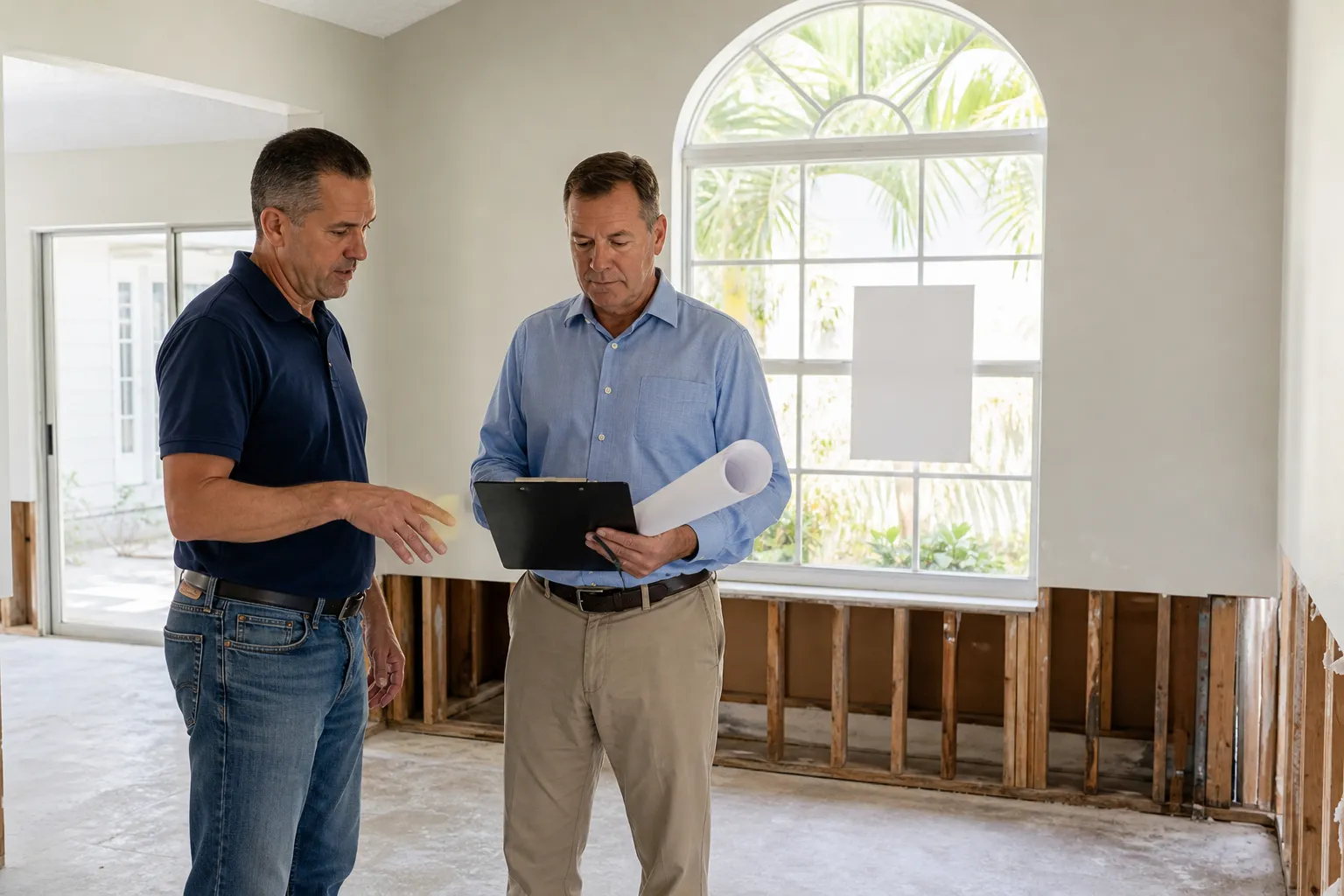
After a flood, everyone wants to get back to normal fast. Contractors are busy, permit counters are busy, and it is tempting to just start fixing things. Skipping the permit can cost you more than the wait would have. Here is how to tell what needs one, what flood zone rules add, and how to get repairs approved without losing weeks.
Cleanup vs. repair: where the permit line usually falls
The simplest rule: taking things out is usually cleanup. Putting things back in is usually a repair, and repairs usually need a permit.
Usually no permit needed:
- Pumping out water and removing mud and debris
- Tearing out wet carpet, padding, insulation and drywall
- Running fans and dehumidifiers
- Temporary protection, like tarps or boarding up openings
- Cosmetic work like painting and replacing carpet
Usually needs a permit:
- Electrical repairs, including replacing outlets, wiring or a panel that was underwater
- Plumbing repairs and new water heaters
- Replacing an AC condenser, air handler or ductwork
- Structural repairs to walls, floors, foundations or framing
- Replacing windows, exterior doors or garage doors
- Roof repairs beyond a small patch
- Any work that changes the layout of the home
Depends on where you live: drywall replacement, cabinets and some flooring. Some South Florida jurisdictions require a permit for these after a flood, especially in a flood zone, because they need to track the total cost of repairs. Others do not. Always check with your local building department before you start.
For a closer look at the small fixes you can make right away, see 4 storm repairs Florida homeowners can do without a permit.
Who issues your permit in South Florida
Your permit comes from the city you live in, or from the county if you live in an unincorporated area. South Florida has dozens of separate building departments, and each one runs flood recovery its own way.
- Miami-Dade County: 34 cities plus unincorporated Miami-Dade, each with its own building department. See our Miami-Dade County permitting guide.
- Broward County: 31 cities, most with their own building departments. See our Broward County permitting guide.
- Palm Beach County: 39 cities plus the county's own building division for unincorporated areas. See our Palm Beach County permitting guide.
- Monroe County: the Keys, where almost every property is in a flood zone. See our Monroe County permitting guide.
Not sure which one covers your address? Use our building department lookup. After a major flood, many building departments publish recovery rules, temporary fee waivers or faster review for flood repairs, so check your department's website first.
What flood zones add
If your home is in a FEMA Special Flood Hazard Area, your permit comes with extra rules on top of the normal building code.
- Substantial damage review. Your jurisdiction compares the cost of repairs with the market value of the building, not including the land. If repairs reach 50% or more, the whole home must be brought up to current flood rules. That can mean elevating it. Our guide to the FEMA 50% rule in Florida explains how the numbers are calculated.
- Flood-resistant materials. Materials below the required flood elevation may have to be flood-resistant, like tile instead of wood flooring.
- Elevated equipment. Replaced AC units, water heaters and electrical panels may need to be raised above the flood elevation.
- Elevation certificate. Your building department may ask for one. If you already have one, find it now.
For the full process, read 7 flood zone permitting steps to know.
Why skipping the permit costs more
An unpermitted flood repair does not go away. It shows up later, usually at the worst time.
- Selling the house. Buyers, lenders and title companies check permit history. Unpermitted work can stall or kill a closing.
- Your next insurance claim. Carriers can dispute claims on work that was never inspected. See how unpermitted work affects flood insurance.
- Fines and tear-outs. Code enforcement can require you to open walls so the work can be inspected. See the penalty for building without a permit in Florida.
- Your ICC money. Increased Cost of Compliance coverage on an NFIP policy pays up to $30,000 toward bringing a substantially damaged home into compliance. You need the substantial damage determination from your building department to claim it.
Hire carefully after a flood
Floods bring out unlicensed contractors. Protect yourself before you sign anything:
- Check the license on the Florida DBPR website at myfloridalicense.com.
- Make sure the contractor pulls the permit in their name. If they ask you to pull it yourself, ask why. Read who can pull a permit in Florida.
- Do not pay large deposits in cash. Get a written contract with a clear scope and payment schedule.
- Know the law. Contracting without a license during a declared state of emergency is a felony in Florida.
If you plan to do some of the work yourself, Florida's owner-builder rules may let you pull your own permit. Learn more about owner-builder permits.
How to get flood repair permits moving
- Document the damage before and during tear-out. Your building department and your adjuster may both ask for photos.
- Find your building department and check its flood recovery page.
- Ask whether your home is in a flood zone and whether a substantial damage review applies.
- Get a written repair estimate with a full scope. The building department uses it to calculate the repair cost.
- File the permits before work starts, and schedule inspections before walls are closed up.
Not sure what your city or county requires? Call us at (866) 314-6931 or send us a message. We handle permits across all 67 Florida counties and will help you figure out the next step.
Frequently Asked Questions
Do I need a permit to replace drywall after a flood in South Florida?
It depends on your jurisdiction. Some South Florida cities require a permit for drywall replacement after a flood, especially in flood zones, so they can track repair costs. Others do not. Check with your building department before you hang new drywall.
Do I need a permit to replace a water heater or AC unit damaged by a flood?
Yes, almost always. Water heaters and AC equipment need a permit and inspection. In a flood zone, the new equipment may also need to be raised above the flood elevation.
What happens if my home is declared substantially damaged?
The home must be brought into compliance with current flood rules before or as part of the repairs. That often means elevating it. If you have an NFIP policy, Increased Cost of Compliance coverage can pay up to $30,000 toward that work.
Can I start repairs before the permit is issued?
You can do cleanup and emergency work to prevent more damage, like drying the house and covering openings. Permanent repairs should wait for the permit. Starting early can mean opening walls later for inspection.
Are permit fees waived after a flood?
Sometimes. After major storms, some South Florida jurisdictions temporarily waive or reduce permit fees for repairs. Check your building department's website or call us to find out.
We do this work every day across all 67 Florida counties. Call (866) 314-6931 and we will tell you what your situation actually requires — including when you do not need us.
Related services
Permit Facilitation & Filing
You have a crew scheduled, a client asking for dates, and a permit sitting somewhere in a queue you cannot see. We file it, w…
See the serviceOwner-Builder Permits
Florida law lets a property owner pull a permit for work on their own property without a contractor's license — under specifi…
See the serviceReady to get your permit moving?
One call tells you which jurisdiction controls your project, what it will take, and what it will cost. Most of the time we can scope it on the phone.