
Flood & Coastal
Flooded in South Florida? What to Do Next (Homeowner Checklist)
Water came in and now you have a mess, a lot of questions and no clear order to answer them in. Here are the 5 steps to take, in the order that protects you, your claim and your rebuild.
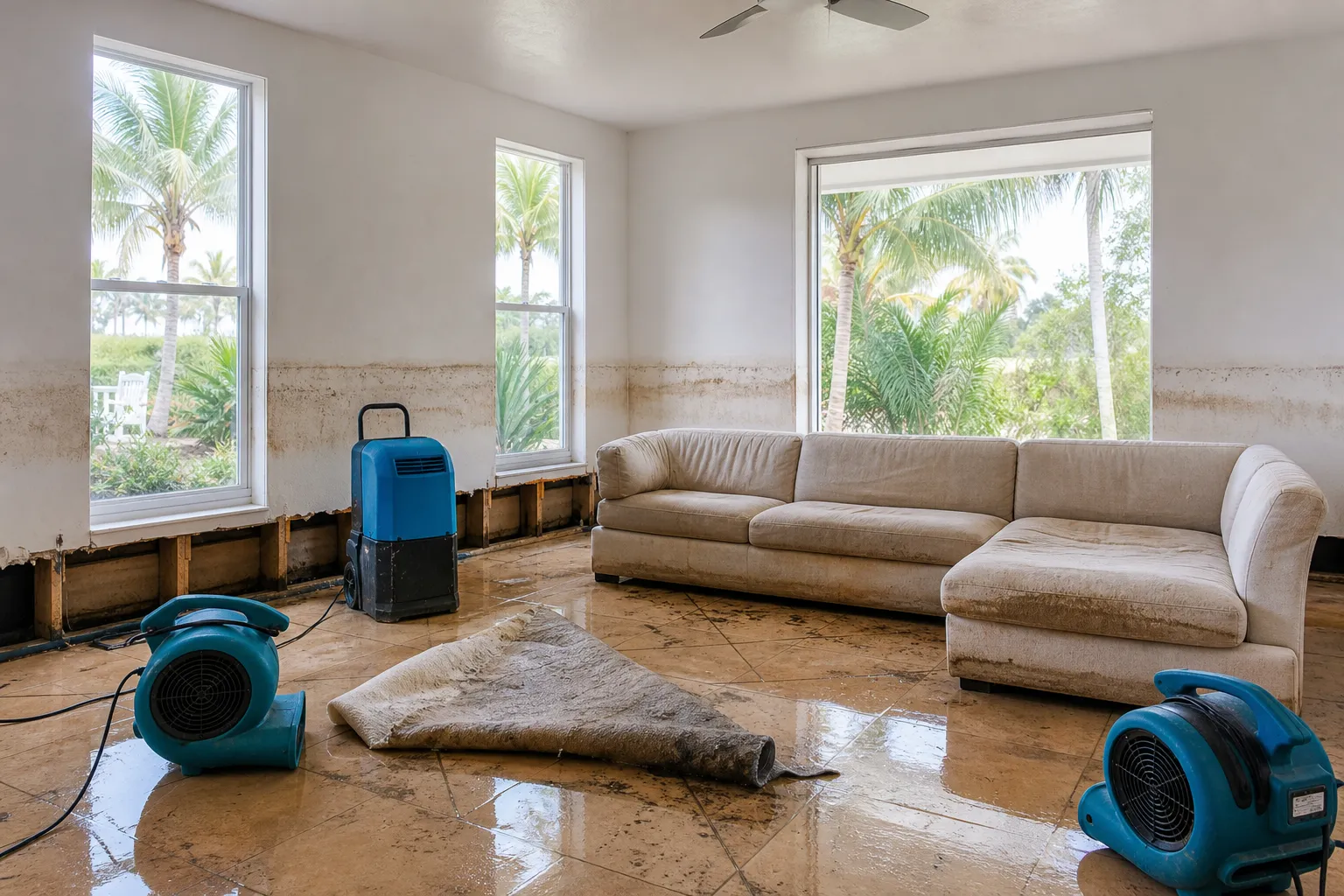
South Florida's recent rain left a lot of homes with water inside. What you do in the first few days affects your safety, your insurance payout and how smoothly your repairs get permitted. Work through these steps in order.
1. Stay safe first
Floodwater is more dangerous than it looks. Before anyone starts cleaning up:
- Keep out of standing water. It can hide sharp debris, open drains and live wires, and it is often contaminated with sewage.
- Leave the power off if water reached outlets, appliances or your electrical panel. Do not flip the main breaker while standing in water. Many South Florida jurisdictions want a licensed electrician to check submerged wiring before power is restored.
- If you smell gas, leave. Call your gas utility or 911 from outside the house.
- Protect yourself during cleanup. Wear rubber boots, gloves and an N95 mask. Wash anything that touched floodwater.
- Watch for structural warning signs. Sagging ceilings, new cracks in walls or floors, and doors that suddenly stick can mean the structure shifted. Stay out of those areas until someone qualified looks at them.
2. Document everything
Your photos are your evidence. Take them before you move, throw out or clean anything.
- Walk every room on video. Narrate as you go: which room, what got wet, how high the water reached.
- Photograph the water line on walls, cabinets and doors. Put a tape measure next to it in at least 1 shot per room.
- Capture model and serial numbers on appliances, water heaters, AC equipment and electronics.
- Keep samples of flooring, carpet and drywall if your adjuster has not seen the damage yet. A 12-inch square is usually enough.
- Save every receipt for cleanup supplies, fans, dehumidifiers, hotel stays and meals. Many of these are reimbursable.
Back everything up to cloud storage the same day. A phone that drowns in a second storm takes your claim with it.
3. Start your insurance claim
Call your carrier as soon as you are safe. Do not wait until you know the full extent of the damage.
- Flood is usually a separate policy. Standard homeowners insurance does not cover rising water. Flood damage is covered by a flood policy, either through the National Flood Insurance Program (NFIP) or a private carrier.
- Know which damage is which. Water that came through a damaged roof or a burst pipe may fall under your homeowners policy. Water that rose from the ground falls under flood. If you have both kinds of damage, open a claim on both policies.
- Watch your deadlines. NFIP policies generally require a signed proof of loss within 60 days of the flood. Ask your adjuster for every deadline in writing.
- Ask about Increased Cost of Compliance (ICC). NFIP policies include up to $30,000 to help bring a substantially damaged home up to current flood rules, for example by elevating it. You have to ask for it.
- Get the adjuster's name and claim number and keep a log of every call and email.
4. Dry it out
Mold can start growing within 24 to 48 hours. Once your adjuster has seen the damage, or once you have documented it thoroughly, start drying.
- Remove wet materials. Soaked carpet, padding, insulation and drywall rarely dry out properly. Drywall is usually cut at least 12 inches above the water line so hidden moisture in the wall cavity can escape.
- Get air moving. Open windows when the air outside is drier than inside, and run fans and dehumidifiers around the clock.
- Do not run the AC system if its ducts or air handler were underwater. It can spread contamination through the whole house.
- Bring in a licensed mold professional for anything larger than about 10 square feet. In Florida, mold assessment and remediation over 10 square feet must be done by state-licensed professionals.
Removing wet materials and drying the house is cleanup, and it usually does not need a permit. Putting the house back together usually does. That is step 5.
5. Check permits before you rebuild
This is the step most homeowners skip, and it is the one that causes problems months later. Most flood repairs need a permit, and homes in flood zones have extra rules.
- Electrical, plumbing and AC replacements almost always need a permit. So do new water heaters, structural repairs and new windows or doors.
- Some jurisdictions require a permit just to replace drywall after a flood. Others do not. The answer depends on your city or county.
- Homes in a flood zone may face a substantial damage review. If the cost to repair reaches 50% of the building's market value, the whole home may have to be brought up to current flood rules, which can mean elevating it. Read the FEMA 50% rule in Florida, explained before you sign a repair contract.
- Unpermitted repairs follow the house. They can delay a future sale, complicate your next insurance claim and lead to fines. See how unpermitted work affects flood insurance.
For a full breakdown of which repairs need a permit in Miami-Dade, Broward, Palm Beach and Monroe counties, read our guide to flood damage repair permits in South Florida.
Not sure what your city or county requires?
Every South Florida jurisdiction handles flood repairs a little differently. Find yours with our building department lookup, or call us at (866) 314-6931. We will tell you which permits your repairs need and help you figure out the next step. You can also send us a message.
Frequently Asked Questions
Does homeowners insurance cover flood damage in Florida?
Usually not. Standard homeowners policies exclude rising water. Flood damage is covered by a separate flood policy through the NFIP or a private flood insurer. Water from a roof leak or a burst pipe may still be covered by your homeowners policy.
Do I need a permit to tear out wet drywall and carpet?
Usually not. Removing damaged materials and drying the house is generally treated as cleanup. Replacing drywall, electrical, plumbing and AC equipment is a different story, and most of that work needs a permit.
How fast does mold grow after a flood?
Mold can start growing within 24 to 48 hours in South Florida's heat and humidity. That is why drying should start as soon as the damage is documented.
Can I turn my power back on myself after a flood?
Not if water reached your outlets, panel or wiring. Have a licensed electrician check it first. Some jurisdictions and utilities require an inspection before power to a flooded home is restored.
What is a substantial damage determination?
In a flood zone, the local floodplain manager compares the cost to repair your home with the market value of the building. If repairs reach 50% or more, the home is considered substantially damaged and must be brought into compliance with current flood rules.
We do this work every day across all 67 Florida counties. Call (866) 314-6931 and we will tell you what your situation actually requires — including when you do not need us.
Related services
Permit Facilitation & Filing
You have a crew scheduled, a client asking for dates, and a permit sitting somewhere in a queue you cannot see. We file it, w…
See the serviceOwner-Builder Permits
Florida law lets a property owner pull a permit for work on their own property without a contractor's license — under specifi…
See the serviceReady to get your permit moving?
One call tells you which jurisdiction controls your project, what it will take, and what it will cost. Most of the time we can scope it on the phone.