
Blog
Fix Violations vs. Ignore Them: Code Enforcement in FL
Got a Florida code enforcement notice for unpermitted work? Compare fixing it proactively vs. ignoring it, with costs, steps, and local fee examples.
Key Takeaways
-
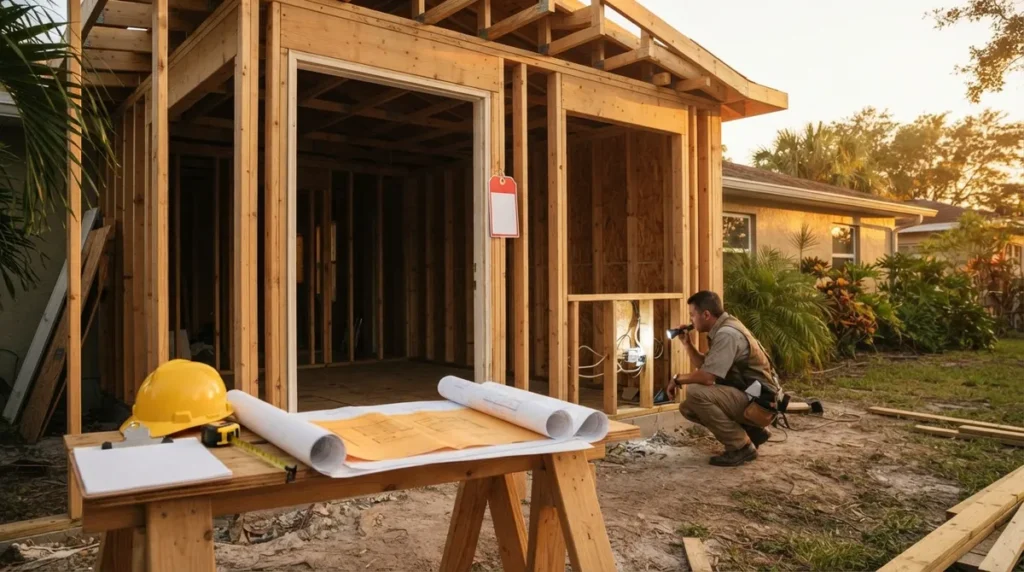
Ignoring a Florida code enforcement notice usually makes the problem worse, with stop-work orders, accumulating fines, and closing or refinancing complications, so act before the deadline.
-
An after-the-fact permit is a process to seek approval for completed work; it does not automatically legalize the work, and you still must pass inspections and meet building and zoning rules.
-
Submitting a permit application does not close a code case by itself; the case typically closes only after the permit is issued, inspections pass, and the enforcement office confirms compliance in writing.
-
There is no statewide after-the-fact fee; local penalties vary widely, such as 2x standard fees in Orange City versus 4x in Palm Beach County, so check your jurisdiction's fee schedule.
-
Gather the notice of violation, a site plan or survey, as-built drawings, and engineer letters early, and be ready to expose concealed work so inspectors can verify it.
-
Track every notice deadline, contact both building and code enforcement offices, and watch for permit expiration, since some jurisdictions expire permits after 180 days without passed inspections.
Picture this: you open your mailbox, and there it is. A crisp envelope from your city's code enforcement office. Maybe a neighbor mentioned your new patio enclosure. Maybe a roofer finished a job without pulling a permit. Maybe you bought a home and just learned the previous owner skipped the paperwork. Take a breath. You are far from the first person in this spot, and there is a clear path forward.
Here is the big question most people face: do you work through code enforcement after the fact in Florida by actively fixing the problem, or do you wait and hope it goes away? One path leads to a closed case. The other tends to lead to bigger fees, stop-work orders, and stressful closings. This guide compares both options side by side, so you can decide with confidence. We will walk through what the process looks like, what it can cost, and how to move quickly without making common mistakes.
What Code Enforcement After the Fact Actually Means in Florida
Florida generally requires a permit before anyone constructs, alters, modifies, repairs, or demolishes a building. Florida Statutes § 553.79 assigns permitting and inspection duties to the appropriate enforcing agency, and local governments handle most of the day-to-day work.
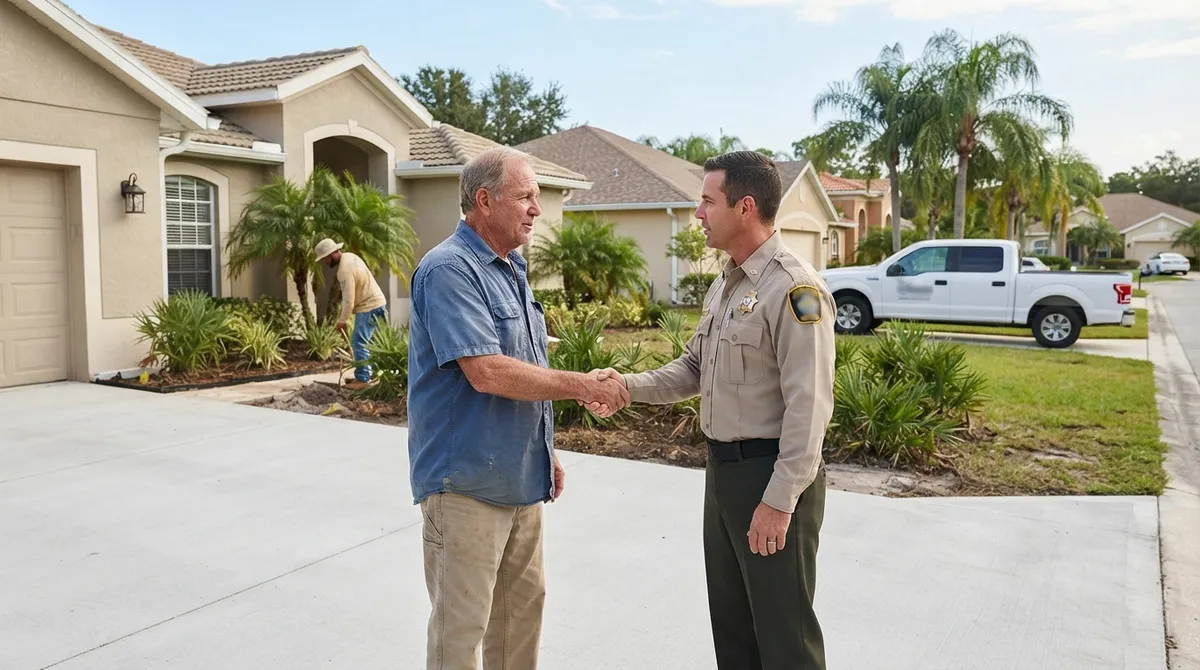
When work happens without a required permit, two things can unfold at once. The building department can require an after-the-fact permit, and the code enforcement office can open a case. These are related, but they are not the same thing. Building staff review plans and inspect work. Code enforcement staff track violations and deadlines.
An after-the-fact permit is simply a local process for seeking approval of work already done. It does not automatically legalize the work, and it is not a guarantee of approval. You still apply, provide documentation, satisfy building and zoning requirements, and pass inspections. If you want a deeper walkthrough of the process itself, our guide on how to get an after-the-fact permit in Florida covers it step by step.
Option One: Fix It Proactively
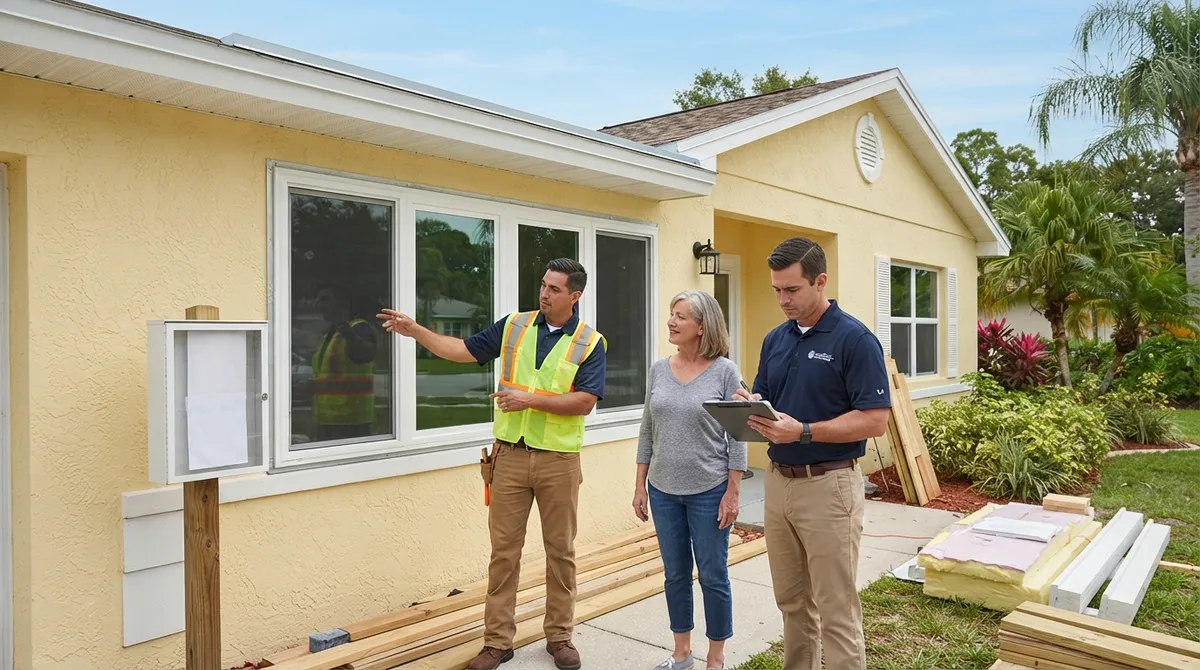
Fixing the violation means engaging with the process head-on. You respond to the notice, apply for the permit, and coordinate with both the building department and code enforcement staff. It is not always quick, but it is predictable, and predictable is a wonderful thing in construction.
What the Proactive Path Looks Like
- Read the notice carefully. Note the case number, the alleged violation, and every deadline.
- Contact the right offices. Reach out to both code enforcement and the building department. Ask what they need for a violation permit.
- Gather documentation. This often includes the notice of violation, a site plan, as-built drawings, and sometimes an engineer letter.
- Submit the application. Many jurisdictions flag it as a code-violation or after-the-fact permit so it gets routed correctly.
- Respond to reviewer comments. Corrections are common and completely normal.
- Pass inspections. If work is concealed, inspectors may require exposure so they can verify it.
- Close it out. Obtain any certificate of completion or closeout documents, then confirm the code case is formally resolved.
Palm Beach County, for example, notes that a code-violation permit application must include the notice of violation, and that required inspections must pass to abate the violation. Local steps vary, so always confirm with your specific jurisdiction.
Why Many Owners Choose This Route
- It stops the clock on escalating penalties in many cases.
- It creates a paper trail that satisfies lenders, insurers, and buyers.
- It protects your ability to sell, refinance, or insure the property.
- It removes the uncertainty of waiting for the next notice.
Option Two: Ignore It and Hope
We understand the temptation. Permits can feel like a hassle, and a notice can feel like a bad dream you can sleep off. But ignoring a violation rarely makes it disappear. Code enforcement cases typically carry deadlines, and missing them can trigger additional action under the applicable statute and local ordinance.
Potential consequences of waiting can include:
- Stop-work orders on active projects
- Citations and fines that can grow over time
- Additional fees or penalties on the eventual permit
- Code enforcement proceedings before a local board or special magistrate
- Complications at closing, refinancing, or insurance renewal
The exact consequences depend on your city or county. The point is simple: delay tends to make the problem larger, not smaller.
Side-by-Side Comparison
| Factor | Fix It Proactively | Ignore It |
|---|---|---|
| Penalty risk | Typically limited to local after-the-fact fees | Fines, citations, and escalating action can accumulate |
| Timeline control | You set the pace within notice deadlines | Enforcement sets the pace |
| Impact on sale or refinance | Closeout documents help clear the way | Open violations can stall closings |
| Stress level | Manageable, with a clear checklist | Ongoing uncertainty |
| Final outcome | Case can be formally resolved | Case may remain open or worsen |
What Will It Cost? Local Examples
Here is where honesty matters: there is no single statewide after-the-fact permit fee. Florida Statutes § 553.79 requires permits before covered work begins, but it does not set one uniform penalty rate. Each jurisdiction sets its own fee policy, so costs can differ quite a bit from one city to the next.
| Jurisdiction | Reported Approach |
|---|---|
| Palm Beach County | Permit fees for violation work calculated at four times standard fees (county guidance, accessed 2026) |
| Orange City | Permit fee plus a penalty of two times the permit fee for work without a permit (city guidance) |
| City of Miami | Two times the scheduled fee plus a base fee for homestead properties; four times plus a base fee for non-homestead or commercial (city fee schedule, accessed 2026) |
These are local examples, not statewide rates, so please treat them as illustrations rather than quotes. Your own cost depends on the scope of work, your property type, and your local fee schedule. For a closer look at numbers, see our breakdown of after-the-fact permit costs in Florida.
The Documents and Inspections That Usually Come Up
Every jurisdiction has its own checklist, but a few items show up again and again. Having them organized early can shave days or weeks off your timeline.
- The notice of violation and any case paperwork
- Property survey or site plan showing what was built and where
- As-built drawings documenting the existing conditions
- Engineer letters or sealed drawings when structural, electrical, or mechanical elements need verification
- Product approvals for items such as windows, doors, or roofing materials
- Contractor or owner-builder information as required locally
If the work is already covered by drywall, flooring, or finished surfaces, the building official may require additional documentation or ask you to expose construction so it can be inspected. The exact requirement depends on the type of work and your jurisdiction. Our team can help you prepare as-built drawings and engineer letters that reviewers expect to see.
Does an After-the-Fact Permit Clear the Code Case?
This is one of the most common misunderstandings. Submitting a permit application does not, by itself, resolve a code enforcement case. Think of the permit as one major piece of the puzzle. The case typically closes once the permit is issued, inspections pass, and the enforcement office confirms compliance.
That is why coordination matters so much. Keep both offices in the loop, follow the deadlines in your notice, and ask for written confirmation when the case is abated. If a deadline is looming and you need more time, ask early. Many offices are more flexible with owners who communicate than with owners who go silent.
Can Code Enforcement Make You Remove the Work?
In some situations, yes, it is possible. If the work cannot meet code or zoning requirements, a jurisdiction may require corrections or removal. That said, many projects can be brought into compliance through documentation, engineering, and modest corrections. The outcome depends on the work, the location, and local rules. Our article on whether Florida code enforcement can force you to remove work explores this in more detail.
Who Should Handle It: DIY or a Permitting Pro?
Some owners successfully handle a small violation on their own, especially for a simple scope with a friendly local office. But many cases involve drawings, engineering, multiple reviewers, and tight notice deadlines. That is where outsourced help earns its keep.
| Approach | Best For | Watch Out For |
|---|---|---|
| DIY | Simple scopes, flexible deadlines, owners comfortable with paperwork | Missed requirements, rejected submittals, lost time |
| Permitting pro | Complex scopes, tight deadlines, closings, multi-jurisdiction work | Choosing a firm without in-house drafting or engineering |
At 1 Contractor Solutions, we act as Florida's outsourced permitting department. We prepare or review plans, file the application, track it, work every reviewer comment, and carry it through approval and closeout. Our drafting and engineering are in-house, and our own engineer signs and seals the work, so when a reviewer flags something, we fix it without waiting on an outside consultant. You can learn more about our after-the-fact and expired permit services or our code compliance violation support.
Tips for Different Readers
General Contractors and Design Trades
If a subcontractor skipped a permit on your job, move quickly. Document the scope, gather as-builts, and loop in your engineer early. Our general contractor support and drafting-only service can slot into your workflow without disrupting it.
Solar Companies
Unpermitted installs happen, and they can usually be addressed with proper structural and electrical documentation. See how we support solar contractors across Florida.
Realtors and Property Buyers
Open violations and unpermitted work can surface during inspections or title review. Early research saves deals. Our realtor and closing support and the open permit search tool are good places to start.
Homeowners and Residential Owners
You do not need to be an expert. You just need a plan and a deadline calendar. Start by reading your notice, then reach out for help if the steps feel unclear. Our homeowner resources are written for exactly this situation.
Common Mistakes to Avoid
- Missing the notice deadline. Mark every date the day you receive the letter.
- Talking to only one office. Building and code enforcement should both be informed.
- Submitting incomplete drawings. Incomplete packets trigger rejections and delay.
- Assuming the permit alone closes the case. Get written confirmation of abatement.
- Hiding concealed work. Be upfront so the building official can plan inspections.
- Letting the permit expire. Orange City, for example, notes permits can expire after 180 days without a passed inspection or after work is suspended for 180 days. Stay on top of local rules.
Our Verdict: Which Path Wins?
For most owners, fixing it proactively wins by a comfortable margin. It limits surprises, protects your property value, and gives you a clean paper trail. Ignoring the issue may feel easier in the short term, but it tends to cost more in time, money, and stress.
If you want help sorting out what your jurisdiction needs, urgent permit rescue is built for denials, stop-work orders, and closings against the clock. You can also see what our customers say by checking out our 1 Contractor Solutions reviews on Google, and you can follow us on LinkedIn for Florida permitting updates.
Ready to Resolve It?
A code enforcement notice is stressful, but it is solvable. With the right documents, the right inspections, and a steady hand, most cases move from open to closed without drama. We answer around the clock and respond within 30 minutes, so you never have to wait long for a real person. When you are ready, get a free quote and let us help you turn that notice into a closed case.
FAQs
How do I get an after-the-fact building permit in Florida?
Start by reading your notice and contacting your local building department to learn their process. You will typically submit an application with the notice of violation, drawings or as-builts, and any engineering documents, then pass the required inspections. Requirements vary by city and county, so confirm the specifics locally.
What happens if code enforcement finds unpermitted work in Florida?
You may receive a notice with a deadline to correct the violation, and in some cases a stop-work order, citations, or additional fees. The exact steps depend on your local ordinance. The good news is that responding promptly and pulling the right permit usually keeps things moving in a positive direction.
Does an after-the-fact permit clear a code violation?
Not by itself. The permit is a key step, but the case typically closes only after the permit is issued, inspections pass, and the code enforcement office confirms compliance. Coordinate with both offices and ask for written confirmation when the case is resolved.
How much does an after-the-fact permit cost in Florida?
There is no single statewide rate. Some jurisdictions charge two times the standard permit fee, while others, like Palm Beach County, report four times standard fees for violation work. Check your local fee schedule for the most accurate number.
Can code enforcement make me remove unpermitted work?
It is possible if the work cannot be brought into compliance with building or zoning requirements. Many projects can be legalized through documentation, engineering, and modest corrections. A permitting professional can help you evaluate your options before deadlines pass.
We do this work every day across all 67 Florida counties. Call (866) 314-6931 and we will tell you what your situation actually requires — including when you do not need us.
Related services
Permit Facilitation & Filing
You have a crew scheduled, a client asking for dates, and a permit sitting somewhere in a queue you cannot see. We file it, w…
See the servicePlan Review Coordination
A permit in plan review is not one queue. On a commercial project it can be six queues, each with its own reviewer, its own c…
See the serviceReady to get your permit moving?
One call tells you which jurisdiction controls your project, what it will take, and what it will cost. Most of the time we can scope it on the phone.