
Blog
Can Florida Code Enforcement Force You to Remove Work?
Learn whether Florida code enforcement can force removal of unpermitted work, when after-the-fact permits work, and how to avoid fines.
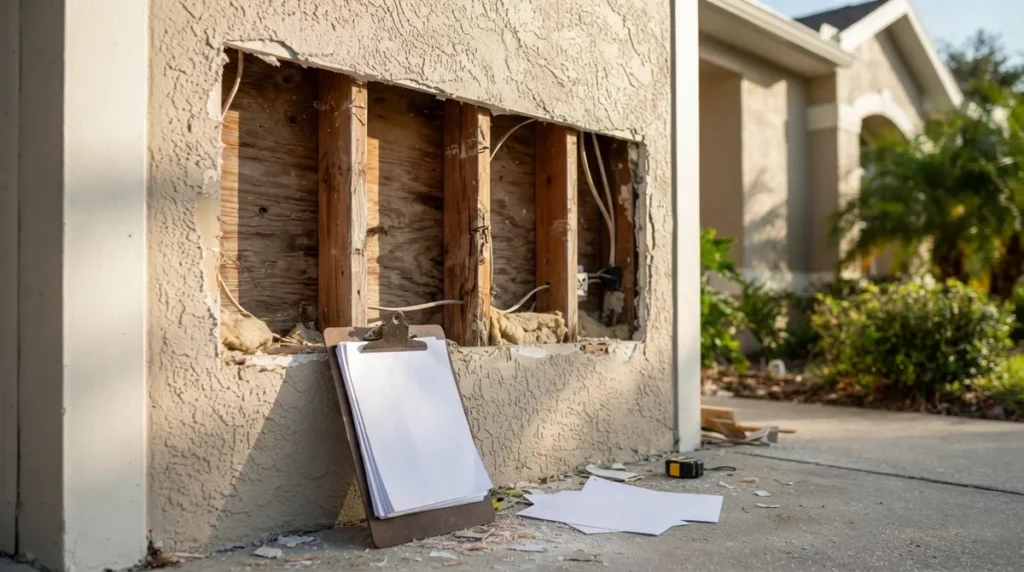
Key Takeaways
-
Yes, code enforcement can require removal of unpermitted work in Florida, but removal is usually the last resort—most jurisdictions prefer legalizing work through after-the-fact permits if it meets current building, zoning, and safety standards.
-
Apply for an after-the-fact (retroactive or as-built) permit to legalize completed unpermitted work instead of removing it; each of Florida's 67 counties has different documentation requirements, fees, and processes, so contact your local building department directly.
-
Florida Statutes §162.06 typically requires code enforcement to give you 10-30 days written notice to correct a violation before escalating to a hearing, giving you a critical window to act and prevent fines and property liens.
-
Fines for unpermitted work violations start at $250/day for first violations and $500/day for repeat violations, and unpaid fines become a lien on your property—quick action after receiving a notice is essential to avoid accumulating penalties.
-
After-the-fact permit approval requires sealed as-built drawings, engineering documentation, inspector access (sometimes requiring wall openings to verify concealed work), and higher-than-standard permit fees as a penalty.
-
Removal becomes necessary only when unpermitted work violates setbacks or zoning, sits in flood zones without proper elevation, fails structural engineering review, or shows irreparable concealed defects like corrosion or improper wiring.
Picture this: you're getting ready to sell your Sarasota home, or maybe you just bought a property in Bradenton with a screened-in lanai that looks a little too new. Then a letter shows up. It's from code enforcement, and it mentions the words "unpermitted work." Your stomach drops a little, right? We get it, and we want you to know something right away: you're not alone, and this is fixable more often than you'd think. Grab a cup of coffee, because we're going to walk through exactly what Florida law says, what your real options are, and how folks just like you have handled this without losing their minds (or their additions).
So let's answer the big question first, because you deserve a straight answer before we get into the details.
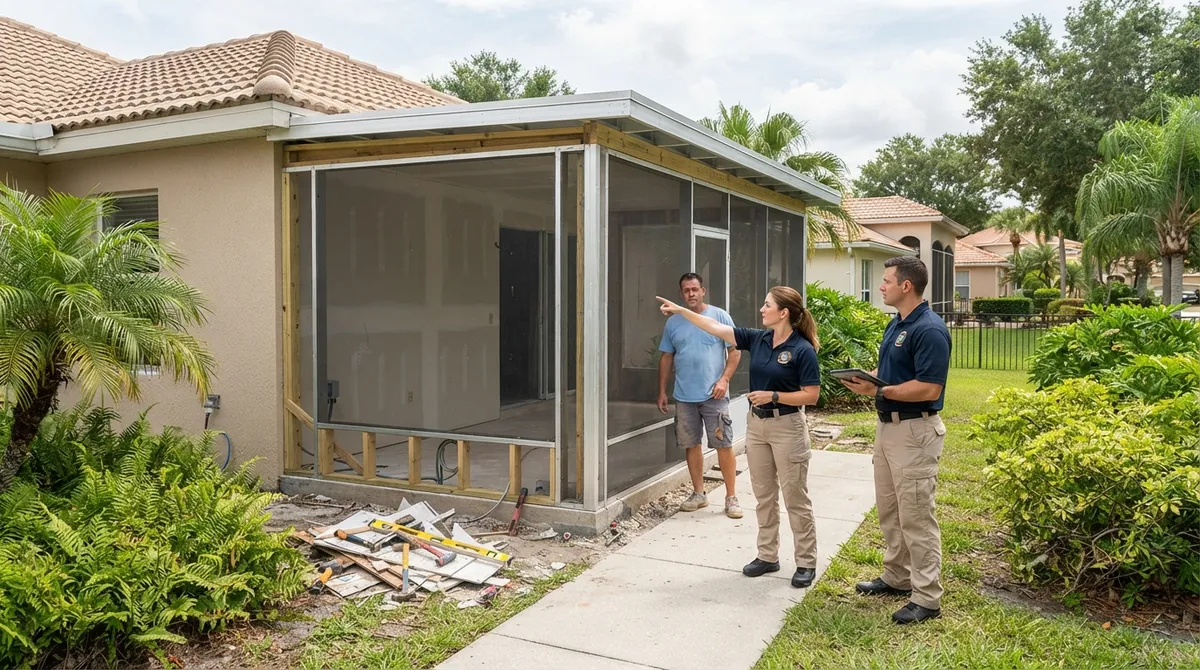
Can Code Enforcement Really Make You Remove Unpermitted Work in Florida?
Yes, unfortunately, Florida code enforcement and building officials can require you to remove or demolish unpermitted work. But here's the good news: removal is usually the last resort, not the first move. Florida Statutes §553.79 requires a permit before most construction, alteration, repair, or demolition happens, and local building departments enforce that rule. Whether you actually have to tear something out depends on whether the work can be brought up to current building, zoning, floodplain, and fire-safety standards.
In plain terms: if your unpermitted addition, deck, or electrical panel can pass inspection once documented properly, most jurisdictions would much rather permit it after the fact than force a demolition. Removal typically only becomes the answer when the work is structurally unsafe, sits in a floodplain violation, encroaches on setbacks, or simply cannot be verified without opening up walls that reveal bigger problems.
Code Enforcement vs. the Building Department: Who's Actually Knocking on Your Door
This trips up a lot of homeowners and even some contractors, so let's clear it up. Code enforcement and the building department are related, but they are not the same office, and they don't follow the same playbook.
- The building official handles permits, plan review, and inspections. They can issue a stop-work order if they discover unpermitted construction happening right now.
- Code enforcement (often a board or a special magistrate) handles ordinance violations under Chapter 162, Florida Statutes, and typically gets involved after a complaint or a referral, sometimes years after the work was completed.
- Both can ultimately require you to legalize or remove work, but the notice process, timelines, and fines differ significantly between the two.
Knowing which one sent your notice matters because it determines your next move. If you're unsure which office has jurisdiction over your address, our Building Department Lookup tool can point you in the right direction fast.
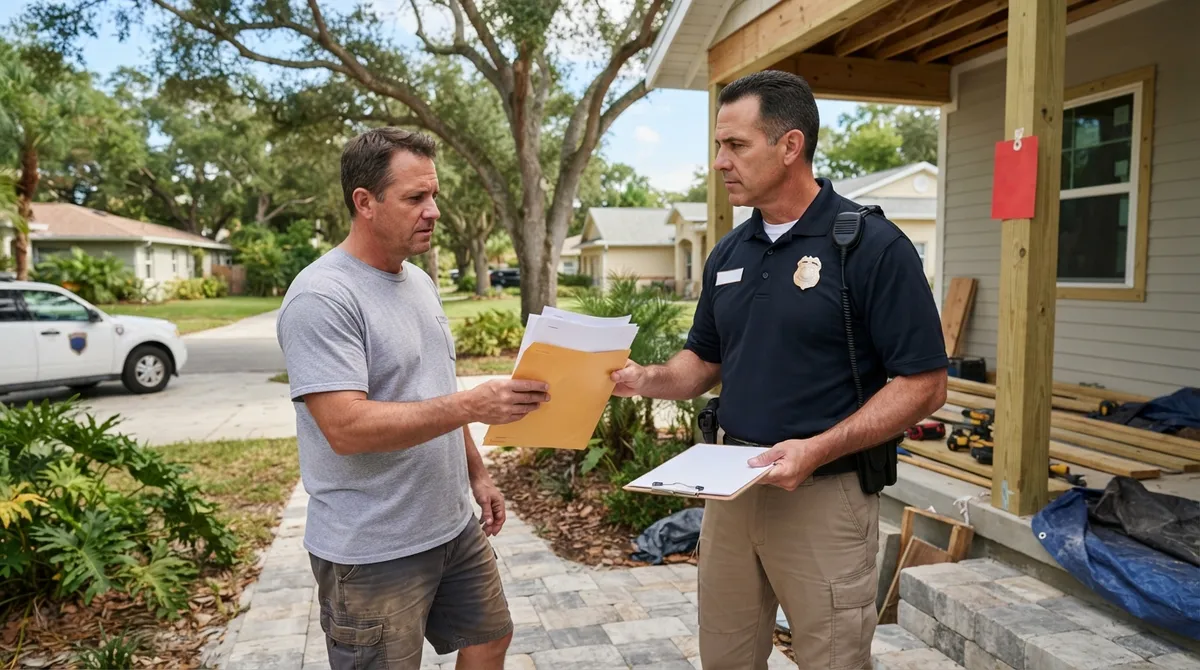
The Notice-and-Correct Process Under Florida Law
Florida Statutes §162.06 generally requires code enforcement to give you notice of a violation and a chance to fix it before things escalate to a hearing. This is huge, because it means you almost always get a window to act before penalties pile up.
Here's roughly how that timeline tends to unfold:
- Initial notice of violation. You'll receive written notice describing the alleged violation and a reasonable time frame to correct it, often 10 to 30 days depending on the jurisdiction.
- Compliance opportunity. You apply for the appropriate permit, submit documentation, or otherwise show good-faith progress toward correcting the issue.
- Hearing (if uncorrected). If the violation isn't resolved, the case goes before a code enforcement board or special magistrate, who can order compliance by a specific date.
- Fines and liens. If you still haven't complied after the ordered date, fines begin accruing, and unpaid fines can become a lien on your property.
There are exceptions for repeat violations or situations that present an imminent safety threat, where the process can move much faster and skip some of the usual courtesy steps. If you've received a notice, don't guess. Read it carefully and note every deadline listed.
Your Best Path: The After-the-Fact Permit
Here's the part that tends to bring people a lot of relief. In most cases, you don't have to remove the work at all. You can apply for what's called an after-the-fact permit, sometimes referred to as a retroactive or as-built permit, which essentially asks the building department to review and legalize work that's already been completed.
Florida doesn't have one single statewide process for this. Each of the 67 counties and hundreds of municipalities sets its own documentation requirements, fee schedule, and inspection procedures. That's exactly why so many homeowners, investors, and even seasoned general contractors end up needing help navigating after-the-fact and expired permits instead of trying to decode it themselves county by county.
What Happens During an After-the-Fact Permit Review
Getting approved isn't automatic, and it helps to know what reviewers are actually looking for. Typically, you'll need to provide:
- As-built drawings or plans showing exactly what was constructed
- Engineering documentation confirming structural, electrical, or plumbing work meets current code
- Payment of local after-the-fact fees, which are often higher than standard permit fees as a penalty
- Access for inspectors to verify the work, sometimes requiring you to open up walls, ceilings, or crawl spaces to expose concealed construction
That last point catches people off guard. Yes, inspectors really can ask you to cut into drywall or expose framing if they can't otherwise confirm what's behind the finished surfaces. It's not fun, but it's a lot less painful than a full removal order. Having as-built drawings prepared professionally upfront often reduces how much destructive investigation is needed.
When Removal Becomes the Only Option
We won't sugarcoat it: sometimes an after-the-fact permit gets denied, and removal or demolition is genuinely the outcome. This tends to happen when:
| Situation | Why Removal May Be Required |
|---|---|
| Structure violates setback or zoning requirements | Cannot be corrected without relocating or removing the structure |
| Work sits in a flood zone without proper elevation | Conflicts with FEMA and local floodplain management rules |
| Structural elements fail engineering review | Framing, footings, or load paths can't safely support the structure |
| Concealed defects discovered upon opening walls | Corrosion, rot, or improper wiring that can't be economically corrected |
| Repeat violation with no good-faith correction attempt | Board loses patience and orders removal as the compliance path |
If your property falls near a flood zone, it's worth understanding how the FEMA 50 percent rule in Florida might affect whether repairs or additions can legally remain in place.
What Fines Actually Look Like
Nobody wants a surprise bill, so let's talk numbers straight from the statute. Florida Statutes §162.09 sets general caps on code enforcement fines, though local boards have discretion within these limits.
| Violation Type | Maximum Daily Fine |
|---|---|
| First violation | Up to $250 per day |
| Repeat violation | Up to $500 per day |
| Irreparable or irreversible violation | Up to $5,000 (one-time, case-specific) |
These fines can add up shockingly fast, and a recorded fine order can become a lien against your property, which is bad news if you're trying to sell or refinance. This is exactly why quick action after receiving a notice pays off. For more on what triggers penalties, our guide on the penalty for building without a permit in Florida breaks it down further.
Steps to Take the Moment You Get a Notice
Take a breath. Here's a practical checklist we walk clients through every week:
- Read the notice carefully. Identify whether it's from code enforcement or the building department, and note every deadline.
- Stop any ongoing unpermitted work immediately. Continuing work after notice almost always makes things worse.
- Pull the property's permit history. You can use tools like an Open Permit Search to see what's already on file.
- Contact the building department to ask about after-the-fact permitting. Don't assume; ask directly what your jurisdiction requires.
- Get professional documentation together. Sealed drawings, engineering letters, and as-built plans go a long way toward a smooth review.
- Consider legal advice if the order is contested or the potential fines are substantial.
How This Plays Out for Different Situations
For Homeowners and Residential Property Owners
If you've discovered an old unpermitted addition or a previous owner's DIY project, don't panic. Most residential cases get resolved through the after-the-fact permit route. We help homeowners across Bradenton, St. Petersburg, and beyond prepare the plans and paperwork that turn a scary notice into a closed case.
For Real Estate Professionals
Unpermitted work discovered during a home inspection can absolutely delay or kill a closing. If you're representing buyers or sellers, getting ahead of the issue with a permit history search and quick professional guidance protects your transaction timeline. Learn more about how an open permit found at closing gets resolved.
For General Contractors and Solar Companies
If you're managing multiple projects across jurisdictions, unpermitted work discovered mid-project can throw off your entire schedule. Having a team that handles code compliance and violations alongside your permit filing means fewer surprises and faster resolution when something slips through.
Why Professional Help Makes This Process So Much Smoother
Here's the honest truth: the biggest reason after-the-fact permits get denied isn't that the work is unsafe. It's that the paperwork is incomplete, the drawings don't match what was actually built, or nobody followed up on reviewer comments before deadlines expired.
That's where we come in. At 1 Contractor Solutions, our in-house drafting and engineering team prepares sealed drawings, coordinates with your local building department, and tracks your case from notice to closeout. We work across all 67 Florida counties, and we've handled after-the-fact permits that other firms turned away. If you're dealing with a code enforcement notice right now in Hillsborough County, Pinellas County, or anywhere else in the state, our Urgent Permit Rescue service exists specifically for situations like this.
Curious what other homeowners and contractors say about working with us? Feel free to visit us on Google — 1 Contractor Solutions and see real reviews, or check out additional resources from the Florida Building Commission for statewide code guidance. You can also stay connected and see how we're helping Florida property owners every day when you follow us on LinkedIn or follow us on Facebook.
A Quick Comparison: Fixing It Yourself vs. Getting Professional Help
| Factor | DIY Approach | Professional Permitting Help |
|---|---|---|
| Understanding jurisdiction requirements | Time-consuming research per county | Already known and documented |
| Drawing preparation | May require hiring separately | In-house sealed drawings included |
| Reviewer comment turnaround | Can stall for weeks | Handled same-day in many cases |
| Risk of denial or delay | Higher due to incomplete submissions | Lower with experienced coordination |
Let's Wrap This Up Together
Here's what we want you to take away from all of this: yes, Florida code enforcement can require removal of unpermitted work, but that outcome is far from guaranteed. In the vast majority of cases we see, a properly documented after-the-fact permit gets the job legalized without anyone picking up a sledgehammer. The key is acting quickly, understanding which office is involved, and getting the right documentation in front of the right reviewer the first time.
You don't have to figure this out alone, and honestly, you shouldn't have to. If you've received a notice, discovered unpermitted work during a renovation, or you're a real estate professional trying to clear a title before closing, we're here and ready to help. Reach out today to get a free quote and let's turn that stressful notice into a resolved permit.
FAQs
Can a Florida city or county really make me tear down unpermitted construction?
Yes, it's possible, but it's usually the last resort, not the first step. Most jurisdictions would rather help you legalize the work through an after-the-fact permit if it can be brought up to code, so removal typically only happens when safety, zoning, or floodplain issues can't be corrected.
Can I get an after-the-fact building permit in Florida?
In most cases, yes! Florida allows after-the-fact, retroactive, or as-built permits, though each of the 67 counties has its own process, fees, and documentation requirements. We work with folks across the state every day to get these approved smoothly.
What happens if I just ignore a code enforcement notice in Florida?
Please don't do this one, friend. Ignoring a notice usually leads to a hearing, then fines that can reach $250 a day for a first violation and $500 a day for repeat violations, and those fines can turn into a lien on your property.
Will inspectors really make me open walls or ceilings to check unpermitted work?
Sometimes, yes, especially if concealed work like electrical or plumbing can't otherwise be verified. It's not the most fun part of the process, but having professional as-built drawings ready ahead of time often minimizes how much needs to be exposed.
Who should I contact first, code enforcement or the building department?
Start with the building department if you're proactively trying to fix unpermitted work, since they handle the actual permit and inspection process. If you've already received a notice, it will tell you exactly which office issued it, so follow those instructions first.
We do this work every day across all 67 Florida counties. Call (866) 314-6931 and we will tell you what your situation actually requires — including when you do not need us.
Related services
Permit Facilitation & Filing
You have a crew scheduled, a client asking for dates, and a permit sitting somewhere in a queue you cannot see. We file it, w…
See the servicePlan Review Coordination
A permit in plan review is not one queue. On a commercial project it can be six queues, each with its own reviewer, its own c…
See the serviceReady to get your permit moving?
One call tells you which jurisdiction controls your project, what it will take, and what it will cost. Most of the time we can scope it on the phone.