
Blog
5 Asbestos Survey Mistakes That Stall Cape Coral Demolitions
Avoid costly delays. Learn the 5 asbestos survey mistakes that stall Cape Coral demolitions and how to coordinate DEP and city permits in 2026.
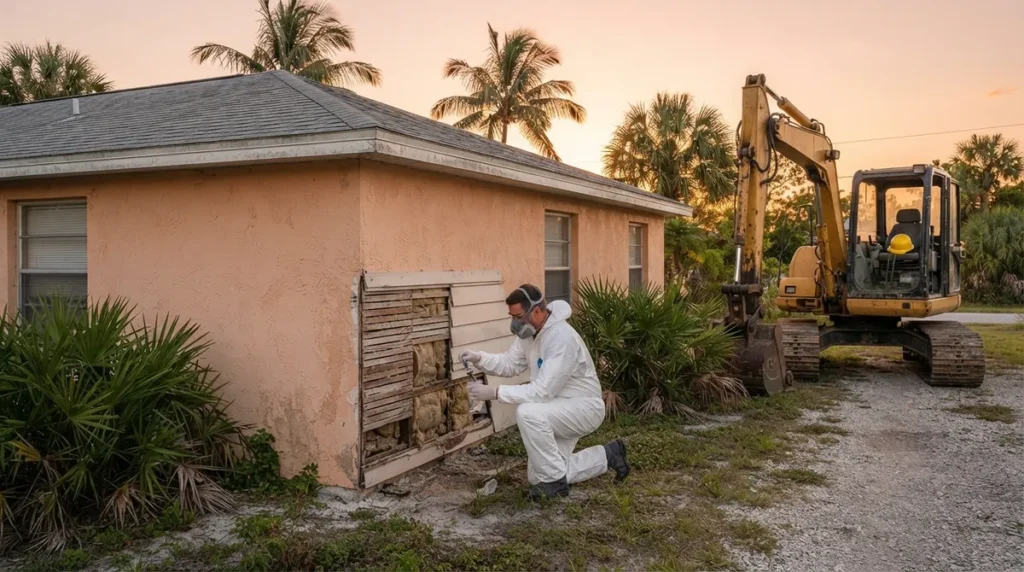
Key Takeaways
-
An asbestos survey is required before demolition under Florida DEP and federal NESHAP rules, and it must be completed by a licensed asbestos consultant for applicable notifications.
-
Do not assume a single-family home is exempt: the residential exclusion (four or fewer units) has exceptions when the home is part of a larger commercial, public, or multi-unit project.
-
The DEP Notice of Renovation or Demolition generally must be submitted at least 10 working days before work starts, so plan the survey early enough to report accurate quantities.
-
Where NESHAP applies, regulated asbestos-containing material generally must be removed before demolition begins; starting early risks stop-work orders and fines.
-
The asbestos survey runs alongside, but does not replace, the City of Cape Coral demolition permit, so both tracks need to be coordinated and kept consistent.
-
Confirm current forms, fees, and local checklists before filing, since requirements can change and this guide is general information rather than legal advice.
Picture this: your Cape Coral demolition crew is booked, the excavator is scheduled, and the homeowner is already dreaming about the new build. Then someone asks one simple question: "Where's the asbestos survey?" Suddenly the whole schedule is on hold. If that sounds stressful, take a deep breath. It happens to smart, hardworking people every single week, and it is very fixable.
An asbestos survey for demolition in Cape Coral is one of those steps that feels like paperwork until it derails a project. The good news? Most delays come from a handful of avoidable mistakes. In 2026, with Florida DEP notification rules and local permit checklists working side by side, knowing the order of operations matters more than ever.
In this friendly guide, we walk through what the survey actually is, who needs one, how it connects to the City of Cape Coral demolition permit, and the five mistakes we see most often. Whether you are a general contractor, an investor, a realtor, or a homeowner clearing a lot, you will leave with a clear plan and a lot less guesswork.
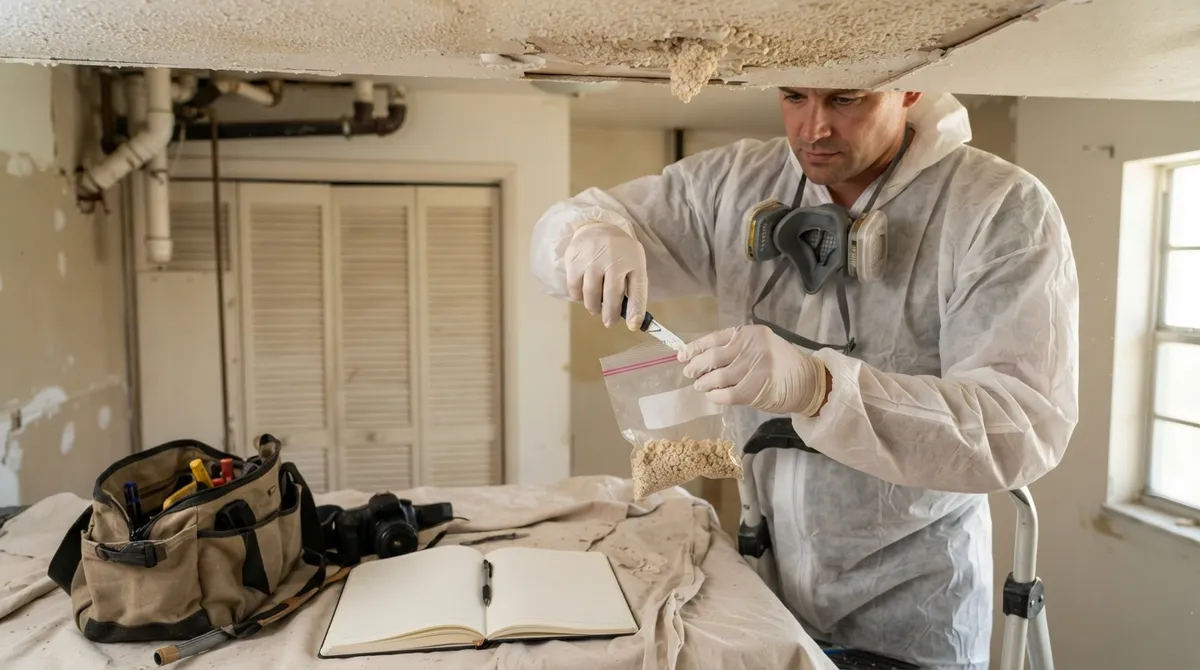
What an Asbestos Survey Actually Is (and Why It Matters)
An asbestos survey is a thorough inspection of the building, or the portion of it that will be disturbed, to identify asbestos-containing materials (ACM). The inspection records where those materials are, what condition they are in, and, where relevant, how much regulated asbestos-containing material (RACM) is present.
Florida DEP says a thorough inspection is required before demolition or renovation that falls under the federal asbestos NESHAP (National Emission Standards for Hazardous Air Pollutants). For notifications that apply, DEP materials call for a survey report from a licensed asbestos consultant.
Think of it as a map. It tells your demolition contractor what can be knocked down safely, what must be removed first, and how the waste has to be handled. Without that map, you are guessing, and guessing in demolition is expensive.
Common Places ACM Hides in Older Cape Coral Buildings
- Popcorn or textured ceilings and joint compound
- Vinyl floor tile and the mastic underneath it
- Roofing felt, shingles, and flashing materials
- Pipe and duct insulation
- Stucco, plaster, and cement board siding
- Window glazing and caulk
Buildings from the mid-20th century through the 1980s are the usual suspects, and Cape Coral has plenty of homes and small commercial buildings from that era. The survey tells you what is actually there instead of what you hope is there.
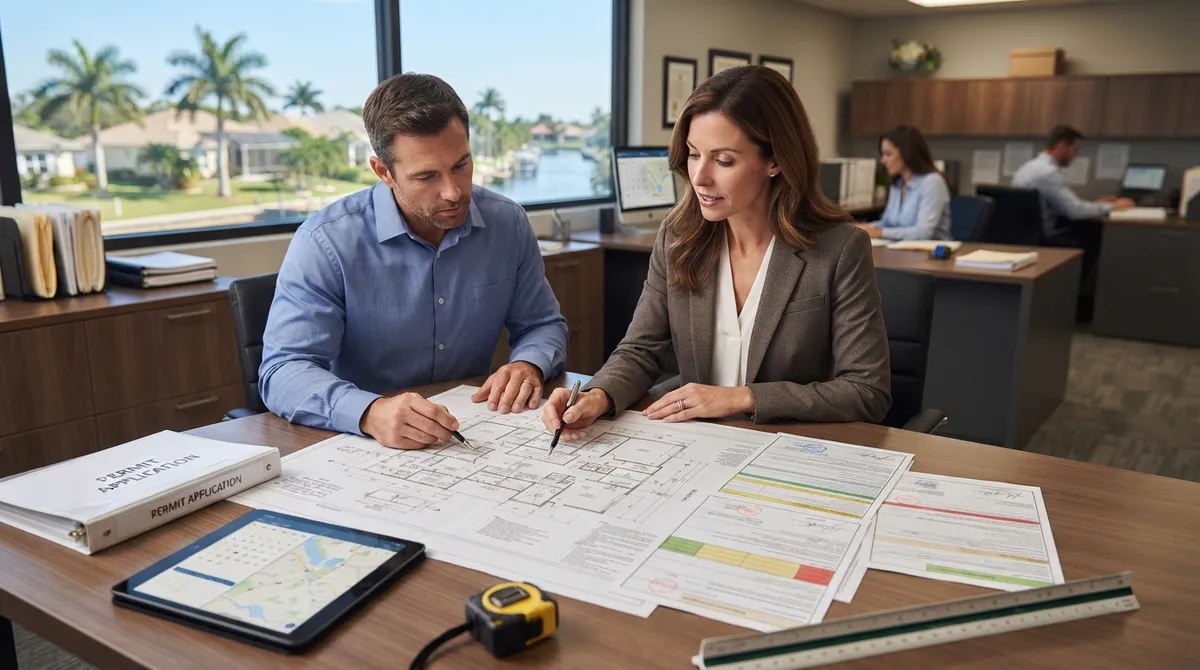
Where the Survey Fits in the Permitting Timeline
Here is the part that trips people up. The asbestos survey is not a substitute for a City of Cape Coral demolition permit. It runs alongside it. One is an environmental compliance step. The other is the local building-department approval. You generally need both, and they need to be coordinated.
| Step | Who Handles It | Why It Matters |
|---|---|---|
| Asbestos survey | Licensed asbestos consultant | Identifies ACM/RACM, locations, and quantities |
| Florida DEP notification | Owner or operator (often with contractor) | Generally due at least 10 working days before work starts |
| Demolition permit | City of Cape Coral | Local approval to demolish; confirm current checklist |
| Abatement, if needed | Licensed abatement contractor | RACM generally must be removed before demolition |
| Waste transport and disposal | Transporter and approved disposal site | Reported on the DEP notice |
If you want help sorting out the permit side of that table, our demolition permit services and asbestos, mold and environmental support were built for exactly this kind of coordination. You can also read our related guide on how to get an asbestos survey for demolition in Fort Myers, since Lee County projects share many of the same steps.
Mistake 1: Assuming a Single-Family Home Is Automatically Exempt
This one comes up constantly, and we understand why. The federal asbestos NESHAP generally excludes residential buildings with four or fewer dwelling units. So a lot of folks hear "exempt" and stop reading.
But the exclusion does not necessarily apply when a small residential building is part of a larger commercial or public project, or part of a project involving more than four residential units. Think of a developer clearing several lots, or a house being demolished as part of a bigger redevelopment plan.
Applicability depends on the facts of your project. The friendly, safe move is to confirm with the regulator instead of assuming a single-family home is exempt from every asbestos requirement. A quick phone call or a conversation with a permitting professional can save you weeks.
Mistake 2: Skipping the Survey Because the Quantities Look Small
You may have heard about the federal RACM thresholds, and they are worth understanding. Under the asbestos NESHAP, the thresholds are:
- At least 260 linear feet of RACM on pipes
- At least 160 square feet of RACM on other facility components
- At least 35 cubic feet where the material cannot otherwise be measured
Here is the catch. Those thresholds relate to specific NESHAP emission-control requirements. They do not mean a survey is unnecessary, and they do not mean other state or local rules disappear. You cannot know whether you are under or over a threshold until someone has actually surveyed the building.
In other words, the survey is how you find out which side of the line you are on. Skipping it to "save money" usually costs far more once a notice gets rejected or an inspector asks questions.
Mistake 3: Hiring the Wrong Person to Do the Survey
A handyman with a flashlight is not an asbestos consultant. Florida DEP notification materials call for the survey report to be conducted by a licensed asbestos consultant for applicable notifications. That license matters because the report becomes part of your official paper trail.
Before you hire, ask a few simple questions:
- Is the consultant licensed in Florida for asbestos surveys?
- Will the report list ACM locations, conditions, and quantities by category?
- Do the quantities match what you will report on the DEP notice?
- How fast can sampling and lab results be turned around?
Quantities matter more than people expect. The DEP notice asks for project information such as the survey consultant, quantities and categories of ACM and RACM, contractors, the waste transporter, and the disposal site. The numbers you report should match the survey. A mismatch is a common reason notices get questioned.
Mistake 4: Starting the Survey Too Late
Timing is everything here. Florida's Notice of Renovation or Demolition must generally be submitted to the appropriate DEP district or local air-program office at least 10 working days before the project start date. DEP also offers online submission through its Business Portal with the same advance-notice period.
Now work backward. You need a survey before you can fill out the notice accurately. If sampling takes a few days, lab results take a few more, and abatement is needed, the calendar fills up fast. A demolition date that looked comfortable can quickly turn into a scramble.
A Simple Backward-Planning Example
| Milestone | Rough Planning Note |
|---|---|
| Target demolition start | Pick the date you actually want |
| DEP notice submitted | At least 10 working days earlier |
| Survey report finished | Before the notice, so quantities are accurate |
| Abatement (if needed) | Must be completed before demolition begins |
| Permit submittal to City | Run in parallel; confirm current local checklist |
These are planning notes, not guarantees. Confirm current forms, fees, submission destination, and the local permit checklist before you file anything. Requirements can change, and it never hurts to double-check.
Mistake 5: Letting Demolition Start While ACM Remains
This is the big one, and it is the one that can turn a stressful week into a serious problem. Where the NESHAP applies, RACM generally must be removed before demolition, subject to regulatory exceptions. Removal, wetting, containment, transport, and disposal all have to follow the applicable requirements.
So the answer to "Can demolition begin while asbestos-containing materials remain in the building?" is, in most regulated situations, no. Starting early can mean stop-work orders, fines, and a messy cleanup. If you have ever dealt with one, you know the headache. Our guide on what happens if you ignore a Florida stop work order explains why it is so much easier to prevent than to repair.
The takeaway is gentle but firm: the survey leads to the plan, the plan leads to abatement if needed, and only then does the excavator roll.
How to Coordinate Everything Without Losing Your Mind
Good news: you do not have to juggle this alone. Here is a calm, step-by-step approach that works well for Cape Coral projects.
- Confirm the project facts. Number of units, building age, and whether this is part of a larger project all affect applicability.
- Hire a licensed asbestos consultant. Get the survey done early, before dates are locked in.
- Review the report together. Make sure categories and quantities are clear and usable for the notice.
- Plan abatement and disposal. Line up the contractor, transporter, and disposal site named on the notice.
- File the DEP notice. Submit at least 10 working days before the start date, using current forms.
- Coordinate the City permit. Verify the current Cape Coral demolition permit requirements and keep the paperwork consistent across both tracks.
Keeping the environmental and building tracks consistent is where a permitting partner earns their keep. 1 Contractor Solutions works as Florida's outsourced permitting department, handling filing, tracking, and revisions while you focus on the work. If your plans also need to go through a local review, you may find our guide on how to get permit-ready plans Florida officials approve helpful too.
Who Benefits Most From Getting This Right
General Contractors and Design Trades
Your schedule is your reputation. A survey done early keeps your crew moving and your client happy, and it keeps the paperwork from becoming the reason a start date slips.
Investors, Realtors, and Property Buyers
If you are evaluating an older Cape Coral property for teardown, the survey gives you real numbers before you commit. Pair it with a quick open permit search in Cape Coral and you will know what you are buying much more clearly.
Homeowners and Residential Property Owners
Clearing a lot for a new home is exciting. A little early planning means fewer surprises, and you will feel far more in control of the process.
Wrapping It Up (You've Got This)
An asbestos survey for demolition in Cape Coral is really about clarity. It tells you what is in the building, helps you meet Florida DEP notification and waste planning requirements, and keeps your City demolition permit moving without drama. Avoid the five mistakes above, plan backward from your start date, and confirm the current rules with the regulator.
Remember, this article is general information, not legal advice, and requirements can change. When in doubt, verify before you file.
Ready to take the stress out of the permitting side? Get a free quote and let our team coordinate the demolition permit and environmental steps with you. You can also see what our 1 Contractor Solutions customers say on Google, and if you enjoy practical Florida permitting tips, follow us on LinkedIn or follow us on Facebook. Our digital marketing partner, Brain Buzz Marketing, helps us keep these guides coming. Permits approved. Projects moving.
FAQs
Do I need an asbestos survey before demolishing a house in Cape Coral?
Often, yes. Florida DEP requires a thorough inspection before demolition or renovation subject to the asbestos NESHAP, and the federal exclusion for residential buildings with four or fewer units has exceptions. Because applicability depends on your project facts, it is smart to confirm with the regulator instead of assuming you are exempt.
Who is qualified to perform an asbestos survey in Florida?
Florida DEP notification materials call for the survey report to come from a licensed asbestos consultant for applicable notifications. Always verify the consultant's Florida license before hiring, since the report becomes part of your official paperwork.
How far in advance must Florida's asbestos demolition notice be filed?
The Notice of Renovation or Demolition must generally be submitted at least 10 working days before the project start date. You can file through DEP's online Business Portal with the same advance-notice period, so plan your survey early enough to fill out the notice accurately.
Can demolition begin while asbestos-containing materials remain in the building?
Where the NESHAP applies, regulated asbestos-containing material generally must be removed before demolition, subject to certain regulatory exceptions. Removal, containment, transport, and disposal must also follow the applicable requirements, so check your specific situation before the crew arrives.
Does the asbestos survey replace my City of Cape Coral demolition permit?
No, it does not. The survey supports your DEP notification and waste planning, while the demolition permit is the separate local approval. Both tracks need to be coordinated, and you should verify current local requirements before filing.
We do this work every day across all 67 Florida counties. Call (866) 314-6931 and we will tell you what your situation actually requires — including when you do not need us.
Related services
Permit Facilitation & Filing
You have a crew scheduled, a client asking for dates, and a permit sitting somewhere in a queue you cannot see. We file it, w…
See the servicePlan Review Coordination
A permit in plan review is not one queue. On a commercial project it can be six queues, each with its own reviewer, its own c…
See the serviceReady to get your permit moving?
One call tells you which jurisdiction controls your project, what it will take, and what it will cost. Most of the time we can scope it on the phone.