
Blog
What Is an FDEP Notice of Demolition? 2026 Florida Guide
Learn what an FDEP Notice of Demolition is, who needs one, the 10-working-day rule, fees, and how it differs from a local demolition permit in Florida.
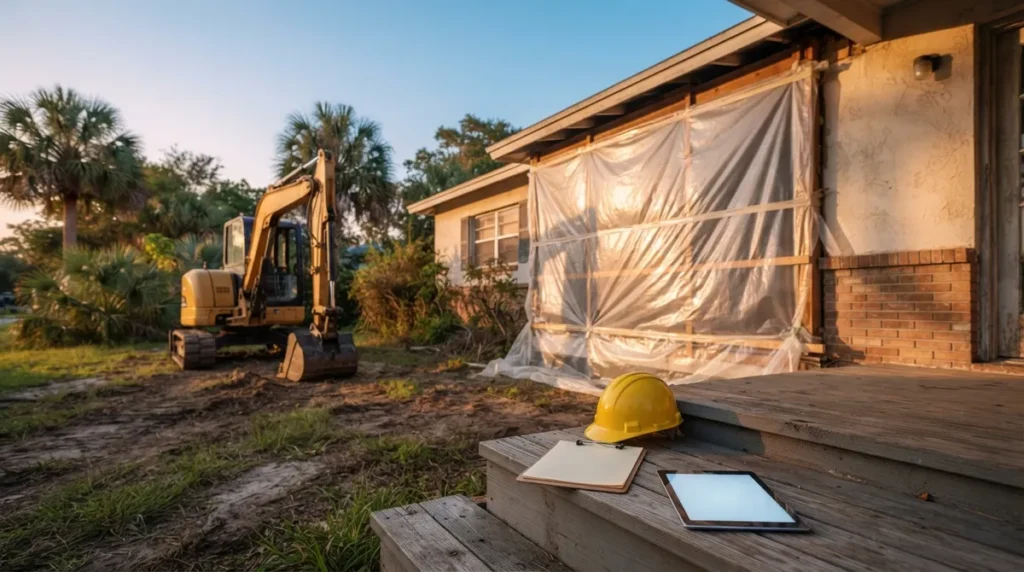
Key Takeaways
-
An FDEP Notice of Demolition (DEP Form 62-257.900(1)) is generally required even when an asbestos survey finds no asbestos, so a clean survey still means you must file.
-
The FDEP notice is an environmental and asbestos notification, not a demolition permit; you still need a separate approval from your county or city building department.
-
Demolition notices are generally due at least 10 working days before the project starts, so file early to protect your schedule from delays.
-
Submitting electronically through the DEP Business Portal and paying at submission costs $100 as of March 23, 2025, versus $200 for hard copy or invoiced payment.
-
If asbestos is found above regulated thresholds, abatement must typically occur before demolition, and that work can trigger its own notification and waste requirements.
-
Verify your jurisdiction (DEP district office or local air program), use the current form, and confirm fees and thresholds locally, since rules and county requirements vary.
If you have ever lined up a demolition crew, scheduled the excavator, and then heard someone say, "Did you file the FDEP notice?" you know that sinking feeling. Don't worry, you are far from alone. This is one of the most commonly missed steps in Florida demolition projects, and the good news is that it is very manageable once you understand it.
So, what is an FDEP notice of demolition? In plain terms, it is Florida's required environmental notification for covered demolition work. You file it with the Florida Department of Environmental Protection (or a local air program) before a building or facility comes down, using DEP Form 62-257.900(1). It is separate from your local demolition permit, and it applies even when no asbestos is found.
In this friendly 2026 guide, we will walk through what the notice is, who needs it, how the timing works, what it costs, and how it fits alongside your building department paperwork. Whether you are a general contractor, an investor, or a homeowner clearing an old structure, you will leave knowing exactly what to do next.
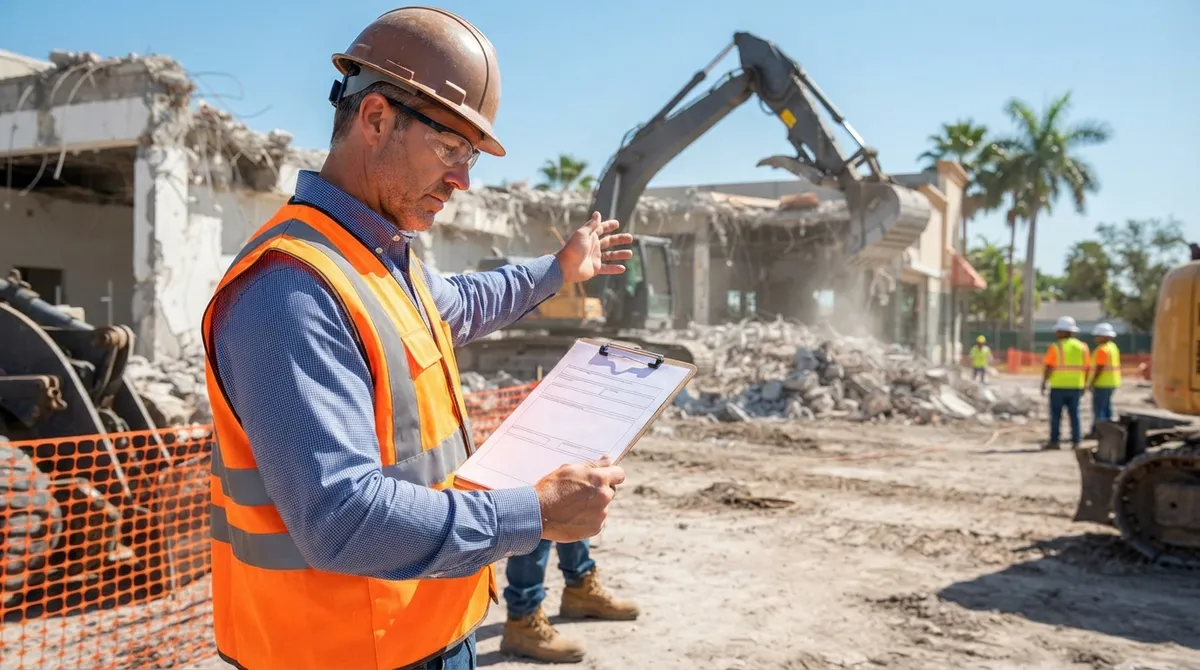
What an FDEP Notice of Demolition Actually Is
An FDEP Notice of Demolition is the state's formal notice of intent to demolish a building or facility. It is submitted on Florida DEP Form 62-257.900(1), officially titled "Notice of Renovation or Demolition." The form exists under Florida's asbestos program and the federal Asbestos NESHAP requirements that Florida has adopted into its rules.
Why does the state care? Older buildings can contain asbestos-containing materials in roofing, flooring, insulation, pipe wrap, and more. Knocking a structure down without a plan can release fibers into the air. The notice gives regulators a heads-up so they can confirm that the project owner has surveyed the building and has a safe plan for handling any asbestos.
Think of it as the environmental "heads up" that runs alongside your construction paperwork. It is not about whether your demolition is allowed in a zoning sense. It is about making sure the dust, debris, and waste are handled responsibly.
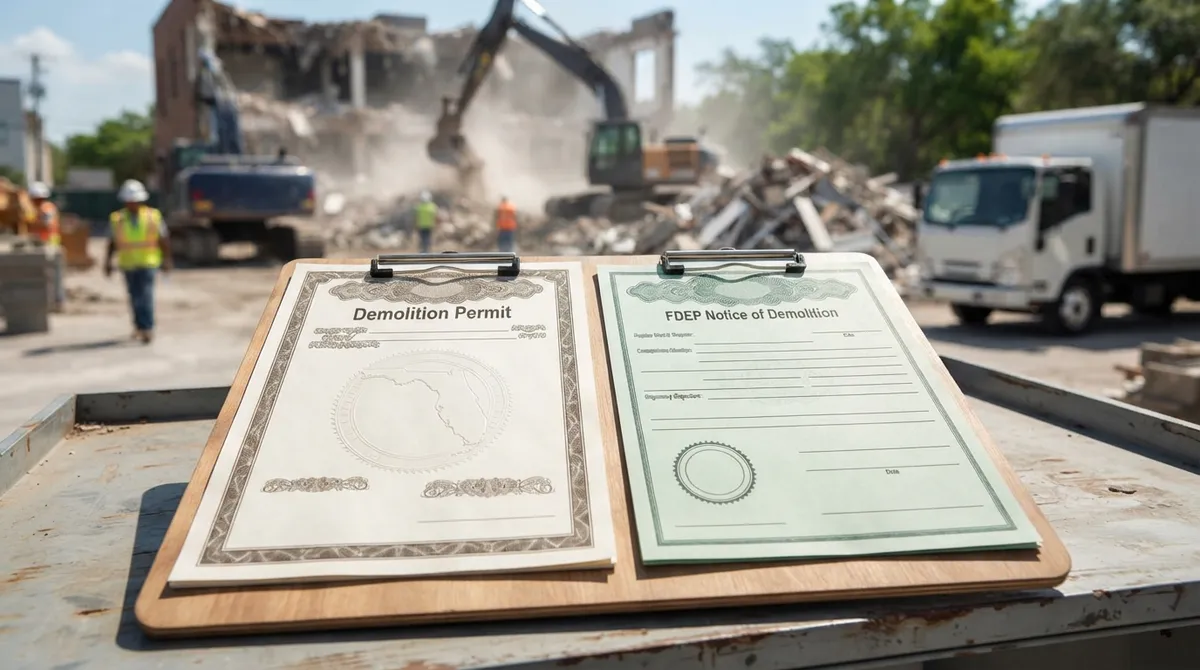
Is It the Same as a Demolition Permit?
No, and this is where many people get tripped up. The FDEP notice is an environmental and asbestos notification. It is not a demolition permit or a building permit, and filing it does not authorize you to start tearing anything down.
Your local building department, whether a county or a municipality, controls the demolition permit. That permit often involves utility disconnects, site safety, erosion control, and sometimes a post-demolition site restoration plan. You need both pieces to be fully compliant.
| Item | FDEP Notice of Demolition | Local Demolition Permit |
|---|---|---|
| Issued or received by | DEP district office or local air program | County or city building department |
| Purpose | Environmental and asbestos notification | Authorization to demolish |
| Form | DEP Form 62-257.900(1) | Local permit application |
| Grants permission to demolish? | No | Yes, once approved |
| Needed even if no asbestos? | Generally yes | Yes |
If you want a deeper look at how local approvals work, our team covers related topics in demolition permits and how permit facilitation and filing keeps everything coordinated.
Do You Need One If There Is No Asbestos?
This is the question we hear the most, and the answer surprises people. Generally, yes. An FDEP demolition notice is typically required even when an asbestos survey finds no asbestos in the building.
The notice is triggered by the demolition itself, not only by what you find inside. The form asks for the survey results, so a clean survey simply means you report that no regulated asbestos-containing material was found. You still file, and you still observe the advance notice period.
That said, rules can have nuances based on the type of structure and local program requirements. Always confirm the current form and instructions for your project's county before you file.
How Far in Advance Do You Have to File?
Florida DEP says demolition notifications are generally due at least 10 working days before the project begins. That clock matters, because a missed deadline can push your whole schedule back.
Here are a few timing details worth remembering:
- The 10-working-day period is measured before the relevant project start date.
- DEP's FAQ describes working days as Monday through Friday, including holidays that fall on those weekdays.
- Emergency renovation is a limited exception to the advance period, but notification is still required under the applicable rules.
- If your demolition date shifts, check whether you need to submit an updated notice.
A practical tip: file earlier than the minimum. Building in a cushion protects you from weather delays, crew changes, and the occasional incomplete form that needs correcting.
Where Do You Submit the Notice?
The notice goes to the DEP district office or the local air program office that has jurisdiction over the project location. Florida is divided into DEP districts, and some counties run their own local air programs, so the right destination depends on where the building sits.
Online submission is available through the DEP Business Portal, which many contractors find faster than mailing a hard copy. Local programs may have their own instructions, so verify before you file.
If you are working across several counties, this routing can get confusing quickly. That is one reason many busy contractors lean on a permitting team that handles all 67 Florida counties. You can explore our Florida counties we serve to see how broad that coverage is.
What Information Does the Form Ask For?
The notice requests a fairly detailed picture of your project. Having these details ready before you sit down to file will save you real time.
- Project and facility details: the address, type of structure, size, age, and prior use.
- Owner and operator information: who owns the building and who is responsible for the work.
- Contractor information: the demolition contractor and any asbestos abatement contractor.
- Scheduled dates: start and completion dates for both asbestos removal (if any) and demolition.
- Asbestos survey and quantities: what was found, where, and how much.
- Work methods: how the demolition will be performed.
- Waste handling: how debris and any regulated material will be transported and disposed of.
- Unexpected asbestos procedures: what you will do if suspect material turns up mid-job.
Because the current form and local program instructions can change, always download the latest version from DEP rather than reusing an old copy.
Asbestos Removal: A Separate Notification
Here is where things can get layered. A demolition notice is distinct from an asbestos-removal notification. If your survey finds regulated asbestos-containing material (RACM) above applicable thresholds, removal and abatement may need to happen before demolition, and that work can trigger its own notification and requirements.
Thresholds vary by program, so verify them locally. As one example, Pinellas County's local guidance lists RACM notification thresholds of 160 square feet on facility components, 260 linear feet on pipes, or 35 cubic feet when debris cannot otherwise be measured. Check the rules for your own county and confirm current applicability.
| Scenario | What It Typically Means |
|---|---|
| Survey finds no asbestos | File the demolition notice; report clean survey results |
| Asbestos below thresholds | Demolition notice still filed; follow local handling rules |
| RACM above thresholds | Abatement before demolition; additional notice and waste rules may apply |
| Unexpected asbestos found mid-job | Follow the contingency procedure listed on your notice |
If you are dealing with older structures where asbestos is likely, the practical first step is a proper survey. For related guidance, see How to Get an Asbestos Survey for Demolition in Fort Myers, and for abatement work, local specialists like Blastworx can be a helpful resource to discuss alongside your survey results.
What Does It Cost in 2026?
DEP lists the asbestos project notification fee as follows, effective March 23, 2025:
| Submission Method | Fee |
|---|---|
| Hard copy | $200 |
| Electronic with "Pay Later" invoice | $200 |
| Electronic with "Pay Now" | $100 |
So filing electronically and paying at the time of submission is the cheapest route. Fee schedules can change, and local air programs may have their own payment instructions, so confirm the current fee with DEP or your local program before you file.
A Simple Step-by-Step Filing Checklist
Ready to get moving? Here is a straightforward path most projects follow.
- Identify your jurisdiction. Confirm whether your project falls under a DEP district office or a local air program.
- Order an asbestos survey. Use a qualified inspector so you have documented results for the form.
- Plan any abatement. If regulated material is present, schedule removal before demolition.
- Gather your project details. Dates, contractors, methods, waste plans, and quantities.
- Complete DEP Form 62-257.900(1). Use the current version from DEP.
- Submit with payment. Online through the DEP Business Portal is usually quickest.
- Wait out the 10 working days. Do not begin demolition before the required period passes.
- Coordinate with your local permit. Make sure your building department demolition permit is in order.
If that list feels like a lot to juggle, it is. Many of our clients hand the whole sequence to us so their crews stay on schedule. Feel free to read about our FDEP and environmental permits support, or our asbestos, mold and environmental services.
Common Mistakes to Avoid
After years of helping Florida projects move forward, we see the same slip-ups again and again. A little awareness goes a long way.
- Assuming a clean survey means no filing. The notice is generally still required.
- Confusing the notice with a permit. It does not authorize demolition by itself.
- Filing too late. Missing the 10-working-day window can delay your start date.
- Using an outdated form. Always grab the current version.
- Sending it to the wrong office. Jurisdiction matters, especially near county lines.
- Skipping the local permit. Both approvals are needed.
Demolition mistakes can also create bigger headaches down the road, like stop work orders or complications at closing. If you are already in that situation, our guide on How to Hire the Right Pros to Avoid Demolition in Florida may be a useful companion read.
Who Needs to Pay Attention to This?
Different readers feel this requirement in different ways, so here is a quick snapshot.
- General contractors: You are often responsible for making sure filings are done before crews mobilize. Missing it can idle a whole job.
- Real estate investors and realtors: If you are clearing an older property for a teardown or rebuild, the notice affects your timeline and carrying costs.
- Homeowners and residential property owners: Tearing down a structure to build new or to remove a damaged one still triggers environmental notification in many cases.
- Design trade professionals: Architects and designers planning a teardown-and-rebuild should build the notice period into the project schedule from day one.
Whatever your role, the common thread is timing. Because the notice needs about 10 working days, it works best when it is part of your schedule from the very beginning, not an afterthought the week before demolition.
How 1 Contractor Solutions Can Help
At 1 Contractor Solutions, we act as Florida's outsourced permitting department. We coordinate filings across all 67 counties, track applications, and make sure the environmental piece and the building department piece line up. Our team responds within 30 minutes day or night, so a quick question never has to wait.
We are not a demolition contractor. We are the team that handles the paperwork so your crew can focus on the work. If you want to see what other clients say, you can see what our 1 Contractor Solutions customers say on Google. You can also stay connected by choosing to follow us on LinkedIn or follow us on Facebook for Florida permitting updates, and our marketing partner Brain Buzz Marketing helps us share them.
Final Thoughts
An FDEP Notice of Demolition may not be the most glamorous part of a teardown, but it is an important one. Remember the key points: it is filed on DEP Form 62-257.900(1), it is generally due at least 10 working days before demolition, it is usually required even when no asbestos is found, and it is separate from your local demolition permit.
Get the timing right, use the current form, confirm your jurisdiction, and pair the notice with your building department approvals. Do that, and you will keep your project clear of avoidable delays. Always double-check current fees and instructions with DEP or your local air program, since details can change.
Ready to take the stress out of your next teardown? Reach out today to get a free quote, and let us handle the permitting while you handle the build.
FAQs
Do I need an FDEP demolition notice if the building has no asbestos?
In most cases, yes. The notice is generally required for covered demolition work even when your asbestos survey comes back clean. You simply report the survey results on the form and still observe the advance notice period.
How many days before demolition must I submit the Florida DEP notice?
DEP generally requires the notice at least 10 working days before the project begins. Working days are Monday through Friday, including holidays that fall on those weekdays, so it is smart to file a little early.
Is an FDEP Notice of Demolition the same as a local demolition permit?
Nope, they are two different things. The FDEP notice is an environmental and asbestos notification, while the demolition permit comes from your county or city building department. You will need both before work starts.
Can I submit a Florida demolition notice online?
Yes! Online submission is available through the DEP Business Portal. As of the fee schedule effective March 23, 2025, paying at the time of electronic submission is the lowest-cost option at $100, but confirm current fees before filing.
Where do I submit a Notice of Renovation or Demolition in Florida?
You send it to the DEP district office or local air program office that covers your project's location. Since jurisdiction depends on the county, double-check which office applies to your address before filing.
We do this work every day across all 67 Florida counties. Call (866) 314-6931 and we will tell you what your situation actually requires — including when you do not need us.
Related services
Permit Facilitation & Filing
You have a crew scheduled, a client asking for dates, and a permit sitting somewhere in a queue you cannot see. We file it, w…
See the servicePlan Review Coordination
A permit in plan review is not one queue. On a commercial project it can be six queues, each with its own reviewer, its own c…
See the serviceReady to get your permit moving?
One call tells you which jurisdiction controls your project, what it will take, and what it will cost. Most of the time we can scope it on the phone.