
Blog
How to Find Out If You Need a Permit to Demolish a Shed in Florida
Wondering if you need a permit to demolish a shed in Florida? Learn how local rules, utilities, asbestos, and inspections affect your project.
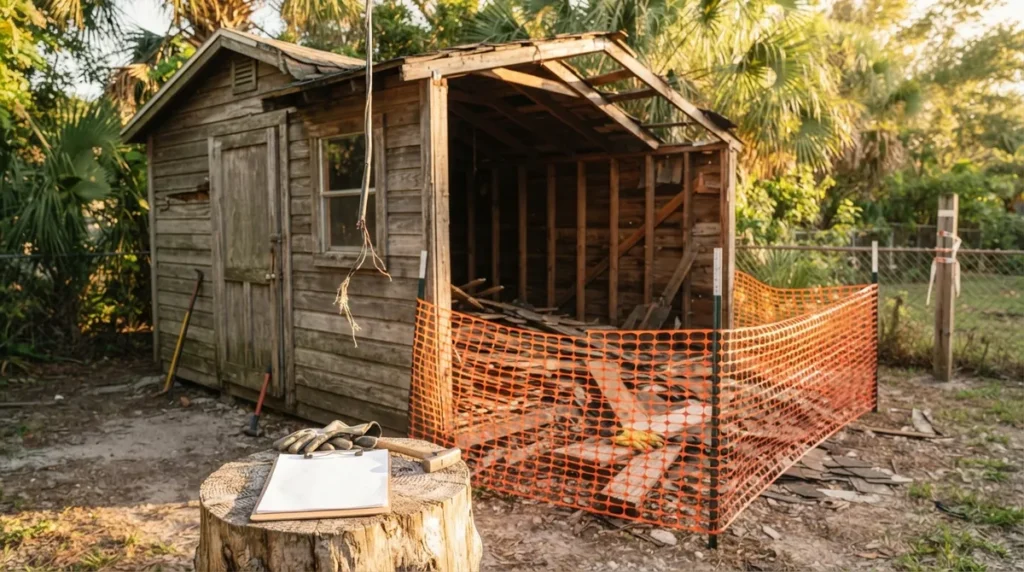
Key Takeaways
-
Assume you need approval before demolishing a shed in Florida; there is no statewide shed-size exemption, and local building departments make the final call for your parcel.
-
Confirm your jurisdiction first by checking your county property appraiser's site, since city and unincorporated county addresses are governed by different offices.
-
Get written confirmation from the local building department on whether a demolition permit and zoning review are required, as a verbal answer may not protect you later.
-
Disconnect and secure all utilities, including simple outlets or light fixtures, before demolition, and expect a pre-demolition and final inspection in many counties.
-
For older sheds, ask about asbestos obligations before starting, since some jurisdictions require notice to the state environmental agency at least 10 working days before demolition.
-
Demolishing without a required permit can lead to fines, stop-work orders, and title or closing complications, so verifying requirements upfront is far cheaper.
So you've got an old shed in the backyard that's leaning, leaking, or just taking up space you'd rather use for something else. Tearing it down sounds like a weekend project, right? Grab a sledgehammer, rent a dumpster, and call it done. Not so fast, friend. One of the most common questions Florida property owners ask is, do I need a permit to demolish a shed in Florida? The honest answer is: probably, but it depends on where your property sits.
Here's the good news. Figuring this out is a lot easier than it sounds, and we're going to walk through it together, step by step. Whether you're a homeowner tackling a cleanup, a contractor prepping a site, or a real estate pro getting a property ready to list, this guide will help you avoid fines, stop-work orders, and surprise inspections.
Florida's rules are set at the state level but enforced locally, which is why your neighbor across the county line may have a totally different experience than you. Let's break down what to check, who to call, and how to get it done right the first time.
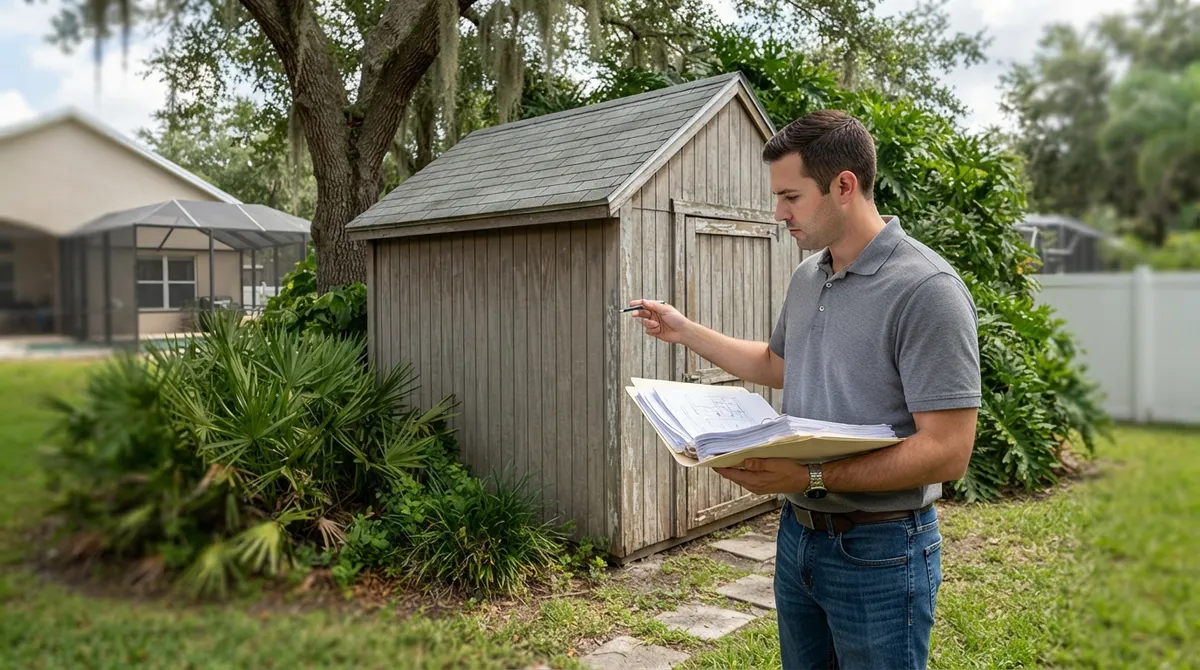
The Short Answer: Plan on Needing Approval First
Let's get right to it. In general, you should assume you need approval before demolishing a shed in Florida. The Florida Building Code, Section 105.1, requires a permit before demolishing a building or structure when the work is regulated by the code. Florida Statutes §553.79 also sets up the permitting framework that local governments follow.
Here's where people get tripped up. There is no single statewide shed-size exemption that guarantees you can tear one down without a permit. Many folks have heard that small sheds are exempt, and that's partly true for building a small shed. But demolition is a separate question, and local offices often treat it differently.
Take Orange County as an example. The county says residential demolition requires a permit, and that structures of 120 square feet or less may be exempt from parts of the building code but can still need a building permit and review by other county agencies. Brevard County goes even further and specifically lists sheds as accessory structures covered by its residential demolition permit process.
The takeaway? Never assume a small shed gets a free pass. Your local building department makes the final call for your specific parcel.
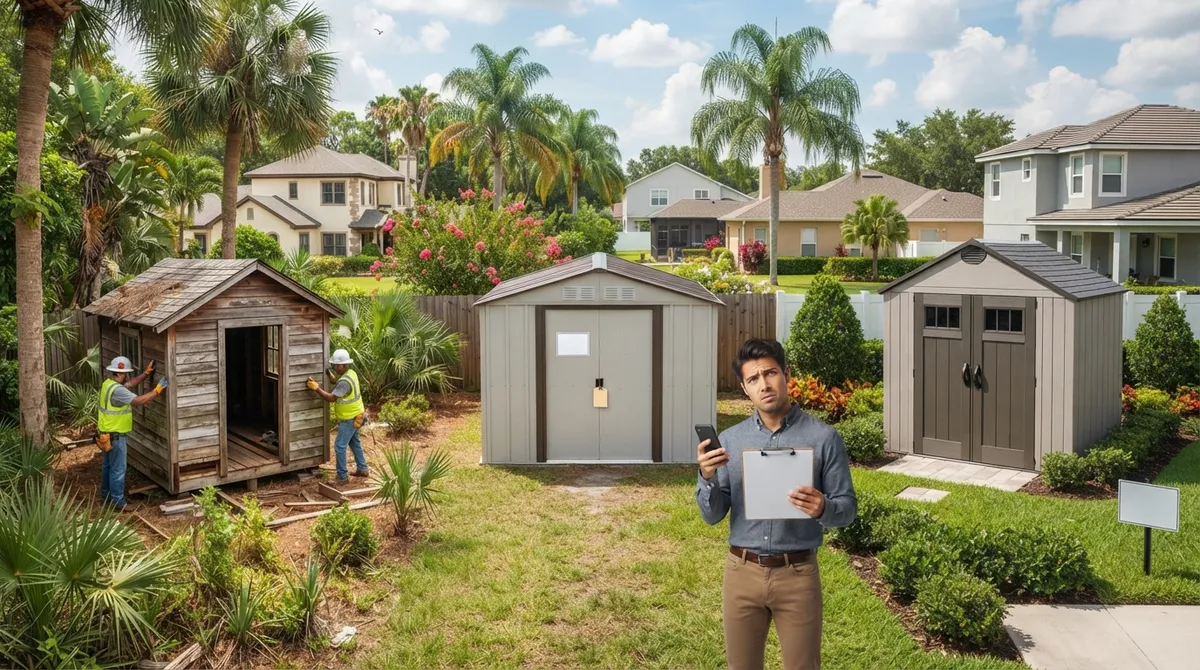
Why Shed Demolition Rules Vary So Much Across Florida
Florida has 67 counties and hundreds of municipalities, and each one can add its own twist on the state rules. That's why a quick internet search often gives you conflicting answers. Both answers might be right, just for different places.
Three Layers of Rules to Keep in Mind
- State level: The Florida Building Code and Florida Statutes set the baseline for regulated demolition work.
- County or city level: Your local building department decides which permit applies, what it costs, and how long it lasts.
- Zoning and development review: Some jurisdictions loop in planning or zoning staff, especially for accessory structures near property lines, easements, or flood zones.
This is also why "which jurisdiction controls my address" matters more than people realize. Near city lines, a property that looks like it's in a city may actually sit under county authority, or the other way around. Calling the wrong office wastes time.
Examples of How Florida Counties Handle It
Seeing real examples helps make sense of the variation. The table below pulls from county guidance and checklists published in 2026. Always verify current details with your local office before you act, since fees and rules change.
| County | What the County Says | Key Detail |
|---|---|---|
| Orange County | Residential demolition requires a permit; structures of 120 sq ft or less may be exempt from parts of the building code but may still need a building permit | Other county agencies may also review |
| Brevard County | Lists sheds as accessory structures under its residential demolition permit process | $25 application processing fee; building-code review fee of $75 for the first $1,000 of job value plus $3.25 per additional $1,000 |
| Brevard County (continued) | Notice of Commencement required when job value exceeds $5,000 | Local threshold, not a statewide rule |
| Lake County | Demolition permits expire 60 days after issuance | Don't assume this applies elsewhere |
| Bay County | Initial and final demolition inspections; asbestos notice guidance | Utilities must be disconnected and secured first |
Notice how different each one is? That's the whole point. A rule that's true in Lake County may not exist in Bay County, so treat every example as a clue about what to ask, not as a final answer for your property.
How to Find Out If Your Shed Needs a Demolition Permit
Ready to get a real answer for your address? Follow these steps in order. It usually takes less time than you'd think.
- Confirm your jurisdiction. Look up your parcel on your county property appraiser's website to confirm whether you're in a city or unincorporated county. This tells you which building department to call.
- Gather the basics. Have your address, parcel number, and a rough size of the shed (length, width, and whether it has electrical service).
- Contact the building department. Call or check their website and ask directly: "Do I need a demolition permit for an accessory structure or shed at this address?"
- Ask about size thresholds. Some offices have a square-footage cutoff for building permits, but may still require a demolition or review process.
- Ask about zoning review. Find out whether planning or zoning also needs to sign off, especially if the shed is near a setback or easement.
- Get the answer in writing. An email confirming "no permit required" can save you headaches later if a neighbor or inspector asks questions.
If you'd rather skip the phone tag, this is exactly the kind of research a permitting team handles every day. Permit facilitation and filing services can confirm the controlling jurisdiction and the exact requirements for your parcel.
What You'll Typically Need to Apply for a Demolition Permit
If your local office says yes, a permit is required, here's what the application usually asks for. Requirements vary, but these items come up again and again.
- Building permit application: The standard form from your local building department.
- Parcel or legal description: So the county knows exactly which property is involved.
- Site plan: A simple drawing that identifies the structure being removed and its location on the lot.
- Owner-builder paperwork: If you're doing the work yourself, you may need an owner-builder affidavit or disclosure.
- Contractor information: If you're hiring someone, licensed contractor details and proof of insurance are common requirements.
- Notice of Commencement: Some jurisdictions require this when the project value exceeds a local threshold. Brevard County, for example, uses $5,000.
- Asbestos notification statement: Commonly included in Florida demolition permit packets.
A simple site plan is often the piece homeowners find most intimidating. It doesn't have to be fancy. A clear drawing showing the lot, the shed location, and distances to property lines is often enough. If you need help, site plan drafting can turn a rough sketch into a clean, submission-ready document.
Utilities, Inspections, and Other Steps Before You Swing That Hammer
Getting the permit is only part of the job. Florida demolition work generally follows a specific sequence, and skipping a step can cause real trouble.
Disconnect and Secure Utilities First
If your shed has power, water, or any other utility connection, those need to be disconnected and secured before demolition starts. Guidance cited by Bay County describes an initial demolition inspection after utilities are disconnected and secured, followed by a final inspection once the demolition is complete. Even a basic shed with a single outlet or a light fixture can fall under this requirement, so check before you cut anything.
Plan for Inspections
Expect at least two touchpoints in many jurisdictions: one before demolition (to confirm utilities are safe) and one after (to confirm the site is cleared and the debris handled). Schedule these early. Waiting on an inspector can stall your whole timeline, especially in busy counties. If you want an inspection process that moves on your schedule, ask about private provider plan review and inspections.
Handle Debris the Right Way
Many local offices require you to document where your debris goes. Keep dumpster receipts or disposal tickets. Some places ask for proof at final inspection.
The Asbestos Question for Older Sheds
Here's one that surprises a lot of homeowners. If your shed is older, it may contain materials that include asbestos, such as certain roofing, siding, or flooring products. Asbestos rules can apply even to small accessory structures, depending on the structure's age and the work being done.
Florida permit materials commonly require an asbestos notification statement. Bay County guidance explains that applicable asbestos-containing materials must be handled before work that could disturb them, and describes advance notice to the Florida Department of Environmental Protection where required. Bay County demolition materials state this notice must be provided at least 10 working days before demolition when it applies. Whether it applies to your project depends on the structure and on governing state and federal rules.
Don't guess on this one. If your shed is decades old, ask your building department about asbestos obligations before you start. If testing is recommended, you can learn more about environmental, asbestos, and mold services, or see this local guide on how to get an asbestos survey for demolition in Fort Myers for a sense of how the process works.
Can You Demolish a Shed Yourself as an Owner-Builder?
Many Florida homeowners ask this, and the answer is often yes, with conditions. Owner-builder rules let property owners do certain work on their own property without hiring a licensed contractor, but eligibility, paperwork, and limitations are set locally. Some offices ask for an owner-builder affidavit as part of the demolition application.
Keep in mind that doing it yourself doesn't mean skipping the permit. It usually means you take on the responsibility for following the rules, scheduling inspections, and handling disposal correctly. If you want a refresher on how this works, take a look at our owner-builder permits page.
Costs and Timelines: What to Expect
Permit costs for shed demolition tend to be modest compared to other construction work, but they vary widely. Brevard County, for instance, lists a $25 application processing fee plus a building-code review fee of $75 for the first $1,000 of job value and $3.25 for each additional $1,000 or portion. That's just one county's published schedule, so verify current fees with your own office.
| Factor | What Can Change It |
|---|---|
| Permit fee | Local fee schedule, job value, and review type |
| Approval time | Department workload and whether zoning review is needed |
| Permit expiration | Local rules; Lake County's checklist says 60 days |
| Inspection scheduling | Inspector availability and utility disconnect timing |
One practical tip: plan to finish the demolition within the permit's validity period. If a permit expires before you're done, you may need to renew or reapply. If that ever happens, our guide on what reopens an expired Florida permit fastest can point you in the right direction.
What Happens If You Demolish Without a Permit?
We hear this question a lot, and we say it with a smile, not a scolding: it's best not to find out. Tearing down a structure without a required permit can lead to a code violation, fines, or a stop-work order. It can also complicate things down the road when you sell, refinance, or apply for another permit on the same lot.
For real estate professionals and investors, this matters even more. A missing demolition permit can show up in records and slow a closing. If you're already facing a mess, read up on what happens if you ignore a Florida stop work order, and you'll see why handling it the right way upfront is almost always cheaper.
Already did the work without approval? Don't panic. There's a path forward. Start with our walkthrough on the 7 steps to legalize unpermitted work in Florida.
Tips for Contractors, Realtors, and Investors
If you work in this industry, shed demolition often shows up as a small line item that quietly becomes a big delay. A few practical habits help.
- Contractors: Add accessory structure removal to your permit checklist on every project. Missing it can stall a larger permit, especially if the shed sits where new construction is planned.
- Realtors: Check the property for outbuildings during due diligence. An unpermitted shed or an undocumented demolition can surface during inspections or appraisals.
- Investors: Budget time for demolition permits when planning site cleanup on flips and teardowns.
- Design and trade pros: Confirm whether a shed removal affects drainage, setbacks, or site plan updates on the project you're drawing.
Many Florida offices run their demolition process separately from other building permits, so a quick early call prevents surprises later.
Let Us Take the Guesswork Out of It
Shed demolition sounds simple, but the paperwork, utility steps, asbestos questions, and local quirks add up. That's where 1 Contractor Solutions comes in. We're Florida's outsourced permitting department, working across all 67 counties and more than 400 municipalities. We confirm which jurisdiction controls your address, prepare the application and site plan, file it, track it, and carry it through inspections.
If you'd like to see what other property owners say about working with us, you can visit us on Google — 1 Contractor Solutions and read their reviews. You can also follow us on LinkedIn and follow us on Facebook for permitting tips, and our marketing partner Brain Buzz Marketing helps us share them.
Your Next Step
The safest rule for anyone asking whether you need a permit to demolish a shed in Florida is simple: check with your local building department before you start, get the answer in writing, and follow the steps for utilities, inspections, and debris. A few minutes of upfront work can save you weeks of headaches.
Ready to skip the guesswork? We respond within 30 minutes, day or night, and se habla español. Get a free quote and let us handle the permit while you focus on the fun part: reclaiming that backyard space.
FAQs
Do I need a permit to demolish a small shed in Florida?
In most cases, yes, you should plan on it. Florida has no statewide shed-size exemption for demolition, and local offices like Orange and Brevard County explicitly cover small accessory structures. A quick call to your local building department will give you the final answer for your address.
Is a permit required to remove a shed under 120 square feet in Florida?
Not necessarily exempt, even though it sounds like it should be. Orange County says structures of 120 square feet or less may be exempt from parts of the building code but can still require a building permit and review by other agencies. Always confirm with your local office before you start.
Do I need to disconnect utilities before demolishing a shed?
Yes, if the shed has any utility connections. Utilities generally need to be disconnected and secured before demolition, and some jurisdictions schedule an inspection after that step and another once the demolition is finished. It's a safety essential, so don't skip it.
Do asbestos rules apply when demolishing an old shed in Florida?
They can, especially for older structures. Florida demolition permit materials commonly require an asbestos notification statement, and where applicable, advance notice to the Florida Department of Environmental Protection may be needed, sometimes at least 10 working days before work. Ask your building department whether it applies to your shed.
Can I demolish my own shed as an owner-builder in Florida?
Often you can, but you still need to follow the permit process. Owner-builder eligibility and paperwork are set locally, and some offices ask for an affidavit with the application. Doing it yourself means you take responsibility for inspections, disposal, and following the rules.
We do this work every day across all 67 Florida counties. Call (866) 314-6931 and we will tell you what your situation actually requires — including when you do not need us.
Related services
Permit Facilitation & Filing
You have a crew scheduled, a client asking for dates, and a permit sitting somewhere in a queue you cannot see. We file it, w…
See the servicePlan Review Coordination
A permit in plan review is not one queue. On a commercial project it can be six queues, each with its own reviewer, its own c…
See the serviceReady to get your permit moving?
One call tells you which jurisdiction controls your project, what it will take, and what it will cost. Most of the time we can scope it on the phone.