
Blog
Closing Delayed? Who to Hire for Unpermitted Work
Learn exactly who to hire when unpermitted work delays your Florida closing — from building departments to engineers and contractors.

Key Takeaways
-
Contact your local building department first to confirm permit history and requirements—this is the non-negotiable starting point before hiring anyone else.
-
Hire a permitting consultant to coordinate the after-the-fact application process and track reviewer comments, acting as project manager rather than performing the actual construction work.
-
Bring in appropriately licensed contractors (general, electrical, plumbing, etc.) only after the building department confirms what corrections are needed, and always verify their license status before hiring.
-
Engage a Florida-licensed architect or engineer when structural elements, load-bearing walls, roof framing, or concealed conditions are involved—their sealed documentation is often required for approval.
-
Consult a real estate attorney to clarify buyer vs. seller responsibility, contract deadlines, and liability—permitting professionals can't address these legal and contractual questions.
-
Insist on written documentation at every stage including permit applications, inspection reports, and final approval from the building department, not just submission receipts or verbal assurances.
Picture this: you're two weeks from closing on your dream home in Sarasota, the movers are booked, and then the title company drops a bombshell — there's unpermitted work on the property. Maybe it's a lanai enclosure, a converted garage, or a kitchen remodel that never got inspected. Suddenly everyone's asking the same question: who should I hire when closing is held up by unpermitted work? Take a breath. This happens more often than you'd think across Florida, and there's a clear path forward.
Whether you're a buyer, seller, real estate agent, or investor caught in this situation, you're not stuck. You just need the right team, in the right order. This guide walks you through exactly who to call first, what each professional actually does, and how to keep your closing on track (or as close to on track as possible) while the paperwork gets sorted out.

Why Unpermitted Work Stops a Florida Closing
Florida Statutes §553.79 generally requires a building permit before covered construction, alteration, repair, or demolition takes place. When work skips that step, it creates a gap in the property's legal record that title companies, lenders, and buyers don't like to see. Lenders especially get nervous because an unpermitted addition can affect appraised value, insurability, and even whether the square footage counted in the listing is legitimate.
Here's the tricky part: a standard title search often won't catch unpermitted work. Title insurance protects against ownership disputes, not code violations. That's why it's smart to ask your closing agent or title company about a municipal lien search, and to independently check permit records with the open permit search tools available for many counties. You want facts, not guesses, before you decide who to hire.
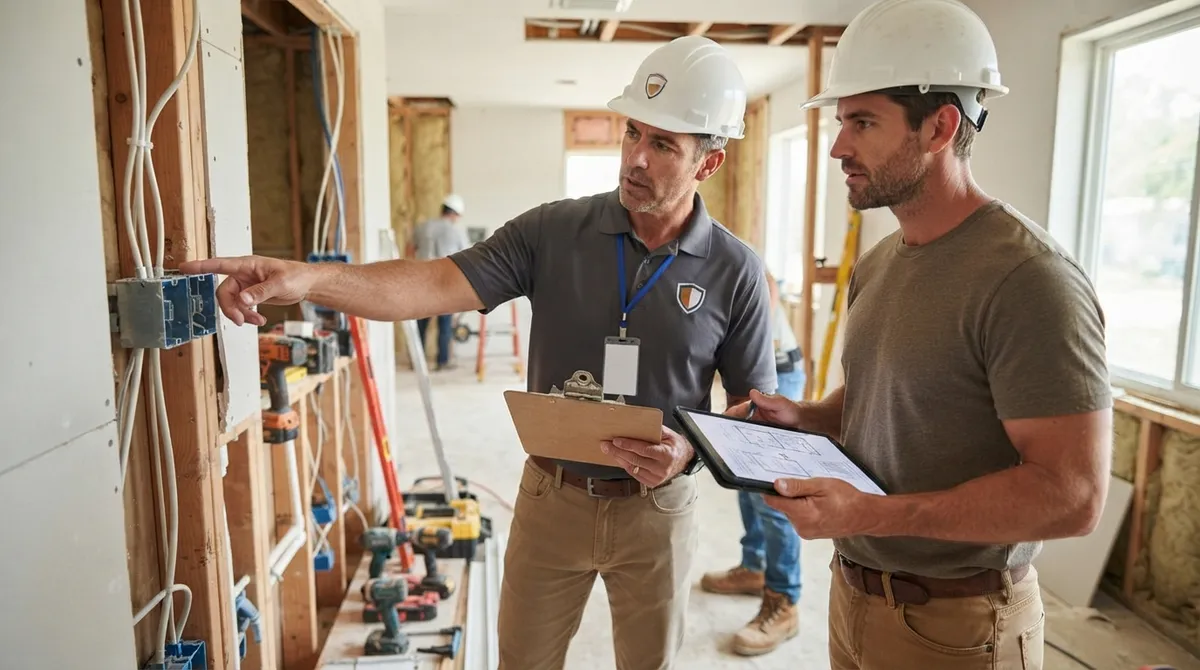
Who Should I Hire When Closing Is Held Up by Unpermitted Work
The honest answer is: it depends on what the unpermitted work actually is. But there's a logical sequence almost everyone should follow, and it starts with information, not construction.
Step 1: Contact the Local Building Department
Before hiring anyone, find out what the local building department with jurisdiction over the property actually says. Ask about the permit history, whether the work in question required a permit, and if there are any open permits or code-enforcement cases attached to the address. Requirements, fees, and processes vary wildly from one Florida city or county to the next, so this step is non-negotiable.
If you're not sure which office governs your address (this trips up more people than you'd expect, especially near city-county lines), a building department lookup can point you to the right desk fast.
Step 2: Bring in a Florida Permitting Consultant
This is where a permitting consultant earns their keep. A good consultant identifies the correct jurisdiction, pulls the permit records, and coordinates the entire after-the-fact application process. They track review comments, manage resubmittals, and keep everyone — buyer, seller, agent, lender — updated on real timelines instead of guesswork.
What a consultant does not do is replace the licensed contractors, architects, or engineers whose sealed work may be required. Think of them as the project manager who keeps the pieces moving, not the person swinging a hammer or stamping a structural drawing.
Step 3: Hire the Right Licensed Contractor for the Trade Work
If the building official determines that corrections are needed — say the electrical panel wasn't inspected, or the enclosure doesn't meet current wind-load requirements — you'll need appropriately licensed contractors to fix it. Depending on scope, that might mean a general contractor, plus separate licensed electrical, plumbing, mechanical, or roofing contractors.
Always verify license status before hiring anyone under pressure. A rushed closing is exactly when people get talked into cutting corners, and that never ends well.
Step 4: Bring in an Engineer or Architect When Structure Is Involved
Not every unpermitted job needs an engineer. But if the work touches structural elements — load-bearing walls, roof framing, additions, or anything with concealed conditions — you'll want a Florida-licensed architect or professional engineer involved. Their sealed documentation and site evaluation are often what the after-the-fact permit application requires.
Keep in mind: an engineer's letter doesn't automatically guarantee approval. The local building department still decides what documentation it will accept and whether inspections need to expose concealed work. This is a big reason why in-house engineering and engineer letters from a single coordinated team can move faster than juggling multiple outside firms.
| Professional | Role in Resolving Unpermitted Work | When You Need Them |
|---|---|---|
| Local Building Department | Confirms permit history, requirements, and approval process | Always — first call |
| Permitting Consultant | Coordinates applications, tracks reviews, manages jurisdiction research | Almost always, especially under time pressure |
| Licensed Contractor | Performs corrections or completes required trade work | When physical repairs or upgrades are needed |
| Architect or Engineer | Provides sealed plans, structural evaluation, or letters | When structural or concealed conditions are involved |
| Real Estate Attorney | Advises on contract deadlines, disclosure, and risk allocation | Whenever the closing timeline or liability is in question |
After-the-Fact Permits: What They Can and Cannot Fix
For completed work that required a permit but never got one, the standard path is an after-the-fact permit application. This is not a rubber stamp. The local building official can require plans, inspections, corrections, or in some cases removal of work that doesn't comply with code.
A Florida Senate bill analysis from 2019 outlined several routes for closing out open or expired permits, including a licensed contractor's involvement, an engineer or architect's inspection and affidavit, and certain owner-builder circumstances. Applicability always depends on current law and local agency procedure, so don't assume your neighbor's experience in another county will match yours.
- Confirm with the building department whether an after-the-fact application is even an option for the specific work in question.
- Gather existing documentation — old invoices, photos, or plans — that can support the application.
- Coordinate sealed drawings or engineering evaluations if structural elements are involved.
- Submit the application and track every reviewer comment closely; delays often come from incomplete resubmittals.
- Schedule and pass required inspections, which may mean opening walls or exposing concealed work.
- Obtain documented final approval or permit closeout — not just a submitted application — before considering the issue resolved.
Florida Statutes §489.103 does include limited owner-builder exemptions, but it's not a blanket substitute for hiring licensed contractors or securing required permits. If someone tells you owner-builder status solves everything, get a second opinion.
Who's Responsible: Buyer or Seller?
This is often the emotional center of the whole mess, and there's no universal answer. It depends on the purchase contract, when the work was discovered, and what your state disclosure obligations require. This is exactly the kind of question a Florida real estate attorney should weigh in on — not because permitting professionals can't help, but because contract law and permitting law are different disciplines.
- Review the purchase agreement for disclosure clauses and remedy provisions.
- Get everything in writing regarding who pays for corrections and who manages the process.
- Decide together whether to extend closing, renegotiate price, or hold funds in escrow until resolution.
- Loop in your closing agent early so the timeline stays realistic.
How General Contractors and Realtors Can Prevent This Scenario
If you're a general contractor managing renovations, or a realtor listing properties regularly, unpermitted work issues are avoidable more often than not. Requesting a full permit history search before listing, or verifying every subcontractor pulled proper permits before a project wraps, saves everyone a last-minute scramble.
For agents specifically, offering realtor and closing support as part of your service can be a genuine differentiator. Buyers remember when their agent caught a problem early instead of letting it blow up during closing week.
Special Considerations for Solar Installations
Solar companies face a unique version of this problem. An unpermitted solar array discovered at closing can involve both structural roof-mounting documentation and electrical interconnection paperwork. If you're a solar contractor, having code-compliant structural and electrical documentation ready from day one avoids this altogether — and if you're troubleshooting an existing issue, coordinated solar contractor permitting support can move faster than piecing it together solo.
Regional Notes Across Florida
Permitting timelines and after-the-fact procedures vary by county, which is part of why "who do I hire" doesn't have a one-size-fits-all answer. In Hillsborough County, Pinellas County, and Manatee County, review timelines and after-the-fact fee structures can differ significantly from what you'd see in Miami-Dade County or Broward County. Coastal counties often layer in additional wind-load and flood-zone documentation requirements too.
| Common Scenario | Typical First Hire | Possible Second Hire |
|---|---|---|
| Unpermitted lanai or patio enclosure | Permitting consultant | Structural engineer if roof/frame is involved |
| Converted garage or added room | Permitting consultant + contractor | Architect for sealed plans |
| Unpermitted electrical or plumbing work | Licensed electrical/plumbing contractor | Permitting consultant to file corrections |
| Unpermitted roof replacement | Roofing contractor | Engineer letter if code compliance is questioned |
| Unpermitted solar installation | Solar-specialized permitting team | Structural/electrical engineer |
Why Coordinated Permitting Support Matters Most
The single biggest cause of closing delays isn't the unpermitted work itself — it's the back-and-forth between disconnected professionals who aren't talking to each other. When your engineer, contractor, and permit filer all work from the same file with the same understanding of deadlines, things move faster.
This is where 1 Contractor Solutions steps in as a genuinely useful resource for buyers, sellers, and agents navigating this exact situation across all 67 Florida counties. Because plan drafting, engineering, and permit filing all happen in house, a reviewer comment doesn't mean waiting days for an outside consultant to call back — corrections get handled directly. If you want to see how local homeowners and professionals have experienced this firsthand, visit us on Google — 1 Contractor Solutions to read real reviews. You can also follow us on LinkedIn or follow us on Facebook for ongoing updates on Florida permitting changes.
Documentation That Keeps Everyone Protected
Regardless of who you hire, insist on documentation at every stage. Verbal assurances that "it's basically approved" have derailed more closings than actual permit denials.
- Written confirmation from the building department of exactly what's required.
- Copies of the permit application and all submitted plans.
- Inspection reports, especially for anything involving concealed work.
- A signed closeout or final approval document — not just a submission receipt.
- A written agreement between buyer and seller covering cost responsibility and timeline expectations.
Resolving the issue means reaching documented final approval or permit closeout, not simply submitting an application and hoping for the best. Inspections may require exposing concealed work, so budget time and patience for that reality.
Bringing Your Closing Back on Track
Unpermitted work doesn't have to derail your closing forever — it just requires the right people in the right order: the building department first, a permitting consultant to coordinate, licensed contractors for the physical fixes, an engineer or architect when structure is involved, and a real estate attorney to protect your contractual interests. Get those pieces aligned and most closings move forward within weeks rather than months.
If you're staring down a permit problem right now and need answers fast, our team handles exactly this kind of urgent situation every day across Florida. Reach out today to get a free quote and let's get your closing back on schedule.
FAQs
Who should I hire first when closing is held up by unpermitted work in Florida?
Start with the local building department — they'll confirm the permit history and what's actually required. From there, a permitting consultant can coordinate the process, and you'll bring in licensed contractors or an engineer depending on what the work involves. It's a team effort, but the building department call comes first, always.
Can a permitting consultant fix unpermitted work themselves?
Not exactly, but they're incredibly valuable for coordinating everything. A good consultant identifies the right jurisdiction, files the after-the-fact application, and tracks reviewer comments, but licensed contractors and engineers still handle the physical work and sealed documentation. Think of them as your project quarterback.
Do I need an engineer to get an after-the-fact permit approved?
It depends on whether structural elements or concealed conditions are involved. If your unpermitted work touches framing, load-bearing walls, or anything the building official can't easily verify, a Florida-licensed engineer's sealed documentation is usually required. For simpler cosmetic work, it may not be necessary at all.
Who is responsible for unpermitted work found at closing — the buyer or seller?
Honestly, it depends on your purchase contract and when the issue was discovered. This is exactly the kind of question a Florida real estate attorney should help answer, since it involves disclosure obligations and contract remedies rather than just permitting rules. Get it in writing either way.
Can my Florida home sale still close with an open or unpermitted permit?
Sometimes, yes — many buyers and sellers negotiate an escrow holdback or agree on a timeline to resolve the issue after closing. But this always depends on your lender, title company, and the specific contract terms, so loop in your closing agent and attorney before assuming it'll work out that way.
We do this work every day across all 67 Florida counties. Call (866) 314-6931 and we will tell you what your situation actually requires — including when you do not need us.
Related services
Permit Facilitation & Filing
You have a crew scheduled, a client asking for dates, and a permit sitting somewhere in a queue you cannot see. We file it, w…
See the servicePlan Review Coordination
A permit in plan review is not one queue. On a commercial project it can be six queues, each with its own reviewer, its own c…
See the serviceReady to get your permit moving?
One call tells you which jurisdiction controls your project, what it will take, and what it will cost. Most of the time we can scope it on the phone.