
Blog
Can Private Providers Review After-the-Fact Plans in Florida?
Can private providers review after-the-fact plans in Florida? Learn what §553.791 allows, what it doesn't, and how to get your permit moving.
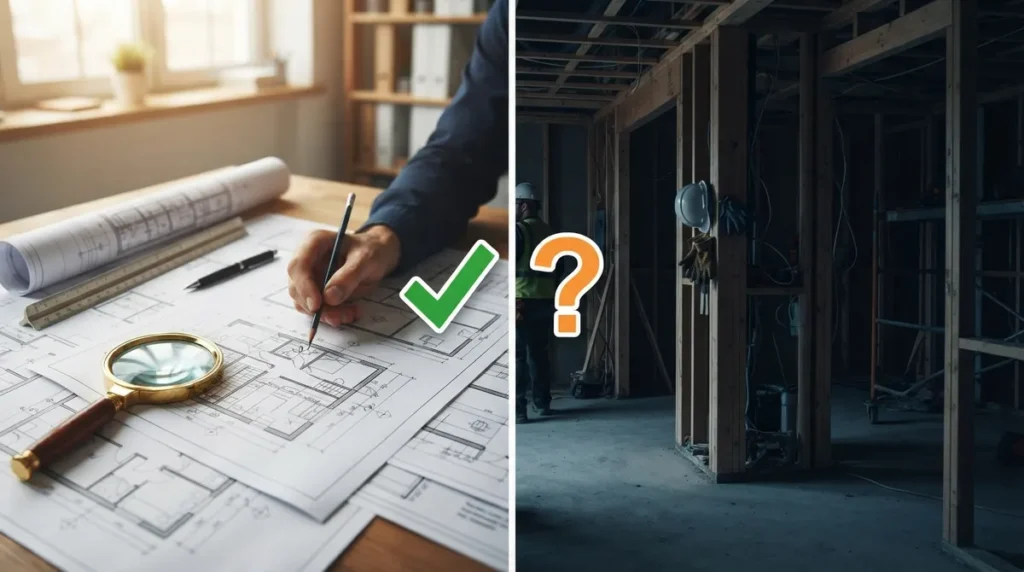
Key Takeaways
-
Florida Statute §553.791 allows private providers to review after-the-fact permit plans, but this does NOT automatically legalize work—the building official must still issue the permit and required inspections must pass.
-
Private-provider review reduces queue time to 20 business days (deemed approved if no deficiency notice issued), but local building departments vary widely in accepting after-the-fact applications and procedures.
-
For completed work, accurate as-built drawings, engineer verification of concealed conditions, and strong documentation are critical; plan review alone cannot confirm hidden construction matches the submitted plans.
-
Each Florida jurisdiction has different rules on licensed contractor requirements, permit fee multipliers, and after-the-fact procedures—always contact your specific building department before hiring a provider.
-
Private providers cannot replace zoning, floodplain, fire, environmental, or other local approvals; these must still be obtained separately regardless of plan review completion.
-
Common costly mistakes include assuming the review legalizes work, skipping confirmation with your building department, submitting inaccurate plans, and using unqualified providers for specific disciplines.
You bought a home with a finished patio enclosure, or maybe your crew built a bathroom addition before anyone pulled a permit. Now the county wants an after-the-fact permit, and the plan review queue looks painfully long. So you ask the natural question: can a private provider step in and review those plans instead?
Good news: generally, yes. Florida's private-provider statute, §553.791, does not expressly exclude plans submitted for an after-the-fact permit. But there is an important catch. A private provider's review is a faster route through the permitting process, not a shortcut around it. Your work still needs a permit, code-compliant plans, and the right inspections.
In this guide, we'll walk through what the law says, what a private provider can and cannot do for work that's already built, and how to avoid the mistakes that slow people down. Whether you're a general contractor, a solar company, a real estate professional, or a homeowner, you'll leave knowing exactly what to ask your building department. If you want a head start, you can get a free quote from our team anytime.
The Short Answer: Yes, With Conditions
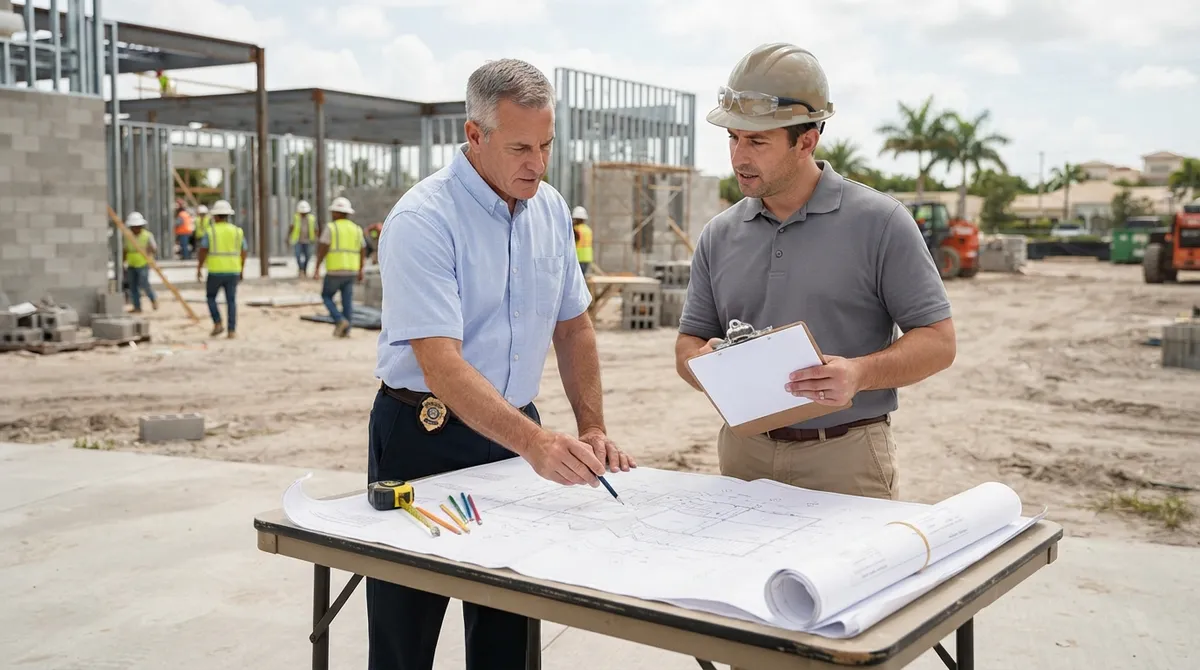
Under Florida Statute §553.791, a property owner, or a contractor with the owner's explicit written authorization, may choose a qualified private provider for building-code plan review. The statute does not carve out after-the-fact applications. So a private provider may generally review those plans if the local building department accepts the application and the provider is qualified for the work.
The question "can private providers review after the fact plans in Florida" therefore has a practical answer: usually yes, but acceptance and approval depend on several factors:
- The specific permit type and scope of work
- The private provider's license and discipline qualifications
- The evidence you submit about the completed work
- Applicable Florida Building Code requirements
- Your local building department's procedures
Think of it like choosing a different lane on the highway. You still arrive at the same destination, and you still have to follow every traffic law along the way.
What an After-the-Fact Permit Actually Is
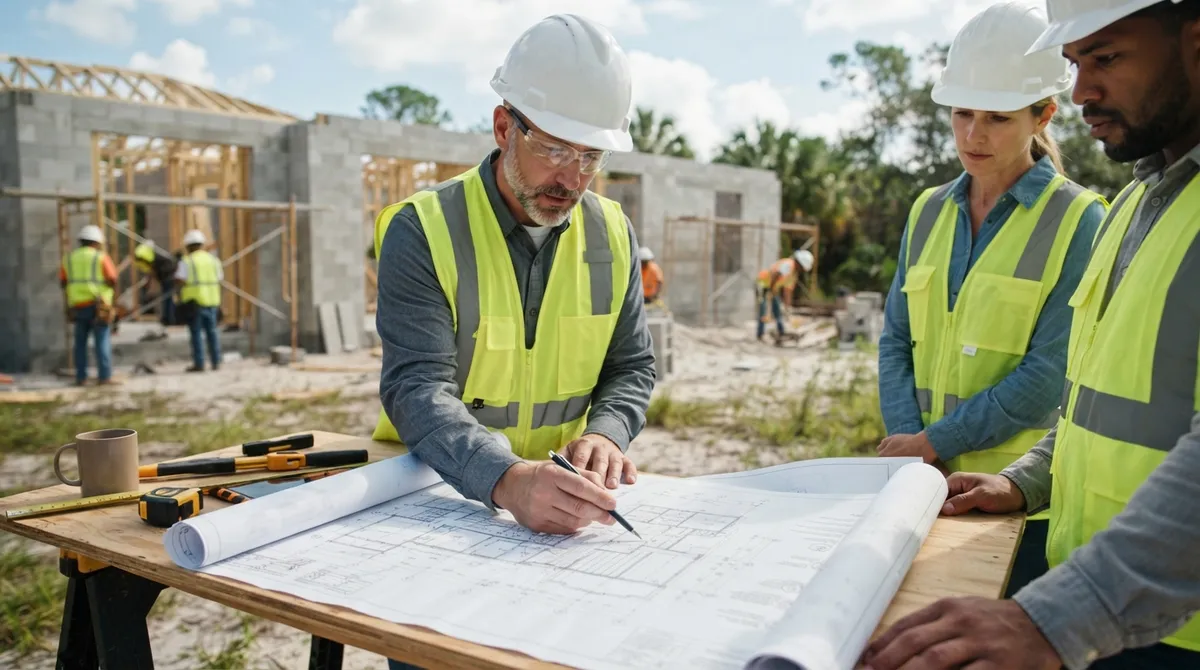
An after-the-fact permit, sometimes called a retroactive permit, is required when work was done without a required permit. It can also apply when a permit expired before the work was inspected and closed. The goal is to bring the work into the official record and confirm it meets code.
If you're not sure which situation you're in, our guide on after-the-fact and expired permits explains the difference. You can also read how to get an after-the-fact permit in Florida for the full process.
Common Situations That Trigger One
- A prior owner built an addition, enclosure, or deck without permits
- A contractor vanished before final inspection
- An appraisal, inspection, or lender flagged unpermitted work
- A code enforcement notice or stop work order arrived
- A real estate closing is stalled by a permit hold
What Private-Provider Review Does and Does Not Do
This is where many people get confused, so let's be clear. A private provider's statutory role is to review submitted plans for compliance with applicable codes and provide the required sworn affidavit when the plans are found compliant.
What It Can Do
- Review plans and supporting documents for code compliance
- Issue the required plan-review affidavit
- Reduce your dependence on the building department's review queue
- Work on your schedule rather than waiting in line
What It Cannot Do
- Legalize work automatically or waive the permit requirement
- Replace the building official's authority to issue the permit
- Prove that concealed or completed construction matches the plans
- Waive zoning, floodplain, fire, environmental, or other local approvals
That third point matters most for after-the-fact work. A plan review looks at paper. Completed construction hides things like framing connections, fasteners, and wiring behind finished walls. So the review alone does not establish that what's built actually complies.
| Question | Private-Provider Plan Review | Still Required |
|---|---|---|
| Reviews plans for code compliance? | Yes | Code-compliant plans |
| Issues the permit? | No | Building official issues it |
| Verifies concealed work? | No (plans only) | Field verification, engineer letters, inspections |
| Replaces zoning or floodplain review? | No | Local approvals as applicable |
| Waives penalties or fees? | No | Local fee schedule applies |
How the Statute Frames the Timeline
One reason owners like private-provider review is timing. Under §553.791, when a permit application is accompanied by the required private-provider plan-review affidavit, the local building official has 20 business days to act. According to the statutory text, the permit is deemed approved if the official does not issue a written deficiency notice within that period.
That sounds wonderful, and it can be. But please confirm the current statute and any applicable exceptions before relying on that deadline, especially for an after-the-fact application. Local departments may handle these applications differently, and the building official retains authority to identify deficiencies and conduct audits as the statute allows.
For a deeper look at how the two paths compare, see our breakdown of private provider vs. building department in Florida. And if you want to see how we handle this work directly, visit our private provider plan review and inspections page.
Local Rules Vary Across Florida
Here is the part that trips people up. Florida has hundreds of permitting jurisdictions, and after-the-fact procedures are not uniform. Pembroke Pines, for example, publishes that after-the-fact permits are required for work done without a required permit, that its stated process requires a licensed contractor, and that double permit fees apply. It also describes an exception process for certain owners who bought a property with the unpermitted work already in place.
Those are one city's rules, not a statewide mandate. Your jurisdiction may use a different contractor requirement, a different fee structure, or a different intake process entirely.
| Item | Statewide Rule? | What to Do |
|---|---|---|
| Private provider may be chosen | Yes, under §553.791 | Confirm the provider's qualifications |
| Licensed contractor required | No, varies locally | Ask your building department |
| Doubled permit fees | No, city-specific example | Request the local fee schedule |
| Private provider accepted for ATF applications | Depends on the department | Confirm before hiring a provider |
Not sure which office actually controls your property? Try our building department lookup tool to find the right jurisdiction. This matters near city lines, where the address you see may not match the authority that reviews your project.
Step-by-Step: Using a Private Provider for an After-the-Fact Permit
Every jurisdiction is a little different, but this sequence works as a reliable roadmap.
- Confirm the jurisdiction. Identify which city or county building department controls your address.
- Call the building department. Ask directly whether it accepts private-provider plan review for after-the-fact applications, and request its forms and registration requirements.
- Search for open or expired permits. Use the open permit search tool to see what's already on record for the property.
- Document what was built. Gather as-built drawings, photos, material specs, and any available receipts or prior documentation.
- Verify the construction. Have an engineer evaluate the structure where needed, since plan review cannot confirm concealed work.
- Choose a qualified private provider. Confirm licensing for each discipline reviewed, and have the owner sign written authorization if a contractor is acting on the owner's behalf.
- File the application with the affidavit. Submit plans, supporting documents, and the required statutory notice and affidavit documentation.
- Complete inspections and close out. Satisfy required inspections so the permit can be finaled.
Why Documentation Makes or Breaks the Review
For work that's already complete, the quality of your evidence matters enormously. A private provider can only review what you give them. If the plans don't reflect what's physically there, the review will either stall or produce an affidavit that doesn't survive a closer look.
Strong after-the-fact packages usually include:
- Accurate as-built drawings showing existing conditions
- A site plan with setbacks and property lines
- Structural details or an engineer letter where the structure can't be seen
- Product approvals for windows, doors, or roofing where applicable
- MEP documentation for electrical, plumbing, and mechanical changes
For example, if a screened enclosure was built years ago, an engineer may need to verify anchoring and wind-load performance in the field. A private provider can then review the resulting sealed documents as part of the plan review.
Who Benefits Most From This Route
Different readers come to this question for different reasons, so here's how it tends to play out.
General Contractors and Design Trades
If a crew skipped a permit or a job expired before closeout, you're carrying the liability and the schedule pressure. A private provider can keep the review moving while you assemble field documentation. Our team supports contractors through general contractor permitting services.
Solar Companies
Solar installs that went in without proper permitting can hold up interconnection and inspection. Sealed structural and electrical documentation, paired with an efficient plan review, helps get systems legalized. See our solar contractor support for more.
Real Estate Professionals
A permit hold can derail a closing quickly. Time is tight, and lenders or title companies often want the work resolved. Learn more about realtor and closing support, or read whether a permit hold can delay a Florida real estate closing.
Homeowners and Residential Property Owners
You may have inherited the problem from a prior owner. Take a breath: this is far more common than most people realize, and there is a path forward. Our homeowner permitting help walks you through it.
Do You Need a Licensed Contractor?
It depends on where you are. Some jurisdictions, like Pembroke Pines, state in their published process that a licensed contractor is required for after-the-fact permits, with exceptions for certain owners. Others may allow owner-builder applications under Florida's exemption rules. Because requirements differ, check locally before you assume either way.
If you're considering applying as the owner, our overview of owner-builder permits explains the basics. You can also read about who can pull a permit in Florida.
Costs and Fees to Expect
Private-provider fees are separate from the building department's own permit fees. You may pay the provider for plan review, then pay the jurisdiction for the permit itself, and possibly a penalty multiplier if your local rules include one. Pembroke Pines, for instance, states that its after-the-fact permits carry double permit fees. Again, that's a city-specific example rather than a statewide figure.
For budgeting help, take a look at our guide to after-the-fact permit costs in Florida. Costs also vary based on scope: a small deck is a very different conversation than a full addition.
Mistakes That Slow Things Down
- Assuming the review legalizes the work. The building official still issues the permit.
- Skipping the phone call. Hiring a provider before confirming local acceptance can waste time and money.
- Submitting inaccurate plans. Drawings that don't match what's built invite deficiency notices.
- Ignoring concealed conditions. Without field verification, a clean plan review may still hit trouble at inspection.
- Overlooking other approvals. Zoning, floodplain, fire, and environmental approvals may still apply.
- Using an unqualified provider. Confirm licensing for every discipline being reviewed.
If your situation has already escalated to a violation, our resource on code compliance violation help in Florida can point you toward next steps. For urgent cases like stop work orders or stalled closings, our urgent permit rescue service is built for exactly that.
How 1 Contractor Solutions Helps
We're Florida's outsourced permitting department, and we're a licensed private provider ourselves. That means we can perform plan review while also handling the drafting, engineering, filing, and tracking that after-the-fact projects demand. Our drafting and engineering are in house, and our own engineer signs and seals the work, so when a reviewer flags something, we fix it instead of waiting on an outside consultant.
We work across all 67 Florida counties and have filed in more than 400 municipalities, so we know which office really controls your property. You can read more customer reviews or see what our customers say on Google. We also share updates when you follow us on LinkedIn, and for building code context, the Florida Legislature publishes the official text of Florida Statute 553.791 so you can read the private-provider rules yourself.
Final Thoughts
So, can private providers review after-the-fact plans in Florida? Generally, yes. The statute does not exclude them, and many owners find private-provider review to be a faster, more predictable route. But it only works when the permit application is accepted locally, the provider is qualified, the plans honestly reflect what was built, and the required inspections follow.
The best first move is simple: contact your building department, ask whether it accepts private-provider review for your specific after-the-fact application, and gather solid documentation. If you'd rather hand the whole thing to a team that does this every day, we're happy to help. Ready to move your project forward? Get a free quote and let's get your permit back on track.
FAQs
Can I use a private provider for an after-the-fact permit in Florida?
Generally, yes. Florida Statute §553.791 allows an owner, or a contractor with written owner authorization, to choose a qualified private provider, and it does not expressly exclude after-the-fact applications. Just confirm with your local building department that it accepts private-provider review for your specific permit before you hire anyone.
Will a private provider's plan review legalize work done without a permit?
Not by itself, and that's an important thing to know. The review checks your plans for code compliance, but you still need the actual permit issued by the building official, plus any required inspections and local approvals. Think of it as a faster review lane, not a legalization shortcut.
Can a private provider inspect completed or concealed work?
A private provider's plan review covers submitted plans and documents, so it can't confirm that hidden construction matches the drawings on its own. For concealed work, you'll typically need field verification, such as an engineer evaluation or letter, along with the inspections your jurisdiction requires.
Are after-the-fact permit fees doubled in every Florida city or county?
No. Pembroke Pines, for example, publishes that its after-the-fact permits carry double permit fees, but that's a city-specific rule rather than a statewide standard. Ask your local building department for its current fee schedule so there are no surprises.
How do I find out whether my building department accepts private-provider review for an after-the-fact permit?
The simplest way is to call or email the building department and ask directly, since procedures vary by jurisdiction. If you're unsure which office controls your address, a building department lookup tool can help, and our team can confirm it for you as well.
We do this work every day across all 67 Florida counties. Call (866) 314-6931 and we will tell you what your situation actually requires — including when you do not need us.
Related services
Permit Facilitation & Filing
You have a crew scheduled, a client asking for dates, and a permit sitting somewhere in a queue you cannot see. We file it, w…
See the servicePlan Review Coordination
A permit in plan review is not one queue. On a commercial project it can be six queues, each with its own reviewer, its own c…
See the serviceReady to get your permit moving?
One call tells you which jurisdiction controls your project, what it will take, and what it will cost. Most of the time we can scope it on the phone.