
Blog
Bathroom Remodel Without a Permit in Florida: What to Know
Wondering if a bathroom remodel without a permit in Florida is okay? Learn what needs permits, the risks, and how to fix unpermitted work.
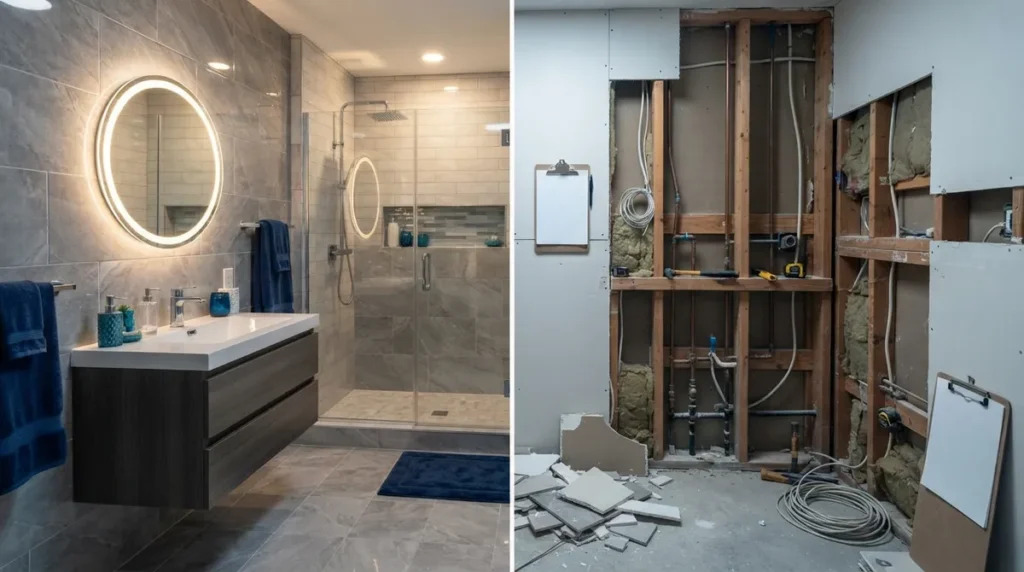
Key Takeaways
-
Bathroom remodels involving plumbing, electrical, structural, mechanical, or gas changes require permits in Florida; the $7,500 small-project exemption explicitly does not cover these trades or flood hazard areas.
-
Unpermitted bathroom work can surface during home sales, inspections, appraisals, or insurance claims, potentially stalling closings and complicating your property transaction.
-
Only pure finish work like painting, replacing surface tile, or swapping hardware may be permit-exempt, but exemptions vary significantly by city and county—always confirm with your local building department before starting.
-
If unpermitted work is already complete, most Florida jurisdictions offer after-the-fact or corrective permit processes; this may require opening walls to expose concealed plumbing and electrical work for inspection.
-
Permits typically take 10-30 business days depending on jurisdiction and workload; submitting a complete application upfront is far cheaper and less stressful than dealing with violations, penalties, and corrective work later.
-
A contractor who recommends skipping permits on bathroom work is shifting liability to you as the property owner, who bears the consequences of code violations, safety issues, and future sale complications.
So you're dreaming of a fresh, spa-like bathroom, and somebody (a neighbor, a handyman, maybe a very confident YouTube video) told you that you don't need a permit. It's a tempting thought, because permits sound like paperwork, fees, and waiting. We get it. Here's the honest, friendly truth about a bathroom remodel without permit in Florida: sometimes the work really is exempt, and sometimes skipping the permit creates a headache that follows you all the way to your next home sale.
The difference comes down to what you are changing, not how big the bathroom is. In this guide, we'll walk through what typically needs a permit, what may not, what can go wrong, and what to do if the work is already done. Whether you're a homeowner, a general contractor, a designer, or a real estate pro evaluating a property, you'll leave knowing exactly where to start. Think of us as the friend who has seen a few thousand of these files and wants to save you some stress.
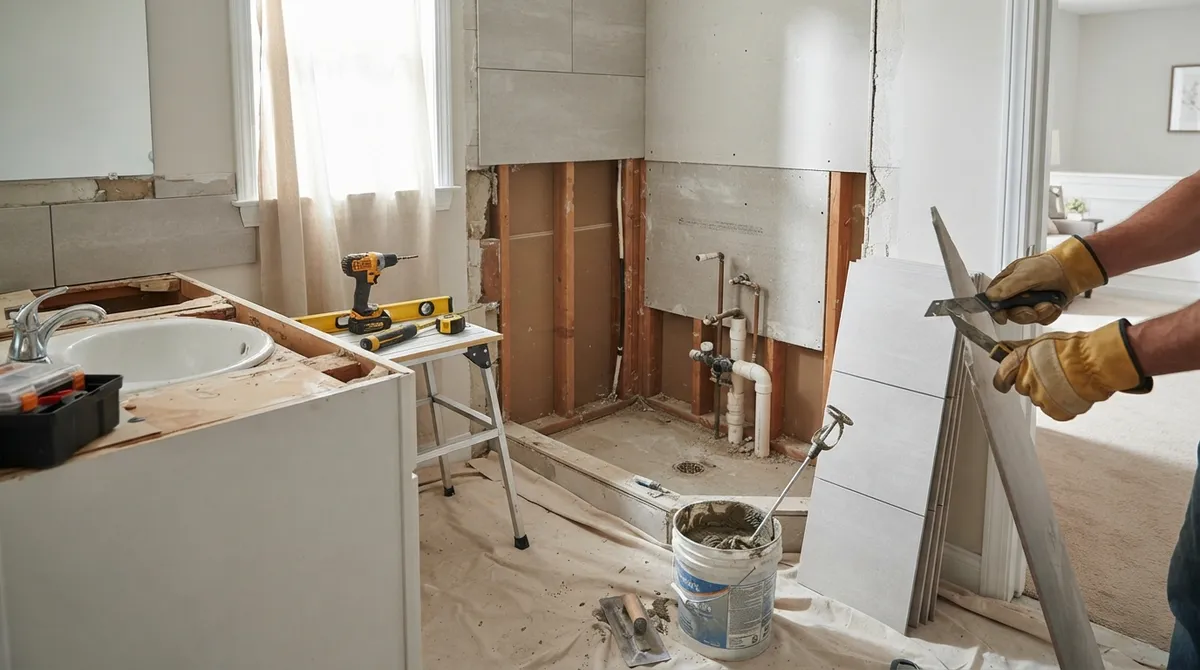
Does a Bathroom Remodel Need a Permit in Florida?
Short answer: very often, yes. Under Florida Statutes §553.79, a permit is generally required before construction, alteration, modification, repair, or demolition. Your local building department administers permits and decides the specific requirements for your property.
Here's the part that surprises people. A bathroom remodel is not automatically permit-free just because it feels small or cosmetic. If the work touches plumbing, electrical, structural, mechanical, or gas systems, a permit is commonly required. Florida's limited exemption for certain work valued under $7,500 at a single-family home specifically does not apply to electrical, plumbing, structural, mechanical, or gas work, and it does not apply in flood hazard areas. Always verify the current statute text and your eligibility with your local authority before relying on any exemption.
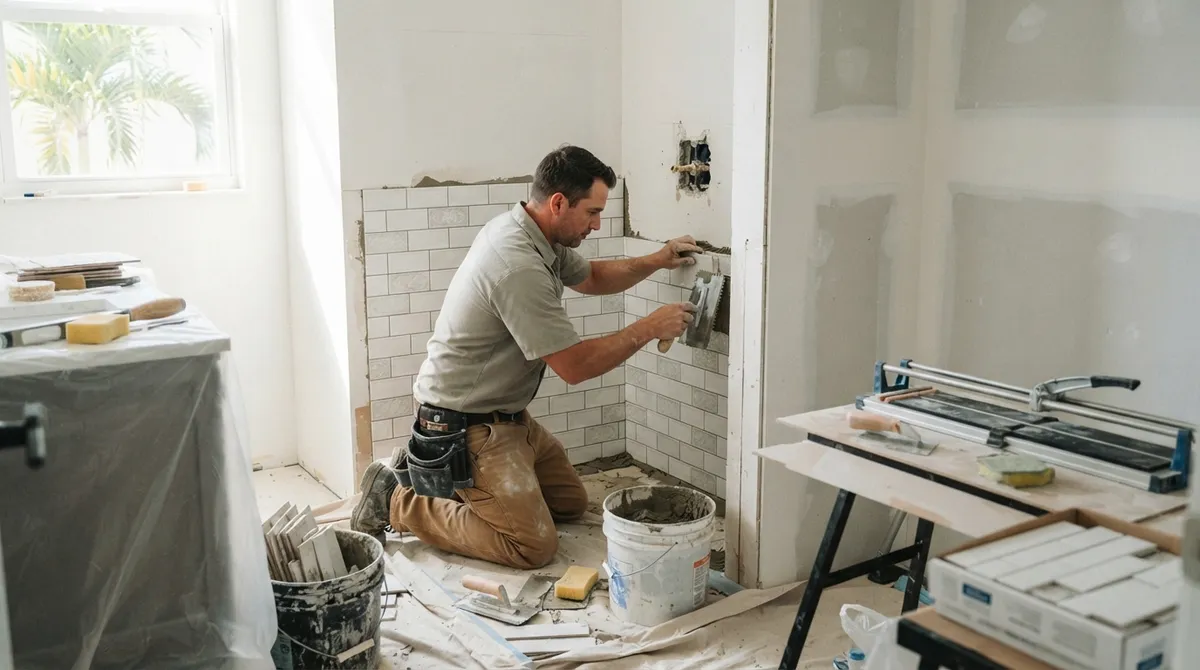
Work That May Not Need a Permit
Good news first. Pure finish work is where many jurisdictions relax. Examples that may be exempt in some places include:
- Painting walls and ceilings
- Replacing surface materials like floor tile, wall tile, or vinyl without changing structure or systems
- Swapping a vanity for one with the same plumbing connections in the same location
- Replacing cabinet hardware, mirrors, or towel bars
- Installing a new faucet on an existing sink
Notice the pattern: nothing regulated is being moved, added, or rerouted. Still, exemptions and interpretations vary from one city or county to the next. A like-for-like toilet swap might be fine in one jurisdiction and prompt questions in another, so a quick call to your building department is always smart before you start.
Work That Commonly Triggers a Permit
If your plans include any of the following, expect to need at least one permit, and possibly several separate trade permits:
- Moving or adding a toilet, sink, tub, or shower
- Changing drain lines, vent lines, or water supply lines
- Adding circuits, outlets, recessed lighting, or an exhaust fan
- Relocating or removing walls, or altering framing
- Changing a tub to a walk-in shower with new waterproofing and drain locations
- Adding or changing gas lines, such as for a water heater
- Installing new ductwork or mechanical venting
Local authorities decide the exact permit package, so the same project can look different in Tampa than it does in Miami-Dade or Orlando.
Quick Reference: Permit Likelihood by Project Type
| Bathroom Project | Permit Likelihood | Why |
|---|---|---|
| Painting and surface refresh | Often exempt | No regulated systems changed |
| Replacing floor or wall tile only | Often exempt | Finish materials only; confirm locally |
| Same-location vanity swap | Varies by jurisdiction | Depends on whether plumbing is altered |
| Moving a sink, toilet, or shower | Typically required | Plumbing changes |
| New outlets, lighting, or fan | Typically required | Electrical changes |
| Removing or moving a wall | Typically required | Structural changes |
| Full gut remodel | Typically required | Multiple trades involved |
Who Issues the Permit for Your Property?
The permitting authority depends on where your home sits. If you're inside city limits, the municipality generally handles it. If you're in an unincorporated area, the county does. Near city lines, it isn't always obvious, and guessing wrong can send your application to the wrong office.
Our free building department lookup tool can help you find the right office, and our guide on which Florida jurisdiction reviews your project explains the city-versus-county question in plain English. Application procedures also differ by location, so it's worth checking the specific requirements for places like Hillsborough County, Pinellas County, or Miami-Dade County.
What Happens If You Remodel a Bathroom Without a Permit in Florida?
Florida law treats regulated work done without a required permit as unlawful. What happens next, though, depends heavily on your local jurisdiction. There is no single statewide penalty amount for an unpermitted bathroom remodel, and fees, enforcement steps, and penalty schedules are set locally. So please be wary of anyone quoting a flat statewide fine.
Here's what can realistically happen:
- Discovery. Unpermitted work often surfaces through a neighbor complaint, a code officer visit, a home inspection, an appraisal, an insurance claim, or a buyer's due diligence.
- A notice or violation. The local authority may issue a notice requiring you to correct the issue. See our guide on code compliance violations for how that process works.
- Corrective permitting. You may be required to apply for a permit after the fact, submit plans, and pass inspections.
- Opening up walls. If plumbing or electrical was concealed, inspectors may require exposure so they can verify the work.
- Fees and penalties. Applicable fees, and in some places added penalties, are assessed according to local schedules.
For more detail on how penalties are generally approached, our article on the penalty for building without a permit in Florida is a helpful read.
The Hidden Costs Beyond Fines
The government fee is often the smallest part of the problem. Unpermitted bathroom work can quietly cause trouble in other areas of your life:
- Home sales. Buyers, lenders, and title companies increasingly flag unpermitted work, and closings can stall. Our article on open permits found at closing shows how quickly this can happen.
- Insurance. If a leak or electrical issue starts from unpermitted work, a claim may become complicated. Read more on expired permits and insurance claims in Florida.
- Safety. Permits exist because inspections catch problems like improper venting, missing GFCI protection, or bad waterproofing before they get hidden behind tile.
- Financing and appraisals. An appraiser who spots an unpermitted renovation may adjust value or raise questions.
Water and electricity are a tricky combo in any home, and a bathroom has plenty of both. A quick inspection is cheap insurance.
Already Remodeled Without a Permit? Don't Panic
If the work is already finished, or half-finished, you have options. Many Florida jurisdictions offer an after-the-fact or corrective permit process. Approval is not automatic, and requirements vary, but it is a well-worn path that thousands of owners have walked successfully.
Typical Steps to Legalize Unpermitted Bathroom Work
- Confirm your jurisdiction. Identify whether the city or county controls your address.
- Contact the building department. Ask about their after-the-fact or corrective permit process and what documents they require.
- Document what exists. Gather photos, receipts, and details about what was changed and when.
- Prepare plans or as-built drawings. Many departments want drawings showing what is actually in place, sometimes with engineer verification.
- Submit the application. File with the required plans, forms, and fees.
- Schedule inspections. Inspectors may need to see plumbing, electrical, and waterproofing, which can mean exposing concealed work.
- Correct anything that fails. Fix deficiencies, resubmit, and re-inspect until the permit is closed out.
We break this down further in our guides on how to legalize unpermitted work in Florida and fixing an unpermitted remodel. If you want to understand likely expenses, see after-the-fact permit costs in Florida.
Permit Now vs. Permit After the Fact
| Factor | Permit Before Work | Permit After the Fact |
|---|---|---|
| Timing | Inspections happen as work progresses | Inspections happen after work is done |
| Access to concealed work | Inspected before walls close | May require opening walls or exposing lines |
| Fees | Standard permit fees | Standard fees plus possible local penalties |
| Stress level | Low and predictable | Higher; depends on what inspectors find |
| Documentation | Plans before construction | Plans or as-builts after construction |
The takeaway is simple: permitting upfront is nearly always smoother and cheaper than fixing things later.
How to Do It the Easy Way From the Start
If you're planning a remodel, a little prep up front saves a lot of trouble. Here's a friendly checklist:
- Write down your full scope of work, including every plumbing, electrical, and structural change
- Call your building department and describe the scope. Ask which permits apply
- Confirm your contractor is licensed and willing to pull permits in their name. Our guide on who can pull a permit in Florida explains your options
- If you're doing the work yourself on your own home, look into owner-builder permits
- Ask whether your project needs drawings, and whether those need an engineer's seal
- Be wary of anyone who says, "We don't bother with permits on bathrooms"
That last point is a big one. A contractor who suggests skipping the permit is shifting the risk to you, because the property owner is the one who lives with the consequences.
How Long Does Permitting Take?
Timelines vary widely by jurisdiction, workload, and project complexity. Some small residential reviews move quickly, while others take weeks. One local source cited roughly 10 to 30 business days for certain Pinellas County reviews, but that is not a statewide figure and shouldn't be treated as a promise anywhere else. For a broader look, see how long a building permit takes in Florida.
The best way to keep things moving is a complete, clean application the first time. Missing details, unclear drawings, or mismatched scope are what trigger comment letters and delays. If your application does get kicked back, our article on why building permits get rejected will help you respond efficiently.
Special Notes for Different Readers
For Homeowners and Residential Property Owners
Your bathroom is yours, but the permit record belongs to the property. A clean permit history makes selling, refinancing, and insuring easier. If you're unsure whether your project needs a permit, ask before you demo, because it's far easier to answer that question before the tile is down.
For General Contractors and Design Trade Professionals
Clients often assume bathrooms are permit-free, and that assumption can land on your license if something goes wrong. Setting the permit expectation in your proposal protects your reputation. If drafting, MEP, or structural sheets would help your package sail through, our team supports general contractors with permit filing, drafting, and sealed drawings.
For Real Estate Professionals
Spotted a freshly remodeled bathroom in a listing? It's worth a quick open-permit check. Our open permit search tool can help you research a property, and our realtor closing support is built for exactly those pre-closing surprises.
Where 1 Contractor Solutions Fits In
We're Florida's outsourced permitting department. We're not a construction contractor, so we're the team you call when the permit is standing between you and a scheduled crew. We can help you figure out what your bathroom project truly needs, prepare drawings, file and track the application, work through reviewer comments, and carry it through inspections and closeout. If the work is already done, we handle after-the-fact and expired permits too, including projects other firms decline.
Our drafting and engineering are in house, with sealed drawings from our own engineer, so when a reviewer flags something, we can fix it quickly instead of waiting on an outside consultant. We serve all 67 Florida counties, respond within 30 minutes day or night, and se habla español. You can see what customers say by checking out our Visit us on Google — 1 Contractor Solutions listing, and you're welcome to follow us on LinkedIn or follow us on Facebook for more Florida permitting tips. For official statute language, you can read Florida Statutes §553.79 directly.
Final Thoughts
A bathroom remodel without a permit in Florida might feel like a shortcut, but the real rule is simple: if your project changes plumbing, electrical, structural, mechanical, or gas systems, plan on a permit. Pure cosmetic updates may be exempt in some places, but confirm the exact scope with your city or county before you begin. And if the work is already done, remember that corrective options exist and you're far from the first person to need them.
Ready for a smooth, stress-free bathroom project, or need help cleaning up past work? Reach out and get a free quote today, and let our team handle the permit while you pick out the tile.
FAQs
Do I need a permit to remodel a bathroom in Florida?
Often, yes. If your remodel involves plumbing, electrical, structural, mechanical, or gas changes, a permit is commonly required, and the small-project exemption under $7,500 does not cover those trades. Purely cosmetic work like painting or replacing surface tile may be exempt in some places, so confirm with your local building department first.
What bathroom work can I do without a permit in Florida?
Finish-only work such as painting, replacing surface materials, or swapping hardware may be permit-free in some jurisdictions, as long as no regulated systems or structure change. Rules vary by city and county, so a quick call to your building department will give you a clear, local answer.
What happens if I remodel a bathroom without a permit in Florida?
Unpermitted regulated work is unlawful, and consequences vary by location. You may face a violation notice, a corrective permit application, required inspections (sometimes with exposed walls), and local fees or penalties. There's no single statewide penalty amount, so be cautious of anyone who quotes one.
Can I get an after-the-fact permit for an unpermitted bathroom remodel?
Many Florida jurisdictions offer an after-the-fact or corrective permit process, though approval is not automatic. You'll typically submit plans or as-built drawings, pay applicable fees, and pass inspections, which may require exposing concealed plumbing or electrical work. Contact your local building department to learn their specific process.
Can unpermitted bathroom work affect selling my home?
Yes, it can. Buyers, lenders, appraisers, and title companies may flag unpermitted work, which can delay or complicate a closing. Resolving it before listing, through a corrective permit, usually makes the sale much smoother.
We do this work every day across all 67 Florida counties. Call (866) 314-6931 and we will tell you what your situation actually requires — including when you do not need us.
Related services
Permit Facilitation & Filing
You have a crew scheduled, a client asking for dates, and a permit sitting somewhere in a queue you cannot see. We file it, w…
See the servicePlan Review Coordination
A permit in plan review is not one queue. On a commercial project it can be six queues, each with its own reviewer, its own c…
See the serviceReady to get your permit moving?
One call tells you which jurisdiction controls your project, what it will take, and what it will cost. Most of the time we can scope it on the phone.