
Blog
As-Builts for After-the-Fact Permits in Florida: A 2026 Guide
Learn how as-builts work for after-the-fact permits in Florida, who can seal them, what they cost, and how to legalize unpermitted work in 2026.
Key Takeaways
-
Before commissioning any as-built drawings, call the local building department for the property address, since after-the-fact (ATF) requirements are set by each city and county rather than a single statewide checklist.
-
As-builts must reflect what is actually built, not an idealized version; drawings that mismatch the physical conditions will be exposed at inspection and cause delays.
-
Whether a Florida-licensed engineer or registered architect must seal the drawings depends on the work: structural, wind-load, and concealed work are most likely to require a seal.
-
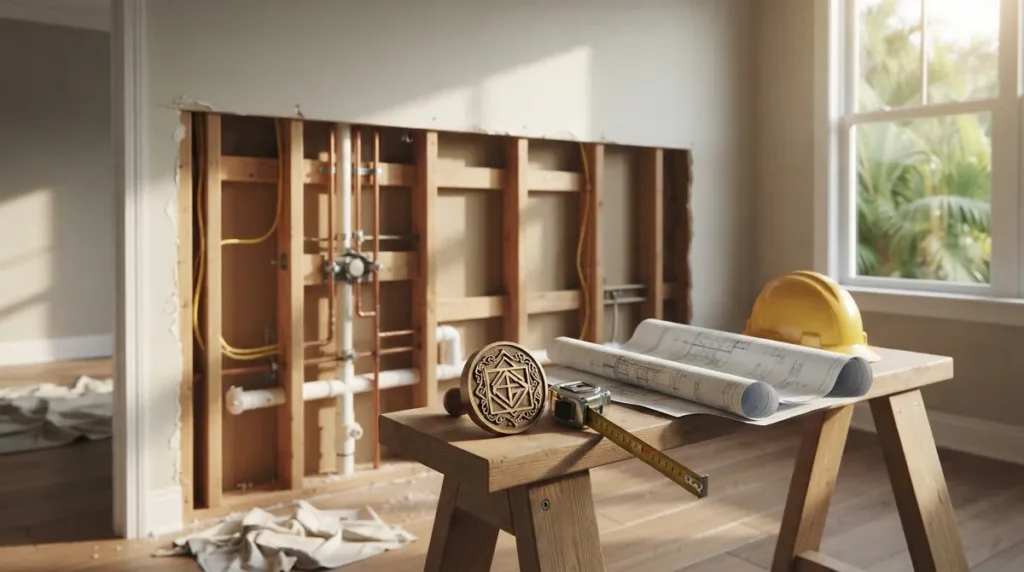
Concealed work may require third-party engineering analysis, exploratory openings, testing, or sealed legalization documents, so plan for verification of hidden framing, wiring, and plumbing.
-
Submitting as-builts and paying for an ATF permit does not legalize the work; inspections, testing, corrections, and remedial upgrades may still be needed before final approval.
-
Run an open permit and violations search first, and keep the file active by answering reviewer comments promptly to avoid permit expiration.
Let's be honest: nobody wakes up excited to discover that a patio enclosure, a bathroom remodel, or a whole addition was built without a permit. But it happens all the time in Florida, and it usually surfaces at the worst moment: a home sale, an insurance claim, a failed inspection, or a letter from code enforcement. The good news? There is a well-worn path to fix it, and as-built drawings are usually the first stepping stone.
If you're searching for as builts for after the fact Florida projects, you're probably asking a few questions. What exactly is an as-built? Does my building department require one? Who can draw and seal it? And how much trouble am I in? This guide walks you through all of it in plain, friendly language, whether you're a general contractor cleaning up a job, a realtor facing a closing deadline, or a homeowner who just inherited someone else's shortcuts.
One quick note up front: after-the-fact (ATF) rules are set locally. Florida Statutes §553.79 gives the statewide framework for permits and plan review, but each city and county runs its own process. We'll point out where requirements typically differ.
What Is an As-Built Drawing, and Why Do ATF Permits Need One?
An as-built drawing records the work as it actually exists today, not as someone once imagined it. Think of it as a portrait of the structure rather than a blueprint of intentions. For a legally permitted project, plans come first and construction follows. With unpermitted work, the order is flipped: the construction is done, so the plans have to be created to match reality.
An after-the-fact permit is simply a permit application for construction or alterations that began or finished without the required permit. The building department needs a way to evaluate what's there, and as-built drawings give plans examiners something concrete to review against the Florida Building Code.
Here's what a good as-built set typically documents:
- Dimensions, floor plans, and elevations of the completed work
- Structural elements such as framing, connections, footings, and tie-downs where they can be verified
- Electrical, plumbing, and mechanical layouts (often through MEP engineering)
- Setbacks and property relationships, usually on a site plan or survey
- Notes on materials, products, and installation methods
If you want a deeper look at how this fits into the bigger permitting picture, see our overview of as-built drawings and our guide on getting as-built drawings for Florida permits.
Do You Always Need As-Builts for an After-the-Fact Permit?
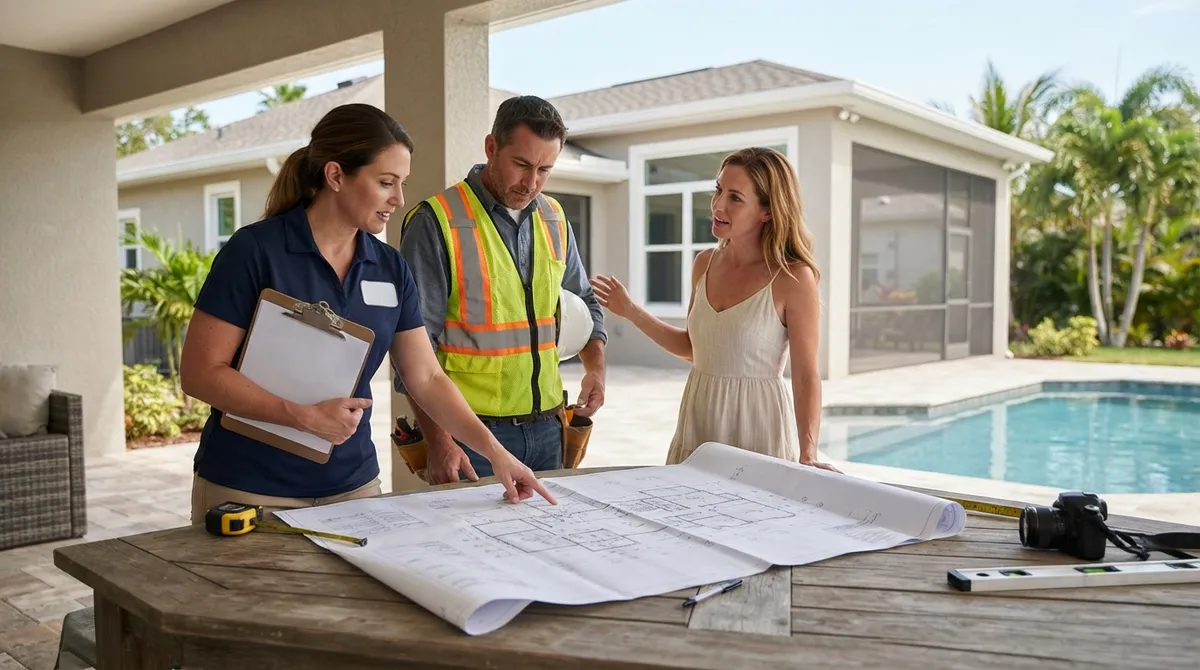
Not always in exactly the same form, but usually some version of them. The exact submittal depends on the work and on the local building official. A small interior change might need a simple floor plan and photographs. An addition or enclosure will almost certainly need full drawings, and anything structural may need a professional seal.
There is no single statewide ATF checklist. That's the most important thing to remember. What Hillsborough County asks for may differ from what Miami-Dade or a small municipality requires. The smartest first step is to contact the building department for the property address before commissioning any drawings. Doing so can save you from paying for the wrong document set.
Typical ATF Submittal Contents
While requirements vary, a typical after-the-fact package may include:
- A completed permit application identifying the work as after-the-fact
- As-built plans showing the existing conditions
- A site plan or survey
- Photographs of the completed work
- Product information, such as window or door approvals
- Contractor or owner-builder details
- Engineer or architect letters, calculations, or testing where structural or concealed work is involved
Who Can Prepare and Seal As-Builts in Florida?
This is where many owners get tripped up. Anyone with drafting skills can produce a clean set of measured drawings, but the building department decides whether those drawings need a Florida-licensed professional engineer or registered architect to sign and seal them.
As a rule of thumb, the more structural, life-safety, or concealed the work is, the more likely a seal will be required. Here's a simple way to think about it:
| Type of Work | Typical Documentation | Seal Likely Needed? |
|---|---|---|
| Minor interior finish changes | Basic floor plan, photos | Often not |
| Non-structural remodel with electrical/plumbing | As-built plans, trade documentation | Sometimes |
| Room addition or garage conversion | Full as-built set, site plan, structural details | Frequently |
| Screen enclosure, pool cage, or patio cover | As-built plans, engineering for wind loads | Frequently |
| Concealed structural work | Sealed as-builts, engineer letter, possible testing | Very likely |
Because 1 Contractor Solutions keeps drafting and engineering in house, our own engineer signs and seals the work. That means when a plans examiner has a question, we answer it directly rather than waiting on an outside consultant. You can read more about our engineering services and engineer letters for situations where a letter, not a full drawing set, is what the department wants.
The Concealed Work Problem
Here's the part that makes ATF permitting trickier than a standard permit: inspectors normally see framing, wiring, and plumbing before the walls are closed up. With unpermitted work, that inspection window has usually passed. Drywall is hung, concrete is poured, and everything is painted and pretty.
So how does a building department verify what it can't see? Several ways, depending on the jurisdiction:
- Third-party engineering analysis. St. Lucie County's published Building FAQ notes that a third-party engineering analysis may be required when work areas are concealed.
- Exploratory openings. Officials may ask you to open a section of wall, ceiling, or flooring so an inspector or engineer can confirm connections and materials.
- Testing. Some jurisdictions call for testing of electrical, plumbing, or structural components.
- Sealed legalization documents. The Town of Palm Beach's legalization guidance for concealed completed work calls for an as-built and legalization certificate, plus supporting plans, specifications, and testing, prepared, signed, and sealed by a Florida-licensed engineer or registered architect. That's a local procedure, not a universal statewide rule, but it shows how seriously some departments treat concealed conditions.
If you're worried about what's behind the walls, our guide on field verification for after-the-fact permits explains how engineers document conditions with minimal demolition whenever possible.
Does an ATF Permit Automatically Legalize the Work?
Here's a gentle but important reality check: no. Submitting as-builts and paying for an after-the-fact permit does not magically legalize the work. It simply starts the review. The building department may still require inspections, testing, corrections, or remedial work to prove the construction meets code before issuing final approval.
That's why honest as-builts matter so much. Drawings that show what is truly there, rather than an idealized version, let the engineer identify weak points early and plan upgrades. It's far cheaper to add a few hurricane straps or correct a deficient connection during the permit process than to fail an inspection and start over.
How Much Does It Cost?
Everyone asks this one first, and we wish there were a tidy statewide number. There isn't. The available public sources do not establish a single statewide ATF fee or penalty multiplier. Costs depend on your jurisdiction, the size and type of work, and the amount of engineering involved.
To give you a sense of how local the rules are, St. Lucie County's published Building FAQ states that the fee for an after-the-fact permit is double. That's a county-specific example, not a rule that applies everywhere. Other jurisdictions may use different fee structures or enforcement procedures.
| Cost Component | What Drives It | |
|---|---|---|
| Permit fees | Jurisdiction, project valuation, any ATF surcharge or multiplier | |
| As-built drafting | Size and complexity of the structure | |
| Engineering and sealing | Structural involvement, wind-load analysis, concealed conditions | |
| Testing or exploratory work | Whether the department requires verification of concealed elements | |
| Corrections | Any code upgrades found during review or inspection |
For a closer look at budgeting, check out our breakdown of after-the-fact permit costs in Florida.
Step-by-Step: How to Get As-Builts for an After-the-Fact Permit
Ready to move forward? Here's a practical roadmap you can follow.
- Identify the true jurisdiction. Florida has 67 counties, and permitting is also handled by municipalities. Near city lines, it isn't always obvious who controls your property. Our building department lookup tool can help.
- Check for open permits and violations. Run an open permit search so there are no surprises hiding in the record.
- Contact the building department. Ask what they require for an after-the-fact application on your specific work. Request their ATF checklist if they have one.
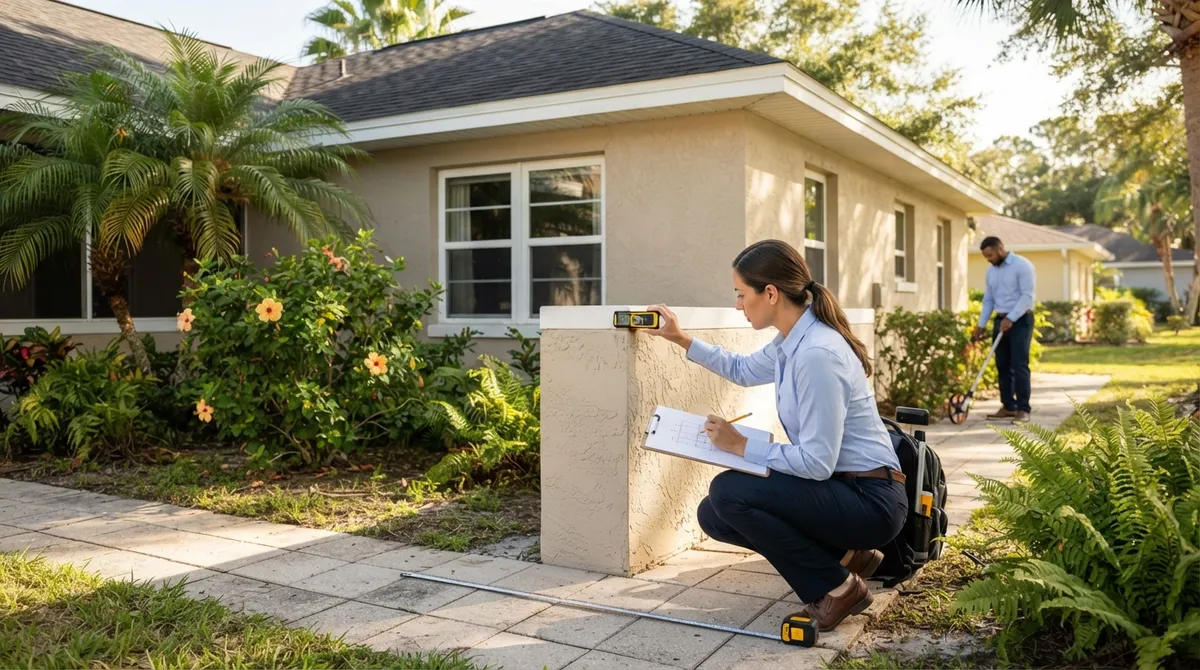
- Document the existing conditions. A site visit measures the structure, photographs it, and notes materials and visible connections.
- Prepare the as-built drawing set. Drafting produces floor plans, elevations, and a site plan that match what's actually built.
- Add engineering if required. Structural, wind-load, or concealed-work questions are handled by a licensed engineer, who may issue sealed drawings or a letter.
- File and track the application. Submit the package, then follow it through plan review, answering every reviewer comment promptly.
- Complete inspections and closeout. Address any corrections, pass final inspection, and get the permit closed out properly.
If steps like these sound like a lot to juggle, that's exactly what an outsourced permitting department is for. We handle permit facilitation and filing, plan review coordination, and revisions and resubmittals from start to finish.
Why Different Audiences Need As-Builts
As-builts aren't just a homeowner problem. Different people land in this situation for different reasons, and the stakes look a little different for each.
General Contractors
If you inherited a half-finished job, or a subcontractor skipped a permit, you want it cleaned up fast so your reputation and license stay protected. Accurate as-builts plus a smooth ATF filing let you move on to the next job. Learn more on our page for general contractors.
Realtors and Property Buyers
Unpermitted work discovered mid-transaction can freeze a closing. As-builts and an ATF permit are often the cleanest way to resolve it. Our realtor and closing support is built for tight timelines, and this article on permit holds and Florida closings goes deeper.
Solar Companies
Sometimes an array or electrical upgrade was installed without a permit. As-built structural and electrical documentation helps bring it into compliance and keeps interconnection on track. See our resources for solar contractors.
Homeowners and Residential Property Owners
Maybe a previous owner enclosed the lanai or finished the garage. You didn't do it, but it's now your responsibility. Take a deep breath. It's common, it's fixable, and our homeowner resources walk you through it.
Common Mistakes to Avoid
After helping with files other teams decline, we see the same missteps again and again. Dodge these and you'll save time and money:
- Ordering drawings before calling the building department. Requirements vary, so confirm what they want first.
- Drawing what should be there instead of what is. As-builts must reflect reality, or the inspection will expose the mismatch.
- Ignoring concealed conditions. Pretending hidden work isn't hidden rarely ends well. Plan for verification.
- Assuming the permit equals approval. You still need to pass inspections and close the permit.
- Letting the file go stale. An unanswered reviewer comment can lead to expiration. Our guide on closing an expired permit covers what to do if that happens.
When It Feels Urgent
Sometimes you don't have weeks to spare. A stop work order, a pending closing, or a code enforcement notice can turn a slow project into an emergency. If that sounds like you, our urgent permit rescue service is designed for exactly those moments, and our team on after-the-fact and expired permits takes on the files others won't. If a notice is already in your mailbox, our code compliance and violations team can help you respond properly.
Stay Informed and Connected
Florida's permitting landscape shifts as local departments update procedures and the Florida Building Code evolves. For the statutory backbone, you can review Florida Statutes Section 553.79 directly. For county-specific examples of how ATF rules and concealed-work analysis are handled locally, the St. Lucie County Building FAQ is a helpful reference. To keep up with our latest permitting tips, follow us on LinkedIn or follow us on Facebook. And if we've helped you, we'd love it if you'd visit us on Google and see what our 1 Contractor Solutions customers have to say.
Ready to Legalize What's Already Built?
As-builts for after-the-fact work in Florida don't have to be a source of stress. With accurate drawings, the right engineering, and a team that knows how Florida jurisdictions think, unpermitted work can move from a liability to a closed permit. 1 Contractor Solutions handles the whole journey across all 67 counties: measuring, drafting, sealing, filing, tracking, and carrying it through final approval. We respond within 30 minutes day or night, and se habla español.
Don't let a missing permit hold up your sale, your crew, or your peace of mind. Get a free quote today and let's get your project permitted, approved, and moving.
FAQs
Do I need as-built drawings for an after-the-fact permit in Florida?
In most cases, yes, some form of as-built documentation is part of the application. The exact submittal depends on your project and your local building department, so it's smart to call them before commissioning drawings. Small projects may need only a simple plan and photos, while structural work often requires sealed drawings.
Who can prepare and seal as-built plans for a Florida permit?
A qualified drafter can prepare measured as-built drawings, but a Florida-licensed professional engineer or registered architect must sign and seal them when the building department requires it. This is common for structural, wind-load, or concealed work. Having drafting and engineering under one roof keeps everything coordinated.
How much does an after-the-fact permit cost in Florida?
There's no single statewide fee, since costs vary by city and county and by the size and type of work. Some jurisdictions charge extra, and St. Lucie County, for example, states its after-the-fact fee is double. Engineering, drafting, and any corrections add to the total, so ask your building department for their specific fee schedule.
What happens if the unpermitted work is hidden behind walls or concrete?
Concealed work is harder to verify, so the building department may require a third-party engineering analysis, testing, or exposing a portion of the construction for inspection. Some local procedures call for sealed as-builts and a legalization certificate from a Florida-licensed engineer or architect. Your engineer can often minimize demolition by documenting conditions carefully.
Does an after-the-fact permit automatically legalize my work?
Not automatically. Filing the permit starts the review, but the building department may still require inspections, testing, corrections, or remedial work before final approval. Once everything passes and the permit is closed out, the work is properly documented and legal.
We do this work every day across all 67 Florida counties. Call (866) 314-6931 and we will tell you what your situation actually requires — including when you do not need us.
Related services
Permit Facilitation & Filing
You have a crew scheduled, a client asking for dates, and a permit sitting somewhere in a queue you cannot see. We file it, w…
See the servicePlan Review Coordination
A permit in plan review is not one queue. On a commercial project it can be six queues, each with its own reviewer, its own c…
See the serviceReady to get your permit moving?
One call tells you which jurisdiction controls your project, what it will take, and what it will cost. Most of the time we can scope it on the phone.