
Blog
After-the-Fact Plans vs. New Plans: Which Do You Need?
After-the-fact plans document existing work; new plans design future work. Learn which one fits your Florida project, plus costs, steps, and pitfalls.
Key Takeaways
-
Filing an after-the-fact permit does not guarantee approval: the building department still reviews the work against the Florida Building Code, and noncompliant work must be corrected first.
-
If the work is already built without a permit, you need after-the-fact plans documenting as-built conditions; if it has not started, submit new plans before construction begins.
-
After-the-fact fees are set locally, not statewide: St. Lucie County doubles its fee, while Pasco County's ordinance says paying the fee does not defend against prosecution, so verify with your exact jurisdiction.
-
Concealed work may need to be exposed or evaluated by a third-party engineer at the owner's expense, so budget time and money for that possibility upfront.
-
Confirm your permitting authority first, since a property inside a municipality may not fall under county jurisdiction, and stop any ongoing unpermitted work immediately.
-
Waiting too long can lead to stop-work orders, closing delays, or insurance problems, so address unpermitted work as soon as it is discovered.
Let's be honest: nobody wakes up hoping to deal with unpermitted work. Maybe you bought a home with a mystery sunroom. Maybe a contractor skipped the paperwork and moved on. Or maybe you finished a weekend project and only later learned it needed a permit. Take a breath. This happens all the time in Florida, and it is fixable.
The big question is usually this: do you need after the fact permit plans in Florida, or do you need brand-new plans for a project you have not built yet? They sound similar, but they work very differently. One documents what already exists. The other designs what is about to exist.
In this friendly guide, we will compare the two side by side, walk through what building departments typically look for, and help you figure out which path fits your situation. We will also cover costs, timing, and the common mistakes that slow people down in 2026. Whether you are a homeowner, a general contractor, a solar installer, or a real estate pro, you will leave with a clear game plan.
What After-the-Fact Permit Plans Actually Are
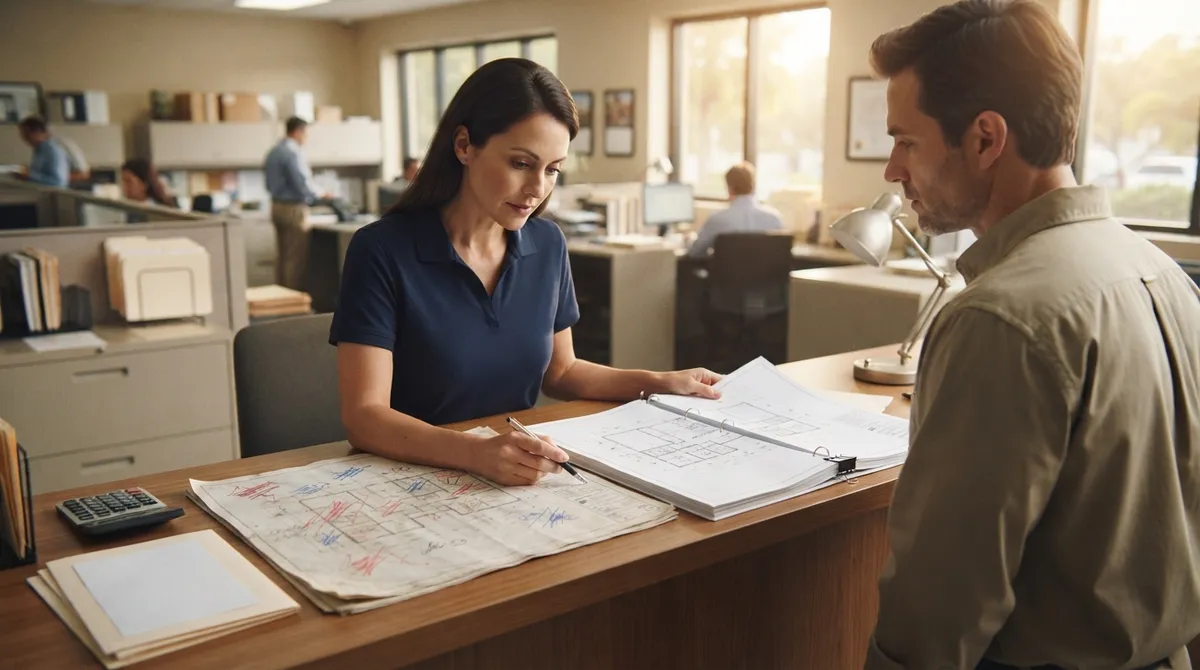
An after-the-fact permit is a permit application submitted once work that required a permit has already started or been completed without one. The plans that go with it document the work as it currently exists, often called as-built plans. The local building department then reviews that work against the Florida Building Code and any local rules.
Here is the part many people miss: filing is not the same as approval. After-the-fact permitting does not waive code requirements. The department still checks whether the work is safe and compliant. If it passes, you get your permit finalized. If it does not, you correct the deficiencies first.
Florida Statutes §553.79 generally requires plans and specifications to be reviewed before a building permit is issued, and the city or county building department administers that process. After-the-fact plans simply give reviewers what they need to do that review on work that is already in place. If you want a deeper look at how this works, see our guide on what is after-the-fact permitting in Florida.
What New Permit Plans Are (and Why They Differ)
New permit plans, sometimes called design or proposed plans, show what you intend to build. They go to the building department before construction starts. Reviewers check the design, you receive the permit, and then inspections happen as the work progresses.
The key difference is timing and verification. With new plans, inspectors see the work at each stage: footings, framing, rough-in, and final. With after-the-fact plans, much of that work may already be covered by drywall, roofing, or finishes. That is why the process can feel more detective-like than a standard permit.
A Quick Analogy
Think of new plans as a recipe you submit before cooking. After-the-fact plans are more like describing a finished cake and proving every ingredient was safe. It is doable, but you may need extra documentation to show what is inside.
After-the-Fact Plans vs. New Plans: Side-by-Side Comparison
| Factor | After-the-Fact Plans | New Plans |
|---|---|---|
| Timing | Submitted after work started or finished | Submitted before construction begins |
| What plans show | Existing, as-built conditions | Proposed design |
| Inspections | May require exposing concealed work or engineering evaluation | Staged inspections as work progresses |
| Fees | Set locally; some jurisdictions charge extra | Standard permit fees |
| Risk | Work may need correction or removal if noncompliant | Design can be adjusted on paper first |
| Best for | Legalizing completed unpermitted work | Planned renovations, additions, new builds |
The takeaway: if it is built, you need after-the-fact documentation. If it is not built yet, start with new plans and save yourself the extra steps.
Which One Do You Need? A Quick Decision Guide
Use this simple checklist to point yourself in the right direction.
- The work is already finished or partly finished without a permit: You need after-the-fact plans.
- You received a notice of violation or stop-work order: You likely need after-the-fact plans, plus a response to the violation.
- You are buying or selling and discovered unpermitted work: After-the-fact plans are usually the route to clear it.
- You are planning an addition, remodel, or solar install that has not started: You need new plans.
- A prior permit expired before final inspection: You may need an expired-permit fix rather than a brand-new application.
Not sure which bucket you are in? Our team handles after-the-fact and expired permits every day and can sort it out quickly.
What After-the-Fact Permit Plans Usually Include
Every jurisdiction sets its own requirements, and the local authority makes the final call. That said, plans for existing work commonly document the following:
- A site plan showing the structure's location on the property
- Floor plans reflecting the current layout
- Elevations showing the exterior as built
- Structural details, such as framing, connections, or foundations
- Product approvals for items like windows, doors, and roofing materials
- Electrical, plumbing, or mechanical information for those trades
Concealed or structural work can need extra support. An inspector may ask for the work to be exposed, or request an engineering assessment or other evidence of compliance. St. Lucie County, for example, warns that concealed work may require a third-party engineering analysis at the owner's expense. That is why as-built drawings and engineer letters often go hand in hand with these projects.
Cost and Fee Differences You Should Know About
Here is where people get nervous, so let's be clear. There is no single statewide after-the-fact fee. Fees and consequences are set locally, and they vary quite a bit.
| Jurisdiction Example | What It Says |
|---|---|
| St. Lucie County | Its FAQs state the after-the-fact permit fee is double |
| Pasco County | Its ordinance provides for an after-the-fact fee and states that paying it does not defend against prosecution for doing permit-required work without a permit |
| Pinellas County | A temporary penalty waiver for specified storm repairs in unincorporated floodplains ran through June 30, 2026; standard permit fees still apply, so verify current eligibility directly |
Do not assume every county uses a double fee. Always confirm with the permitting authority for your exact address. For a closer look at budgeting, check our breakdown of after-the-fact permit costs in Florida.
How the Process Works: A Step-by-Step Walkthrough
The after-the-fact path is very manageable when you take it one step at a time. Here is a practical sequence:
- Stop further unpermitted work. Pause anything that is still in progress so the situation does not grow.
- Confirm your permitting authority. Your property might sit inside a municipality rather than under county jurisdiction. Our building department lookup tool can help.
- Identify all work and trades involved. List everything that was done, including electrical, plumbing, and mechanical.
- Prepare as-built plans. Document the existing conditions with the detail your jurisdiction requires.
- Submit the application and pay applicable fees. Include the required drawings and any product approvals.
- Complete inspections or evaluations. This may include exposing concealed work or providing an engineer's assessment.
- Correct deficiencies and secure final approval. A permit does not legalize work that fails code or land-use requirements, so fixes may be needed.
That last point matters. Approval depends on the work meeting the rules, not just on paperwork being filed.
Timing: How Long Will It Take?
New-plan permits have some statutory guardrails. Under Florida Statutes §553.792, review decision timeframes apply to certain complete and sufficient applications, including 30 business days for specified residential permits on structures under 7,500 square feet and 60 business days for specified larger residential permits.
Those are review timeframes, not a guarantee of approval and not a promise about after-the-fact timelines. After-the-fact projects can move faster or slower depending on how clean your documentation is, whether inspections reveal problems, and how backed up the local office is. For general expectations, see how long a building permit takes in Florida.
Who Benefits Most From Each Path
Homeowners and Residential Property Owners
If you inherited unpermitted work from a prior owner, after-the-fact plans can protect your investment and remove a cloud over your property. If you are planning something new, starting with proper plans avoids this headache entirely.
General Contractors and Design Trade Professionals
When a job turns up unpermitted conditions mid-project, after-the-fact documentation keeps your schedule from collapsing. Outsourcing drafting and engineering lets you stay focused on the build.
Solar Companies
Solar installs need code-compliant structural and electrical documentation. If an install went in without proper permitting, as-built documentation and engineering support help bring it into compliance.
Real Estate Professionals
An open permit or unpermitted addition can derail a closing fast. After-the-fact plans are often the cleanest way to resolve it. Our realtor closing support is built for exactly this.
Common Mistakes to Avoid
- Assuming a fee payment fixes everything. Paying does not erase a violation or guarantee approval.
- Skipping jurisdiction research. Filing with the wrong office wastes weeks.
- Underestimating concealed work. Plan for the possibility of exposure or engineering review.
- Using generic drawings. Plans need to reflect what is truly built, not an idealized version.
- Waiting too long. Delays can lead to stop-work orders, closing problems, or insurance complications.
Fixing these early makes everything smoother. If a notice has already arrived, our walkthrough on how to respond to a Florida unpermitted work notice is a good next read.
Do You Need an Engineer or Architect?
Sometimes yes, sometimes no. Simple cosmetic or minor work may need only drafted as-builts. Structural changes, roof framing, additions, and enclosures often call for sealed documentation. The building department decides what it will accept.
This is where having drafting and engineering under one roof helps. At 1 Contractor Solutions, our drafting and engineering teams work in house, and our own engineer signs and seals the work. That means when a reviewer flags something, we address it directly instead of waiting on an outside consultant. You can explore our plans and engineering services to see how it fits together.
The Bottom Line: Pick the Path That Matches Reality
Here is the simple truth. If the work exists, you need after the fact permit plans in Florida. If the work is still just an idea, you need new plans. Choosing the right one up front saves time, money, and stress.
If you are staring at an unpermitted structure, a violation notice, or a stalled closing, you do not have to figure it out alone. We work across all 67 Florida counties, respond within 30 minutes, and handle everything from plan prep to final approval. Prefer to see what customers say first? You can visit us on Google — 1 Contractor Solutions and read their experiences, or follow us on LinkedIn and follow us on Facebook for more Florida permitting tips.
Ready to move forward? Get a free quote and let's turn that permit problem into a finished project.
FAQs
What is an after-the-fact building permit in Florida?
It is a permit application filed after work that required a permit has already started or been completed without one. It is not automatic approval. The local building department still reviews the work for compliance with the Florida Building Code.
Are after-the-fact permit fees doubled in every Florida county?
Nope, and that is a common myth. St. Lucie County, for example, says its fee is double, but Pasco County and others handle fees and enforcement differently. Always check with your specific city or county permitting office.
What plans are required for an after-the-fact permit in Florida?
It depends on your jurisdiction and project, but plans often include a site plan, floor plans, elevations, structural details, product approvals, and electrical, plumbing, or mechanical information. The local authority makes the final call on what it needs.
What happens if the work is concealed before inspection?
An inspector may require the work to be exposed, or ask for an engineering assessment or other proof of compliance. Some counties note this may be at the owner's expense, so it helps to plan ahead.
Do I need an engineer for after-the-fact permit plans?
Not always, but structural, roof, addition, and enclosure work frequently calls for sealed engineering documentation. Your building department determines what it will accept, and an experienced permitting team can tell you early what to expect.
We do this work every day across all 67 Florida counties. Call (866) 314-6931 and we will tell you what your situation actually requires — including when you do not need us.
Related services
Permit Facilitation & Filing
You have a crew scheduled, a client asking for dates, and a permit sitting somewhere in a queue you cannot see. We file it, w…
See the servicePlan Review Coordination
A permit in plan review is not one queue. On a commercial project it can be six queues, each with its own reviewer, its own c…
See the serviceReady to get your permit moving?
One call tells you which jurisdiction controls your project, what it will take, and what it will cost. Most of the time we can scope it on the phone.