
Blog
9 Hurricane Shutter Permit Tampa FL Mistakes to Avoid
Avoid costly delays with your hurricane shutter permit in Tampa, FL. Learn 9 common mistakes and simple fixes from Florida permitting pros.
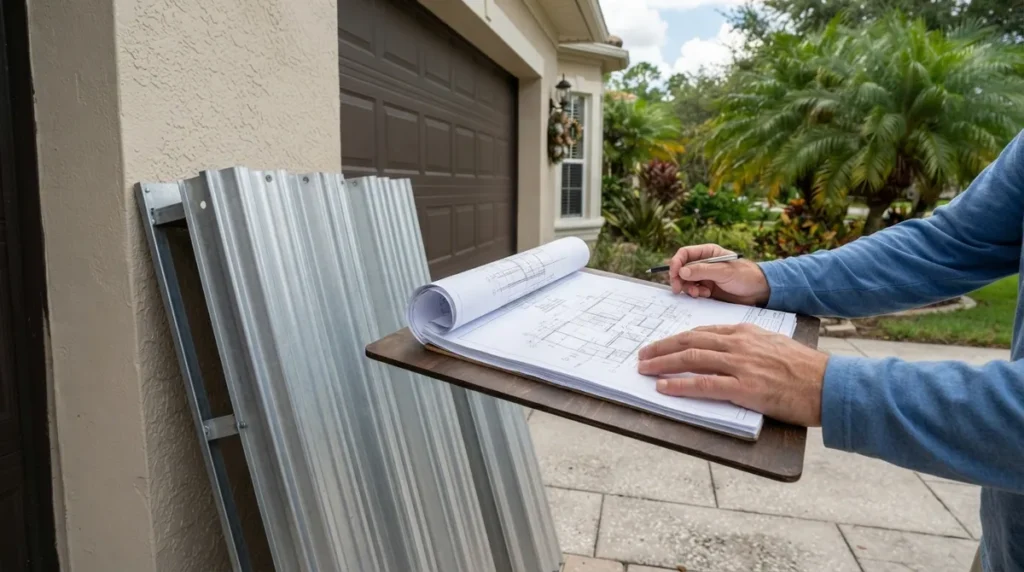
Key Takeaways
-
Confirm your parcel is inside City of Tampa limits before filing, since Tampa addresses can fall under unincorporated Hillsborough County or cities like Temple Terrace or Plant City.
-
Get the Florida product approval documentation for your exact shutter model before buying, because installation must follow the approval's conditions, fasteners, and anchor details.
-
Budget for both the City's shutter permit fee and the Florida Building Permit Surcharge of 2.5% of permit value or a $4 minimum, and verify current amounts with Construction Services.
-
Classify your full scope honestly: motorized shutters, new wiring, or structural repairs may require additional permits beyond the 'Awning/Shutter without electric' category.
-
Prepare an opening-by-opening schedule listing each window, door, and slider with approximate size and shutter type to reduce reviewer questions and correction notices.
-
Schedule required inspections promptly and keep final sign-off records, since an forgotten open permit can surface during a sale or insurance claim.
Hurricane season has a funny way of making everyone suddenly very interested in shutters. One week the forecast looks calm, and the next you are standing in a hardware store parking lot wondering if you can just bolt something up this weekend. We get it, and we want to help you do it the right way. A hurricane shutter permit in Tampa, FL is one of those small steps that can quietly cause big headaches when it is skipped, rushed, or filed with the wrong paperwork.
The good news is that most shutter permit problems are easy to avoid once you know where they come from. In this friendly guide, we walk through nine common mistakes we see homeowners, contractors, and even real estate pros make, plus simple fixes for each one. Along the way, we will point out what Tampa's Construction Services actually publishes, what you should double-check before you file, and where a little outside help can save you weeks. Think of this as a chat with a neighbor who has seen a lot of permit files, minus the jargon.
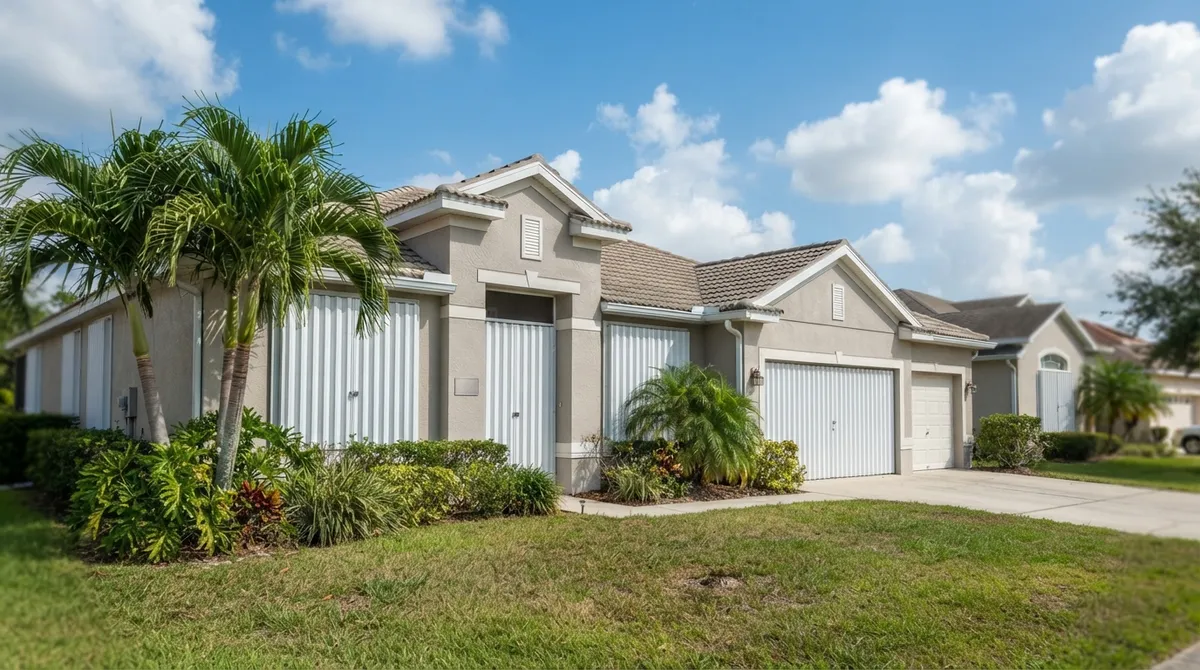
Why a Hurricane Shutter Permit Tampa FL Matters in 2026
Shutters protect openings, but a permit protects you. It creates a record that the product was approved for use in Florida, that it was installed to the manufacturer's conditions, and that the work was inspected where inspections apply. That record matters when you sell, when you file an insurance claim, and when a lender or appraiser starts asking questions.
In Tampa, shutter work falls under the City of Tampa Construction Services when the property sits inside city limits. The City's fee materials list an "Awning/Shutter without electric" category, and they also note a Florida Building Permit Surcharge of 2.5% of permit value or a $4 minimum, which is added on top of listed fees. Because fees and checklists can change, always confirm the current numbers with the City before you budget.
Quick Snapshot: What Tampa Publishes
| Item | What the City Says | What You Should Do |
|---|---|---|
| Permit category | "Awning/Shutter without electric" appears in the fee schedule | Confirm how your full scope is classified |
| State surcharge | 2.5% of permit value or $4 minimum, added to listed fees | Add it to your budget estimate |
| Jurisdiction | City limits are handled by City of Tampa Construction Services | Verify your address before applying |
| Product approval | Florida law requires shutters and impact-protection systems to be approved | Collect the approval documents first |
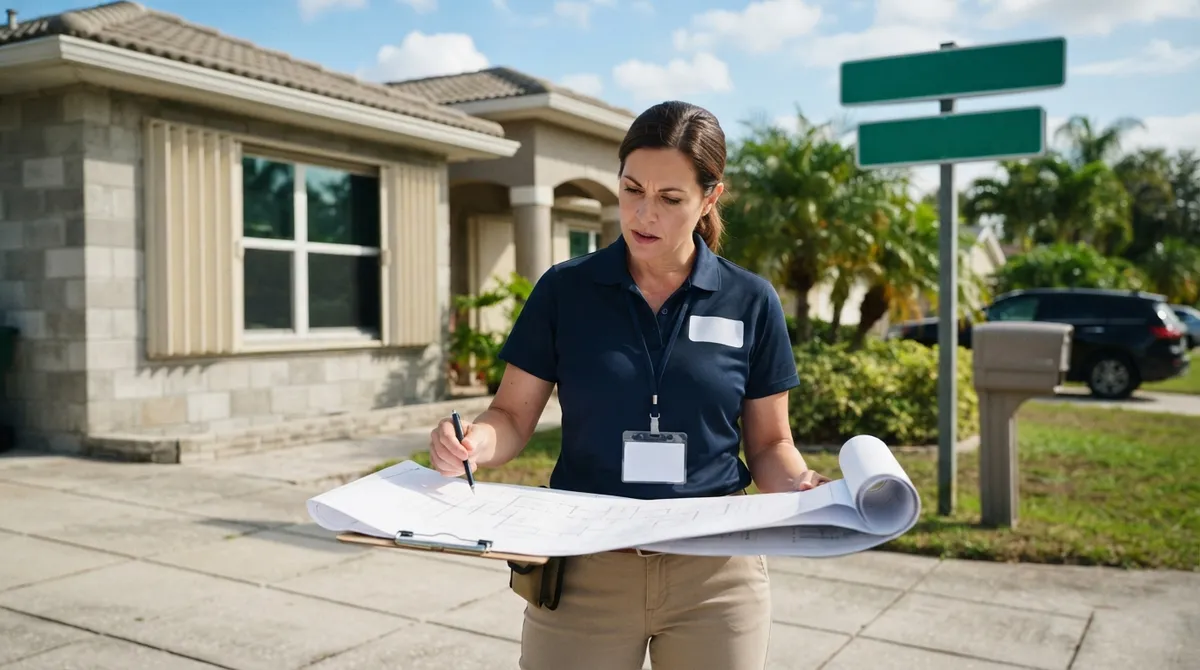
Mistake 1: Assuming Every Tampa Address Is in the City
This one catches people constantly. Tampa mailing addresses stretch well beyond city limits, and a property just across a line may belong to unincorporated Hillsborough County or another municipality such as Temple Terrace or Plant City. Each has its own permitting office and its own submittal habits.
Before you do anything else, confirm who actually has jurisdiction over your parcel. Filing with the wrong office wastes days and sometimes fees. If you are unsure, our building department lookup is a handy starting point, and our Tampa permitting page explains how local filing works.
Mistake 2: Buying Shutters Before Checking Product Approval
It is tempting to grab a great deal on shutters and sort out the paperwork later. That is how people end up with beautiful panels that cannot be permitted. Florida Statutes section 553.842 sets up statewide product approval and lists shutters and impact-protection systems among the products that need an applicable approval before use.
The installation also has to follow the approval's conditions and the Florida Building Code. That means fastener type, spacing, substrate, and anchor details all matter. Ask your supplier for the approval documentation before you pay, not after.
If you want a deeper look at how approval numbers work in a related trade, our guide on reading a Florida product approval number shows the same logic in action.
Product Approval Checklist
- Written approval documentation for the exact shutter model
- Installation details that match your wall type (block, wood frame, or other)
- Anchor and fastener specifications from the approval
- Any size or pressure limits that apply to your openings
- Manufacturer installation instructions
Mistake 3: Skipping the Opening-by-Opening Details
A permit application is not just "I want shutters." Reviewers generally expect project-specific information, including which openings will be protected, what type of shutter goes on each one, and how it attaches. Tampa's public search results do not spell out one definitive checklist, so confirm the current submittal requirements directly with Construction Services.
A simple opening schedule makes everyone's life easier. List each window, door, and slider with its approximate size and the shutter type you plan to use. When the reviewer can see the whole picture at a glance, fewer questions come back.
Mistake 4: Misclassifying the Scope of Work
The City's fee schedule separates shutter work without electric from other categories. If your project includes motorized rolling shutters, new wiring, or other construction, additional permit requirements may apply. Calling it a simple shutter job when it is really shutters plus electrical can trigger a correction notice or a stalled review.
Ask the City how your entire scope should be classified before you file. If a motor, a new circuit, or structural repair is involved, plan for those pieces up front. Our team handles this kind of coordination through permit facilitation and filing, so the right pieces land on the right permits.
Mistake 5: Guessing at the Cost
Cost surprises are a classic. Homeowners often see one number online and assume it is the final bill. In reality, Tampa's published materials point to a listed permit fee plus the separate state surcharge, and the exact current fee for the shutter category should be verified in the City's fee schedule or estimator.
Here is a friendly way to budget without guessing:
- Pull the City of Tampa fee schedule for miscellaneous projects.
- Find the "Awning/Shutter without electric" line.
- Add the Florida Building Permit Surcharge (2.5% of permit value or $4 minimum).
- Add any fees tied to extra scope, such as electrical.
- Confirm the total with Construction Services before you commit.
For a broader look at how Florida owners estimate these costs, see our guide to estimating permit costs in Florida.
Mistake 6: Hiring an Unlicensed Installer
Who can apply matters, and so does who does the work. Contractor licensing rules apply to many permitted jobs, and an unlicensed installer can put your permit, your warranty, and your insurance position at risk. Verify the license, ask for proof of insurance, and make sure the contractor's details match what goes on the application.
If a contractor is new to the area, municipality registration may also come into play. We cover that process in our municipality registration service, and it is worth sorting out before the crew shows up.
Who Does What on a Shutter Permit
| Role | Typical Responsibility | Common Pitfall |
|---|---|---|
| Homeowner | Authorizes work, signs required forms | Assuming the supplier handles everything |
| Licensed contractor | Installs per approval and code, pulls permit | Mismatched license or insurance details |
| Supplier | Provides product and approval documents | Missing or outdated approval paperwork |
| Permit service | Organizes documents, files, tracks review | Late involvement after problems start |
| City of Tampa | Reviews, issues permit, inspects | Requirements may change; verify current rules |
Mistake 7: Ignoring Inspections and Closeout
Getting the permit is not the finish line. Depending on the scope, inspections may be required after installation, and an open permit can follow a property for years. We have seen sellers discover a forgotten open permit days before closing, and it is never a fun surprise.
Ask the City what inspections apply to your scope, schedule them promptly, and keep your final sign-off in a safe place. If you are buying or selling, our open permit search tool can help you spot loose ends early. And if an open permit does surface, permit due diligence in Tampa is a smart read.
Mistake 8: Treating Post-Storm Rules as Routine Rules
After a hurricane, cities sometimes announce temporary emergency exceptions or fee waivers. Tampa's post-hurricane permitting guide describes these under specific circumstances and notes that flood-zone rules can still affect repair work. These are disaster-specific measures, so please do not assume they apply to ordinary shutter installation.
If you are installing before a storm, plan on the normal process. If you are repairing after one, read the City's current guidance carefully and verify what applies to your situation. When the calendar is tight, our urgent permit rescue team can step in. You can also read about getting a hurricane damage permit in Tampa.
Mistake 9: Going It Alone When the Paperwork Gets Tricky
Plenty of homeowners file a clean shutter permit on their own, and that is wonderful. But when the scope grows, the product approval is confusing, or the review stalls, outside help pays for itself quickly. A permit service can confirm the jurisdiction, organize your application and approval documents, coordinate with your contractor, and track review and inspection steps. The City still makes the final decisions, of course.
At 1 Contractor Solutions, we act as Florida's outsourced permitting department. Our drafting and engineering are in house, and our own engineer signs and seals the work, so if a reviewer asks for a structural detail, we can answer it directly. You can also see what customers say through our Visit us on Google — 1 Contractor Solutions listing.
If you run into a denial, our guide on who can rescue a denied building permit in Florida explains your options. Contractors working across multiple jobs may also like in-house team vs. outsourced expediter for a similar comparison.
A Simple Step-by-Step Path to a Clean Shutter Permit
Here is a friendly roadmap you can follow from start to finish:
- Confirm jurisdiction. Make sure your address is inside City of Tampa limits.
- Choose an approved product. Collect the Florida product approval and installation details.
- Map your openings. Build a simple schedule of each window and door.
- Define the full scope. Note any electrical or structural work.
- Verify current fees and checklist. Check with Construction Services.
- Submit the application. Include contractor and property details.
- Respond to comments quickly. Answer reviewer questions the same day when possible.
- Schedule inspections. Follow through to final approval.
If your project involves sealed drawings, who seals structural drawings for Florida permits explains what to expect. And for revisions after a rejection, our revisions and resubmittals service is built for exactly that moment.
Who Benefits Most From Getting This Right
- Homeowners: a clean permit protects insurance conversations and resale value.
- General contractors: faster approvals keep crews scheduled and customers happy.
- Real estate professionals: closed permits mean fewer closing surprises.
- Design and trade professionals: sealed, coordinated documents reduce reviewer back-and-forth.
- Solar and specialty trades: shutter work often overlaps with roof and electrical scopes on the same property.
Final Thoughts: Make Your Hurricane Shutter Permit Tampa FL Painless
A hurricane shutter permit in Tampa, FL does not have to be stressful. Confirm your jurisdiction, pick an approved product, describe your openings clearly, classify the scope honestly, and budget for the permit fee plus the state surcharge. Do those things and you have avoided most of the nine mistakes above.
If you would rather hand the paperwork to a team that lives and breathes Florida permitting, we would love to help. Reach out and get a free quote, and we will tell you which jurisdiction controls your project and what it will take to get it approved. You can also follow us on LinkedIn or follow us on Facebook for Florida permitting tips, and our marketing partners at Brain Buzz Marketing help us share them. Stay safe this season, and happy permitting!
FAQs
Do I need a permit to install hurricane shutters in Tampa, Florida?
In most cases, yes. Tampa's fee schedule includes an "Awning/Shutter without electric" permit category, which signals that shutter work is typically permitted. Check with City of Tampa Construction Services for the rules that apply to your exact project and address.
How much does a hurricane shutter permit cost in Tampa, FL?
The City lists a fee for the shutter category and adds a separate Florida Building Permit Surcharge of 2.5% of permit value or a $4 minimum. Because fees can change, please verify the current total in the City's fee schedule or estimator before you budget.
What documents do I need for a Tampa shutter permit?
Plan on gathering your property and contractor details, a list of the openings you are protecting, the shutter type, and the Florida product approval documentation. Tampa's exact checklist can change, so confirm current submittal requirements with Construction Services.
Does the City of Tampa handle my permit, or is it Hillsborough County?
It depends on where your parcel sits. City of Tampa Construction Services covers properties inside city limits, while other areas may fall under unincorporated Hillsborough County or another municipality. Confirm jurisdiction first so you file in the right place.
Are inspections required after installing hurricane shutters in Tampa?
Inspection requirements depend on the scope of work and how the City classifies it. Ask Construction Services which inspections apply, schedule them promptly, and keep your final approval records on file for resale and insurance.
We do this work every day across all 67 Florida counties. Call (866) 314-6931 and we will tell you what your situation actually requires — including when you do not need us.
Related services
Permit Facilitation & Filing
You have a crew scheduled, a client asking for dates, and a permit sitting somewhere in a queue you cannot see. We file it, w…
See the servicePlan Review Coordination
A permit in plan review is not one queue. On a commercial project it can be six queues, each with its own reviewer, its own c…
See the serviceReady to get your permit moving?
One call tells you which jurisdiction controls your project, what it will take, and what it will cost. Most of the time we can scope it on the phone.