
Blog
8 Steps for an After the Fact Screen Enclosure North Port
Eight friendly steps to legalize an unpermitted lanai in North Port, from zoning and sealed plans to inspections, fees, and closeout in 2026.
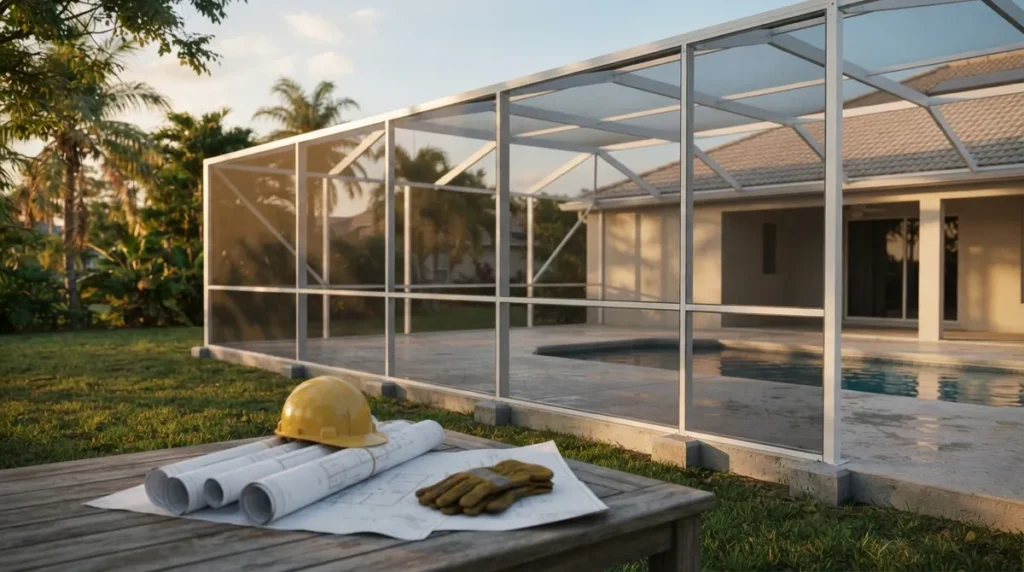
Key Takeaways
-
Screen enclosures in North Port are treated as structural work, so the City's low-cost single-family exemption does not apply; plan on a full permit review.
-
Confirm with the Building Division how it handles an already-built enclosure, since the published screen-enclosure checklist covers standard permits, not a retroactive track.
-
Search for open or expired permits on the parcel first; an expired permit may need reinstatement rather than a brand-new after-the-fact filing.
-
Expect to provide three sets of signed and sealed plans from a licensed Florida engineer, showing framing sizes, connections, and footings to meet wind-load requirements.
-
Prepare a Certificate of Zoning Compliance and ask whether a Notice of Commencement must be recorded in Sarasota County for your project value.
-
Do not cover or alter concealed connections or footings before the City's required inspections, since inspectors may need them exposed to verify construction.
So you bought a lovely North Port home with a screened lanai, or maybe you built one yourself years ago, and now someone has mentioned the dreaded word: unpermitted. Take a deep breath. You are far from alone, and there is a real path forward. Florida homeowners deal with this all the time, and an after the fact screen enclosure North Port approval is something the City handles through its Building Division.
Here is the friendly truth: screen enclosures are treated as structural work in North Port. That means they are not a quick, low-cost exemption situation. The good news is that the process is very learnable once you break it into steps. In this guide, we will walk you through eight of them, from confirming your situation to closing out inspections, so you know exactly what to expect in 2026.
Whether you are a homeowner, a real estate professional prepping a listing, a general contractor cleaning up a past job, or a pool and lanai specialist, this walkthrough is for you. Let's get that enclosure legal.
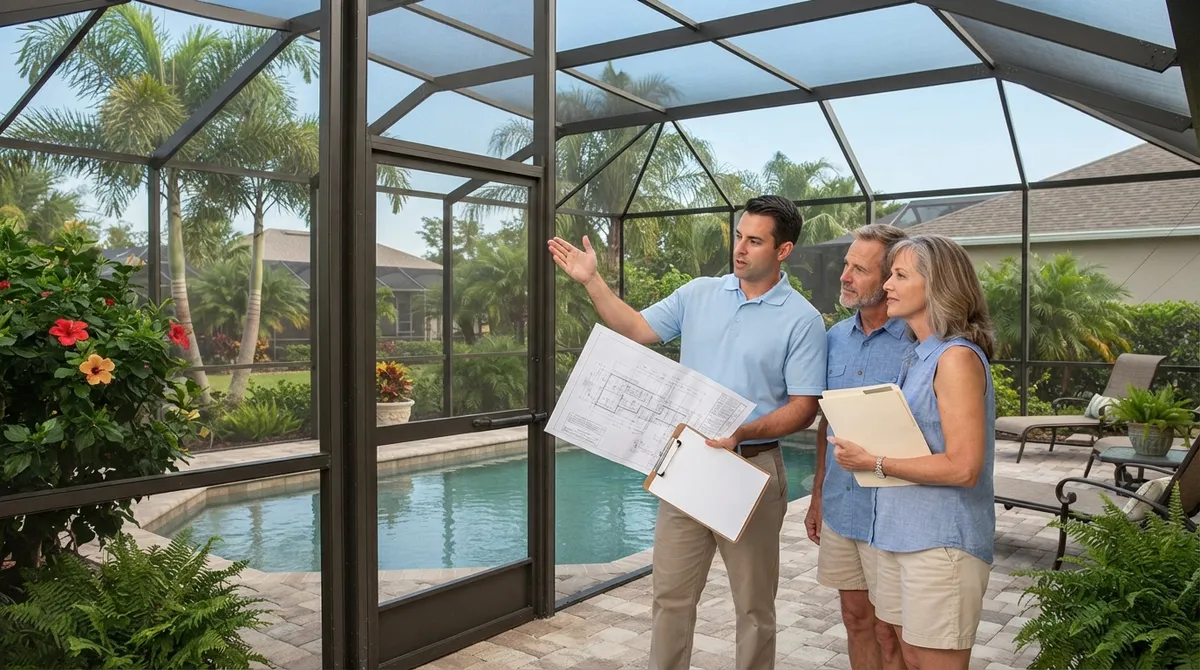
Step 1: Understand What 'After the Fact' Really Means in North Port
An after-the-fact permit is simply the process of seeking approval for work that was built or altered before the required permit was obtained. For an after the fact screen enclosure North Port project, that means the City needs to review something that is already standing.
Here is a key detail worth knowing. The City's published screen-enclosure checklist is written for a standard permit application. It does not spell out a special retroactive track. So the smartest first move is to confirm directly with the Building Division how they handle an already-built enclosure, and what extra documents or fees may apply.
It also helps to know what an after-the-fact permit is not. Filing an application does not automatically prove your enclosure is compliant. Think of the permit as the doorway to a review, not a stamp of approval.
Quick Reality Check
- Screen enclosures are classified as structural work in North Port.
- The City's low-cost single-family exemption does not apply to structural work.
- Properties in a flood hazard area are listed as ineligible for that exemption.
- The process can involve plan review, inspections, and possible corrections.
If you want a broader look at how this works statewide, our guide on how to get an after-the-fact permit in Florida covers the big picture.
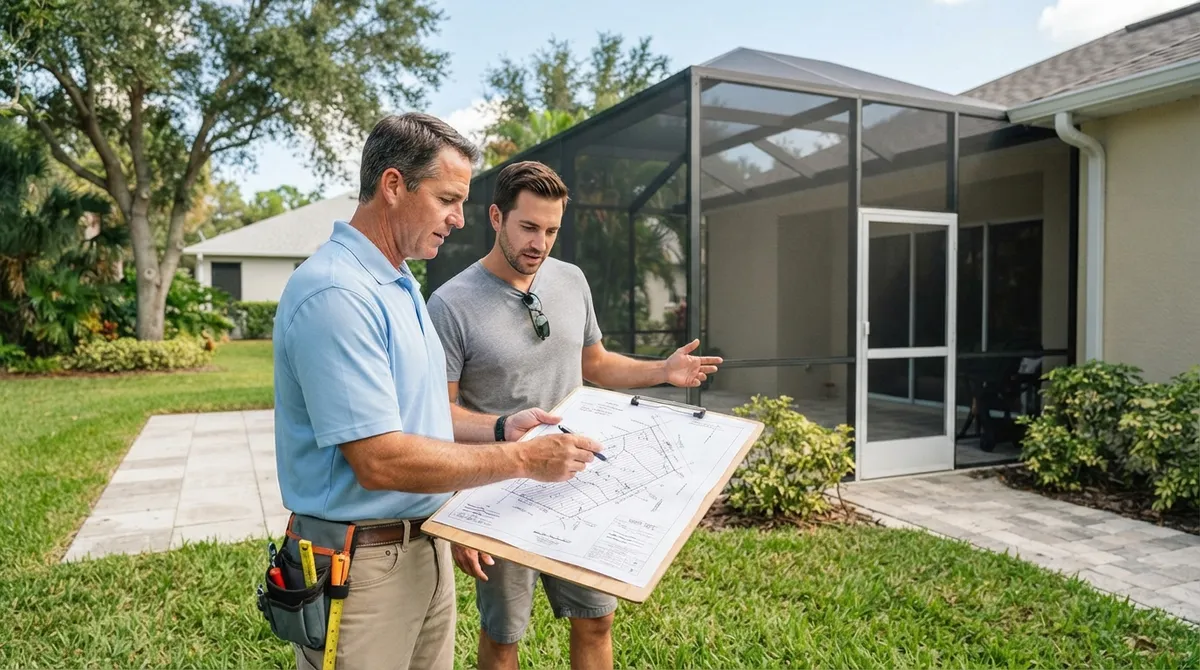
Step 2: Confirm Your Property's Location and Zoning
Before anything else, make sure you know exactly which jurisdiction controls your property. North Port sits in Sarasota County, but city limits and county lines can blur, especially near the edges. Filing in the wrong place wastes weeks.
The City's checklist calls for a Certificate of Zoning Compliance, so zoning is part of the very first conversation. This certificate confirms your enclosure respects setbacks and lot rules. A lanai that sits too close to a property line is a classic snag, and it is far easier to learn that now than after you have paid for drawings.
Our Building Department Lookup tool is a handy way to confirm who reviews your address. And if you want local context, take a look at our North Port permitting page.
What to Gather for Zoning
- Your full parcel identification, including lot, block, and addition.
- A copy of your survey or site plan, if you have one.
- Photos of the enclosure and its distance to property lines.
- Any HOA or deed restriction paperwork that might apply.
Step 3: Check for Open Permits and Past Records
Sometimes the story is simpler than you think. A previous owner may have pulled a permit that was never finished, or an old permit may have expired without a final inspection. That is a different problem than building with no permit at all, and the fix is different too.
Run a search before you spend money on plans. Our Open Permit Search is a quick starting point, and the Building Division can confirm what is on file for your parcel.
If you find an expired permit, you may be dealing with a reinstatement rather than a brand-new filing. Our article on how to close an expired permit in Florida explains that route, and our after-the-fact and expired permits service handles both situations.
| Situation | Typical Path | First Move |
|---|---|---|
| No permit ever pulled | After-the-fact application | Confirm process with Building Division |
| Permit pulled, never finaled | Reopen or reinstate | Search open permits |
| Permit expired mid-project | Reinstatement or new filing | Ask the City what is allowed |
| Enclosure altered after approval | Revision or new permit | Compare existing to approved plans |
Step 4: Get Accurate As-Built Documentation
Here is where many homeowners feel a little lost, so let's make it simple. The City expects plans that show what actually exists. For a screen enclosure, that means the framing members, their sizes, and how they connect, plus a footing plan showing size and location when applicable.
This is where as-built drawings come in. Someone has to measure the enclosure, document the structure, and turn it into a clear set of drawings the plan reviewer can understand. Photos alone will not cut it.
What Good As-Builts Show
- Overall dimensions and the enclosure's location on the lot.
- Framing member sizes, spacing, and connection details.
- Attachment to the existing structure, such as the house or slab.
- Footing or foundation size and location, where applicable.
- Roof or screen panel configuration.
Our team prepares as-built drawings and handles architectural drafting in-house, so you are not bouncing between vendors. If you are curious about the process, our guide on getting as-built drawings for Florida permits walks through it.
Step 5: Secure Signed and Sealed Engineering
This is the step that surprises people most, so let's be upfront about it. North Port's checklist asks for three sets of signed and sealed plans. A licensed Florida engineer has to evaluate the enclosure and put their seal on the documents.
Why so strict? Because screen enclosures face real wind loads in Florida, and the City needs confidence that yours can handle them. An engineer reviews the framing, the connections, and the footings against the Florida Building Code.
Sometimes the engineer finds that the existing enclosure is perfectly fine. Other times, they identify upgrades, such as added bracing or stronger connections. Either way, you get clarity, and you get documents the City can accept.
Our structural engineering team seals work in-house, which keeps things moving when a reviewer has questions. You can also read up on engineering items for after-the-fact screen enclosures and who seals structural drawings for Florida permits.
Plan Components Checklist
- Site plan showing the enclosure location and setbacks.
- Framing plan with member sizes and connections.
- Foundation or footing plan, where applicable.
- Engineer's signature and seal on every required sheet.
- Three complete sets, as the City's checklist requests.
Step 6: Prepare the Permit Application and Notice of Commencement
With your plans in hand, it is time to assemble the application package. The City's checklist calls for a permit application with accurate parcel information, the Certificate of Zoning Compliance, and your signed and sealed plans.
The checklist also references a Notice of Commencement with the legal description, recorded in Sarasota County. Here is the friendly caution: ask the City whether this is required for your specific project and contract value, and whether it must be recorded before inspections or other milestones. Requirements can shift with project details, so confirming beats guessing.
Our explainer on the Notice of Commencement in Florida breaks down when it matters and how to record one.
| Document | What It Does | Who Usually Provides It |
|---|---|---|
| Certificate of Zoning Compliance | Confirms setbacks and lot rules | City / applicant request |
| Permit application | Opens the review file | Applicant or permitting agent |
| Signed and sealed plans (3 sets) | Shows structural compliance | Drafter and engineer |
| Notice of Commencement | Recorded notice with legal description | Owner, if required |
If paperwork is not your idea of a good time, our permit facilitation and filing service handles the submission, tracking, and follow-up for you. We are happy to get you a free quote if you want to see what that looks like.
Step 7: Plan for Review, Corrections, and Inspections
Once you submit, the City reviews your plans. This is the part where patience pays off. A reviewer may issue comments asking for clarifications or changes. That is normal, and it does not mean you have failed.
The City may also require inspections to verify what is actually built. In some cases, that can mean exposing concealed connections or footings so an inspector can see them. Confirm the required inspection sequence with the Building Division before covering or changing anything. It would be a shame to bury a connection you later have to dig up again.
What Can Happen During Review
- Plan review comments requesting more detail.
- Required corrections to the enclosure itself.
- Field inspections to verify framing and footings.
- Follow-up inspections after any corrections.
If comments come back, a quick, accurate response keeps you on schedule. Our revisions and resubmittals team handles reviewer comments, and our article on responding to a correction notice after the fact offers practical tips. You can also learn what inspections Florida after-the-fact permits require.
For inspections, the City publishes an inspection line at (855) 941-4636. Always double-check current contact details before you call.
Step 8: Budget for Fees and Close Out the Permit
Now for the question everyone asks: how much will this cost? The honest answer is that there is no single fixed after-the-fact fee. North Port's permit-fee page points applicants to the City fee schedule, and fees vary by application type, plan review, and required inspections.
The published schedule lists a $40 minimum base permit fee for valuations up to $4,000, with a valuation-based charge above that amount. It also notes possible charges for additional inspections and plan review. Those figures are a starting reference, not a project-specific quote, so ask the Building Division for an estimate tailored to your enclosure.
| Cost Category | What Drives It |
|---|---|
| Permit and plan review fees | Project valuation and application type |
| Drafting / as-built drawings | Size and complexity of the enclosure |
| Engineering and sealing | Structural condition and any upgrades needed |
| Additional inspections | Corrections and re-inspections |
| Corrective construction | Findings from engineer or inspector |
For more on typical ranges, see our guides on after-the-fact permit costs in Florida and how much after-the-fact permit fees run.
The finish line is a passed final inspection and a closed permit. That closed permit is the paper trail that protects you when you sell, refinance, or file an insurance claim. If a sale is on the horizon, our realtor closing support can help keep things on track.
Who Benefits Most From Acting Now
Different readers feel this pain in different ways, so here is how it often plays out.
- Homeowners: You want peace of mind and a safe lanai, without surprise fines or insurance headaches.
- Real estate professionals: An unpermitted enclosure can stall a closing. Getting ahead of it protects your deal and your client.
- General contractors and pool or screen specialists: Cleaning up a past job protects your reputation and your license.
- Design and trade professionals: Outsourcing drafting and engineering keeps you focused on your craft.
Solar teams sometimes run into enclosure questions too, especially when a roof or attached structure is involved. Whoever you are, acting early usually costs less than waiting for a lender, buyer, or inspector to raise the issue first.
Putting It All Together
Legalizing an enclosure can feel like a big mountain, but it really is just eight manageable steps: understand the process, confirm zoning, check for open permits, document what exists, get engineering, assemble the application, work through review and inspections, and close it out. Each piece builds on the last.
The most important habit throughout is to confirm specifics with the Building Division before you commit. The City lists its Development Services Department at 4970 City Hall Boulevard, North Port, FL 34286, with the Building Division at (941) 429-7044 and BldgInfo@NorthPortFL.gov. Always verify current details and submission procedures before filing, since they can change.
At 1 Contractor Solutions, we act as Florida's outsourced permitting department. Our drafting and engineering are in-house, our engineer signs and seals the work, and we answer 24/7. If you would like to see what our customers say, you can visit us on Google — 1 Contractor Solutions, and you can follow us on Facebook or follow us on LinkedIn for more Florida permitting tips.
Ready to turn that unpermitted lanai into a fully approved one? Get a free quote and let our team handle the drawings, engineering, filing, and follow-through, so your enclosure is legal, protected, and ready for whatever comes next.
FAQs
Do I need a permit for a screen enclosure in North Port, Florida?
Yes, in most cases. North Port treats structural screen enclosures as structural work, and the City's low-cost single-family exemption does not apply to structural work. Confirm your specific situation with the Building Division before you build or legalize one.
Does North Port require signed and sealed engineering plans for a screen enclosure?
The City's published checklist calls for three sets of signed and sealed plans showing framing member sizes and connections, plus a footing plan when applicable. A licensed Florida engineer prepares and seals those documents, so you can feel confident the enclosure meets code.
How much does an after-the-fact screen enclosure permit cost in North Port?
There is no single fixed after-the-fact fee. The City's fee schedule lists a $40 minimum base permit fee for valuations up to $4,000 and a valuation-based charge above that, plus possible plan review and extra inspection fees. Ask the Building Division for a project-specific estimate.
What happens if my existing screen enclosure does not meet Florida Building Code requirements?
The City may require corrections, added bracing, or other upgrades before it will approve the permit and pass final inspection. An engineer can tell you exactly what is needed, so you can fix it once and close the permit with confidence.
Can I sell a North Port home with an unpermitted screen enclosure?
You can, but it often complicates things. Buyers, lenders, and insurers may flag unpermitted work, which can delay a closing. Resolving it with an after-the-fact permit before listing usually makes the sale smoother and protects your price.
We do this work every day across all 67 Florida counties. Call (866) 314-6931 and we will tell you what your situation actually requires — including when you do not need us.
Related services
Permit Facilitation & Filing
You have a crew scheduled, a client asking for dates, and a permit sitting somewhere in a queue you cannot see. We file it, w…
See the servicePlan Review Coordination
A permit in plan review is not one queue. On a commercial project it can be six queues, each with its own reviewer, its own c…
See the serviceReady to get your permit moving?
One call tells you which jurisdiction controls your project, what it will take, and what it will cost. Most of the time we can scope it on the phone.