
Blog
8 Best Seawall & Dock After-the-Fact Fixes (FL 2026)
Facing an unpermitted seawall or dock in Florida? Discover the 8 essential steps to get compliant, fast approvals in 2026.
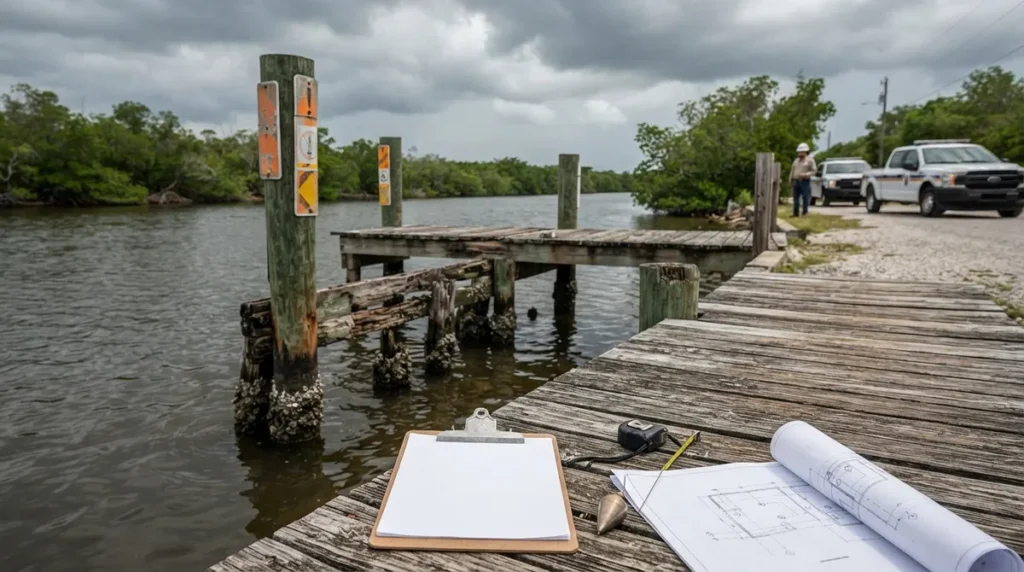
Key Takeaways
-
After-the-fact permits in Florida are not automatic legalization; agencies evaluate completed structures against the same standards that would have applied before construction, potentially requiring redesign, removal, or mitigation.
-
Multiple jurisdictions regulate Florida waterfront structures simultaneously—FDEP, water management districts, local building departments, and sometimes the Army Corps of Engineers—making coordinated multi-agency application essential.
-
Unpermitted seawalls and docks can result in administrative fines up to $15,000, declaration as public nuisances subject to removal, and monthly fines if violations aren't addressed after receiving notice.
-
Smaller docks under 500-1,000 square feet may qualify for exemption or general permits (costing $100-$250) rather than full individual ERP review, but accurate over-water area documentation is critical to qualify.
-
Complete as-built documentation including surveys, photographs, engineering drawings, and environmental assessments must be prepared before submission; missing or inaccurate details are the leading cause of application rejections.
-
Seawall exemptions are narrow and limited to specific scenarios like restoring prior locations or closing gaps between existing legal structures, with restrictions on length, filling, navigation impacts, and protected species habitat.
So you built a seawall or dock without a permit, or maybe you bought a waterfront home in Florida and just discovered the previous owner did. Either way, take a breath. You are far from alone, and the good news is that Florida has a defined path for resolving unpermitted waterfront structures. It just isn't a simple form you fill out and forget. Getting the best seawall and dock after-the-fact help in Florida means finding a team that understands FDEP rules, local building codes, coastal construction requirements, and how to package everything into an application that actually gets approved instead of bounced back.
Whether you're a homeowner in Bradenton, a real estate agent trying to close a deal in St. Petersburg, or a general contractor juggling a dozen waterfront projects, this guide walks through the eight most important pieces of the puzzle. We'll cover who regulates what, what documentation you'll need, what it typically costs, and how to avoid turning a fixable situation into a bigger headache. Let's get you pointed in the right direction.
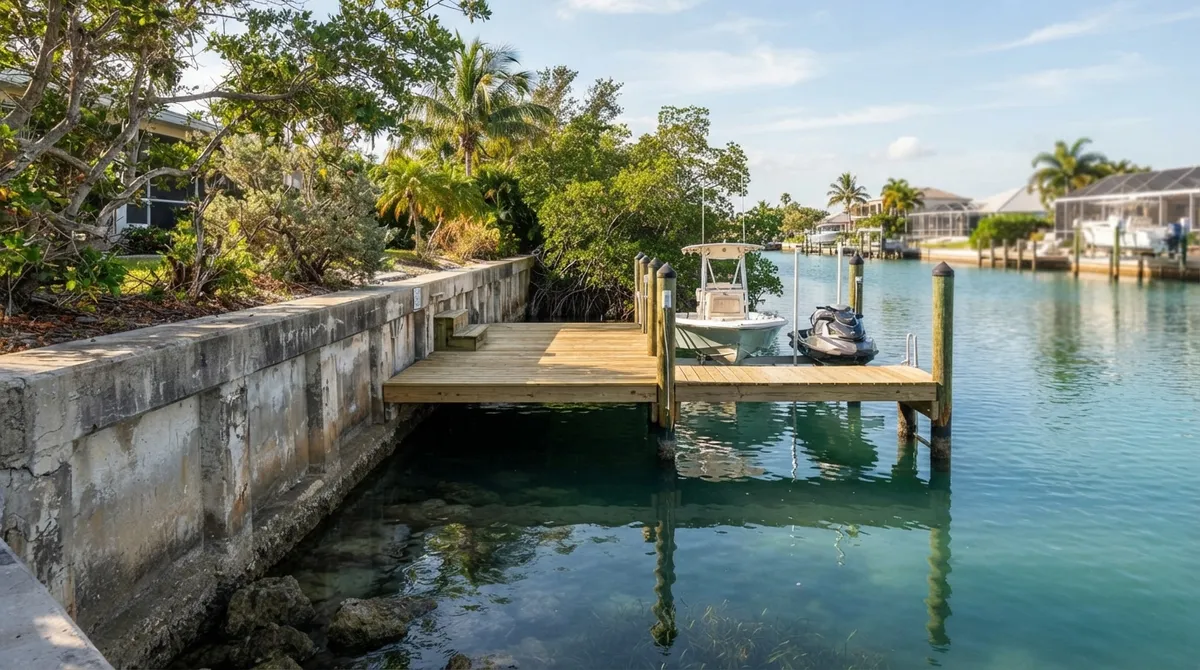
1. Understand Why Seawalls and Docks Need Permits in the First Place
Florida takes coastal construction seriously, and for good reason. Seawalls, docks, and other over-water structures affect navigation, water quality, wetlands, flood control, and protected species like manatees. Under Florida Statutes section 161.041, coastal construction below the mean high-water line generally requires a permit before any work begins. Skipping that step doesn't just risk a fine; it can leave you with a structure that a court or agency later declares a public nuisance.
Depending on where your property sits, your project might touch several layers of regulation at once: the Florida Department of Environmental Protection (FDEP), a regional water management district, your local city or county building department, and sometimes the U.S. Army Corps of Engineers. That overlapping oversight is exactly why so many waterfront owners end up needing dedicated FDEP environmental permits guidance rather than trying to figure it out solo.
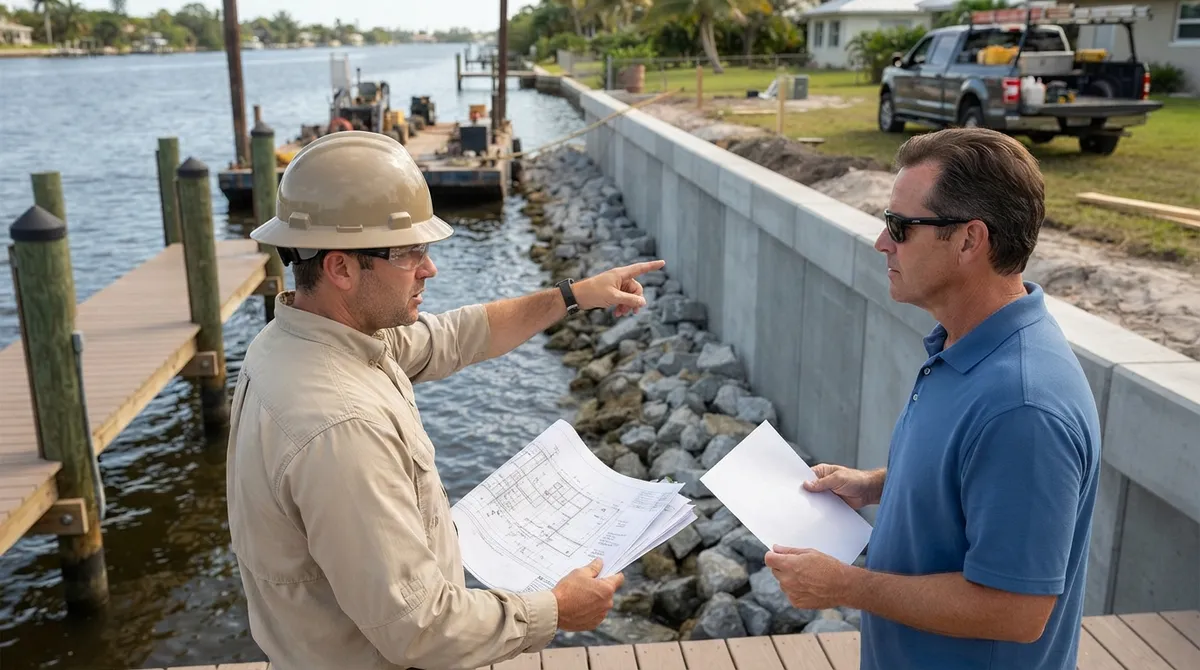
2. Know That an After-the-Fact Permit Isn't a Rubber Stamp
Here's something a lot of property owners don't realize until they're deep into the process: an after-the-fact permit is not automatic legalization. Agencies evaluate the completed structure against the same standards that would have applied before construction. That means your seawall or dock could still be required to be redesigned, partially removed, or mitigated, even after you've submitted paperwork and paid the fees.
This is exactly why working with a team that understands both the technical and regulatory side matters so much. A good after-the-fact and expired permits service will document the as-built condition thoroughly and build a defensible case before anything gets submitted, rather than hoping the agency looks the other way.
What Agencies Typically Review
- Location relative to the mean high-water line and coastal construction control line
- Impact on navigation and neighboring properties
- Effects on wetlands, seagrass beds, and water quality
- Presence of manatee habitat or aquatic preserves
- Structure dimensions compared to exemption thresholds
- Whether the work was new construction or a replacement of a prior legal structure
3. Identify Every Jurisdiction That Has a Say
One of the biggest mistakes people make is assuming a single call to the county building department covers everything. In reality, your dock or seawall might need sign-off from FDEP's Environmental Resource Permit (ERP) program, a water management district, your municipality's building and zoning departments, and potentially a coastal construction permit under Chapter 161 of the Florida Statutes if you're below the mean high-water line in a tidal area.
This is where knowing which Florida jurisdiction reviews your project becomes essential. Coastal counties like Pinellas County, Manatee County, Lee County, and Collier County each have their own local nuances layered on top of state requirements, and getting the sequence wrong can add months to your timeline.
4. Check If Your Dock Qualifies for an Exemption or General Permit
Not every unpermitted dock needs the full individual ERP treatment. FDEP guidance identifies commonly used thresholds where smaller private docks may qualify for an exemption or general permit rather than a full individual review. Generally speaking, docks with up to 500 square feet of over-water area in an Outstanding Florida Water, or up to 1,000 square feet in other waters, may fall under a simpler pathway, subject to additional conditions.
But here's the catch: an exemption that might have applied before construction doesn't automatically erase an existing violation. You still have to formally document why the structure qualifies, and factors like roofs, boat covers, canopies, and elevated platforms can all count toward that over-water area calculation. This nuance trips up a lot of DIY applicants.
| Permit Pathway | Typical Fee | Best For |
|---|---|---|
| Exemption Verification | Around $100 | Small docks meeting strict size and location criteria |
| General Permit | Around $250 | Docks slightly exceeding exemption thresholds |
| Individual ERP | Around $420 | Larger docks, seawalls, or environmentally sensitive sites |
5. Understand Seawall-Specific Exemptions and Their Limits
Seawall exemptions in Florida are narrower than most homeowners assume. A common example involves restoring a seawall at its prior location, or building a nonvertical wall that closes a gap between two existing legal seawalls. Some of these gap-closing exemptions cap the wall length at 150 feet and require it to connect existing legal structures in a continuous, uniform line.
Restrictions can also apply based on filling activity, navigation impacts, water quality concerns, aquatic preserves, manatee sanctuaries, and proximity to the coastal construction control line. If your seawall doesn't cleanly fit one of these narrow exemptions, you're likely looking at an individual permit application supported by structural engineering documentation and a site-specific survey.
6. Gather the Right Documentation Before You Apply
Agencies want to see a complete, organized package, not a pile of loose paperwork. Here's a general rundown of what most after-the-fact seawall and dock applications require:
- A current survey showing the structure's exact location relative to the mean high-water line
- Photographs documenting the as-built condition, including dimensions
- Any prior permits, notices of violation, or correspondence with regulatory agencies
- Sealed engineering drawings if structural elements are involved
- An environmental assessment if the site is near seagrass, wetlands, or protected species habitat
- A written narrative explaining the construction history and current status
Putting together as-built drawings that accurately reflect the structure is often the single most important piece, since agencies will compare your documentation against aerial imagery and prior permit records. Missing or inaccurate details here are one of the most common reasons applications get bounced back for revisions.
7. Know the Real Consequences of Doing Nothing
It's tempting to hope an unpermitted seawall or dock just stays under the radar. Unfortunately, Florida Statutes section 161.121 authorizes administrative fines of up to $15,000 for certain coastal construction violations, and section 161.041 allows an unauthorized structure to be declared a public nuisance subject to removal. Some violations can even carry misdemeanor exposure, with separate offenses accruing for each month the violation continues.
Local ordinances add another layer. For instance, some Pinellas County ordinance materials describe a ten-day window after written notice to either apply for an after-the-fact permit or remove the structure entirely. That's a tight deadline if you're not already prepared. If you've received a notice of violation, the smartest move is to get help fast through code compliance violations support rather than trying to negotiate with an inspector on your own.
What Happens If Florida Discovers Your Unpermitted Structure
- You may receive a written notice of violation with a response deadline
- The agency may require a stop to any additional work immediately
- You'll typically need a site-specific compliance review before any corrective action
- Removal, mitigation, or redesign may be required depending on impacts
- Fines can accrue monthly if the violation isn't addressed
8. Work With a Coordinated Permitting Team Instead of Going It Alone
By now it's probably clear that after-the-fact seawall and dock permitting isn't a one-agency, one-form process. It involves surveys, engineering, environmental review, local zoning coordination, and sometimes negotiation with multiple agencies at once. Trying to manage all of that yourself, especially while also handling the emotional stress of a violation notice, is a lot to take on.
This is exactly the kind of tangled, multi-jurisdiction problem that 1 Contractor Solutions was built to solve. As Florida's outsourced permitting department, the team identifies every agency with a stake in your project, pulls prior permit history, coordinates surveys and sealed engineering, and manages the application from first submission through final closeout. Because drafting and engineering are handled in house, when a reviewer flags an issue, corrections happen quickly instead of waiting on an outside consultant to call back. For general contractors managing multiple waterfront jobs, solar companies coordinating structural documentation, or homeowners just trying to protect their investment, that kind of coordinated support through permit facilitation and filing makes a genuinely stressful situation feel manageable.
If you're a real estate professional trying to close a sale with an unpermitted structure hanging over the transaction, realtor closing support services can help untangle the issue before it derails your deal. And if you'd simply like to see how other Florida property owners have worked through similar situations, you can visit us on Google — 1 Contractor Solutions to read real experiences from clients across the state, including many in the Tampa Bay and Southwest Florida waterfront communities.
| Consideration | DIY Approach | Working With a Permitting Team |
|---|---|---|
| Jurisdiction Research | Time-consuming trial and error | Identified upfront across FDEP, local, and federal layers |
| Documentation | Risk of missing required surveys or drawings | Complete, agency-ready package prepared in house |
| Engineering | Requires finding and coordinating outside consultants | Sealed drawings produced and revised internally |
| Timeline | Often delayed by resubmittals and missing info | Actively tracked and managed through approval |
Bringing It All Together
Unpermitted seawalls and docks are more common in Florida than most people realize, especially on properties that changed hands a few times before anyone noticed the missing paperwork. The path to resolution is very doable once you understand the moving pieces: identify the right agencies, document the as-built structure accurately, check for applicable exemptions, and build a complete application that anticipates agency questions before they're asked.
According to the Florida Department of Environmental Protection, thorough documentation and early agency coordination are consistently the factors that separate smooth after-the-fact approvals from drawn-out enforcement cases. Pairing that guidance with a knowledgeable local team gives you the best possible shot at a clean resolution.
If you're dealing with an unpermitted seawall, dock, or any other coastal structure anywhere in Florida, don't wait for a notice of violation to force your hand. Reach out and get a free quote to find out exactly what your property needs and how quickly it can be resolved. You can also follow us on LinkedIn or follow us on Facebook for ongoing updates on Florida permitting rules and coastal construction requirements. Your waterfront property deserves to be fully protected, on paper and in the water.
FAQs
How do I get an after-the-fact permit for a seawall in Florida?
You'll want to start by pulling together a current survey, photos of the as-built structure, and any prior permit history you can find. From there, a permitting team can help identify whether FDEP, your local municipality, or both need to review the application, and prepare the sealed engineering documentation most seawalls require.
Can I get a permit after building a dock without one in Florida?
Yes, in many cases, though approval isn't guaranteed just because you apply. The dock will be evaluated against the same standards that would have applied before construction, so it helps enormously to check exemption thresholds and prepare accurate documentation before submitting anything.
How much does an after-the-fact seawall or dock permit cost in Florida?
Fees vary by pathway. FDEP materials list typical costs around $100 for an exemption verification, $250 for a general permit, and $420 for an individual ERP, though your specific project, engineering needs, and local fees can add to the total.
What happens if Florida discovers my unpermitted seawall or dock?
You'll typically receive a written notice of violation with a response deadline, and some counties give as little as ten days to apply for an after-the-fact permit or remove the structure. It's stressful, but a coordinated compliance review can usually get things moving in the right direction quickly.
Does buying a waterfront property transfer liability for an unpermitted seawall or dock?
Unfortunately, yes, the violation typically stays with the property, not the previous owner. This is exactly why real estate professionals often bring in permitting help before closing, so any unpermitted structures get resolved rather than becoming the new owner's surprise problem.
We do this work every day across all 67 Florida counties. Call (866) 314-6931 and we will tell you what your situation actually requires — including when you do not need us.
Related services
Permit Facilitation & Filing
You have a crew scheduled, a client asking for dates, and a permit sitting somewhere in a queue you cannot see. We file it, w…
See the servicePlan Review Coordination
A permit in plan review is not one queue. On a commercial project it can be six queues, each with its own reviewer, its own c…
See the serviceReady to get your permit moving?
One call tells you which jurisdiction controls your project, what it will take, and what it will cost. Most of the time we can scope it on the phone.